
Executive Overview
The narrative of life on Earth has long been viewed through the conventional lens of cellular evolution, with bacteria, archaea, and eukaryotes occupying the foundational branches of the phylogenetic tree. However, the inclusion of viruses—enigmatic, sub-microscopic infectious agents situated at the very boundary of biochemistry and biology—profoundly complicates this traditional taxonomy. Unlike cellular organisms, viruses are strictly acellular, devoid of metabolic machinery, and incapable of synthesizing proteins independently. They exist as packets of genetic instruction, requiring a hijacked host cellular apparatus to replicate and perpetuate.
For decades, the evolutionary origin of viruses remained an elusive puzzle. Are they degenerate forms of ancient cells, or do they represent primordial genetic entities that predate cellular life altogether? A transformative hypothesis, first proposed at the turn of the 21st century, posits an even more radical proposition: that viruses were not merely external parasites of early cells, but were the active architects of complex life itself. Specifically, this theory suggests that the defining feature of complex organisms—the membrane-bound cell nucleus—may have arisen directly from a colossal DNA virus that infected an ancestral archaeon.
This bold framework, known as the cell nuclear virus origin theory or viral eukaryogenesis, has received a significant empirical boost. In a study published in the Journal of Virology, an international research team led by Professor Masaharu Takemura of the Tokyo University of Science (TUS) and collaborators at the National Institute of Natural Sciences (NINS) in Japan announced the discovery of a novel giant DNA virus. Named ushikuvirus after Lake Ushiku in Ibaraki Prefecture, Japan, where it was isolated, this organism offers unprecedented structural and genetic clues. By bridging the evolutionary gaps within the Mamonoviridae family and demonstrating unique strategies for cellular takeover, ushikuvirus provides fresh, compelling evidence that viruses played a foundational role in shaping the architecture of all complex life on Earth.
Detailed Chronology
To understand the weight of the ushikuvirus discovery, it is essential to trace the historical trajectory of virology and evolutionary theory over the past several decades.
The Dawn of Viral Eukaryogenesis (2001)
For most of the 20th century, viruses were largely dismissed by mainstream evolutionary biologists as evolutionary "noise"—escaped elements of cellular genomes or discarded biological debris. This paradigm began to shift dramatically in 2001. Independently, Professor Masaharu Takemura of the Graduate School of Science at TUS and Dr. Philip Bell of the Department of Biological Sciences at Macquarie University in Sydney proposed a paradigm-shifting hypothesis: the cell nuclear virus origin theory (with the term "viral eukaryogenesis" coined by Dr. Bell).
The hypothesis dared to invert the standard biological hierarchy. Instead of viewing viruses as late-arriving parasites dependent on pre-existing eukaryotic nuclei, Takemura and Bell suggested that the nucleus itself was viral in origin. According to this model, a large DNA virus—akin to modern poxviruses—infected an ancestral archaeal single-celled microorganism. Rather than destroying the host or being cleared by defense mechanisms, the virus established a stable, permanent residency within the host’s cytoplasm. Over evolutionary epochs, the viral entity integrated host genes, evolved specialized membrane barriers, and ultimately transformed into the centralized, genetic command center we recognize today as the eukaryotic nucleus. If validated, this theory places viruses at the very heart of the evolutionary leap from simple microbes to complex multicellular organisms.
The Megaviral Revolution (2003)
For two years following its proposal, the viral eukaryogenesis hypothesis lacked tangible physical models among contemporary viruses. That changed in 2003 with the monumental discovery of giant DNA viruses, epitomized by Mimivirus. These colossal biological entities shattered the scientific consensus that viruses were invariably tiny, simple particles.
When giant DNA viruses infect their hosts, they construct elaborate intracellular micro-environments known as "virus factories." In several documented cases, these factories are entirely enclosed by lipid membranes and serve as dedicated zones for viral DNA replication—bearing an uncanny structural and functional resemblance to a primitive cell nucleus. This empirical discovery provided the first physical proof-of-concept that viral structures could mimic the compartmentalization characteristic of eukaryotic cells, breathing new life into Takemura’s theoretical model.
Expanding the Megaviral Census
In the years following the 2003 breakthrough, virologists embarked on systematic expeditions to map the hidden diversity of the megaviral world. Researchers identified a growing roster of giant DNA viruses infecting various single-celled eukaryotes. Among these discoveries were members of the Mamonoviridae family, which target Acanthamoeba species, and clandestinovirus, a closely related genetic lineage that infects Vermamoeba—a distinct genus of amoebae.
Each newly discovered virus added nuance to the phylogenetic tree, yet significant gaps remained regarding how these giant viruses diversified, how they interacted with their hosts, and how their replication strategies varied across different ecological niches.
The Isolation of Ushikuvirus (Present Study)
The latest chapter in this scientific saga unfolded with the isolation and characterization of ushikuvirus. Sourced from the waters of Lake Ushiku, Japan, this giant DNA virus specifically targets Vermamoeba hosts. Described in the Journal of Virology, the discovery was spearheaded by Prof. Takemura alongside a team of researchers from TUS and NINS, including Master’s degree students Jiwan Bae and Narumi Hantori, as well as Dr. Raymond Burton-Smith and Professor Kazuyoshi Murata.
By analyzing the unique morphology, cytopathic effects, and replication mechanisms of ushikuvirus, the research team has unlocked critical insights into the evolutionary pathways of the Mamonoviridae family, bringing science one step closer to resolving the mysteries of eukaryotic ancestry.
Supporting Context & Metrics
The isolation of ushikuvirus is not merely an isolated taxonomic addition; it represents a goldmine of comparative data that illuminates the complex mechanics of giant virus evolution.
Structural Comparisons and Morphological Anomalies
Giant viruses are ubiquitous in natural aquatic and terrestrial ecosystems, yet their physical isolation remains notoriously difficult due to their size, fastidious host requirements, and low environmental titers. Furthermore, their extreme genetic and structural diversity ensures that each novel isolate provides a unique window into viral evolution.
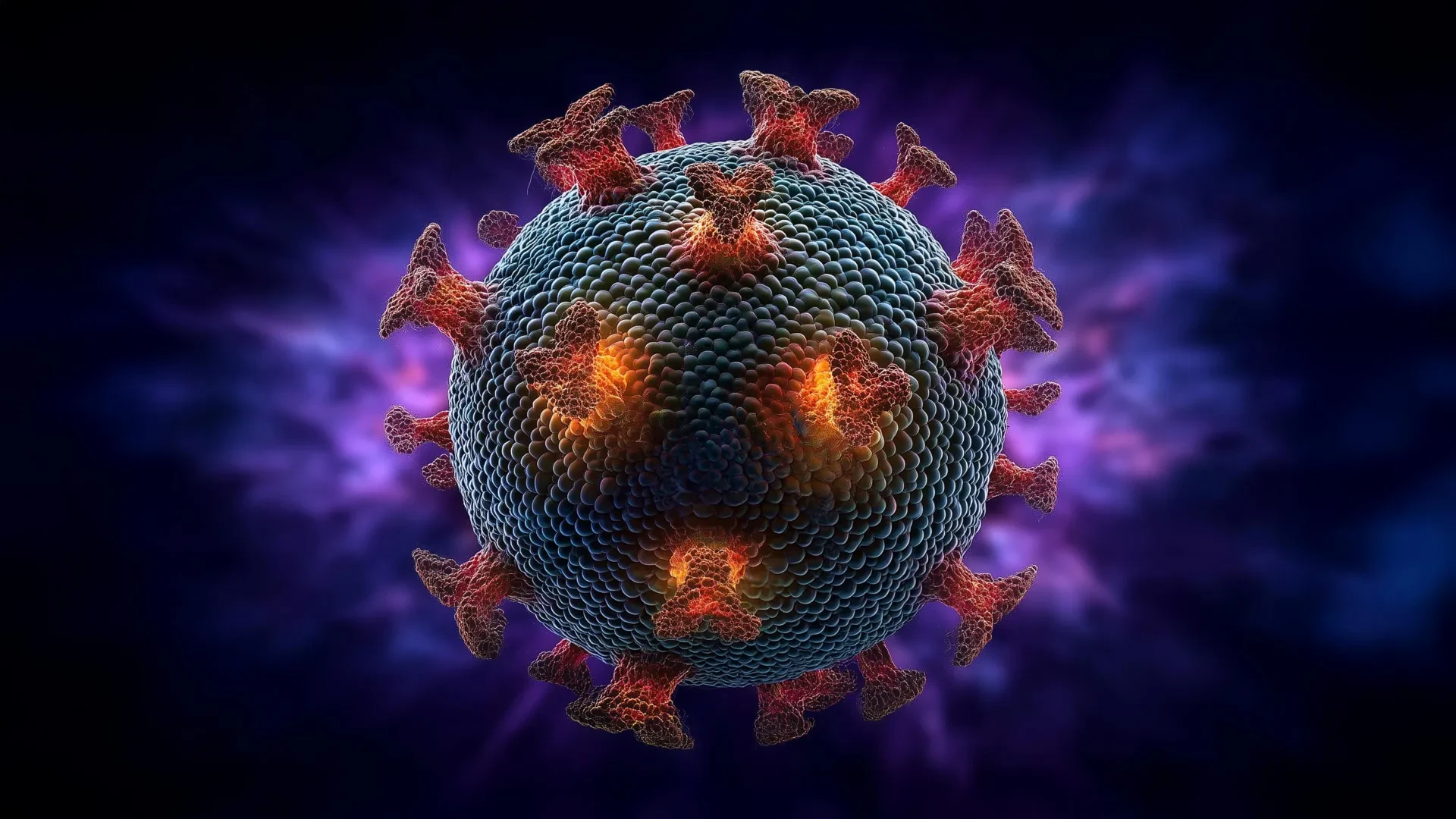
Ushikuvirus exhibits a complex architecture that bridges several known viral lineages. Sharing host preferences with clandestinovirus (infecting Vermamoeba), ushikuvirus simultaneously displays striking structural homologies with the Mamonoviridae family, particularly Medusavirus. Medusaviruses are scientifically celebrated for their rigid icosahedral capsid geometry, blanketed by a dense array of short, specialized surface spikes.
Despite these shared lineages, ushikuvirus diverges in several crucial morphological aspects:
- Cytopathic Impact: Infection by ushikuvirus induces a distinct, aberrant cytopathic effect, causing infected Vermamoeba host cells to swell and grow unusually large before lysis.
- Capsid Surface Architecture: While possessing surface spikes akin to its relatives, the spikes of ushikuvirus are topped with unique, highly distinct cap structures. Crucially, some of these caps feature delicate, filament-like extensions entirely absent in Medusavirus.
- Replication Strategy: Perhaps the most profound divergence lies in intracellular replication mechanics. Both Medusavirus and clandestinovirus reproduce safely within an intact, preserved host cell nucleus. In stark contrast, ushikuvirus actively degrades and breaks down the host’s nuclear membrane during its replication cycle to manufacture progeny virions.
Bridging Evolutionary Divides
This behavioral dichotomy—between viruses that preserve the host nuclear membrane during replication (such as Mamonoviridae members) and those that obliterate it (such as Pandoravirus)—has long vexed evolutionary biologists. Ushikuvirus acts as a functional and phylogenetic bridge. Its genetic makeup suggests that these disparate replication strategies are not disconnected anomalies, but rather flexible evolutionary adaptations fine-tuned over millennia to exploit different host cellular environments.
| Viral Lineage / Isolate | Primary Host | Nuclear Interaction During Replication | Key Structural Features |
|---|---|---|---|
| Medusavirus (Mamonoviridae) | Acanthamoeba | Replicates within intact host nucleus | Icosahedral capsid, dense short spikes |
| Clandestinovirus | Vermamoeba | Replicates within intact host nucleus | Close genetic relation to Mamonoviridae |
| Pandoravirus | Amoebae | Disseminates via nuclear membrane breakdown | Oval morphology, complex apical pore |
| Ushikuvirus | Vermamoeba | Disrupts the nuclear membrane | Icosahedral-like, capped spikes with filaments |
Official Statements
The implications of the ushikuvirus research extend far beyond academic virology, touching upon the fundamental philosophy of how life is categorized and understood.
Reflecting on the broader significance of the discovery, Professor Masaharu Takemura emphasized the boundless potential of megaviral research:
"Giant viruses can be said to be a treasure trove whose world has yet to be fully understood. One of the future possibilities of this research is to provide humanity with a new view that connects the world of living organisms with the world of viruses."
Elaborating on how ushikuvirus specifically impacts our understanding of evolutionary phylogeny, Takemura added:
"The discovery of a new Mamonoviridae-related virus, ‘ushikuvirus,’ which has a different host, is expected to increase knowledge and stimulate discussion regarding the evolution and phylogeny of the Mamonoviridae family. As a result, it is believed that we will be able to get closer to the mysteries of the evolution of eukaryotic organisms and the mysteries of giant viruses."
The collaborative nature of the study brought together rigorous academic mentorship and hands-on graduate research. Co-authors Jiwan Bae and Narumi Hantori, Master’s degree students at the Graduate School of Science at the Tokyo University of Science, played pivotal roles in processing and analyzing the viral samples alongside infrastructure support from Dr. Raymond Burton-Smith and Professor Kazuyoshi Murata at the National Institute of Natural Sciences (NINS).
Behind this research stands Professor Takemura’s extensive academic pedigree. As a Professor in the Department of Mathematics and Science Education at TUS, Takemura has dedicated his career to giant virus biology, viral eukaryogenesis, and improving public scientific literacy. With over 120 peer-reviewed scientific papers and more than 2,500 citations to his name, his overarching life’s work is dedicated to untangling the evolutionary handshake between giant viruses and eukaryotic cells, while ensuring that complex virology is translated effectively into educational frameworks worldwide.
Future Outlook
As the scientific community digests the data published in the Journal of Virology, the horizon of megaviral research points toward several transformative frontiers, spanning fundamental evolutionary biology, practical biomedicine, and science education.
Unraveling the Eukaryotic Ancestry
The primary theoretical objective moving forward is to map the exact genetic exchanges that occurred between ancient giant DNA viruses and early archaeal hosts. By sequencing the complete genome of ushikuvirus and comparing its structural proteins against eukaryotic nuclear pore complexes and chromatin-associated proteins, researchers hope to find definitive molecular signatures. If specific viral genes are found to share a direct, uninterrupted lineage with core eukaryotic nuclear machinery, the viral eukaryogenesis hypothesis will transition from a compelling model to an established biological principle.
Translational Applications in Public Health
While amoeba-infecting giant viruses are traditionally studied for evolutionary insights, their ecological interactions hold significant clinical value. Certain species of Acanthamoeba are not benign environmental organisms; they are opportunistic pathogens capable of causing severe, often fatal human diseases, including amoebic encephalitis and blinding keratitis.
A deeper, mechanistic understanding of how giant viruses identify, infect, and systematically dismantle amoebic cells could pave the way for novel biotherapeutic interventions. By harnessing giant viruses or mimicking their cell-destroying enzymes, biomedical researchers could eventually develop targeted treatments to combat stubborn amoebic infections that resist conventional antimicrobial drug therapies.
Educational Initiatives and Scientific Literacy
Beyond the laboratory bench, Professor Takemura’s ongoing mission emphasizes the pedagogical dimension of virology. In an era marked by heightened public awareness of viral pathogens, shifting the public and academic perception of viruses from purely destructive agents to foundational engines of biological evolution is vital. By developing targeted educational curricula, TUS aims to foster a new generation of scientists equipped with a nuanced, holistic view of microbial ecology and macro-evolution.
In summary, the quiet waters of Lake Ushiku have yielded a biological marvel. Ushikuvirus stands as a microscopic monument to the complexity of Earth’s evolutionary history—a reminder that the boundaries between life and non-life, host and parasite, creator and created, are infinitely more intertwined than science once dared to imagine.