
Executive Overview
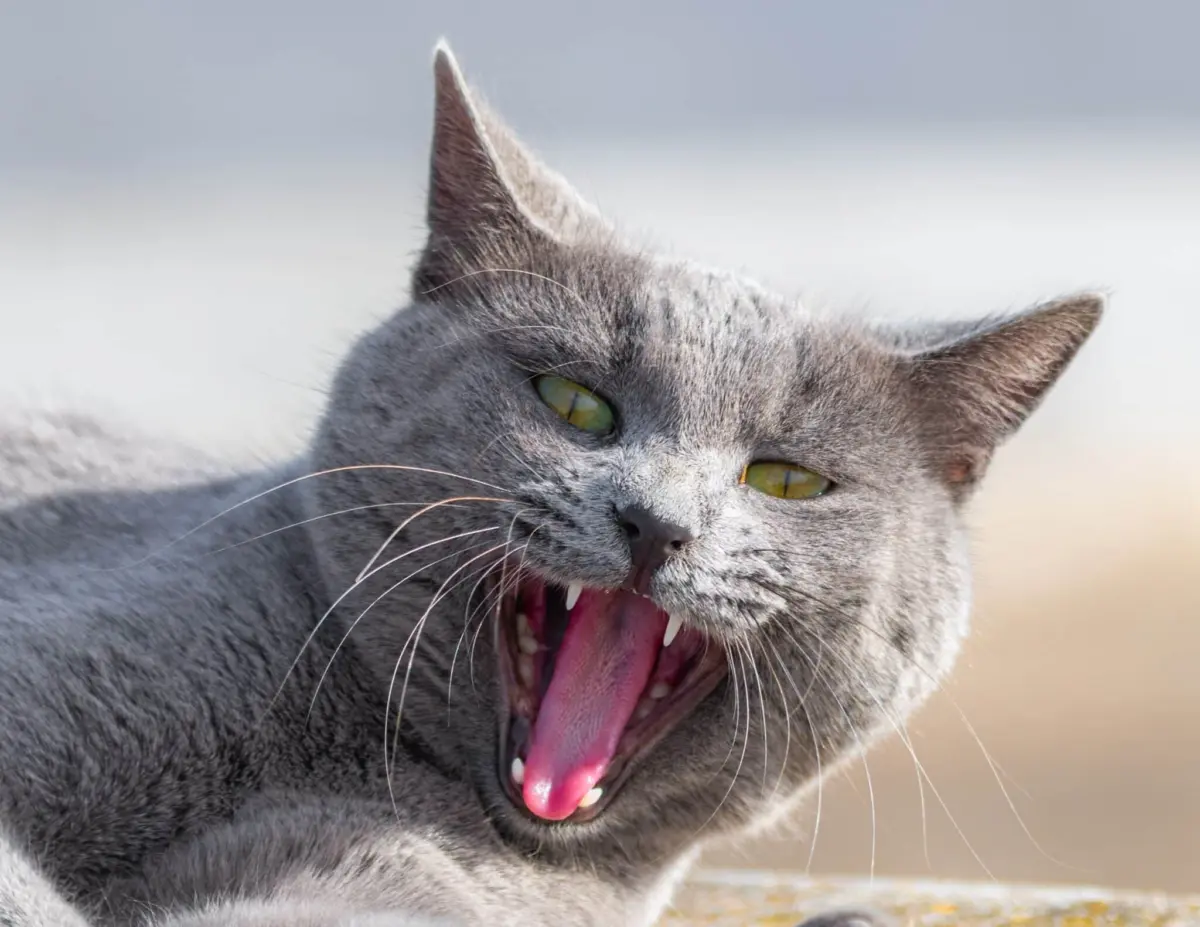
Maintaining optimal feline dental hygiene is one of the most persistent challenges cat owners face. While brushing a cat’s teeth with a pet-safe enzymatic toothpaste remains the gold standard of at-home preventative care, the reality of execution often falls short of the ideal. Feline resistance to having their mouths handled can turn a well-intentioned daily routine into a stressful ordeal for both pet and parent.
To bridge this gap, the veterinary wellness market has increasingly embraced brush-free oral care solutions, chief among them being dental water additives. Designed to be mixed directly into a cat’s daily drinking water, these formulations work continuously to support oral hygiene, neutralize odor-causing compounds, and combat the accumulation of plaque and tartar.
However, introducing a new liquid formula into a cat’s environment is not without its caveats. Felines are notoriously fastidious creatures with acute senses of taste and smell. Any unauthorized alteration to their water bowl can trigger behavioral changes, most notably a dangerous reduction in daily water consumption.
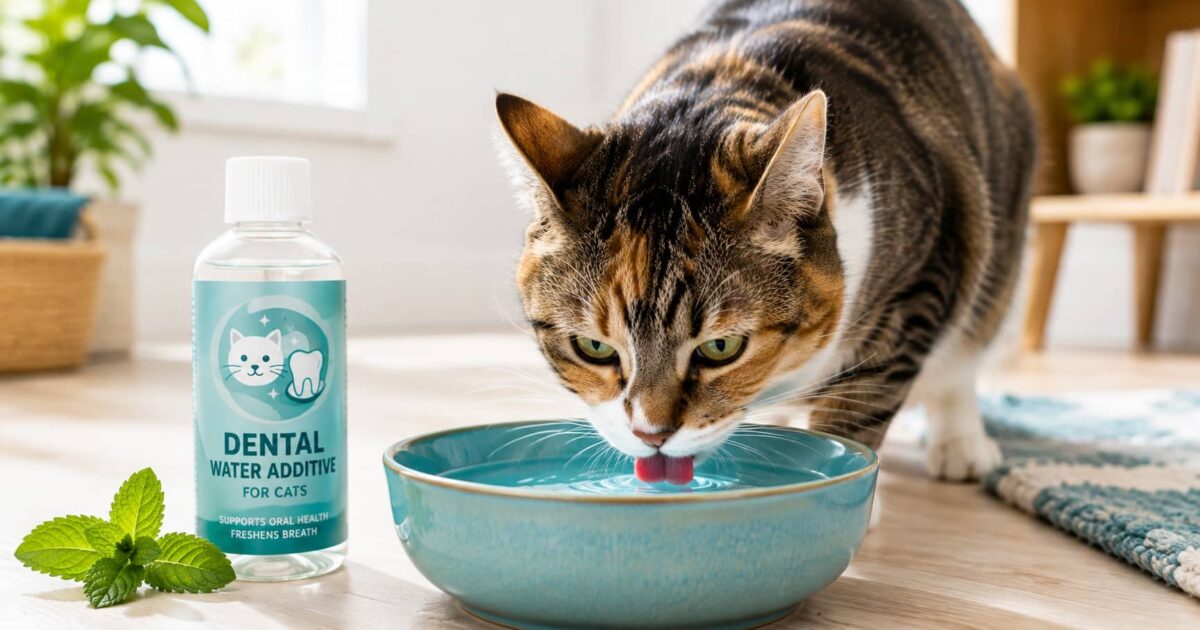
This comprehensive report examines the mechanism of action, efficacy, and practical application of dental water additives. Furthermore, it provides an in-depth review of the five top-performing products currently available on the market, analyzing their ingredients, target demographics, and overall value to help cat owners make informed health decisions.
Detailed Chronology and Industry Evolution
The trajectory of pet dental care has undergone a significant transformation over the past three decades. Historically, feline dental health was largely overlooked, with veterinary medicine focusing almost exclusively on curative interventions such as extractions and professional scaling under general anesthesia once advanced periodontal disease had already set in.
The Shift Toward Proactive At-Home Care
- Late 1990s to Early 2000s: The pet care industry began recognizing the systemic impacts of periodontal disease in cats, which can affect vital organs including the heart, liver, and kidneys through bacterial translocation from the oral cavity. Educational campaigns urged owners to adopt daily tooth-brushing routines.
- Mid-2000s: Recognizing the severe compliance barriers associated with brushing feline teeth, manufacturers began formulating alternative delivery systems. This era saw the introduction of dental treats, specialized kibble, and early iterations of water additives designed to offer passive plaque management.
- 2010s to Present: Scientific formulations advanced substantially. The introduction of targeted active ingredients—such as cetylpyridinium chloride (CPC), stabilized chlorine dioxide, zinc compounds, and advanced enzymatic systems (Biotrate Technology)—allowed water additives to move beyond mere breath-masking agents into functional preventative tools. Concurrently, regulatory frameworks like the Veterinary Oral Health Council (VOHC) established rigorous protocols for evaluating the efficacy of these non-brushing interventions.
Supporting Context & Metrics: Understanding Feline Periodontal Disease
Periodontal disease is arguably the most common medical condition affecting adult cats, with epidemiological studies suggesting that up to 70% to 90% of cats over the age of three exhibit some degree of oral pathology.
The Pathological Cascade
- Plaque Formation: Within hours of a professional cleaning or a meal, a sticky film of bacteria, saliva, and food particles (plaque) begins to adhere to the tooth surface.
- Mineralization into Tartar (Calculus): If left undisturbed, minerals in the cat’s saliva interact with plaque within 24 to 72 hours, hardening it into calculus. This rough surface provides an ideal anchor for further bacterial colonization.
- Inflammation and Periodontitis: As bacteria migrate beneath the gumline, they trigger an immune response characterized by gingivitis (inflammation of the gums). Over time, this progresses to periodontitis, destroying the supporting bone structures and periodontal ligaments, ultimately resulting in tooth loss, pain, and systemic infection.
Why Water Additives Matter
While water additives cannot replace professional veterinary dental cleanings or reverse advanced calculus, they serve as a critical frontline defense in slowing down plaque accumulation. By continuously introducing active agents into the oral cavity every time the cat drinks, these solutions help modify the oral microenvironment, reduce volatile sulfur compounds (the culprits behind halitosis), and inhibit bacterial proliferation.
Comprehensive Review: The 5 Best Dental Water Additives for Cats
Navigating the crowded marketplace of pet wellness products can be daunting. To assist cat parents, we have evaluated the leading formulations based on ingredient transparency, feline suitability, ease of use, and practical value.
1. TropiClean Fresh Breath Dental Water Additive for Cats
- Best Overall
- Active Ingredients: Cetylpyridinium chloride (CPC), green tea extract, zinc gluconate.
Analysis
TropiClean secures our top spot because its formulation is purpose-built specifically for felines rather than relying on a generalized multi-species approach. The inclusion of CPC is particularly noteworthy; it is a well-documented antiplaque antimicrobial agent frequently utilized in advanced oral care formulations. Combined with zinc gluconate and a botanical green tea extract component, the formula works synergistically to target both bacteria and breath odor.
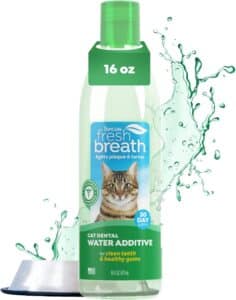
Crucially, TropiClean designs this specific variant to be odorless and tasteless. Given how sensitive cats are to olfactory and gustatory shifts in their hydration sources, an unobtrusive profile is essential for maintaining compliance. The application is straightforward: one capful (15 milliliters) mixed into three cups of fresh water daily.
- Key Consideration: Even tasteless formulations can occasionally be detected by exceptionally finicky felines. Owners must monitor initial intake carefully.
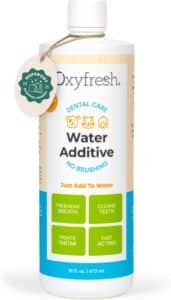
2. Oxyfresh Premium Pet Dental Water Additive
- Best for Picky Cats
- Active Ingredients: Stabilized chlorine dioxide, zinc acetate.
Analysis
For households with cats that immediately reject modified water bowls, Oxyfresh offers a distinct mechanism of action. Instead of relying on botanicals or masking agents, Oxyfresh utilizes a proprietary stabilized chlorine dioxide complex. This compound tackles halitosis through targeted oxidation—chemically neutralizing volatile sulfur compounds at the molecular level rather than simply covering them up with mint or heavy flavorings.
Because it is completely flavorless and odorless, it is exceptionally well-tolerated by finicky drinkers. Furthermore, its dual-species formulation makes it an optimal, cost-effective choice for multi-pet households housing both cats and dogs.

- Key Consideration: Oxyfresh is a multi-species product. Cat parents who strictly prefer a feline-exclusive formulation may lean toward species-specific alternatives.
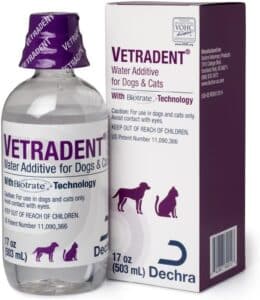
3. VETRADENT Dog & Cat Dental Water Additive
- Best Flavorless Option
- Active Ingredients: Biotrate Technology compounds.
Analysis
VETRADENT stands out for its scientifically engineered approach using proprietary Biotrate Technology, designed to alter the chemical environment of the oral cavity and inhibit tartar formation. Marketed as a completely flavorless and odorless solution, it integrates seamlessly into a cat’s daily routine without disrupting their drinking habits.
It is vital, however, to contextualize VETRADENT’s regulatory standing. While the overarching brand is associated with the Veterinary Oral Health Council (VOHC) Accepted Seal, shoppers must exercise analytical diligence. The VOHC tartar-control acceptance for VETRADENT applies specifically to dogs, not cats. Nonetheless, the product is fully labeled and safe for feline use as a supportive daily rinse.
- Key Consideration: Always verify the specific species claims associated with VOHC seals rather than assuming cross-species efficacy for structural claims.
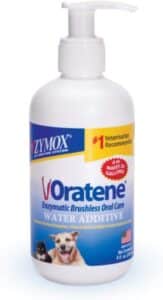
4. Oratene Enzymatic Brushless Oral Care Water Additive
- Best Enzymatic Formula
- Active Ingredients: Glucose oxidase, potassium sorbate, potassium thiocyanate.
Analysis
Oratene represents an entirely different biochemical philosophy. Rather than relying on chemical antimicrobials or oxidizers, Oratene harnesses a natural, multi-complex enzyme system (including glucose oxidase). These enzymes interact with the cat’s saliva to inhibit plaque-forming bacteria and reduce oral malodor organically.

Completely unflavored, flavor-free, and colorless, Oratene is exceptionally gentle, making it an ideal choice for senior cats or those with sensitive oral tissues. The absence of harsh chemicals or strong taste profiles minimizes rejection rates.
- Key Consideration: Enzymatic formulations typically command a higher price point per ounce than conventional chemical additives, making budget a factor for long-term use.
5. Dental Fresh Advanced Plaque & Tartar Water Additive
- Best Value
- Active Ingredients: Stabilized chlorine dioxide and specialized mineral buffers.
Analysis
For cat parents managing multi-cat households or those seeking an economical approach to long-term preventative care, Dental Fresh Advanced delivers unmatched value. Commonly packaged in generous 32-ounce bottles, it offers a significantly lower cost-per-ounce ratio than many boutique competitors.
Dental Fresh is designed to activate upon contact with organic matter and bacteria in the mouth, helping to break down stubborn biofilm and prevent mineralization into calculus. However, because the brand manufactures a wide array of distinct formulas (some optimized strictly for canine use), buyers must rigorously inspect product labels to ensure they select a feline-compatible variant.
- Key Consideration: Due to the extensive product lineup under the Dental Fresh umbrella, owners must double-check label directions and dilution ratios for feline safety.
Official Statements and Veterinary Consensus
To maintain an objective, authoritative perspective, we look to veterinary consensus statements regarding the limitations and utility of water additives.
According to guidelines issued by the American Animal Hospital Association (AAHA) and insights from the Veterinary Oral Health Council (VOHC):
- “Water additives are valuable supportive tools in an at-home preventative dental care regimen, but they cannot replace mechanical plaque removal (such as brushing or professional veterinary cleanings) nor can they reverse established, hardened calculus.”
- Veterinary dentists emphasize that while water additives reduce bacterial loads and improve breath, they must be viewed as an adjunct therapy. Furthermore, professional veterinary evaluations under anesthesia remain non-negotiable for diagnosing subgingival pathology (diseases occurring beneath the gumline where water and toothbrushes cannot reach).
Frequently Asked Questions (FAQ)
1. Do dental water additives actually work for cats?
Yes, when used as part of a comprehensive dental care routine, they help reduce bacterial loads, freshen breath, and slow down plaque accumulation. However, their efficacy depends heavily on regular usage and individual cat biology. They are preventative, not curative.
2. Can water additives remove existing tartar from a cat’s teeth?
No. Once plaque has mineralized into hard calculus (tartar), chemical additives in drinking water cannot dissolve it. Removal of established tartar requires professional scaling and polishing performed by a veterinarian under general anesthesia.
3. What should I do if my cat stops drinking water after adding a dental solution?
Hydration must always take precedence over dental care. If your cat detects the additive and exhibits a noticeable decrease in water consumption, discontinue the product immediately, clean the bowl thoroughly, and provide fresh, untreated water. Consider trying an unflavored, tasteless alternative or alternative delivery methods like dental gels or wipes.
4. Are dental water additives safe for cats with kidney disease or urinary issues?
Cats with underlying medical conditions—particularly chronic kidney disease, lower urinary tract disorders, or those on strict prescription diets—should never be given a water additive without prior consultation with their attending veterinarian. Certain formulations may contain minerals or additives that require professional medical clearance.
5. How does the VOHC seal apply to cat products?
The Veterinary Oral Health Council awards its seal based on rigorous scientific trials submitted by manufacturers. A VOHC acceptance is specific to a product, a particular animal species, and a specific claim (either plaque control or tartar control). Always check if the VOHC acceptance applies to felines before purchasing based on the seal alone.
Future Outlook
As the pet wellness sector continues to innovate, the future of feline oral care is poised to see even more sophisticated, bio-compatible formulations. Researchers are currently exploring advanced postbiotics and targeted enzyme complexes that can modulate the feline oral microbiome with absolute specificity, eliminating pathogenic bacteria while preserving beneficial oral flora.
For now, dental water additives represent an accessible, low-stress bridge across the chasm of feline compliance. By combining these innovative brush-free solutions with diligent veterinary check-ups and open communication with animal health professionals, cat parents can significantly enhance their pets’ long-term systemic health and quality of life.