
Executive Overview
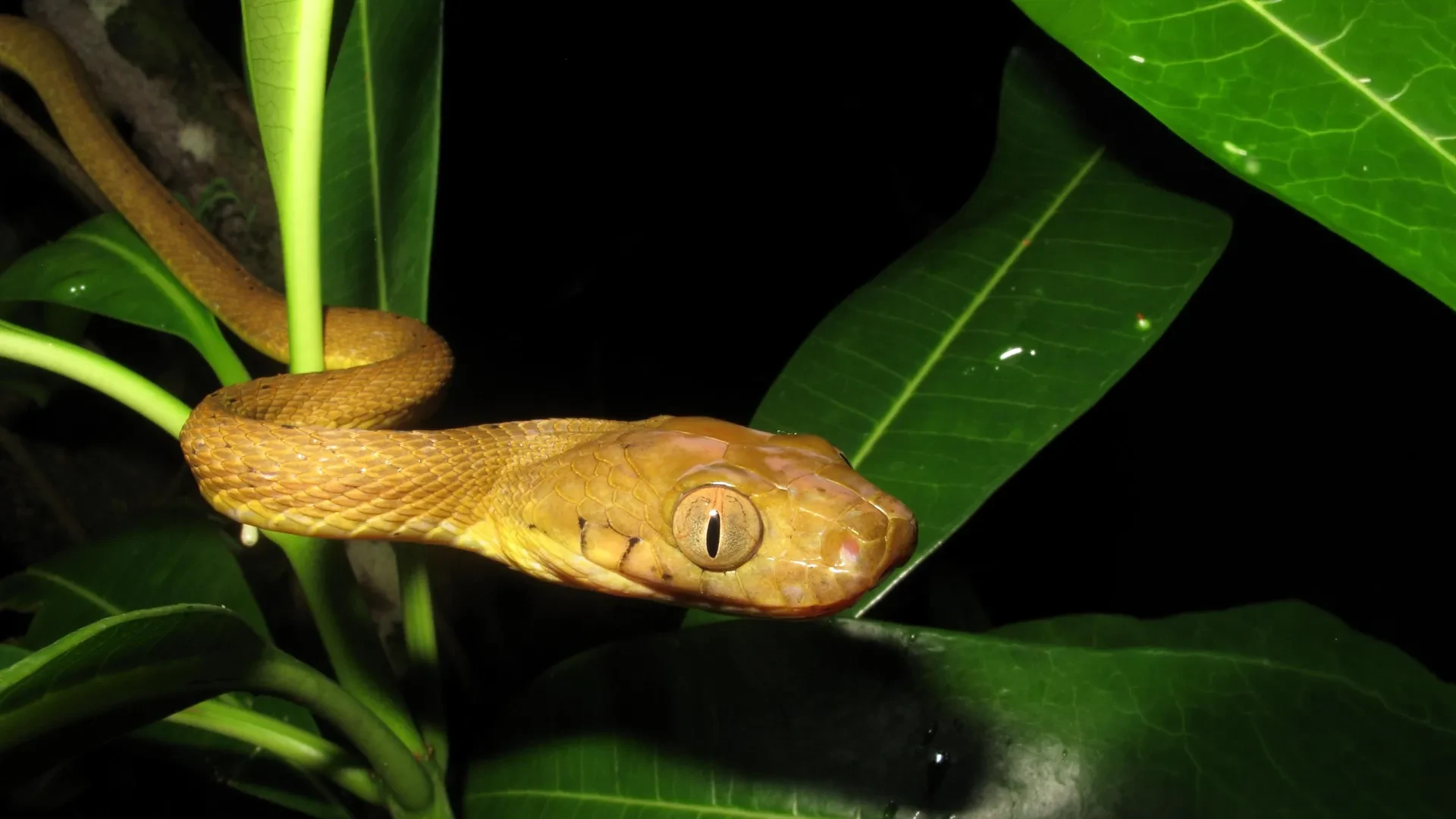
Few ecological catastrophes rival the devastation wrought by the brown tree snake (Boiga irregularis) on the island of Guam. Native to coastal Australia, Indonesia, and the Solomon Islands, this slender, nocturnal predator accidentally hitchhiked to the U.S. territory in the Western Pacific shortly after World War II, likely stowed away in military cargo or shipping materials. Encountering an island ecosystem completely devoid of native mammalian predators and filled with naive, ground-nesting forest birds that had evolved in isolation, the snakes proliferated at an astonishing rate. Today, population densities in certain forested pockets of Guam have reached an unprecedented 30,000 snakes per square mile.
The consequences have been catastrophic. The brown tree snake has driven the local extinction of most of Guam’s native forest bird species, decimated native lizard populations, and caused cascading ecological failures throughout the island’s rainforest canopy. Beyond ecological devastation, the snakes inflict severe economic and infrastructure damage, scaling utility poles and crawling into electrical transformers to cause hundreds of widespread power outages each year, costing millions of dollars in repairs and lost productivity.
For decades, evolutionary biologists and conservationists have been deeply mystified by the sheer scale and speed of this biological invasion. Standard ecological theory dictates that when a population is established by only a tiny handful of founding individuals—as historical and demographic records suggest happened on Guam—it should trigger a severe genetic bottleneck. Inbreeding typically purges genetic variation, eroding fitness, depressing immune responses, and rendering a species highly vulnerable to environmental stressors, diseases, and long-term stagnation.
Yet, the brown tree snake defied every textbook expectation. Rather than withering away or collapsing under the weight of inbreeding depression, the Guam population exploded, adapting swiftly to a novel environment and cementing its status as one of the world’s most notorious invasive species.
Now, a groundbreaking study led by researchers at the University at Buffalo (UB), in close collaboration with the U.S. Geological Survey (USGS), has unmasked the secret weapon behind this biological anomaly. Published on July 24 in the journal Science Advances, the research reveals that brown tree snakes harbor a vast, previously invisible reservoir of genetic variation. Utilizing cutting-edge long-read DNA sequencing technologies, the scientific team uncovered more than 19,000 structural variants—large-scale insertions, deletions, duplications, and rearrangements of genetic material—concentrated heavily in critical functional regions such as immunity and olfaction.
This deep, hidden genetic flexibility not only solves a long-standing ecological mystery regarding the snake’s resilience on Guam but also introduces a paradigm shift in how scientists measure and define genetic diversity in both invasive pests and endangered species teetering on the brink of extinction.
Detailed Chronology: From Post-War Cargo to Genomic Breakthrough
The Accidental Introduction (Late 1940s)
The saga of Guam’s ecological collapse began quietly in the chaotic aftermath of World War II. As military hardware, supplies, and surplus cargo were rapidly transported across the Pacific theater, a small number of brown tree snakes—perhaps just a single gravid female or a handful of individuals—were inadvertently introduced to the island. Unchecked by natural predators, diseases, or competitors, the foundation was laid for an unprecedented biological takeover.
The Decades of Ecological Decay (1950s–1990s)
Throughout the latter half of the 20th century, Guam’s natural environment underwent a silent apocalypse. By the 1960s, the snakes had spread across the entire 210-square-mile island. Forest birds vanished one by one; out of 13 native forest bird species, 10 were driven entirely to local extinction, while others were reduced to precarious, highly managed remnants. The silencing of the island’s bird populations triggered secondary ecological cascades, including a dramatic decline in native tree pollination and seed dispersal, leading to sweeping transformations in Guam’s plant communities. Concurrently, the snakes became a persistent urban nuisance, biting sleeping residents, pets, and relentlessly short-circuiting the island’s electrical grid.
The Conundrum of the Bottleneck (2000s–2010s)
As federal agencies like the USGS and the USDA Wildlife Services poured millions of dollars into containment, trapping, and aerial management programs—such as dropping acetaminophen-laced mice over the jungle canopy—geneticists attempted to understand the enemy. Traditional genetic assessments using early-generation sequencing tools consistently showed low levels of nucleotide diversity among Guam’s snakes. To classical geneticists, this implied that the population was genetically uniform and vulnerable. Yet, field observations repeatedly contradicted this assumption: the snakes kept thriving, reproducing, and resisting eradication efforts.
The Long-Read Revolution and the UB-USGS Partnership (2020–Present)
The turning point arrived when researchers paired high-performance genomics with practical conservation logistics. Collaborating with the USGS Brown Tree Snake Rapid Response Team (RRT)—an elite unit tasked with intercepting outbound cargo to prevent the snakes from spreading to Hawaii, the Commonwealth of the Northern Mariana Islands, and the continental United States—scientists in UB Department of Biological Sciences associate professor Trevor Krabbenhoft’s laboratory secured high-quality DNA samples.
Moving beyond legacy sequencing methods, the research team deployed advanced long-read sequencing platforms. Led by first author Dr. Christopher Osborne and postdoctoral researcher Dr. Levi Gray, the team peeled back layers of genomic data that had previously been obscured. On July 24, their findings were unveiled to the global scientific community in Science Advances, reshaping our understanding of how populations survive catastrophic bottlenecks.
Supporting Context & Metrics: Unveiling Structural Variants
To fully grasp the magnitude of the new discovery, one must understand the technological limitations that kept this genetic treasure chest hidden for decades.
The Limits of Legacy Sequencing
For years, the gold standard of genetic analysis relied on short-read sequencing technologies. These tools are exceptionally proficient at identifying single nucleotide polymorphisms (SNPs)—minor alterations where a single DNA base pair changes (such as an Adenine replacing a Cytosine, or a Thymine swapping for a Guanine). While SNPs are valuable markers for tracking evolutionary divergence and basic relatedness, they offer a very narrow, localized view of the genome.
Short-read sequencers chop DNA into tiny fragments, read them, and stitch them back together using a reference genome. However, this process struggles immensely when attempting to map repetitive regions, large insertions, or structural rearrangements.
The Power of Long-Read Sequencing
Long-read sequencing changes the game entirely. By utilizing advanced biochemical approaches that read continuous stretches of DNA spanning thousands of base pairs at a time, researchers can visualize the architecture of a genome rather than just spelling out individual letters.
The results of applying this technology to the brown tree snake were staggering:
- 19,000+ Structural Variants: The UB-led team identified more than 19,000 distinct structural variants across the brown tree snake genome. These structural variants represent regions where blocks of 50 or more base pairs have been duplicated, deleted, inverted, or translocated.
- Massive Genomic Footprint: Taken together, these structural variants alter nearly eight times more of the genome than traditional single base-pair changes combined.
- The "Book" Metaphor: Dr. Levi Gray illustrates the difference with a vivid analogy:
"It’s like looking at portions of two books letter by letter with a magnifying glass and thinking they’re the same, but not realizing entire paragraphs have been moved around or duplicated. Older sequencing technology didn’t allow us to easily see that DNA in one individual might be in a completely different place on the chromosome than in another."
Functional Hotspots: Immunity and Olfaction
Crucially, these 19,000+ structural variants were not distributed randomly across the genome. Statistical analysis revealed a striking concentration of large-scale genomic modifications within specific functional gene networks—predominantly those governing immune function and olfaction (the sense of smell).
- Immune Resilience: By maintaining high structural diversity in immune-related genes, the snake population likely preserved its ability to fend off novel pathogens and parasites encountered in its invaded range, sidestepping the immunodeficiency that typically plagues bottlenecked populations.
- Olfactory Sophistication: Brown tree snakes are sensory predators that rely heavily on their forked tongues to sample airborne chemical cues, tracking down prey and navigating complex forest canopies. The unexpected diversity in their olfactory genome may explain another fascinating ecological puzzle: why brown tree snakes—which readily cannibalize each other in their native Australian and South Pacific habitats—rarely prey upon one another on Guam. Dr. Gray suggests that enhanced olfactory sensitivity may allow the snakes to chemically recognize close relatives, effectively neutralizing cannibalistic impulses among densely packed kin.
Official Statements and Expert Perspectives
The implications of the study extend far beyond the emerald forests of Guam, offering profound insights for both invasive species management and global conservation biology.
Dr. Trevor Krabbenhoft, corresponding author of the study and associate professor in the UB Department of Biological Sciences, emphasizes that our baseline assumptions about genetic diversity needed a drastic overhaul:
"The brown tree snake is maybe not wildly diverse, but it has important sources of genetic diversity that have been underappreciated." He notes that what scientists previously categorized as a genetically impoverished, vulnerable population was actually fortified by architectural changes in its DNA that standard assays could not detect.
Dr. Christopher Osborne, first author of the study, a former doctoral student in Krabbenhoft’s lab, and now an aquatic biologist at SUNY Oswego, highlights the dual-edged nature of the findings. While the discovery complicates eradication efforts on Guam, it provides an unexpected beacon of hope for critically endangered wildlife:
"It’s possible that endangered species may have more flexibility in their genes than we realize. We’re now getting a better understanding of unappreciated sources of genetic diversity that may explain how some inbred species can still respond to their environment."
Dr. Levi Gray, a postdoctoral researcher in Krabbenhoft’s lab who previously studied Guam’s snake crisis firsthand while working for the USGS, points out that scientific discovery is fundamentally tethered to the limits of our instruments:
"How we define genetic diversity and how we actually measure it is shaped largely by the technology of the day."
Addressing the evolutionary timeline of these genomic traits, Dr. Gray adds an important caveat regarding the origin of these variants:
"Is it possible some of this diversity emerged after the invasion? It is, but we would have to sequence snakes from the native populations to know for sure."
Future Outlook and Conservation Implications
The publication of this landmark study in Science Advances marks the beginning of a new chapter in both pest management and conservation genetics.
Challenges for Guam’s Eradication Strategies
For wildlife managers, the revelation that brown tree snakes possess a deeper, more resilient genetic reservoir than previously suspected is sobering. Managing and eradicating invasive populations requires understanding their adaptive potential. If these snakes possess hidden genetic flexibility, they may prove more adaptable to control measures, toxicants, or environmental shifts than legacy models predicted. Biologists and government agencies, including the USGS and the USDA, will need to incorporate structural variant screening into biosecurity protocols, ensuring that rapid response teams can accurately assess the threat profile of intercepted snakes.
A New Lifeline for Endangered Species
Conversely, conservation geneticists working with endangered, highly inbred species—such as the black-footed ferret, the California condor, or isolated populations of island foxes and rhinos—can view these findings with cautious optimism. Traditional conservation models often sound the death knell for species that exhibit low single-nucleotide diversity. However, if structural variants are widespread across the animal kingdom, many endangered species may harbor hidden genetic safety nets that have kept them viable despite severe demographic bottlenecks.
Next Steps in Genomic Research
To fully resolve the brown tree snake enigma, the research team plans to expand their genomic surveys. The immediate priority is to travel to the snake’s native range in Australia and the South Pacific to sequence wild populations there. By comparing the structural variants present in native snakes with those found on Guam, scientists will finally answer a burning evolutionary question: Did the snakes bring this genetic diversity with them from their homeland, or did the crucible of the Guam invasion accelerate the rapid generation of structural mutations?
As sequencing technology continues to evolve, the brown tree snake serves as a powerful reminder of nature’s adaptability—and of the profound discoveries waiting to be uncovered when science finds new ways to read the book of life.