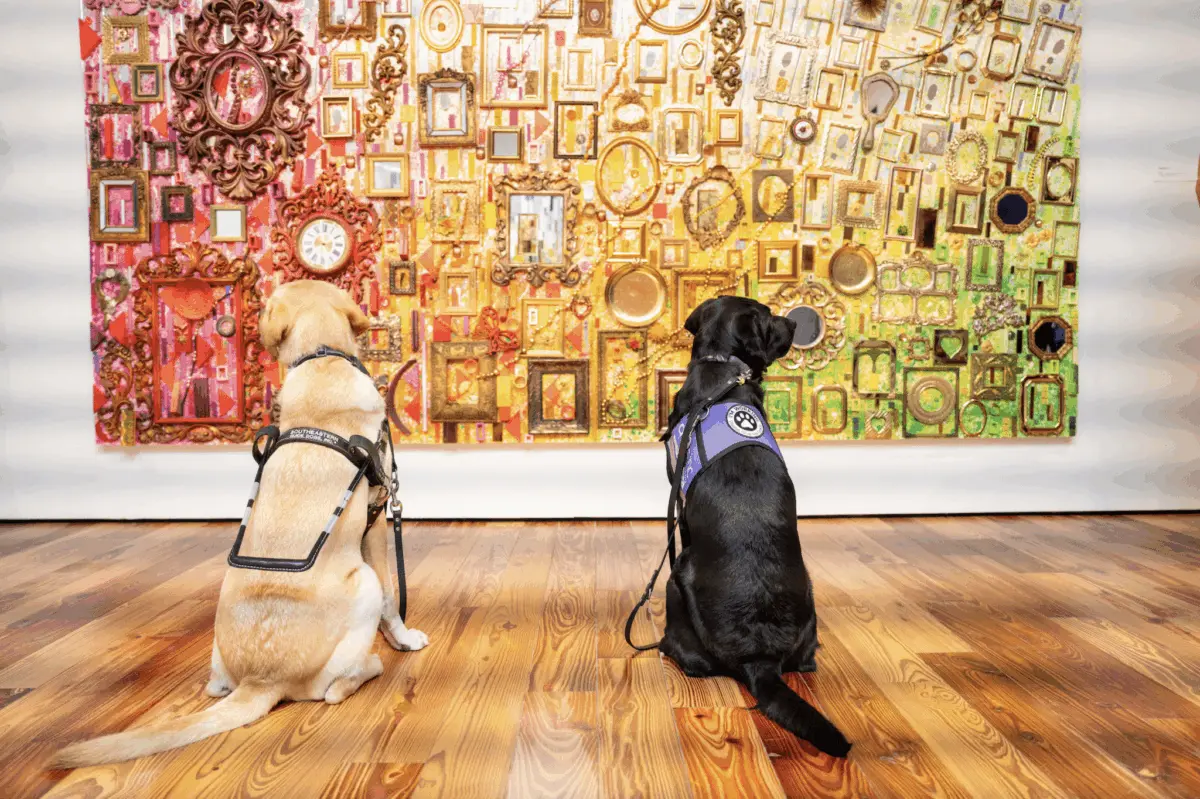
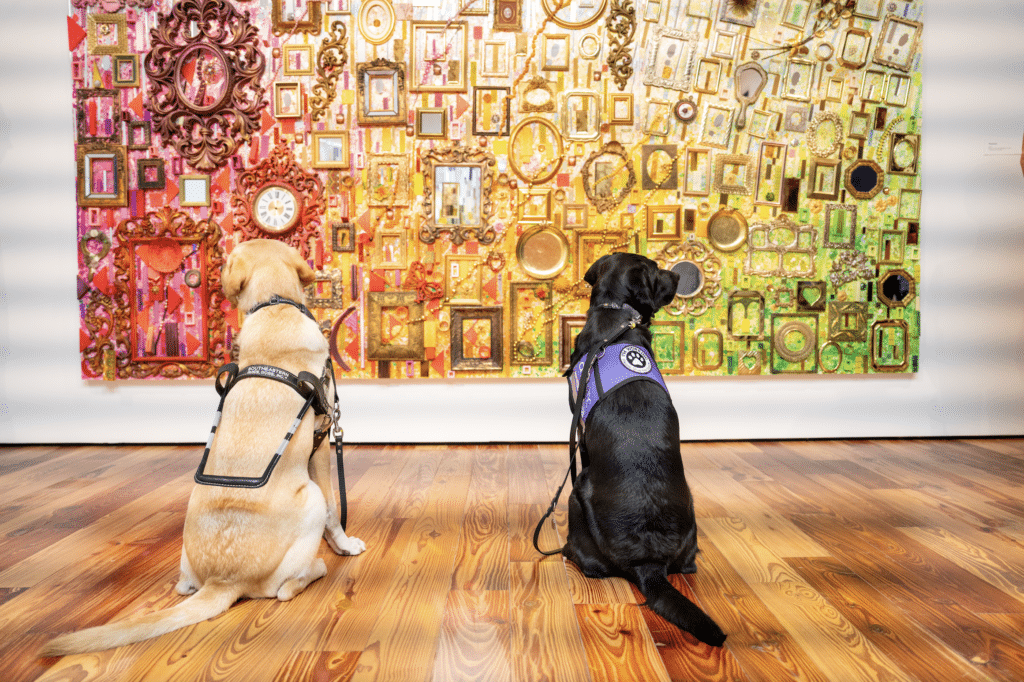
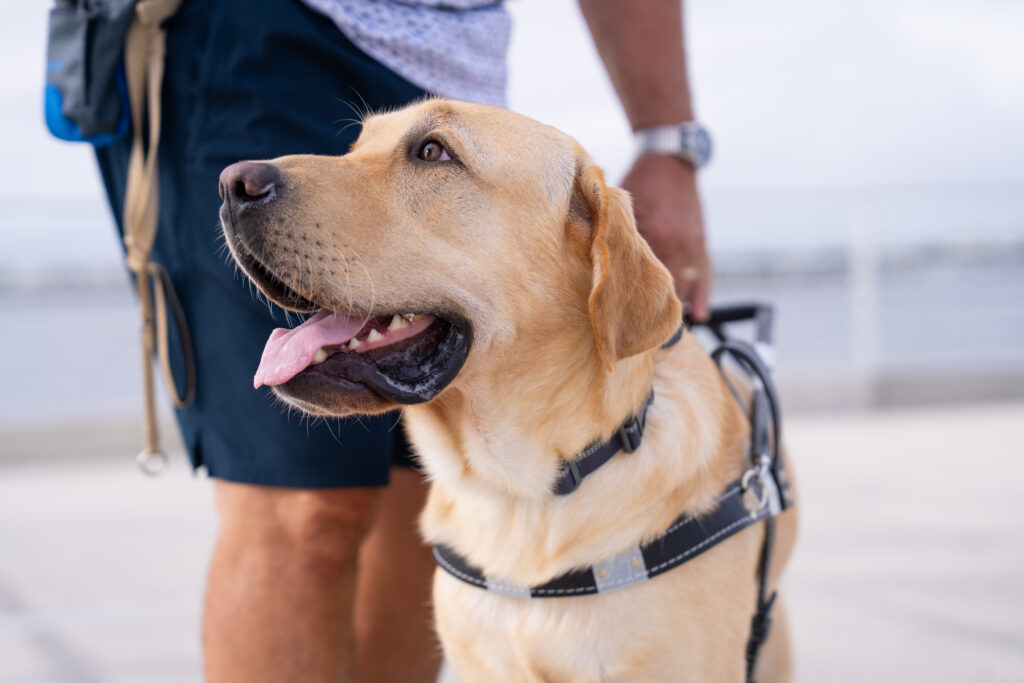
When the average person pictures a guide dog navigating a bustling crosswalk or a service dog quietly anchoring its handler in a crowded airport terminal, that mental image almost invariably features a Labrador Retriever. This is far from accidental. For decades, the Labrador Retriever has served as the undisputed cornerstone of assistance and guide dog programs worldwide, earning a reputation for unmatched reliability, exceptional trainability, and an innate desire to collaborate with humans.
Organizations like Dogs Inc evaluate each candidate as an individual rather than relying purely on breed pedigree, yet the statistical and behavioral foundation provided by the Labrador Retriever consistently places it at the forefront of the working dog world. Combining an outgoing, people-oriented temperament with high emotional stability, physical resilience, and adaptability, the breed remains uniquely equipped for the rigorous demands of public access work. However, the path from a wiggly, high-energy puppy to a poised, life-changing assistance dog is far from guaranteed. It requires a meticulous blend of genetic health, early childhood development, structured positive reinforcement training, and a profound human-animal partnership. This report explores the multifaceted qualities that make Labrador Retrievers exceptional working dogs, examining the training methodologies, health considerations, and evaluation processes that define modern assistance dog programs.
Detailed Chronology: From Working Ancestry to Modern Assistance Icon
To understand why the Labrador Retriever excels in contemporary service roles, one must look backward through its evolutionary and working history. The breed’s lineage traces not to the warm sands of Labrador, Canada, as the name might imply, but rather to the rugged coastlines of Newfoundland.
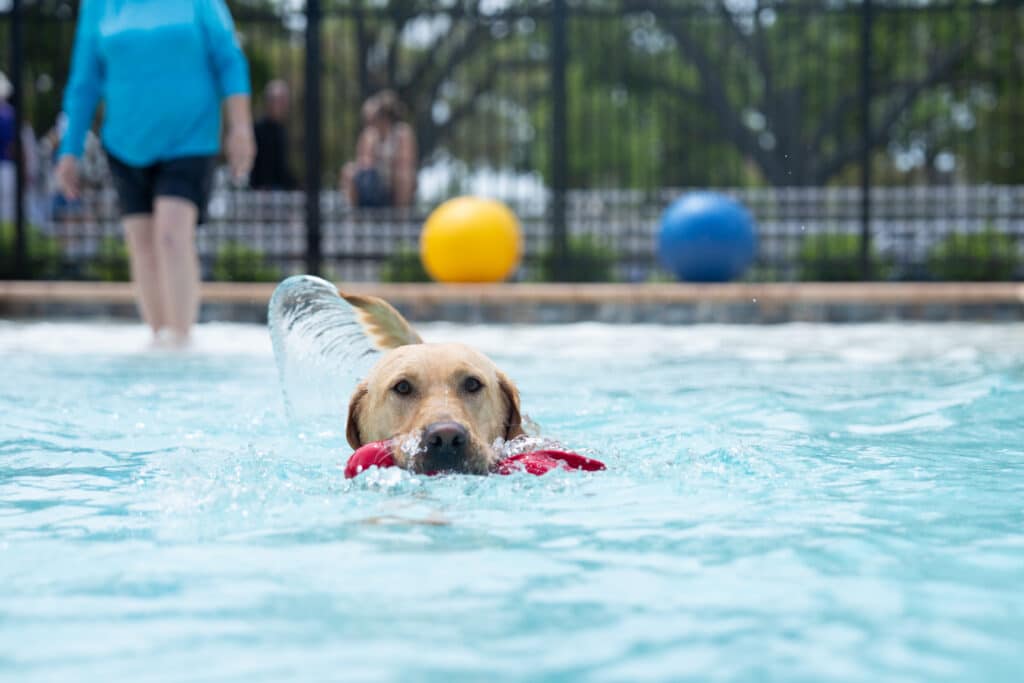
Pre-19th Century (The Foundation): The breed’s ancestors—most notably the Lesser Newfoundland (sometimes called the St. John’s Water Dog)—were developed by local fishermen. These dogs possessed a dense, water-resistant coat, webbed paws, and an indefatigable work ethic. Their primary duty was leaping into freezing North Atlantic waters to retrieve escaped fish, haul floating nets back to shore, and pull lines between boats. This background forged a dog physically and mentally wired for endurance, responsiveness to human cues, and water retrieval.
The 19th Century (Importation and Refinement): English sportsmen visiting Canada—notably the Earl of Malmesbury and the Duke of Buccleuch—recognized the extraordinary utility and gentle demeanor of these dogs. They imported them to Great Britain, where they were selectively bred with other sporting dogs to refine their hunting, tracking, and retrieving capabilities. The focus shifted slightly from maritime labor to upland game hunting, cementing the "soft mouth"—the ability to retrieve game without damaging it—as a hallmark trait.
Mid-20th Century (The Rise of the Guide Dog): As the modern guide dog movement took shape following World War I and World War II, organizations recognized that military veterans and civilians with visual impairments required dogs with exceptional focus, emotional stability, and public-access manners. While German Shepherds were initially common, Labrador Retrievers quickly gained favor due to their friendly public demeanor, lack of aggressive guard tendencies, and high trainability.
Late 20th Century to Present (Diversification of Service Roles): As the Americans with Disabilities Act (ADA) and similar global legislation expanded legal access for service animals, the scope of working dogs expanded dramatically. Beyond guiding individuals who are blind or visually impaired, dogs were trained to mitigate mobility impairments, alert to medical conditions like diabetes or cardiac episodes, and assist individuals with post-traumatic stress disorder (PTSD). Throughout this expansion, the Labrador Retriever adapted seamlessly, proving that its psychological and physical resilience could handle diverse, complex tasks across medical, corporate, and public settings.
Supporting Context & Metrics: Defining the Ideal Service Dog Temperament
What precisely defines a great guide or service dog? The answer lies in a complex psychological profile often summarized as "assistance dog temperament." Unlike pet dogs, which are permitted to react naturally to environmental stressors, working dogs must maintain absolute composure under extreme duress.
The Psychological Profile of a Working Dog
A successful candidate must demonstrate:
Emotional Stability: The capacity to remain calm and unshakeable in chaotic environments—such as crowded subway platforms, screaming sports arenas, or sirens wailing in city centers.
Rapid Recovery: The ability to bounce back immediately from unexpected disturbances (e.g., a dropped tray in a restaurant, a sudden loud vehicle backfire, or an intrusive approach by an untrained pet).
Task Focus: The drive to execute multi-step commands and maintain situational awareness without becoming distracted by food scraps, other animals, or unfamiliar humans.
Adaptive Problem Solving: The intelligence to employ "intelligent disobedience"—knowing when to refuse a handler’s command (such as stepping forward into a crosswalk when an oncoming car fails to stop).
Breed Demographics and Popularity Metrics
According to American Kennel Club (AKC) data spanning decades, the Labrador Retriever has maintained an unprecedented streak as America’s most popular dog breed. This widespread availability allows organizations to source healthy stock with predictable genetic backgrounds.
Furthermore, data from international assistance dog certifying bodies indicates that Labradors, along with Golden Retrievers and crosses of the two, make up the vast majority of operational guide and mobility-support dogs. Their physical dimensions—typically standing 21 to 24 inches tall and weighing between 55 and 80 pounds—hit a physiological "sweet spot." They are large enough to brace a falling adult or clear paths through crowds, yet compact enough to tuck neatly under an airline seat or restaurant table.
Official Statements and Institutional Perspectives: The Dogs Inc Approach
Organizations dedicated to breeding and training elite assistance animals emphasize that while breed genetics provide a strong baseline, individual assessment remains paramount.
"While many breeds possess wonderful qualities, Labrador Retrievers consistently demonstrate a unique combination of emotional resilience, eagerness to please, and environmental adaptability," notes an animal behavior specialist at Dogs Inc. "However, a breed name is never a guarantee. Every single dog that enters our program undergoes rigorous, continuous evaluation from puppyhood through adulthood to ensure they possess the individual fortitude required for life-changing partnership work."
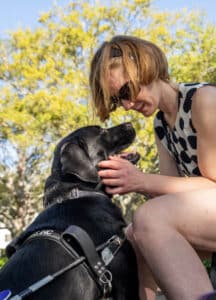
According to institutional training philosophies, the human-animal bond is not merely a byproduct of training; it is the engine that drives it. Guide and service dogs operate as autonomous decision-makers while simultaneously remaining deeply attuned to their handlers’ subtle physical shifts, vocal tones, and emotional states.
Institutions stress that modern service dog preparation relies heavily on positive reinforcement. Coercive training methods are entirely counterproductive in assistance work because a working dog must want to partner with its human out of trust and intrinsic motivation, rather than fear of correction. This philosophy aligns perfectly with the Labrador Retriever’s natural eagerness to engage and collaborate with people.
The Developmental Journey: From Puppyhood to Public Access
The transformation of a Labrador Retriever puppy into a fully certified assistance dog is a multi-year investment in education, socialization, and health monitoring.
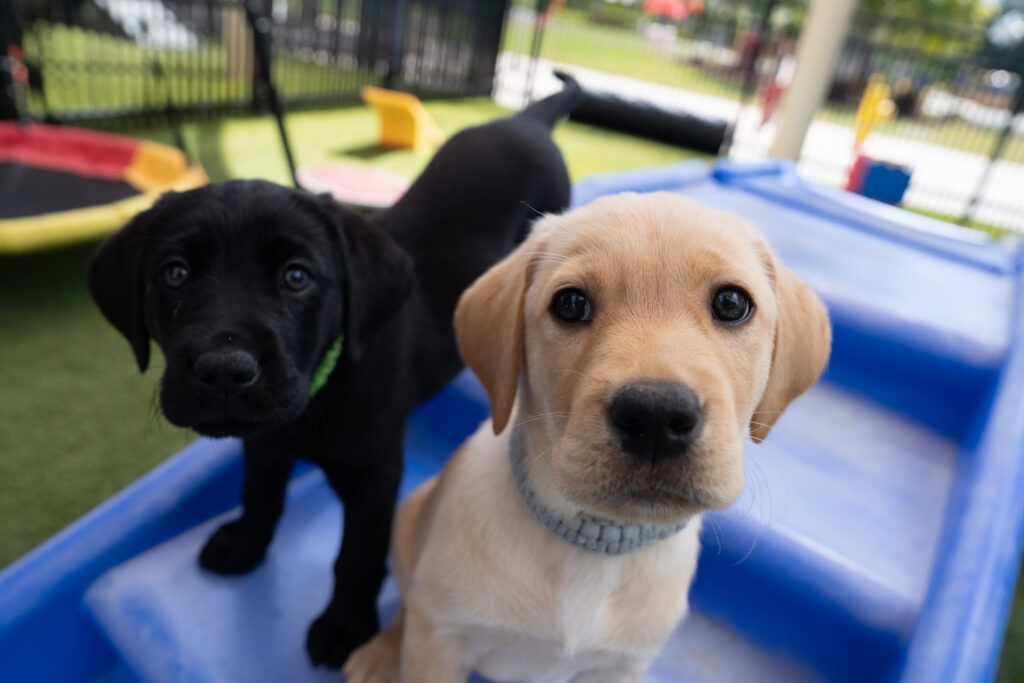
Early Socialization and Puppy Raising
The journey begins at just a few weeks of age. Future service dogs are exposed to a carefully curated matrix of sensory inputs:
Surfaces: Walking over grates, gravel, metal stairs, slick tile, and squishy turf.
Socialization: Positive encounters with diverse human populations—including children, individuals using mobility aids, people wearing hats or beards, and other animals.
Volunteer "Puppy Parents" play a vital role during this first year of life. They teach foundational house manners—such as crate training, house-breaking, and impulse control—while escorting the adolescent Lab into grocery stores, public transit networks, and professional workplaces.
[Breeding & Health Screening]
       ↓
[Early Puppyhood & Sensory Exposure (Weeks 1-16)]
       ↓
[Volunteer Puppy Raising & Public Access Training (Months 2-12)]
       ↓
[Advanced Professional Training & Task Specialization (Months 12-24)]
       ↓
[Final Comprehensive Behavioral Evaluation]
       ↓
[Handler-Dog Team Matching & Graduation]
Advanced Training and Task Specialization
As the dog approaches maturity (around 12 to 18 months), it returns to campus for advanced, professional instruction. Here, training diverges based on the dog’s designated career path:
Guide Dogs: Focus heavily on directional control, obstacle evasion (ensuring both handler and dog clear overhangs or construction barriers safely), curb checks, and intelligent disobedience.
Service Dogs: Focus on specialized physical mitigation tasks—such as retrieving dropped items, pulling wheelchairs, opening heavy doors, alerting to medical alarms, or providing deep pressure therapy during anxiety episodes.
It is worth noting that Labrador Retrievers maintain a notoriously playful, juvenile mindset well into their third year of life. Canine instructors must expertly balance this exuberant puppy energy with the absolute professionalism required during working hours.
The Health and Wellness Imperative
A service dog’s career typically spans 8 to 10 years, making physical soundness a critical selection criterion. Ethical breeding programs enforce stringent health screenings to mitigate hereditary conditions common to the breed, including:
Hip and Elbow Dysplasia: Assessed via radiographic screening (OFA/PennHIP).
Progressive Retinal Atrophy (PRA): Monitored through genetic testing to prevent early-onset blindness.
Hereditary Myopathy and Exercise-Induced Collapse (EIC): Checked via DNA panels to ensure working stamina.
Maintaining optimal body condition scores, providing balanced nutrition, and offering mental enrichment are lifelong priorities that safeguard the health of these hardworking animals.
Future Outlook: The Ongoing Evolution of Canine Assistance
As society continues to evolve, the demand for highly trained assistance dogs is projected to rise significantly. Emerging fields of service work—ranging from psychiatric support and neurological disorder mitigation to specialized facility dogs working in hospitals and legal systems—require animals with unprecedented levels of adaptability.
The Labrador Retriever is exceptionally well-positioned to meet these future demands. Genetic selection programs are continually refining the breed’s emotional stability and stress-recovery metrics. Furthermore, advancements in behavioral science allow trainers to identify optimal working candidates earlier in puppyhood, reducing dropout rates and maximizing the efficiency of breeding programs.
Yet, despite technological advancements in mobility aids and navigational tools, nothing can replicate the sentient, intuitive partnership offered by a well-trained Labrador Retriever. As long as humans require assistance, independence, and companionship in navigating an increasingly complex world, the loyal, steady presence of the Lab will remain the gold standard against which all other working dogs are measured.