
Executive Overview
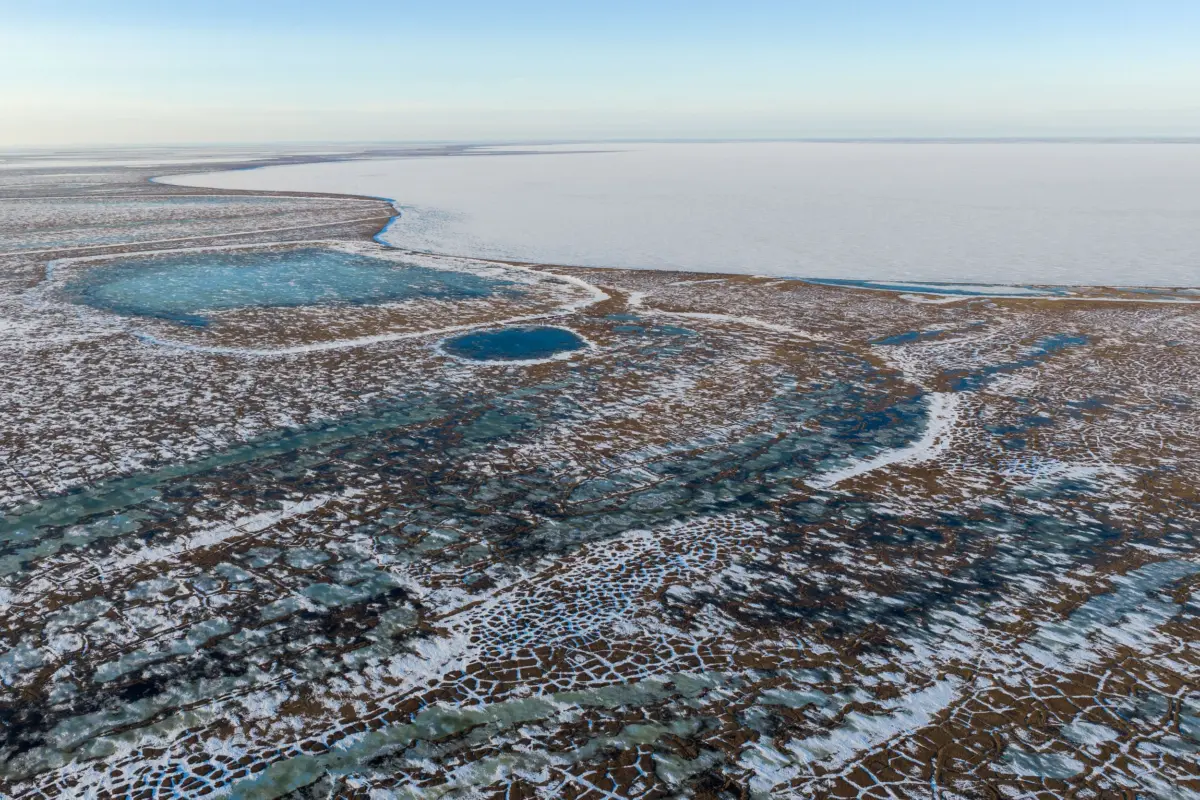
Deep within the remote, flat, and wind-scoured expanse of the Alaskan Arctic lies an ecological sanctuary so vital to global biodiversity that its loss would trigger shockwaves across migratory bird populations worldwide. Teshekpuk Lake—a vast, labyrinthine network of wetlands formed by meltwater pooling atop an ancient permafrost layer—is one of the most critical bird-breeding grounds on the planet. Yet, despite its monumental ecological significance, it remains virtually unknown to the general public.
For conservation photographer Gerrit Vyn, this anonymity is both a tragedy and a call to action. Venturing repeatedly into a landscape defined by swarms of mosquitoes, bone-chilling dampness, and grueling physical isolation, Vyn has dedicated a significant portion of his career to capturing the ephemeral beauty of the Teshekpuk wetlands. In June, Vyn returned for an arduous seven-week expedition, enduring the raw, unforgiving elements of the northern wild to document what is at stake for a sensitive ecosystem facing an unprecedented industrial threat.
That threat is no longer theoretical. Teshekpuk Lake sits at the northeastern corner of the National Petroleum Reserve–Alaska (NPR-A)—the single largest tract of public land in the United States, spanning roughly 23 million acres. Originally established by executive order in 1923 as an emergency petroleum reserve for the U.S. Navy, the NPR-A has increasingly become a frontier for commercial oil and gas extraction.
Following policy shifts that opened more than 80 percent of the reserve to fossil fuel development, and subsequent federal lease sales that auctioned off drilling rights across millions of acres of once-protected tundra, the Teshekpuk Lake Special Area is facing its gravest hour. With heavy machinery, seismic exploration, and potential drilling encroaching on delicate habitats, Vyn, alongside Indigenous leaders, wilderness guides, and conservation organizations like Audubon Alaska, is locked in a race against time. Armed with a camera lens, Vyn aims to give a voice to a globally significant landscape that has, for too long, existed "out of sight and out of mind."
Detailed Chronology of the Fight for Teshekpuk Lake
To understand the modern crisis at Teshekpuk Lake, one must trace the timeline of protection, policy shifts, and legal battles that have shaped the National Petroleum Reserve–Alaska over the past century.
1923–2013: Establishment and the Evolution of Special Areas
- 1923: Recognizing the strategic value of domestic oil reserves, President Warren G. Harding establishes Naval Petroleum Reserve No. 4 (later renamed the National Petroleum Reserve–Alaska, or NPR-A). Comprising millions of acres of pristine Arctic wilderness, the land is set aside primarily for future military energy needs rather than immediate commercial exploitation.
- Decades Following: As the energy demands of the United States shift, management of the NPR-A transfers from the U.S. Navy to the Department of the Interior’s Bureau of Land Management (BLM), transforming the region into a multiple-use public lands area where resource extraction coexists with wildlife conservation.
- The "Special Areas" Designation: Recognizing the extraordinary concentration of wildlife—including millions of migratory birds, caribou herds, and polar bears—the federal government designates five specific zones within the NPR-A as "special areas," granting them heightened protections against disruptive industrial activities. The massive network of wetlands surrounding Teshekpuk Lake is chief among these protected sanctuaries.
- 2013: Following extensive advocacy by Audubon Alaska and a coalition of conservation groups, the Obama administration implements an Integrated Activity Plan that doubles the size of the Teshekpuk Lake Special Area, expanding its protected footprint to an immense 3.65 million acres to safeguard crucial caribou calving grounds and waterfowl habitats.
2018–2024: Policy Reversals and Escalating Industrial Pressure
- 2018: Commercial crude oil begins flowing from federal leases within the NPR-A, signaling the dawn of a new industrial era in the Western Arctic. While strict guardrails and special area boundaries continue to provide a buffer, the presence of heavy infrastructure expands northward.
- The Previous Administration: In a sweeping policy reversal, federal authorities open more than 80 percent of the 23-million-acre reserve to oil and gas leasing, gutting previous protections and rolling back the boundaries that shielded sensitive ecological zones.
- March Lease Sales: Federal lease sales auction off drilling rights across a staggering 1.3 million acres of the NPR-A. Crucially, a significant portion of these newly acquired parcels overlaps with the once-inviolable wetlands surrounding Teshekpuk Lake.
- Congressional Mandates and Litigation: The massive NPR-A lease auction marks the first of five mandated lease sales stemming from recent federal legislation. In response, a coalition of environmental organizations, conservation advocates, and an Iñupiat nonprofit file multiple lawsuits. These legal challenges successfully secure a temporary federal court injunction, putting several contested leases on hold while the legal battle over environmental review and Indigenous subsistence rights plays out.
Supporting Context & Metrics: An Irreplaceable Global Ecosystem
The ecological weight carried by the Teshekpuk Lake wetlands cannot be overstated. While the general public pictures the Arctic as a frozen, barren wasteland, the short summer season transforms the North Slope into a biological engine of staggering proportions.
Avian Biodiversity Hub
Teshekpuk Lake is arguably the single most important piece of real estate for migratory shorebirds in the Western Hemisphere.
- 600,000 Shorebirds: Every spring, roughly 600,000 shorebirds converge on the wetlands to nest, feed, and raise their young.
- Global Reach: Birds arrive from every continent on Earth except Antarctica, utilizing the Arctic flyways as an evolutionary safe haven where endless summer daylight and abundant insect populations provide ideal conditions for breeding.
- Waterfowl Molting Grounds: Up to 100,000 geese molt in the Teshekpuk area every summer. This population includes major concentrations of Greater White-fronted Geese, Brant, Cackling Geese, and Snow Geese, which rely on the relative safety of the lake’s open waters and rich vegetation while flightless during their annual feather replacement.
Megafauna and Indigenous Sustenance
Beyond avian life, the Teshekpuk Lake Special Area serves as a linchpin for iconic Arctic mammals and the human communities that depend on them:
- The Teshekpuk Caribou Herd: Numbering in the tens of thousands, this herd relies on the breezy, insect-relief grounds and calving areas surrounding the lake. The caribou are not only a marvel of wildlife adaptation but also the cultural and nutritional lifeblood of local Indigenous communities, sustaining subsistence hunters for generations.
- Polar Bear Denning: The coastal and wetland fringes of the region provide vital maternal denning habitat for polar bears, a species already severely threatened by diminishing sea ice due to global climate change.
The Threat of Seismic Exploration
Even before a single drill rig breaks the surface soil, the process of oil and gas exploration inflicts deep ecological wounds. Seismic testing requires heavy industrial vehicles—such as massive, tracked "vibroseis" trucks—to traverse the fragile tundra. These vehicles compress the permafrost, crushing delicate mosses, lichens, and dwarf shrubs that can take decades, if not centuries, to recover. When the permafrost melts and collapses beneath these tracks, it leaves permanent scars on the landscape, altering hydrology and disrupting delicate wetland ecosystems.
Official Statements and Expert Perspectives
As the future of the Teshekpuk Lake Special Area hangs in the balance, conservation leaders, wilderness guides, and artists are raising their voices to sound the alarm.
"It’s by far the most important, ecologically critical piece of real estate in the country for migratory shorebirds. Here’s an incredibly important landscape, globally, for biodiversity—and nobody’s ever heard of it. It’s a place largely without a constituency."
— Gerrit Vyn, Conservation Photographer
Vyn’s sentiment is echoed by regional conservation experts who have spent decades tracking the degradation of Arctic protections. David Krause, Vice President of Audubon’s Alaska program, emphasizes the unprecedented nature of the current threat:
"It is irreplaceable and just absolutely imperative to migratory birds the world over. The Teshekpuk Lake Special Area has never been more endangered than it is now. Industrializing this sanctuary threatens not just local wildlife populations, but the interconnected web of life that stretches from the high Arctic down to the southern tips of South America."
— David Krause, VP of Audubon’s Alaska Program
Wilderness guide Michael Wald, whose expedition company outfitted Gerrit Vyn’s grueling seven-week trek into the heart of the wetlands, points out the unique challenge of protecting a place that exists entirely outside the public consciousness:
"When people think of Alaska, they think of Denali, Kenai Fjords, or the Arctic National Wildlife Refuge. Teshekpuk Lake is flat, buggy, remote, and utterly lacking in iconic mountain backdrops. Because it lacks widespread name recognition, it lacks a natural constituency of visitors. That makes it dangerously vulnerable to political backroom decisions that trade ecological integrity for short-term energy gains."
— Michael Wald, Wilderness Guide
Future Outlook: A Race to Save the Tundra
The legal and political battles over the National Petroleum Reserve–Alaska are far from over. While ongoing litigation led by Indigenous nonprofits and environmental coalitions has successfully frozen a portion of the contested oil and gas leases, the broader policy framework favoring fossil fuel extraction remains a persistent shadow over the region.
In the face of these formidable pressures, conservationists are shifting tactics. Traditional lobbying must now be paired with powerful visual storytelling to pierce the veil of invisibility that has historically protected—and endangered—Teshekpuk Lake.
This is where the work of photographers like Gerrit Vyn becomes essential. By translating the remote, buzzing, boggy magic of the Teshekpuk wetlands into striking, intimate imagery, Vyn hopes to build the constituency that the landscape so desperately lacks. When millions of citizens can look into the amber eyes of nesting shorebirds, watch flocks of brant rise off the pewter-gray surface of the lake, and witness the fragile majesty of the Arctic summer, the abstract concept of a "lease sale" transforms into the destruction of a living, breathing home.
As Vyn reflects on his decades behind the lens, his commitment to the region has only deepened:
"At this point in my career, that’s the place I want to invest my energy. If we lose Teshekpuk, we lose a foundational pillar of global biodiversity. We cannot afford to let that happen out of sight."
The coming years will determine whether America’s largest public land reserve can balance the insatiable demand for fossil fuels with the preservation of a globally irreplaceable sanctuary. For the 600,000 shorebirds, the calving caribou, and the wilderness advocates fighting on their behalf, the stakes could not possibly be higher.