
Executive Overview
The Platte River—a legendary lifeline winding across the American Great Plains—is facing an era of unprecedented hydrological stress. At the heart of this complex river system lies Lake McConaughy, Nebraska’s largest reservoir, which currently sits at a mere fraction of its capacity, hovering near historic lows not seen since 2004. Built in the 1940s to regulate spring snowmelt and secure reliable irrigation supplies for agricultural powerhouses, "Big Mac" now serves a far more intricate and demanding network of stakeholders. Today, the water impounded behind Kingsley Dam must balance the competing and vital needs of agricultural irrigation, hydroelectric power generation, municipal drinking water supplies, recreational economies, and crucial environmental flows.
Against the backdrop of intensifying climate change, prolonged droughts, and shifting weather patterns in the Rocky Mountain headwaters, the task of managing the Platte River has transformed into an exercise in high-stakes balancing. Water shortages no longer represent isolated seasonal challenges; they are emerging as structural crises threatening both human livelihoods and delicate ecosystems.
In response, conservation organizations, agricultural leaders, state agencies, and public utilities are being forced to rethink traditional management frameworks. Leading this charge is the National Audubon Society, alongside its partners in the Vision for an Ecologically Sound Platte River (VESPR) initiative. By launching proactive, climate-focused scenario planning sessions slated for late 2026 through the spring of 2027, stakeholders are attempting to pierce through the fog of climatic uncertainty. This comprehensive report explores the multifaceted challenges facing the Platte River Basin, detailing the intricate operations of Lake McConaughy, the ecological stakes for iconic migratory wildlife, and the collaborative strategies required to secure a resilient, water-secure future for both people and nature.
Detailed Chronology: From Infrastructure Roots to Modern Drought Realities
The Genesis of Modern Water Storage (1940s)
The modern hydrological identity of the Platte River was forged in the 1940s with the construction of Lake McConaughy and the Kingsley Dam. Designed to harness the volatile, seasonal flows of the North Platte River, the massive reservoir was engineered to capture peak spring runoff—fed by melting mountain snowpacks in Colorado and Wyoming—and store it for release during the scorching summer months when agricultural demand outpaced natural streamflows. For decades, this infrastructure provided a dependable buffer against the vagaries of weather, turning semi-arid plains into one of the most productive agricultural regions in the United States.
The 2004 Benchmark and Modern Receding Shorelines
For generations, fluctuations in reservoir levels were viewed as a normal operational cycle. However, severe multi-year droughts have tested the limits of these historical patterns. In 2004, Lake McConaughy plummeted to historic lows, exposing vast expanses of sandy lakebed and sparking regional concern over water security.
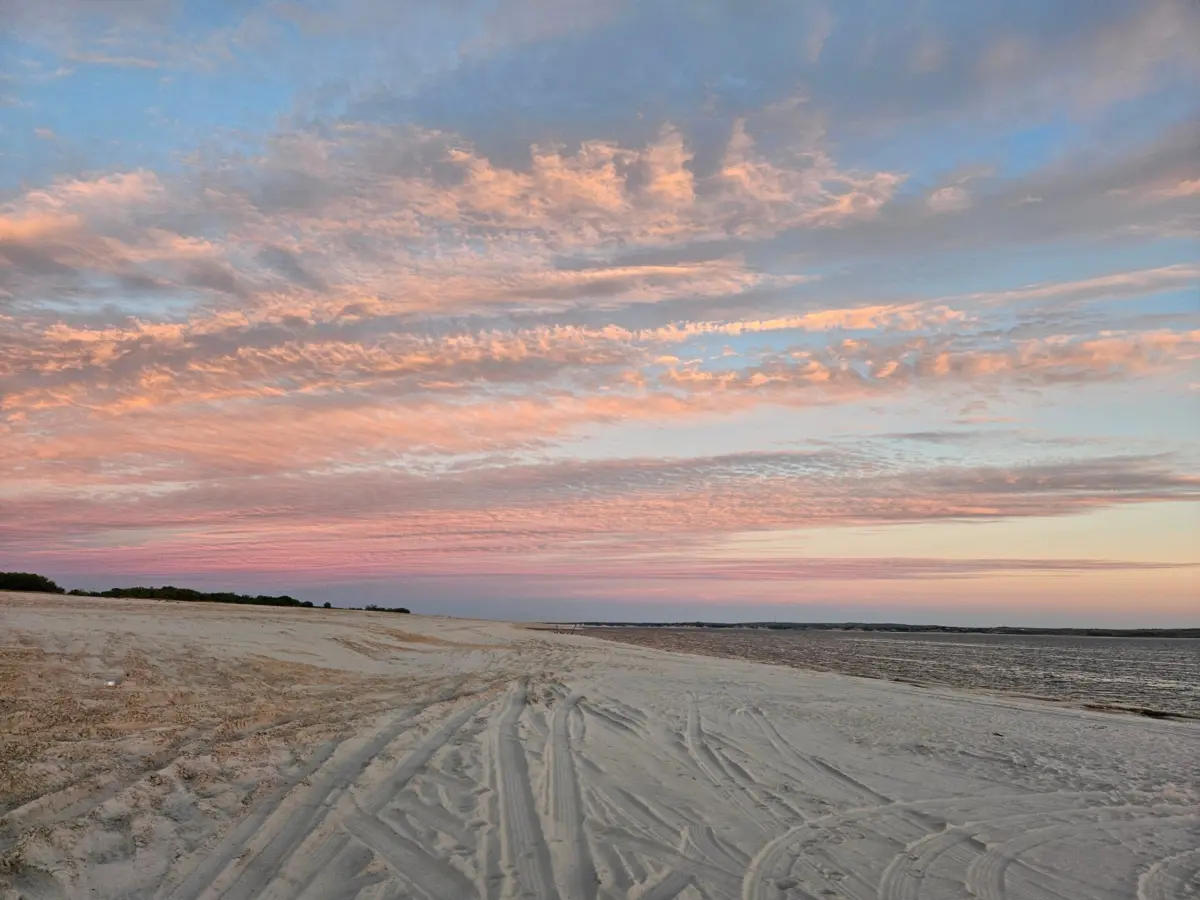
Following a wet late-summer meeting, environmental observers crossing the region noted a striking parallel: the reservoir was once again sitting at only a quarter of its total capacity. Standing on the expansive, newly exposed sandy beaches provides a jarring visual reminder of the immense volume of water missing from the system. This modern depletion highlights a troubling trajectory: recovery periods between severe droughts are shortening, and baseline water availability is trending downward.
The Multi-Use Evolution (Late 20th Century to Present)
Initially constructed primarily for irrigation and power production, Lake McConaughy’s operational mandate has expanded dramatically. Today, the reservoir is governed by a complex web of historic compacts, decrees, and modern agreements. Water released from the dam must simultaneously satisfy:
- Crop irrigation requirements across hundreds of thousands of acres of Nebraska farmland.
- Municipal water supplies for growing communities downstream.
- Hydropower generation facilities that feed regional energy grids.
- Recreational tourism, which drives local economies surrounding the lake.
- Environmental accounts dedicated to preserving endangered species habitats along the Central Platte River.
Managing these competing priorities during normal water years is challenging; during prolonged droughts, it becomes a zero-sum game that demands unprecedented levels of inter-agency cooperation.
Supporting Context & Metrics: The Ecology, Economy, and Hydrology of the Platte
The Snowpack Indicator and Upstream Dynamics
The hydrological fate of the Central Platte River is inextricably linked to geography hundreds of miles away. The winter snowpack accumulating in the high-elevation peaks of the Rocky Mountains in Colorado and Wyoming serves as the ultimate leading indicator for Nebraska’s water supply. When winter snow accumulations fall below average, water managers bracing for spring and summer immediately know that Lake McConaughy will receive diminished inflows.
This reliance on distant headwaters introduces profound vulnerability. Climate models project that warming temperatures in the Rockies will cause earlier snowmelt, reduce total snowpack accumulation, and increase winter precipitation as rain rather than snow. Consequently, the traditional spring pulse that historically filled Lake McConaughy is arriving earlier and less predictably, disrupting decades-old operating assumptions.
The Environmental Account and Ecosystem Health
A critical component of modern Platte River management is the Environmental Account (EA)—a designated, albeit small, portion of the water stored in Lake McConaughy managed specifically to support threatened and endangered species along the Central Platte.
Unlike irrigation releases that spike during the summer growing season, Environmental Account releases are strategically timed to sustain the riverine ecosystem year-round. These flows maintain the river’s dynamic geomorphology, scour vegetation from active channels, and support the complex aquatic food web—including fish, macroinvertebrates, and riparian vegetation—upon which countless migratory birds depend.
The Million-Bird Migration and the $28 Million Ecotourism Engine
Perhaps the most visible beneficiaries of a healthy Platte River are the migratory birds that traverse the Central Flyway each spring. Most notably, more than one million Sandhill Cranes—representing roughly 80% of the world’s population—converge on the Platte River valley to fuel up on leftover corn and aquatic invertebrates before continuing their journey to northern breeding grounds.
Healthy river flows maintain wide, open sandy channels where these cranes can safely roost at night. Standing knee-deep in the water provides the birds with a natural defense mechanism, offering an early-warning system against mammalian predators and allowing them to conserve the precious physiological energy required for long-distance migration.
The ecological health of the Platte River is thus directly mirrored in the region’s economic vitality. A recent comprehensive economic analysis reveals that the spring Sandhill Crane migration alone generates a staggering $28 million ecotourism industry along the Central Platte. From hotels and restaurants to guided photography tours and wildlife education centers, local communities rely heavily on the ecological integrity of the river system. A depleted river risks not only ecological collapse but also severe economic fallout for rural Nebraska.
Official Statements and Stakeholder Perspectives
As the reality of climate change sets in, institutional voices across the agricultural, conservation, and regulatory sectors are increasingly aligned on the necessity of proactive adaptation.
The Conservation Perspective:
Conservation organizations, led by groups like the National Audubon Society, emphasize that waiting for a catastrophic crisis is no longer a viable management strategy. Environmental advocates point out that crossing critical ecological and socioeconomic thresholds—points of no return where native species populations collapse or agricultural operations become entirely economically unviable—must be actively avoided.
“When water shortages affect both people and ecosystems, we need to think ahead about how to avoid crossing over critical ecological and socioeconomic thresholds from which recovery becomes increasingly difficult,” noted regional conservation representatives following recent watershed evaluations.
The Collaborative Imperative:
State water administrators, irrigation districts, and public power districts have long operated under rigid, historical legal frameworks. However, the severity of recent droughts has fostered a cultural shift toward collaborative problem-solving. Water managers increasingly recognize that no single sector—whether agriculture, urban centers, or environmental advocates—can unilaterally dictate terms during a water shortage. The recognition of mutual vulnerability has opened doors to joint scenario-planning exercises that cross traditional ideological and operational divides.
The Economic Realist View:
Agricultural representatives and municipal leaders stress that any future water management framework must protect economic productivity. Food security and rural community survival depend on predictable irrigation water rights. Therefore, modern discussions emphasize efficiency, technological upgrades in irrigation, rotational fallowing agreements, and voluntary water-sharing markets rather than top-down mandates.
Future Outlook: Climate Vulnerability and the VESPR Scenario Planning Initiative
The Growing Threat of Western Aridification
The western Platte River Basin is projected to experience longer, hotter, and more severe droughts in the coming decades. Climate change acts as a threat multiplier, increasing evapotranspiration rates, lowering soil moisture, and intensifying competition for every drop of water in the system. Without strategic intervention, the gap between water supply and water demand will widen significantly.
The VESPR Initiative and Scenario Planning (2026–2027)
Recognizing that traditional reactive responses are inadequate for the challenges of the 21st century, Audubon and its partners in the Vision for an Ecologically Sound Platte River (VESPR) initiative are spearheading a major, forward-looking resilience effort.
Beginning in late 2026 and extending through the spring of 2027, the VESPR partners will initiate a comprehensive, climate-focused scenario planning process. This initiative is designed to bring together a diverse coalition of stakeholders representing:
- Agriculture: Farmers and irrigation district managers who understand crop water demands and on-farm efficiency.
- Power Generation: Public utility operators balancing hydropower generation needs with cooling water requirements.
- Municipalities: City planners and community leaders securing long-term drinking water supplies.
- Wildlife Conservationists: Biologists and advocates safeguarding habitats for endangered species and migratory birds.
- River Science: Hydrologists modeling streamflow dynamics, groundwater interactions, and climate projections.
Piercing the Clouds of Uncertainty
Scenario planning is not about predicting the exact future; rather, it is about preparing for a spectrum of plausible futures. By constructing rigorous, data-driven simulations of extreme drought scenarios, economic shifts, and regulatory changes, decision-makers can stress-test current management policies before a crisis forces their hand.
These planning sessions aim to:
- Identify vulnerable thresholds across both ecological and human systems.
- Test the flexibility of existing water-sharing agreements and infrastructure operations.
- Formulate innovative, collaborative adaptation strategies—such as optimized environmental flow timing, aquifer recharge projects, and voluntary conservation incentives.
- Build enduring trust and communication channels among historically siloed water user groups.
Conclusion
The Platte River is more than a waterway; it is a complex socio-ecological engine that sustains human communities, multi-million-dollar economies, and globally significant wildlife migrations. While the sight of Lake McConaughy sitting at a quarter of its capacity serves as a sobering reminder of the vulnerabilities inherent in a changing climate, it also acts as a catalyst for action. Through unprecedented collaboration, rigorous science-based tools like scenario planning, and a shared commitment to regional resilience, stakeholders in the Platte River Basin are working to ensure that the river continues to flow—supporting both birds and people—for generations to come.