
Executive Overview
The global agricultural technology (agtech) sector is currently navigating a prolonged and complex investment downturn. For years, early-stage start-ups relied heavily on the traditional venture capital (VC) model—a framework built on rapid scaling, software-like burn rates, and exponential returns. However, agriculture operates on a fundamentally different timeline dictated by biological seasons, complex supply chains, and narrow profit margins. This mismatch has left countless innovative companies stranded in the notorious "valley of death": needing massive amounts of capital long before they can demonstrate meaningful commercial revenues.
Yet, a structural evolution is quietly taking root. According to Dr. Belinda Clarke, director of Agri-TechE—an organization connecting farmers, growers, researchers, entrepreneurs, and investors—a dynamic new funding mix is emerging. Rather than relying solely on traditional VC pipelines, agtech start-ups are increasingly benefiting from a sophisticated blend of public sector grants, targeted private capital, and direct, hands-in-the-pocket involvement from major food retailers and supply chain actors.
This multi-pronged financial ecosystem is beginning to alter how agricultural innovation is funded, de-risked, and commercialized. From the UK government’s unprecedented alignment between the Department for Environment, Food and Rural Affairs (Defra) and Innovate UK, to major supermarket anchors like Tesco backing multi-million-pound food innovation funds, the agtech industry is moving away from the "grant junkie" mentality. Instead, it is pivoting toward a collaborative model that prioritizes early revenue generation, practical on-farm integration, and sustainable supply chain resilience.
Detailed Chronology: The Evolution of Agtech’s Financial Landscape
To understand how the agtech funding ecosystem reached its current crossroads, it is necessary to examine the historical trajectory of agricultural investment and the recent catalysts driving change.
Phase 1: The Venture Capital Boom and the Reality Check
During the height of the zero-interest-rate era, venture capital flooded into agtech, driven by enthusiasm for vertical farming, automated machinery, and AI-driven crop intelligence. Investors accustomed to software-as-a-service (SaaS) margins applied high-growth expectations to hardware-heavy, biologically bound companies.
Inevitably, friction occurred. Hardware prototypes take years to build and test; biological trials require whole growing seasons to yield data. When macroeconomic conditions tightened and interest rates rose, venture capital funding sharply contracted. Start-ups that had not yet achieved commercial viability found themselves unable to secure follow-on funding rounds, exposing the vulnerabilities of relying on a single, homogenous source of capital.
Phase 2: Strengthening the Public Purse
Recognizing the systemic risk of a collapsing agtech start-up ecosystem, public funding bodies stepped into the breach, particularly in the United Kingdom. Over recent years, public investment in agtech has reached unprecedented heights.
The turning point was not merely the volume of money injected into the market, but the strategic coordination behind it. Historically, public grants were siloed, bureaucratic, and difficult for early-stage entrepreneurs to navigate. Recently, however, initiatives like the Farming Innovation Programme have bridged the gap between academic research and commercial application. The close cooperation between Defra and Innovate UK has created a robust pre-seed de-risking framework, allowing fledgling companies to test radical ideas without immediately ceding equity or succumbing to financial insolvency.
Phase 3: Supply Chain Actors Step Out of the Shadows
While public grants provide vital oxygen for early-stage R&D, they are not designed to scale commercial operations globally. This is where the most significant modern shift has occurred: the direct engagement of major food retailers, processors, and supply chain intermediates.
For a long time, large corporate players in the food system maintained an arms-length relationship with agtech innovators, preferring to buy proven solutions rather than invest in unproven start-ups. That reluctance has evaporated. Driven by escalating corporate commitments to reduce greenhouse gas emissions—particularly Scope 3 emissions embedded deeply within agricultural supply chains—retailers are adopting proactive investment strategies.
A prime illustration of this evolution occurred with the announcement that Tesco, the UK’s largest supermarket chain, became the anchor investor in Henry Dimbleby’s £100 million Bramble food innovation fund. By putting skin in the game, major retailers are signaling a departure from passive observation to active co-creation of the food system.
Supporting Context & Metrics: The Anatomy of Modern Agtech Funding
Analyzing the current state of agtech investment requires looking closely at the specific mechanisms and vehicles redefining the market. The modern funding continuum can be broken down into distinct pillars, each serving a precise function in a company’s lifecycle.
The Modern Agtech Funding Continuum
| Funding Source | Primary Stage | Core Objective | Risk Profile | Example / Mechanism |
|---|---|---|---|---|
| Public Grants & ARIA | Pre-Seed / R&D | De-risking "wild" or foundational science | Very High | Innovate UK, Defra Farming Innovation Programme, ARIA |
| Supply Chain & Retail | Seed / Series A | Solving specific operational / ESG challenges | Moderate-High | Tesco anchoring the £100m Bramble fund |
| Angel Investors & Syndicates | Early Growth | Mentorship, regional network access, bridge capital | Moderate | Regional investor networks, Agri-TechE platforms |
| Traditional Venture Capital | Scale-Up | Rapid market expansion, global commercialization | High (Commercial) | Institutional VC funds looking for hyper-growth |
The Public vs. Private Dilemma: Striking the Balance
Public funding agencies face a perennial strategic conundrum: should government money be distributed widely across a vast portfolio of ideas to catch unexpected breakthroughs, or should it be concentrated narrowly on major national priorities like soil health, water security, and net-zero farming?
Dr. Belinda Clarke points out that neither extreme offers a complete solution. "The public purse has a difficult line to tread between salami slicing across too many ventures, but also then excluding supporting some of those that are really doing something very innovative, but might not be bang on message in terms of a huge strategic priority," she notes.
Agencies like the Advanced Research and Invention Agency (ARIA) represent one end of the spectrum, designed to fund high-risk, high-reward "wild" science that traditional investors would never touch. Meanwhile, broad-based agricultural innovation programs provide wider safety nets for early-stage entrepreneurs.
Bespoke Corporate Criteria vs. Generalist VC
Corporate investors operate under a different set of incentives than traditional VCs. While a venture capitalist looks primarily for financial return and rapid equity valuation growth, a supply chain actor—such as a food manufacturer or supermarket—evaluates start-ups based on bespoke criteria.
A corporate investor might be laser-focused on post-harvest storage innovations, shelf-life extension technologies, or specific methodologies for reducing methane emissions in dairy cattle. Because their commercial interests align with solving these exact operational bottlenecks, they can offer start-ups something money alone cannot buy: immediate access to pilot farms, distribution networks, and guaranteed first customers. This dynamic enables start-ups to demonstrate meaningful commercial revenues much earlier in their lifecycle, shielding them from the chronic fundraising treadmill.
Official Statements and Industry Insights
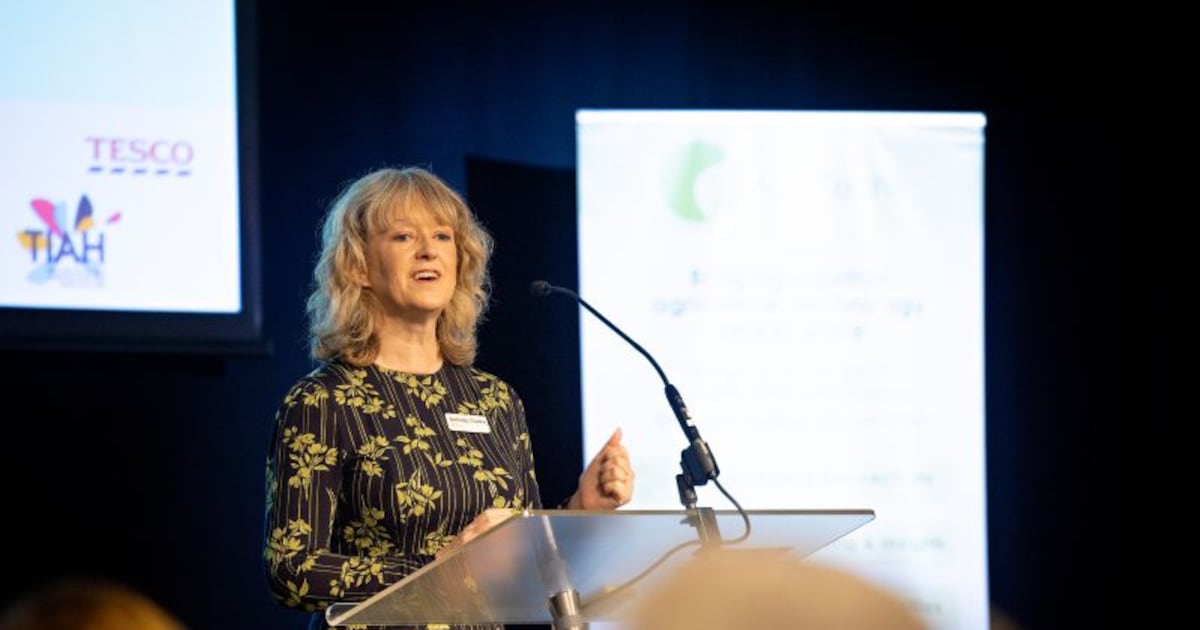
The insights emerging from Agri-TechE’s annual Focus on Finance event—held at NIAB in Cambridge—underscore a broader philosophical shift in how agricultural innovation is conceptualized and financed.
Reflecting on the turbulent investment climate, Dr. Belinda Clarke pulled no punches during her interview with AgNavigator:
"There’s no sugarcoating the fact that it is a tough investment environment. But seeing the big supply chain players—not just Tesco, others are doing the same, leaning in, getting engaged with those innovators—I think is providing potentially a different model than the traditional VC model. What it’s enabling those companies to do is potentially demonstrate revenues earlier, which is obviously good for everybody, and it’s weaning them off being a grant junkie."
Detailing the intent behind Agri-TechE’s flagship finance showcase, Clarke emphasized the importance of laying out the entire financial toolkit for growing ventures:
"This is our annual event to showcase the public, private, non-dilutive debt, all the different types of finance that are around for growing ventures in agri-tech and agri-food. We try and show the entrepreneurs the raft of funding and financing that’s available throughout their growth journey, right up to VC."
On the unprecedented nature of the UK’s public funding environment, Clarke observed:
"I think we have probably never had it so good in terms of investment from the public purse into agritech. It’s quite unprecedented that we have Defra and Innovate UK both coming together to support that early kind of pre-seed de-risking piece."
Addressing the changing posture of downstream agricultural companies, Clarke highlighted a newfound under-the-radar ambition:
"For a while, they didn’t want to put their hands in their pockets, but we’re certainly seeing some under-the-radar ambition of the supply chain partners to engage with technology companies and innovation companies that will help their suppliers. I don’t think they’re influencing the type of innovation particularly, but what I would say is that they probably have a more bespoke set of criteria."
Future Outlook: Integration, Practicality, and the Next 12 Months
As the agtech sector looks toward the future, the prevailing wisdom among industry leaders is shifting away from silver-bullet technologies toward cohesive system integration.
Evolution, Not Revolution: The Rise of "Shovel-Ready" Tech
For years, technology developers marketed disruptive solutions that required farmers to fundamentally overhaul their operations, learn complex software dashboards, or alter long-established workflows. Predictably, adoption rates lagged. Farmers operate under immense time, labor, and financial pressures; they have little appetite for downtime caused by unproven, overly complex machinery.
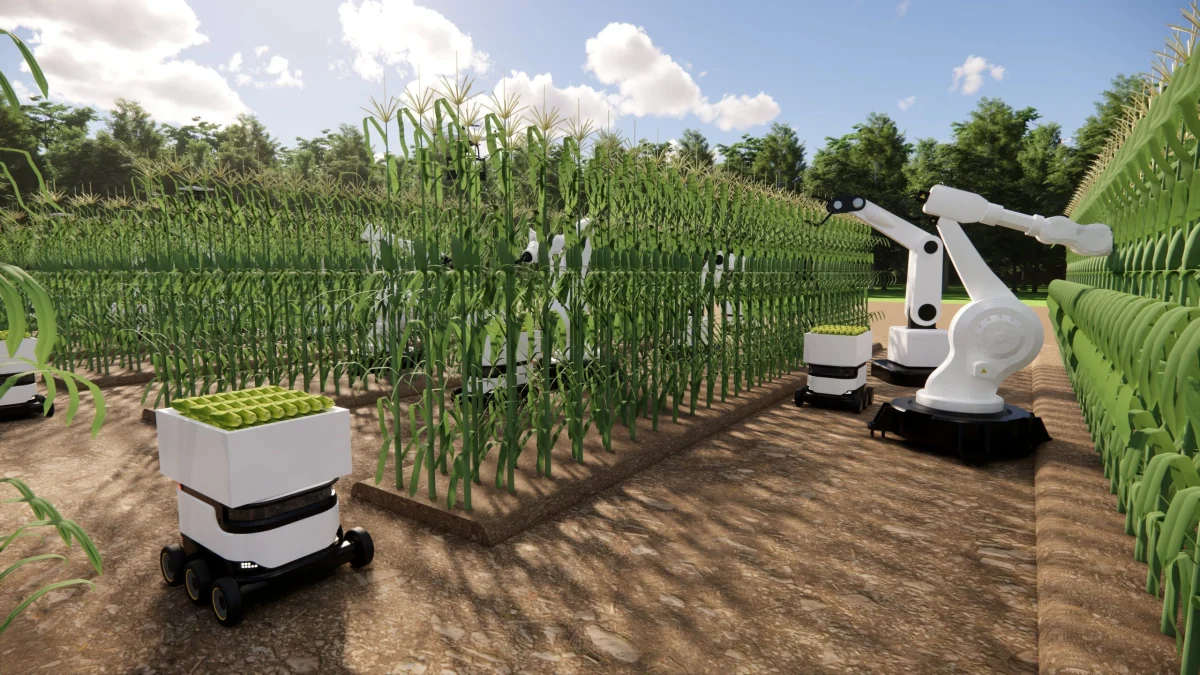
Clarke argues that the future belongs to "evolution, not revolution." Instead of waiting for fully autonomous, artificial intelligence-driven crop-harvesting robots that can navigate unpredictable outdoor conditions with human-like dexterity, the industry is focusing on pragmatic, "shovel-ready" technologies.
A prime example is the deployment of simpler, automated machines designed for routine, physically demanding tasks—such as moving produce around a polytunnel or packhouse. By taking over lower-value chores, these technologies allow skilled farm workers to concentrate on higher-value management and harvesting tasks. This integration respects existing farm workflows rather than disrupting them.
Furthermore, Clarke emphasizes the concept of bundling. The agtech industry will not transform one isolated start-up or academic research project at a time. True progress will come from bundling multiple complementary technologies—combining sensors, data analytics, biological treatments, and smart machinery—to address specific on-farm and supply chain challenges simultaneously. Farmers are increasingly viewed not as passive end-users of single gadgets, but as active integrators of complex technological suites.
Benchmarking Success: What the Next Year Holds
When assessing what a best-case scenario looks like for the agtech sector over the next 12 months, industry leaders are unified in their vision of maturity. Success will not be measured merely by the volume of early-stage venture capital raised, but by the number of companies that successfully bridge the gap between proof-of-concept and commercial integration.
The blueprint for a thriving agtech enterprise in the near future involves:
- De-risking early concepts via targeted public grants and foundational R&D support (such as ARIA or Innovate UK initiatives).
- Securing strategic commercial validation through direct supply chain partnerships and retailer-backed investment funds.
- Achieving early, predictable revenues by embedding technologies directly into existing food supply chains.
- Scaling, growing, and exporting robust, user-friendly solutions that solve genuine on-farm productivity and environmental challenges.
By diversifying the financial ecosystem—blending public sector foresight with corporate supply chain pragmatism—the agtech sector is gradually building a more resilient, realistic, and sustainable path forward. The road ahead remains challenging, but for innovators willing to build practical solutions that fit seamlessly into the realities of modern farming, the financial horizon has never looked more promising.