
In the vast and dynamic ecosystems of North America’s coastlines, a silent, meticulous war for biodiversity preservation is waged daily. At the frontline of this effort are Coastal Bird Technicians—field scientists whose work combines rigorous ecological monitoring, community advocacy, and physical endurance in the face of relentless environmental challenges. Recently, Audubon Delta stepped into the spotlight of regional conservation discourse as one of its leading technicians shared an inside look at the multifaceted realities of protecting shorebird populations, navigating the intricacies of avian banding, and bridging local habitat conservation with broader, continental migration patterns.
This comprehensive report explores the day-to-day operations of coastal bird monitoring, tracing the arc from protecting vulnerable beach-nesting chicks against human encroachment and mosquito swarms to advanced avian research methodologies, such as the delicate art of hummingbird banding in the mountains of southeastern Arizona. Furthermore, this article examines the vital metrics of shorebird productivity, the technological innovations required to study the world’s smallest birds, and the actionable steps the public must take to ensure the survival of migratory species traversing entire hemispheres. Through first-hand accounts, structural analysis, and forward-looking conservation strategies, we present a holistic examination of what it takes to safeguard avian life in an increasingly pressured natural world.
Detailed Chronology
The Rhythm of the Seasons: A Coastal Bird Technician’s Annual Cycle
The work of a Coastal Bird Technician is defined not by standard calendar years, but by the biological rhythms of avian life. The annual cycle is characterized by distinct operational shifts that require varying sets of technical skills, physical stamina, and public engagement strategies.
During the critical breeding season, the primary objective shifts entirely to population demographics and reproductive success. Technicians systematically survey coastal beaches to count nesting pairs, locate hidden scrapes in the sand, and monitor clutch progression. The core questions are deceptively simple yet ecologically monumental: How are the birds doing? Are nests surviving storm surges and predators? Are the fragile, downy chicks successfully making it to fledging age—the critical milestone when they achieve flight?
Yet, ecological science in the 21st century cannot happen in a vacuum. Alongside data collection, technicians function as community liaisons and environmental advocates. Educating beachgoers, local business owners, and coastal municipalities is just as critical as counting eggs. Technicians bridge the gap between human recreation and wildlife preservation, ensuring that human communities respect nesting zones and actively participate in stewardship. All of this unfolds against a backdrop of arduous field conditions, famously punctuated by relentless swarms of coastal mosquitoes.
A Conservation Milestone: The Full-Circle Return
Fieldwork in conservation is often grueling, marked by long hours of data entry, adverse weather, and discouraging habitat losses. However, these challenges are occasionally punctuated by moments of profound professional validation and emotional resonance.
For one Audubon Delta technician, a career-defining moment occurred years after banding her very first shorebird chick. In ornithology, banding—placing a lightweight, uniquely numbered or color-coded band around a bird’s leg—is the gold standard for tracking individual lifespans, site fidelity, and migration routes. Seeing that initial chick return year after year transformed abstract demographic data into a living narrative. Today, that same individual bird has returned consistently to her natal area, successfully transitioning into a breeding female. This full-circle moment serves as a powerful reminder of the generational continuity inherent in conservation work, anchoring technicians to the specific landscapes they fight to protect.
Venturing into the Chiricahuas: The Hummingbird Banding Intensive
Expanding technical horizons beyond coastal shorebirds, the technician recently participated in a rigorous 10-day hummingbird banding workshop hosted jointly by the Hummingbird Conservation Network and the Southwestern Research Station. Situated deep within the rugged Chiricahua Mountains of southeastern Arizona—a renowned global hotspot for avian biodiversity—the immersive training program tested the limits of precision and patience.
The curriculum began with foundational safety and handling techniques. Unlike larger shorebirds, hummingbirds possess metabolisms operating at the absolute edge of biological possibility, requiring specialized extraction grips, feather-safe holding methods, and microscopically calibrated physical measurements.
Perhaps the most astonishing aspect of the training involved the creation of the bands themselves. While standard bird bands are mass-produced and readily available, hummingbird bands are practically artisanal creations. Delivered as flat printed aluminum sheets, technicians must manually cut out individual strips, shear them to exact dimensions, and form them into microscopic semicircles using specialized jigs. The process demands intense fine-tuning: filing down edges, eliminating any potential scratches or grooves that could snag delicate plumage, and ensuring absolute legibility. Because hummingbirds are the tiniest warm-blooded vertebrates on Earth, an improperly sized or flawed band can be catastrophic.
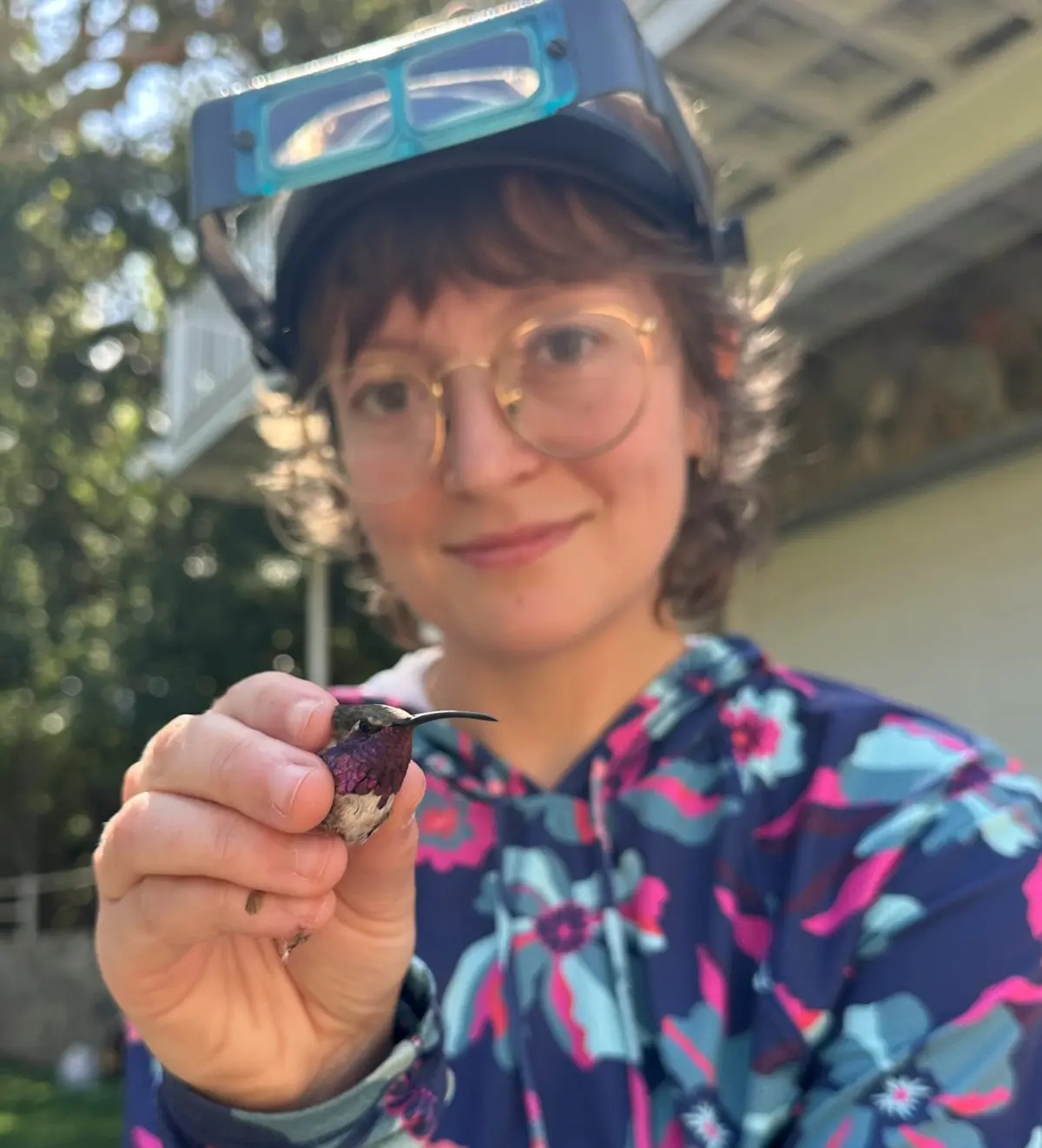
Following the fabrication phase, participants transitioned to active fieldwork across multiple regional habitats, including the research station and private properties known as high-density birding hotspots. Among the seasonal highlights was the capture and processing of Lucifer Hummingbirds—a rare and striking visitor to the region—alongside broader population censusing conducted in collaboration with the Hummingbird Monitoring Network to track migration pulses.
Supporting Context & Metrics
The Mechanics of Niche Conservation
To understand the gravity of coastal and avian conservation, one must examine the specialized tools and empirical metrics that govern the field. While public perception often pictures conservationists simply watching birds through binoculars, modern ornithology relies heavily on quantitative tracking and specialized engineering.
| Conservation Domain | Primary Focus | Key Equipment / Tools | Major Challenges |
|---|---|---|---|
| Coastal Shorebirds | Nesting success, chick survival, habitat protection | Spotting scopes, GPS units, color bands, census logs | Human disturbance, domestic pets, tidal surges, mosquitoes |
| Hummingbird Banding | Migration census, longevity, physiological metrics | Custom aluminum sheets, jeweler’s shears, banding pliers, specialized formers | Extremely delicate avian anatomy, DIY equipment fabrication, high precision requirements |
The realization that hummingbird banding relies almost entirely on custom-engineered, DIY instrumentation highlights the profound specialization required in modern conservation. Because commercial interest in manufacturing tools for creatures weighing less than a nickel is virtually non-existent, researchers have engineered their own pliers, formers, and shears. This DIY culture illustrates how ornithological science often marries cutting-edge ecological theory with old-fashioned craftsmanship.
Ecological Stressors and Migratory Pressures
Shorebirds and hummingbirds alike face unprecedented cumulative stressors throughout their annual cycles. For coastal shorebirds, the beach is not merely a recreational playground for humans, but a hyper-stressed maternity ward. Birds nesting on open sand face continuous disruptions from beachgoers, off-road vehicles, loose dogs, and climate-driven sea-level rise.
When a human walks too close to a resting or foraging flock of shorebirds, the consequences are metabolically severe. As experts emphasize, birds do not necessarily fly simply because they enjoy it; flight is an energy-intensive emergency response. Migratory shorebirds and songbirds arriving on beaches or resting sites are often fresh off grueling, multi-thousand-mile journeys—some traveling continuously from the sub-Arctic all the way to the southern tip of South America. When unmindful beach visitors flush these birds repeatedly, the animals burn essential fat reserves needed to complete their epic migrations or maintain breeding condition.
Official Statements & Expert Insights
On the Daily Realities of Fieldwork
Reflecting on the core mission of her role, the Audubon Delta technician highlighted the dual nature of ecological field assessment:
"As a coastal bird technician, most of my job has to do with monitoring shorebirds… In the breeding season, I’m counting the number of birds nesting on the beach and how many babies they’re having. Basically: how are the birds doing? Are they having nest success? Are the chicks surviving to the point where they can fly? During that time, I’m also advocating for the birds—making communities aware of the work that’s happening and making sure they’re respecting and helping us protect the birds nesting there. And getting bit by lots of mosquitoes."
On the Intricacies of Avian Anatomy and Equipment
Detailing the extreme precision required when handling the world’s smallest birds, the technician underscored the artistic patience demanded by hummingbird banding:
"Everything for hummingbird banding is almost DIY. Besides the aluminum sheet with the bands printed on it, everything is something people have just engineered themselves—the banding pliers, the formers you use to shape the bands, the shears to cut out the strips… Hummingbird banding is still relatively new compared to other banding, and it’s so specialized because their anatomy is totally different. They’re the tiniest birds in the world."
On Public Awareness and Beach Etiquette
Addressing the critical gap between public recreation and wildlife conservation, the technician offered clear guidance on how everyday citizens can become active conservationists:
"One thing people can do that makes a real impact when they go to the beach is give birds space. It’s about understanding bird behavior and what it looks like when they’re stressed. Just because birds are made to fly doesn’t mean they like to fly. If you’re getting close to a flock and they fly away, that’s too close. If they’re moving away from you, don’t flush them—give them space, let them rest. A lot of the birds you’re seeing right now are migrating… they’ve got a long way to go—some of them are traveling all the way to the tip of South America."
Future Outlook
Expanding Regional Expertise and Interconnected Networks
The acquisition of advanced hummingbird-banding methodologies by Audubon Delta staff marks a significant step forward for regional conservation capacity. Historically, the Delta region lacked an on-staff, certified hummingbird bander. By sending technicians to immersive training programs like the one hosted in the Chiricahua Mountains, conservation organizations are systematically closing expertise gaps.
Looking ahead, these newly acquired skills will integrate directly into regional programming, enhancing public outreach at conservation festivals, bolstering migration monitoring initiatives, and strengthening data-sharing pipelines with the National Audubon Society and the Hummingbird Monitoring Network. As migration corridors face mounting pressures from habitat fragmentation and shifting climatic baselines, having cross-trained personnel capable of monitoring both shorebirds and hummingbirds provides regional ecosystems with an invaluable layer of scientific defense.
A Call to Action for Coastal Communities
Ultimately, the future of coastal and migratory birds rests in the hands of the public. Conservationists stress that institutional monitoring programs and field technicians can only achieve so much without grassroots behavioral changes.
As coastal populations grow and recreational demands on beaches increase, the margin for error for migrating and nesting birds shrinks. The path forward relies on cultural shifts toward mindful ecotourism: recognizing the physical vulnerability of resting flocks, respecting posted nesting closures, and spreading awareness that a seemingly empty beach is often a critical sanctuary for wildlife navigating the edges of survival. Through a synthesis of rigorous scientific monitoring, specialized technical training, and community-wide stewardship, organizations like Audubon Delta continue to pave the way toward a sustainable coexistence between human activity and avian biodiversity.