
Executive Overview
To the average commuter navigating a bustling airport terminal, the scene is an orchestration of controlled chaos: rolling luggage clattering against tile, automated security announcements echoing through high-ceilinged concourses, moving walkways humming, and hundreds of travelers rushing to catch flights. Nearby, in a packed restaurant, the air is thick with rich food aromas, the sharp clatter of silverware, and the close proximity of strangers.
Yet, amid this sensory overload, a Labrador Retriever rests calmly under a table, unfazed by a dropped piece of bread or a sudden wave of foot traffic. This unwavering composure is not a matter of mere canine luck or an innate temperament alone. It is the deliberate, meticulous culmination of years of rigorous preparation, specialized socialization, and advanced public access training.
Under the Americans with Disabilities Act (ADA), a service animal must be individually trained to perform specific tasks that directly mitigate a person’s disability. However, task training is only half the equation. Without comprehensive public access training, even the most skillful medical alert or mobility-assist dog could falter when confronted with the unpredictable stimuli of the outside world. This article explores the anatomy of service dog public access training—detailing how organizations like Dogs Inc prepare canine candidates for the high-stakes environments of modern public life, the pedagogical philosophy behind their methods, and the profound societal impact of these working partnerships.
Detailed Chronology: From Puppyhood to Public Access Mastery
The journey of a service dog does not begin in a professional training facility with high-intensity simulations; it starts months earlier in the living rooms and neighborhoods of dedicated volunteer puppy raisers. Understanding this developmental timeline reveals just how methodical the path to becoming a working service dog truly is.
[Early Puppyhood & Socialization]
       │
       ▼
[Foundational Obedience & Exposure (Stores, Parks)]
       │
       ▼
[Advanced Public Access Training (Airports, Restaurants)]
       │
       ▼
[Rigorous Real-World Evaluations]
       │
       ▼
[Final Placement & Life-Changing Partnership]
Phase 1: Early Infancy and Foundational Socialization
Long before a future service dog sets foot in a commercial airport or a crowded shopping mall, the foundation is laid through structured early socialization. During the first few months of life, puppy raisers introduce pups to a vast spectrum of novel sights, sounds, textures, and human interactions.
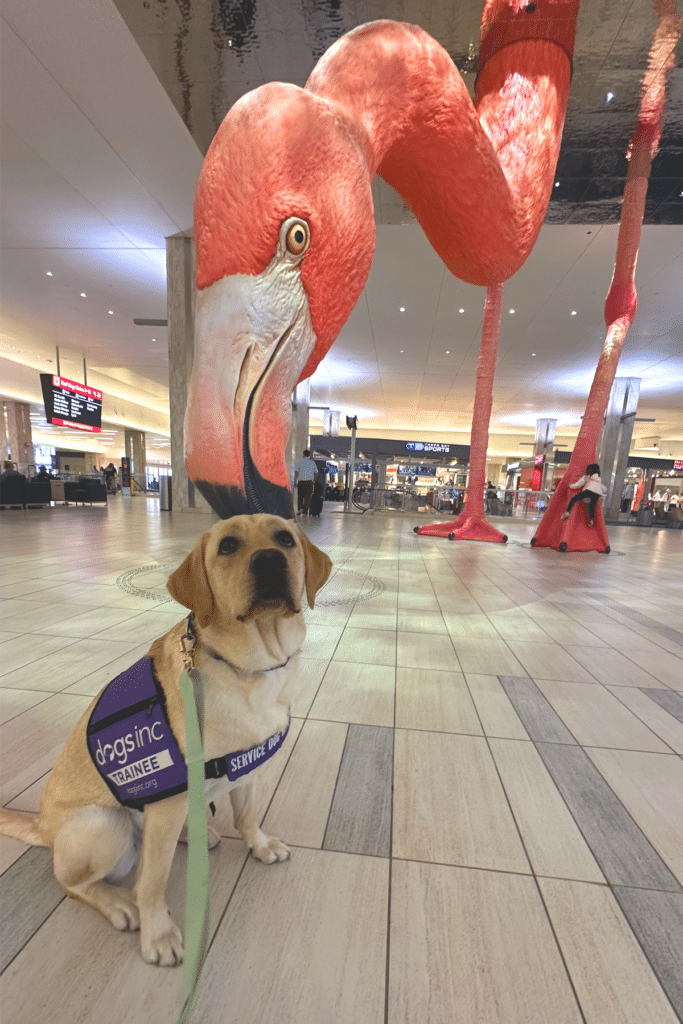
- Sensory Adaptation: Puppies are exposed to unusual floor surfaces (grates, slick tile, gravel), startling auditory stimuli (sirens, vacuum cleaners, dropped pans), and diverse groups of people, including children, individuals using wheelchairs, and people wearing hats or carrying umbrellas.
- Resilience Building: Breeds commonly selected for this demanding work, such as Labrador Retrievers and Golden Retrievers, are guided through these experiences using positive reinforcement. Instead of forcing dogs into stressful situations, trainers and raisers encourage curiosity, thereby building natural psychological resilience and adaptability.
Phase 2: Transitioning to Public Accommodations
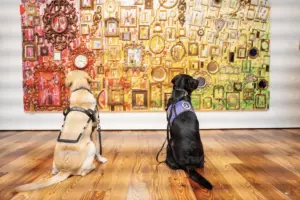
As the dogs mature into adolescence, the training shifts from residential neighborhoods to basic commercial environments. Young dogs in training visit pet-friendly stores, quiet office buildings, and suburban parks.
- Generalization of Rules: During this period, handlers teach the dog that basic obedience commands—such as "sit," "stay," and "heel"—must apply everywhere, not just in a quiet training room.
- Impulse Control Foundations: Dogs learn the fundamentals of ignoring distractions, such as other pets, discarded food items, and fast-moving objects.
Phase 3: Advanced Public Access Training
Once foundational reliability is established, trainers elevate the difficulty by introducing high-stakes public venues. This phase focuses heavily on behavior in complex public spaces where accommodations are legally required to grant access under the ADA.
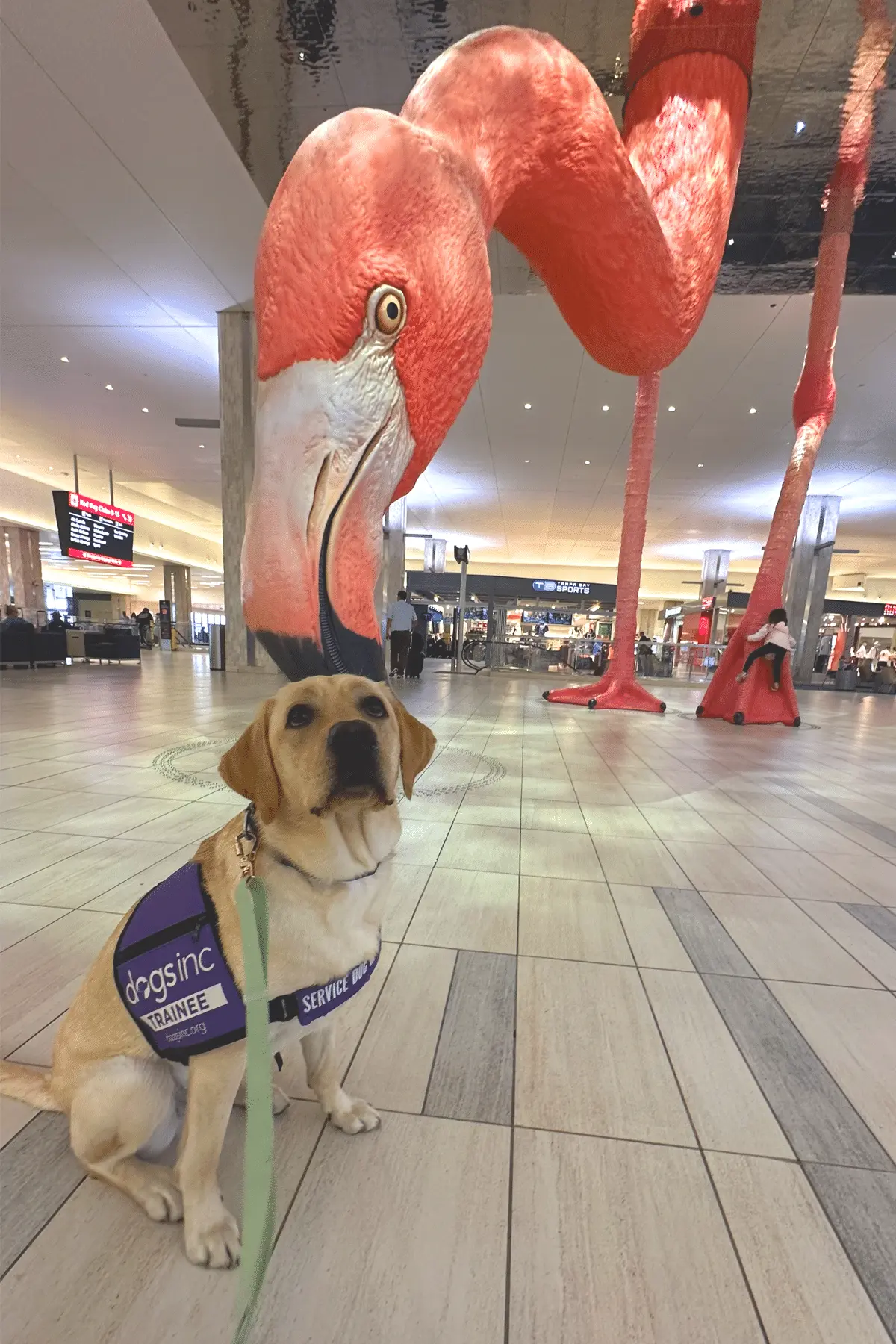
- Airports and Transit Hubs: Dogs are systematically exposed to luggage carousels, security checkpoint protocols, metal detectors, and massive crowds. They learn that jet engines, PA systems, and moving walkways are standard parts of their working landscape.
- Restaurants and Hospitality Venues: Candidates practice the art of the "settle"—remaining completely out of the way under tight restaurant tables for extended periods despite the proximity of aromatic food and bustling waitstaff.
- Crowded Urban Centers: Festivals, public squares, and transit stations test a dog’s ability to remain attentive to its handler while navigating dense pedestrian traffic.
Phase 4: Final Evaluation and Placement
Before earning the title of a fully qualified working service dog, each candidate must pass exhaustive public access evaluations. Professional instructors test the dog’s impulse control, reliability, stress recovery, and obedience under pressure. Only when a dog proves it can maintain consistent, flawless behavior regardless of external chaos is it matched with an individual with a disability, forging a lifelong partnership built on trust and mutual utility.
Supporting Context & Metrics: The Science of Distraction and Calm
To appreciate the rigor of public access training, one must examine the neurological and behavioral challenges working dogs face in modern society.
The Legal and Functional Distinction
It is a common misconception that any well-behaved dog can accompany its owner anywhere. The legal framework provided by the ADA draws a hard line between pets, emotional support animals (ESAs), and service animals:
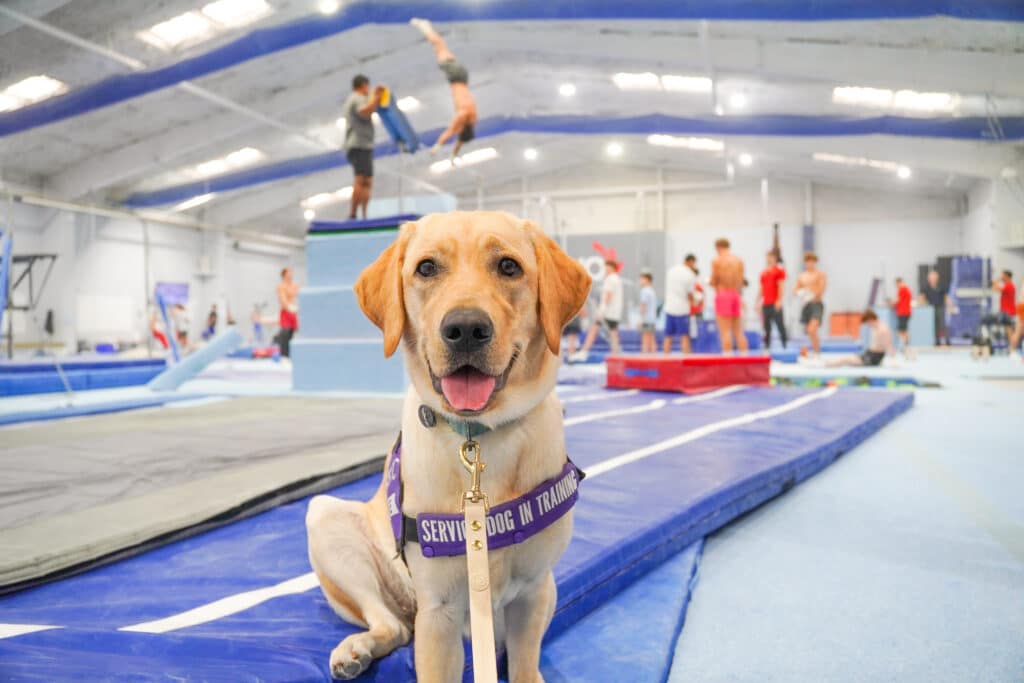
- Pets and ESAs: While emotional support animals provide comfort primarily through their presence and companionship, they do not possess public access rights under federal law because they lack specialized task training.
- Service Dogs: These animals are individually trained to do work or perform tasks for the benefit of an individual with a disability, ranging from physical mobility support and medical alert protocols to psychiatric intervention for conditions like Post-Traumatic Stress Disorder (PTSD).
Managing Cognitive Load in Busy Environments
Dogs possess acute senses, making high-stimulus environments like airports or shopping malls exponentially more overwhelming for them than for humans. A service dog must actively filter out thousands of competing stimuli—the smell of a nearby hamburger, the sound of a crying toddler, the sight of a rolling suitcase—while remaining hyper-aware of its handler’s physical state or commands.
| Environment | Primary Sensory Challenge | Training Objective |
|---|---|---|
| Airports | Audio announcements, rolling luggage, mechanical motion | Maintain forward momentum and handler focus amidst rushing crowds and loud noises. |
| Restaurants | Strong food odors, dropped crumbs, confined spatial layout | Execute a prolonged "settle" under tables without showing interest in food or passing servers. |
| Crowded Public Spaces | Unpredictable human movement, children, stray animals | Demonstrate impulse control and emotional regulation when startled or approached. |
Through gradual exposure and positive reinforcement, trainers condition the dog’s autonomic nervous system to view these stressors as background noise rather than triggers for flight or prey drives. This systematic desensitization ensures that whether a dog is providing deep pressure therapy during a panic attack or bracing to help an individual stand up from a restaurant booth, its operational focus remains uninterrupted.
Official Statements and Industry Insights
The philosophy behind modern service dog preparation emphasizes welfare, positive reinforcement, and collaborative community involvement. Industry experts and training organizations continually refine their methodologies to prioritize the psychological well-being of the animal alongside its technical utility.
"The confidence people see in service dogs isn’t accidental. It’s the result of a thoughtful training process that combines socialization, public access training, task training, exposure to real-world environments, and positive reinforcement."
— Leading Service Dog Training Curriculum Overview
Animal behaviorists stress that force-based corrections are entirely counterproductive in public access work. A dog forced into a terrifying situation through intimidation will exhibit suppressed stress signals that can manifest as behavioral breakdowns later. Conversely, positive reinforcement builds a dog that wants to engage with its environment and relies on its handler for security.
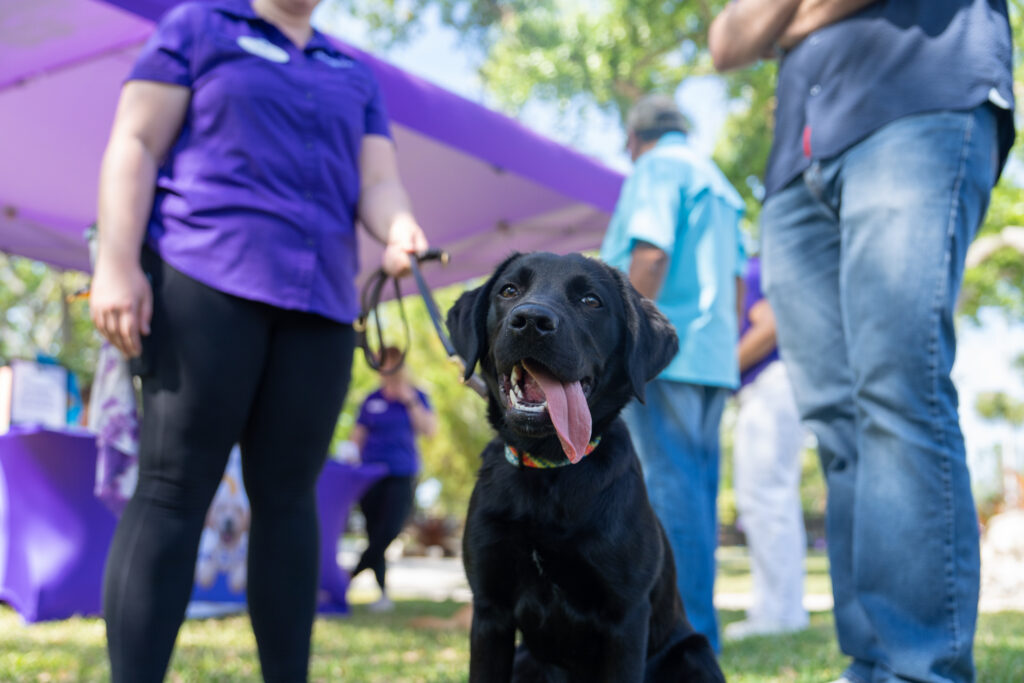
Furthermore, volunteer puppy raisers serve as the unsung heroes of this ecosystem. Organizations frequently emphasize that the hours spent by everyday citizens exposing puppies to normal societal routines form the bedrock of a successful career. Without these community-based foundations, professional trainers would face insurmountable hurdles when attempting to prepare a dog for the complexities of public life.
Future Outlook: The Evolution of Public Access and Accessibility
As society evolves, so too do the environments in which service dog teams must operate. Looking ahead, several key trends and challenges are shaping the future of service dog training and public access advocacy:
1. Technological Integration in Transit and Public Spaces
With airports and mass transit systems continually updating security protocols, smart infrastructure, and automated systems, service dogs must adapt to novel technological disruptions. Future training modules increasingly incorporate exposure to robotic cleaning devices, biometric scanners, and changing architectural designs to ensure teams can navigate modern smart cities seamlessly.
2. Education and Public Awareness
Misrepresentation remains a persistent challenge for the service dog community. The proliferation of fake service animal vests and untrained pets in grocery stores, restaurants, and aircraft has created skepticism among business owners and the public. Enhanced public education regarding the strict requirements of public access training is vital to protecting the access rights of legitimate handlers and their working dogs.
3. Expanding Therapeutic Applications
As medical and psychological understanding deepens, service dogs are being trained for an expanding array of specialized tasks—ranging from complex neurological alert systems to advanced psychiatric mitigation protocols. As the demand for these life-changing animals grows, organizations are scaling their puppy-raising networks and refining public access methodologies to meet the need without compromising training quality.
Conclusion
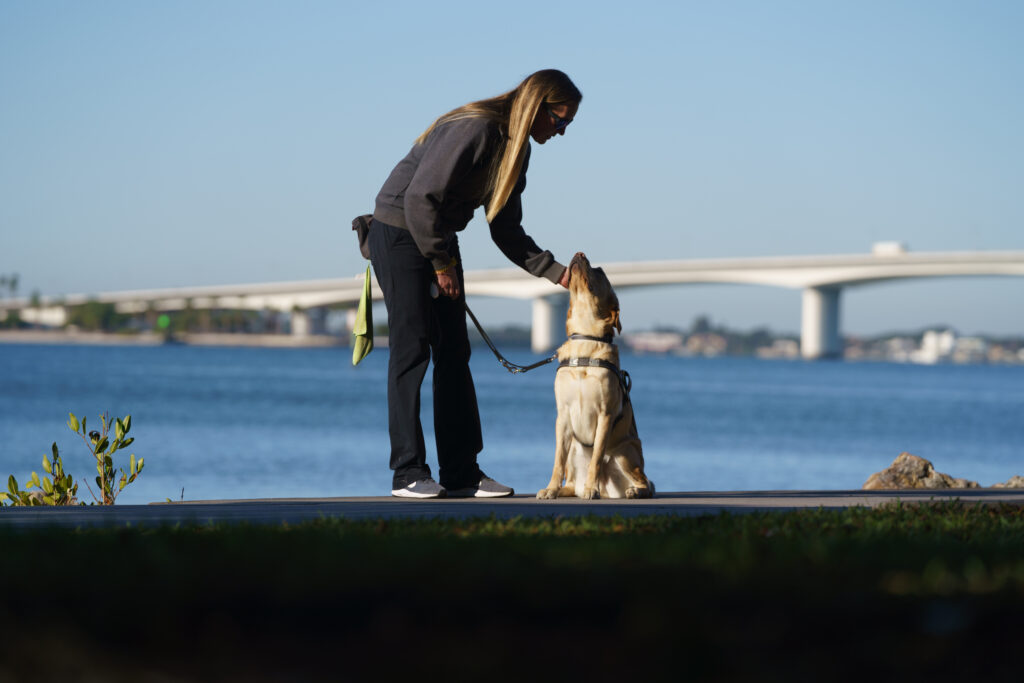
The immaculate composure of a service dog navigating a crowded airport or waiting quietly beneath a restaurant table is a testament to an extraordinary educational journey. From the early weeks of puppy socialization to rigorous real-world public access evaluations, every step is designed to forge a resilient, highly focused working partner. For individuals living with disabilities, this meticulous preparation translates into something priceless: the freedom to move through the world with confidence, dignity, and independence.
To learn more about how organizations like Dogs Inc prepare future service dogs for public life, or to discover how you can support the next generation of life-changing service dog teams through puppy raising and donations, visit Dogsinc.org.