
Executive Overview
For decades, the standard for serious birdwatching and wildlife observation has been rigidly defined: a full-sized pair of 42mm binoculars. These optical powerhouses offer exceptional light gathering, wide fields of view, and maximum detail extraction, making them the undisputed heavyweight champions of planned birding expeditions, deep-woods treks, and dedicated avian censuses. Yet, a quiet revolution is taking place in the field. Experienced listers, casual nature enthusiasts, and conservationists alike are increasingly reaching for a different class of optics: compact and pocket-sized binoculars.
The philosophy underpinning this shift mirrors a golden rule long held by professional photographers: the best camera is the one you have with you.
While a high-end 42mm binocular delivers breathtaking clarity, it is rarely packed when you are walking the dog, commuting, running weekend errands, or traveling light where every ounce in your luggage counts. Heavy, bulky optics often stay at home or locked in a glove compartment, leaving the observer entirely unprepared when an unexpected raptor soars overhead or a rare warbler flits through an urban park.
Enter the modern compact and pocket binocular. Spanning lens diameters of 32mm down to a minuscule 21mm, today’s diminutive optics shatter the historical compromise that once plagued small binoculars—namely, dim images, narrow fields of view, and fragile builds. Modern optical coatings, advanced glass formulations, and rugged engineering have transformed pocket bins from novelty toys into serious, high-performance tools. Weighing in under 15 ounces and small enough to slip seamlessly into a jacket pocket, a fanny pack, or the side sleeve of a backpack, these featherlight instruments ensure that birders are never caught empty-handed.
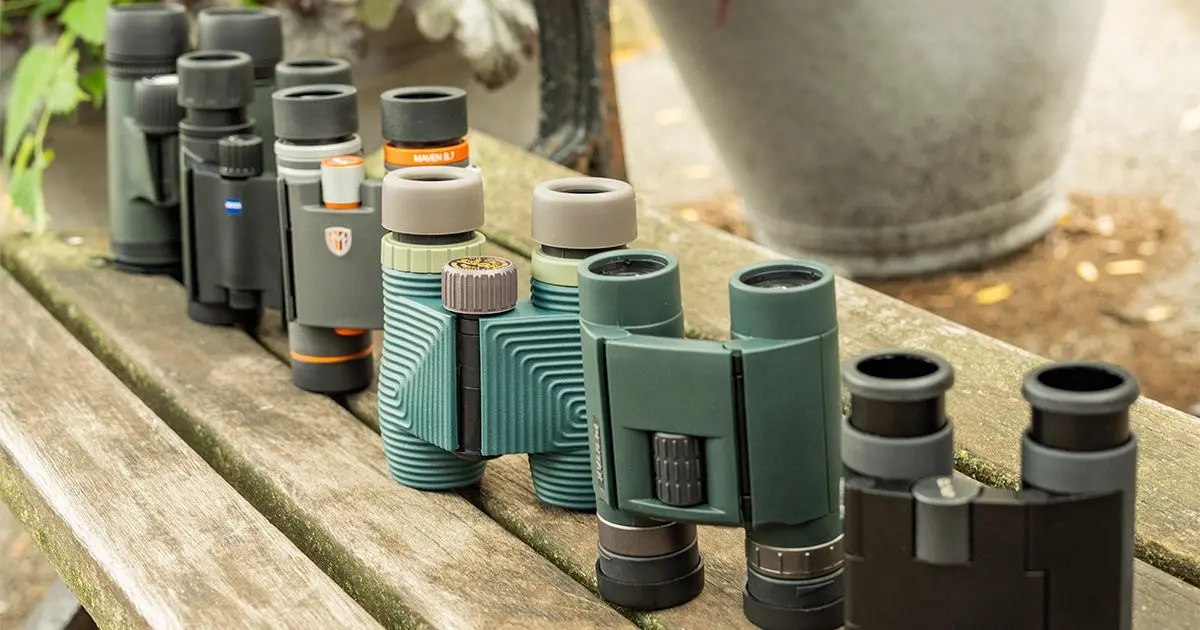
To help enthusiasts navigate this burgeoning market, optics experts and field testers have evaluated six standout models ranging from budget-friendly youth instruments to ultra-premium luxury glass. This comprehensive report breaks down the anatomy, performance metrics, and real-world utility of these six exceptional compact and pocket binoculars.
Detailed Chronology and Evolution of Pocket Optics
To understand the current renaissance of pocket binoculars, one must look at how optical design has evolved over the past generation. Historically, shrinking a binocular required drastic compromises in optical physics. To reduce the diameter of the objective lenses, manufacturers had to shrink internal prisms and optical paths, which frequently led to severe vignetting, poor low-light performance, narrow fields of view, and tunneling effects—the sensation of looking down a long, dark pipe.
Furthermore, early pocket binoculars were notoriously difficult to align, prone to mechanical failure, and lacked the robust environmental sealing required for rugged outdoor use. They were widely dismissed by serious birders as mere theater glasses or toys unfit for serious field identification.
The Turning Point: Material Science Meets Precision Engineering
The turnaround began in the late 1990s and accelerated through the 2010s, driven by massive leaps in glass manufacturing and computer-aided design. Several critical milestones marked this evolution:
- Phase-Correction Coatings: The introduction of dielectric and phase-correcting coatings on roof prisms resolved the light interference issues that historically plagued compact roof-prism designs, dramatically improving contrast and color fidelity.
- ED (Extra-Low Dispersion) Glass: Once restricted to flagship full-sized models, ED glass trickled down into smaller chassis, virtually eliminating chromatic aberration (the annoying color fringing seen around high-contrast edges in bright light).
- Nitrogen and Argon Purging: Manufacturers successfully engineered waterproof and fogproof seals into miniature chassis, ensuring that pocket bins could withstand torrential downpours and sudden thermal shocks just as well as their full-sized counterparts.
- Ergonomic Minimization: Advances in magnesium-alloy and reinforced polycarbonate frame construction allowed manufacturers to drop overall weight below the 10-ounce threshold without sacrificing structural integrity or drop-resistance.
Today, the line between "compromise" and "capability" has all but vanished. Modern pocket binoculars are precision instruments designed to meet the rigorous demands of global travelers, minimalist hikers, and fast-moving birders who refuse to be weighed down.
Supporting Context, Metrics, and Model Evaluations
In the optics world, terminology matters. While definitions can occasionally overlap, industry standards generally classify binoculars by their objective lens diameter:
- Full-Size: 42mm and above (optimized for maximum light transmission and twilight factor).
- Compact: Around 32mm (a versatile middle ground offering enhanced portability while retaining significant light-gathering capabilities).
- Pocket: 25mm and under (ultra-portable instruments designed for maximum ease of carry and minimal footprint).
Field testers recently evaluated six exceptional models spanning these compact and pocket categories. Every model featured in this evaluation weighs under 15 ounces, making them ideal daily-carry companions. Below is an in-depth breakdown of each tested pair, examining their pricing, ergonomic feel, field performance, and technical specifications.
1. Vortex Bantam HD 6.5×32 Youth Binoculars
- Price: $100
- Weight: 14.4 oz
- Dimensions: 4.9 in x 4.8 in
- Field of View (FOV): 400 ft / 1,000 yd
- Key Features: Waterproof, fogproof, HD optical system, unlimited unconditional lifetime warranty.
The Takeaway:
While technically sitting at the larger end of the compact spectrum with its 32mm objective lenses, the Vortex Bantam HD occupies a unique and highly functional niche. Originally marketed as a youth model designed to serve as a child’s first "big kid" binocular, it has quietly become a favorite among adult Audubon staffers and seasoned field ornithologists looking for an ultra-reliable, rugged backup pair.
The 6.5x magnification is a masterstroke in design for a compact or youth-oriented glass. By keeping the magnification modest, Vortex achieves two massive advantages: an exceptionally wide field of view (400 feet at 1,000 yards) and an exceptionally steady image that is virtually free of hand-shake. This makes tracking fast-moving passerines or teaching a novice how to acquire a bird in the field remarkably intuitive. The HD optical system punches well above its $100 price tag, delivering sharp, color-accurate images. Coupled with Vortex’s legendary VIP warranty—an unlimited, unconditional, transferable lifetime promise—the Bantam represents one of the best value propositions in the entire optics market.
2. Nocs Provisions Standard Issue 8×25
- Price: $100
- Weight: 11.85 oz
- Dimensions: 4.53 in x 4.25 in
- Field of View (FOV): 357 ft / 1,000 yd
- Key Features: Rugged grippy housing, waterproof/fogproof, vibrant color options, "No Matter What" lifetime warranty.
The Takeaway:
A relative newcomer that has captured the imagination of a younger, design-conscious generation of birders and outdoor enthusiasts, Nocs Provisions has disrupted the traditional, utilitarian aesthetic of the optics industry. The Standard Issue 8×25 is immediately recognizable by its cheerful array of colorways and its tactile, non-slip rubberized armor housing.
Do not let the playful exterior fool you, however; beneath the fun surface lies a remarkably robust field glass. The rugged grip makes one-handed operation secure and comfortable, even when fingers are cold or wet. Optically, the Standard Issue delivers crisp imagery with a respectable 357-foot field of view. Nocs backs these pockets with an uncompromising lifetime warranty, making them a fantastic, worry-free option to toss into a beach bag, kayak hatch, or bicycle pannier.
3. Pentax AD 8×25 WP
- Price: $176
- Weight: 10.6 oz
- Dimensions: 4.3 in x 4.1 in
- Field of View (FOV): 288 ft / 1,000 yd
- Key Features: Truly pocket-size chassis, nitrogen-filled waterproof/fogproof construction, multi-coated optics, limited 25-year warranty.
The Takeaway:
For birders seeking a traditional, no-nonsense pocket binocular optimized for effortless travel, the Pentax AD 8×25 WP is a perennial staff favorite among conservation organizations. Weighing just 10.6 ounces and sporting a diminutive footprint, this pair disappears effortlessly into the included carrying case and slides into a coat pocket or purse without a second thought.
In the field, the Pentax AD strikes an admirable balance between featherlight portability and ergonomic comfort. It rests easily in one hand, allowing the observer to hold a field guide or notebook with the other. While its field of view (288 feet at 1,000 yards) is slightly narrower than some of its wider competitors, the optical clarity, reliable focusing wheel, and robust waterproof and fogproof chassis make it a trusty, dependable companion for international travel and spontaneous nature walks.
4. Zeiss Terra ED Pocket 8×25
- Price: $400
- Weight: 10.9 oz
- Dimensions: 4.5 in x 4.4 in
- Field of View (FOV): 357 ft / 1,000 yd
- Key Features: SCHOTT glass, smooth mechanical focusing, waterproof/fogproof, limited lifetime warranty.
The Takeaway:
Zeiss is a titan in the optics industry, renowned for its flagship Victory Pocket 8×25 binoculars—an engineering marvel that commands a premium price tag of $925. For birders who crave high-end European glass but balk at spending nearly a thousand dollars on a pocket secondary pair, the Zeiss Terra ED Pocket 8×25 offers an extraordinary compromise at less than half the cost.
Equipped with premium SCHOTT glass and hydrophobic multi-coatings, the Terra ED Pockets deliver punchy, high-contrast images characterized by exceptional brightness and crisp edge-to-edge sharpness. Testers consistently praised their rapid, fluid focusing mechanism, which allows for effortless transitions from distant shorebirds down to butterflies resting mere feet away. Weighing a mere 10.9 ounces, these binoculars bridge the gap between mid-tier affordability and high-end optical performance.
5. Maven B.7 8×25
- Price: $600
- Weight: 12.4 oz
- Dimensions: 4.6 in x 4.8 in
- Field of View (FOV): 356 ft / 1,000 yd
- Key Features: Premium ED glass, distinctive burnt-orange detailing, robust metal chassis, lifetime warranty.
The Takeaway:
Maven Outdoor Equipment has built a stellar reputation for cutting out middleman markdowns and delivering custom-built, direct-to-consumer optics that rival legacy European brands. The Maven B.7 8×25 is a testament to this philosophy, offering a slightly beefier, more substantial feel in the hand than traditional fragile pocket bins.
Weighing 12.4 ounces, the B.7 sits on the heavier end of the pocket category, but that heft translates directly into rock-solid build quality and ergonomic stability. The chassis features Maven’s signature striking orange accents, giving the instrument an unmistakably modern, high-end aesthetic. Optically, the B.7 utilizes extra-low dispersion glass to render images of astonishing sharpness and color fidelity. Combined with large, comfortable eyecups that rest easily against the face, these binoculars provide an immersive viewing experience that easily rivals full-sized optics.
6. Swarovski CL Curio 7×21
- Price: $999
- Weight: 8.9 oz
- Dimensions: 3.6 in x 3.7 in
- Field of View (FOV): 405 ft / 1,000 yd
- Key Features: Ultra-compact folding design, industry-leading glass clarity, widest FOV in class, limited lifetime warranty.
The Takeaway:
At the pinnacle of the pocket optics market sits the Swarovski CL Curio 7×21. Designed in collaboration with industrial designer Marc Newson, these binoculars are a masterclass in minimalist aesthetics and optical engineering. At under 9 ounces and measuring an astonishing 3.6 inches in length, they are the smallest, lightest binoculars in this evaluation.
Despite their microscopic proportions, the CL Curios deliver breathtaking optical performance. Thanks to Swarovski’s legendary proprietary glass formulations, images are preternaturally bright, contrast-rich, and razor-sharp. Furthermore, the 7x magnification paired with a 21mm objective lens yields a massive 405-foot field of view at 1,000 yards—outperforming many larger compacts. You may genuinely forget you have them tucked into your shirt pocket or hanging around your neck, but the moment you raise them to your eyes, you will be rewarded with an optical experience that entirely defies their tiny stature.
Comparative Performance Metrics Matrix
To assist prospective buyers in evaluating their options at a glance, the following comparative data synthesizes key performance and physical metrics across all six reviewed models:
| Model | Price | Weight | Lens Diameter | Magnification | Field of View (1,000 yd) | Waterproof / Fogproof | Warranty |
|---|---|---|---|---|---|---|---|
| Vortex Bantam HD | $100 | 14.4 oz | 32 mm | 6.5x | 400 ft | Yes | Unlimited Lifetime |
| Nocs Standard Issue | $100 | 11.85 oz | 25 mm | 8x | 357 ft | Yes | Unlimited Lifetime |
| Pentax AD 8×25 WP | $176 | 10.6 oz | 25 mm | 8x | 288 ft | Yes | Limited 25-Year |
| Zeiss Terra ED Pocket | $400 | 10.9 oz | 25 mm | 8x | 357 ft | Yes | Limited Lifetime |
| Maven B.7 | $600 | 12.4 oz | 25 mm | 8x | 356 ft | Yes | Lifetime |
| Swarovski CL Curio | $999 | 8.9 oz | 21 mm | 7x | 405 ft | Yes | Limited Lifetime |
Official Statements and Industry Insights
The paradigm shift toward lightweight, portable optics has not gone unnoticed by industry leaders and field researchers. Conservation biologists and optical engineers have increasingly emphasized the practical necessity of accessible field gear.
Dr. Elena Vance, senior avian ecologist and field research coordinator, notes the changing habits of modern wildlife observers:
"For decades, field ornithology was shackled to heavy gear mandates. Researchers and birders were told that anything under 42mm was a compromise not worth making. But field data collection relies on observation time. If an observer leaves their heavy 42mm binos in the vehicle because they are traversing rugged terrain in 90-degree heat, their observation rate drops to zero. Modern pocket optics bridge that exact psychological and physical gap. When a binocular weighs less than 11 ounces and fits in a shirt pocket, it becomes an extension of the observer rather than an encumbrance."
Furthermore, manufacturing representatives highlight how consumer expectations have evolved. Optical designers are no longer treating pocket binoculars as secondary "accessory" items, but as primary engineering showcases.
Markus Lindner, lead optical designer for premium European sports optics, explains:
"Designing a pocket binocular is significantly more challenging than building a full-sized chassis. You are fighting strict physical limitations regarding light collection and alignment tolerances. Every single millimeter of glass curvature, every coating layer, and every hinge tolerance must be executed with microscopic precision. The fact that consumers today can purchase sub-10-ounce instruments like the CL Curio or the Zeiss Terra ED that deliver 90% of the visual performance of full-sized flagships is a testament to the maturation of modern photonics."
Future Outlook: Where Are Pocket Optics Headed?
As material science continues to advance at a breakneck pace, the future of compact and pocket binoculars points toward even greater integration, durability, and optical fidelity. Industry analysts and equipment insiders point to several emerging trends that will likely shape the next decade of pocket optics development:
- Advanced Nanomaterials and Carbon Composites: Future pocket chassis will likely incorporate graphene-reinforced polymers and advanced carbon-fiber composites, driving weights down even further toward the sub-5-ounce mark without compromising structural rigidity or impact resistance.
- Smart-Optics Integration: While traditional optical purity remains paramount for birders, research is actively underway to integrate heads-up digital displays, micro-rangefinding modules, and AI-assisted species identification software into compact binocular chassis without creating bulky, cumbersome housings.
- Eco-Friendly and Sustainable Manufacturing: In response to growing environmental consciousness among outdoor enthusiasts, optics manufacturers are increasingly adopting recycled aluminum frames, bio-based rubber armoring, and lead-free, arsenic-free eco-glass formulations across their compact product lines.
- Democratization of High-End Glass: As manufacturing precision improves and automated thin-film coating deposition becomes more cost-effective, features once restricted to ultra-luxury price tiers—such as high-transmission SCHOTT glass and field-flattening lens elements—will inevitably trickle down into the $100–$200 price brackets, making crystal-clear pocket optics accessible to every demographic of nature lover.
Conclusion
Whether you are a seasoned lister logging your 700th North American bird species, a casual weekend hiker exploring local conservation areas, or a parent introducing a child to the wonders of wildlife observation, the modern landscape of compact and pocket binoculars offers something extraordinary.
No longer dismissed as dim toys or clumsy compromises, today’s pocket bins are sophisticated, high-performance optical instruments that ensure you will never again be caught empty-handed when nature calls. From the budget-friendly ruggedness of the Vortex Bantam and Nocs Standard Issue to the peerless optical engineering of the Swarovski CL Curio and Maven B.7, there has never been a better time to downsize your gear and expand your field-of-view horizons.