
Executive Overview
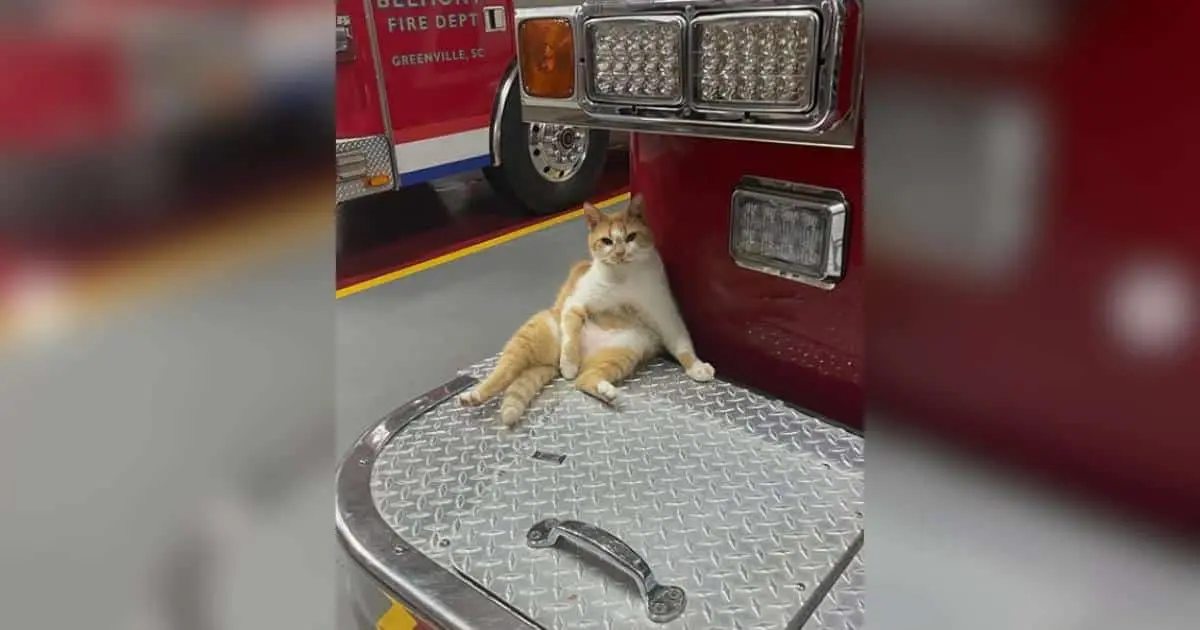
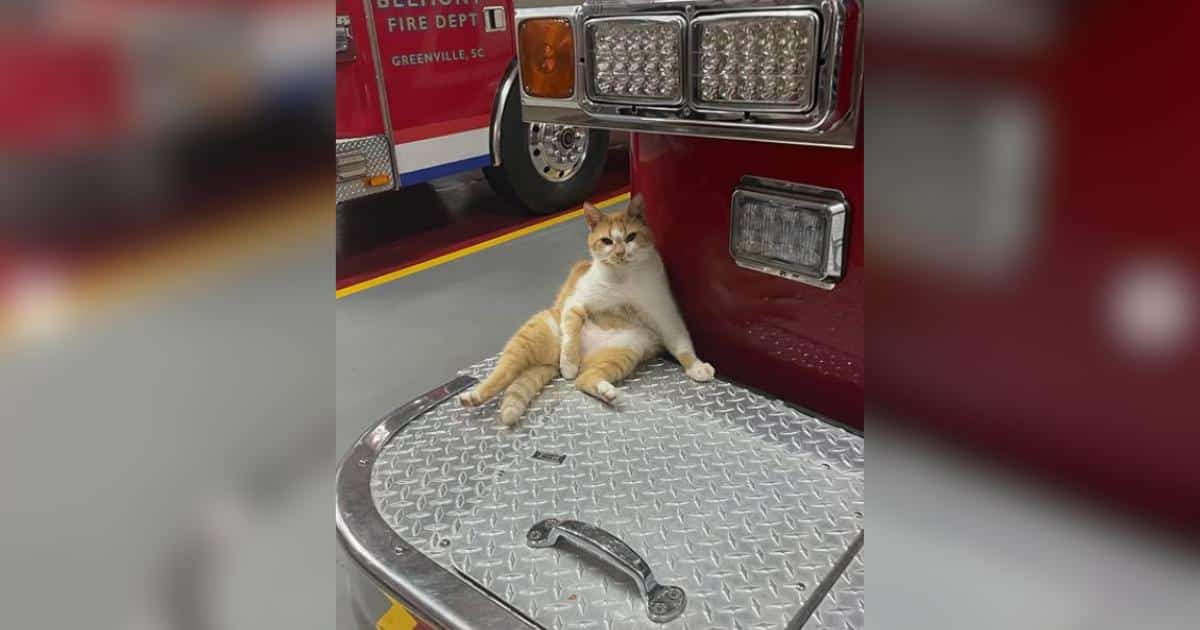
In the high-stakes, adrenaline-fueled world of emergency response, comfort often arrives in the most unconventional forms. For the self-proclaimed "dog people" of the Belmont Fire Department in Greenville, South Carolina, that comfort materialized as a scrawny, scarred, and desperately hungry orange stray cat.
What began as a chance encounter outside the station bay doors evolved into a profound, years-long interspecies bond that fundamentally transformed the culture of a professional firehouse. "Flame," as the cat came to be known, defied the traditional boundaries of animal rescue. He bridged the gap between a traumatized street survivor and a team of first responders carrying the invisible burdens of high-stress public service.
This is the comprehensive journalistic chronicle of Flame’s journey: from an anonymous, weather-beaten wanderer seeking shelter to an indispensable pillar of emotional support, an internet phenomenon, and, ultimately, a deeply mourned member of a firefighting family. His story serves as a testament to the symbiotic nature of rescue—illustrating how an animal given a second chance at life can fundamentally anchor the humans who saved him.
Detailed Chronology
Phase I: The Unlikely Arrival
The narrative of Flame began on a quiet day at the Belmont Fire Department. The crew, composed primarily of seasoned firefighters who proudly identified as canine enthusiasts, had little room in their tactical worldview for felines. Cats were an unfamiliar element in the hyper-masculine, equipment-heavy environment of a modern fire station.
Then, Flame appeared. Starved, bearing the visible physical history of a brutal life on the urban asphalt, the orange tabby lingered near the perimeter of the station. He did not cry out for help aggressively, nor did he demand immediate entry. Instead, he observed the station with a mixture of caution and quiet curiosity.
The ice broke through a moment of casual workplace humor. One firefighter, spotting the cautious vagrant, jokingly meowed at the cat.
To the absolute astonishment of the crew, Flame answered. He didn’t flee from the sound; instead, he engaged in a vocal dialogue, steadily bridging the physical distance between them. Within minutes, the once-skittish stray had walked right up to the firefighters and willingly climbed into their open arms. That initial, whimsical exchange initiated a permanent paradigm shift inside the Belmont firehouse.
Phase II: Integration and Transformation
Recognizing that physical affection was only a fraction of what the animal required, the crew stepped up with professional-grade compassion. A visual inspection revealed a skeletal frame, old battle scars, and the unmistakable desperation of an animal that had long survived on garbage and luck.
The firefighters mobilized as a unit. Flame was transported to a local veterinary clinic, where he underwent a comprehensive medical evaluation. He received essential vaccinations, treatment for his accumulated injuries, and a specialized dietary regimen designed to reverse severe malnutrition.
Upon his return to the station, Flame was integrated into the rhythm of daily firehouse life. The introduction of scheduled meals, clinical care, and a secure environment provided him with a commodity he had likely never known: absolute consistency.
Even the station’s commanding officer—widely regarded by the crew as the toughest, most unyielding veteran in the building—was not immune to the cat’s quiet charm. One morning, without fanfare, Flame sauntered over to the Chief and rubbed affectionately against his heavy-duty work boots. That single, unassuming gesture permanently won over the station’s leadership.
Despite the chaotic acoustic environment of a fire station—punctuated by screaming diesel engines, clattering gear, sudden alarms, and scrambling crews—Flame adapted with eerie serenity. He learned to sleep soundly directly beside the massive apparatus bays, seemingly unbothered by the sudden detonations of emergency dispatches. The station had officially become his fortress.
Phase III: The Weight of the Badge
As months turned into years, Flame’s presence at Belmont evolved from a novelty into a vital psychological anchor. Modern firefighting exposes first responders to relentless psychological strain: horrific accident scenes, traumatic medical calls, sleep deprivation, and unrelenting operational uncertainty. The emotional weight of these shifts often lingers long after the apparatus returns to the bay.
Flame provided a specialized, wordless form of decompression. When firefighters rolled back into the station after grueling calls, the orange cat was invariably there, waiting. There were no debriefs, no administrative expectations, and no emotional demands—just the grounding, tactile presence of an animal content to exist in their orbit.
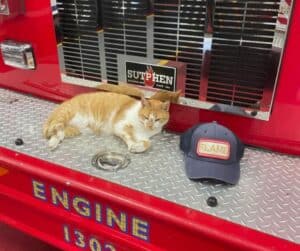
Interacting with Flame—whether stroking his fur during a rare moment of downtime or watching him doze peacefully amidst the chaos—offered the crew a tangible psychological reset. He became a stabilizing force, transforming a utilitarian municipal building into a genuine home.
Phase IV: The Final Watch and Legacy
All good stories carry the inevitable weight of sorrow, and Flame’s time at the Belmont Fire Department eventually reached its emotional crescendo. Years after his miraculous arrival, the firehouse was forced to confront an agonizing reality.
Flame fell seriously ill, battling a severe and painful bladder condition that quickly deteriorated his health. Following intensive veterinary consultations, the firehouse family faced the most difficult decision a pet owner can make. Assessing that his quality of life had irrevocably diminished, they chose to let him pass peacefully. True to the life he had built, Flame was surrounded by the men who loved him until his final breath.
News of "Chief Flame’s" passing did not remain localized to Greenville. Over the years, the firefighters had documented his quirky, endearing habits online, inadvertently cultivating a massive digital community. Followers worldwide who had never met the orange cat in person joined the Belmont crew in mourning his loss, sharing tributes and testifying to the light he had cast far beyond South Carolina.
Supporting Context & Metrics
To fully appreciate the impact of Chief Flame, it is helpful to examine the broader intersection of animal rescue and emergency services work.
| Metric / Category | Context within Belmont Fire Department & Emergency Services |
|---|---|
| Species Integration | Transitioned a 100% canine-preferring crew into dedicated feline advocates. |
| Duration of Service | Multiple years of continuous residency as station mascot ("Chief Flame"). |
| Primary Operational Impact | Reduction of operational stress indicators via structured animal-assisted comfort. |
| Geographic Reach | Localized rescue in Greenville, SC, scaling to global digital engagement via social media networks. |
| Medical Interventions | Comprehensive veterinary intake: vaccinations, nutritional rehabilitation, chronic issue management, and humane palliative end-of-life care. |
Emergency service organizations globally are increasingly recognizing the psychological benefits of station animals. While dogs remain the traditional mascots of firehouses, cats like Flame offer a distinct psychological counterbalance—their independent yet affectionate nature providing a low-stimulus, grounding presence for crews managing high-adrenaline post-traumatic stress.
Official Statements
While the grief of losing Flame was deeply personal to the Belmont crew, the collective sentiment of the firehouse and the extended community reflected a profound sense of gratitude.
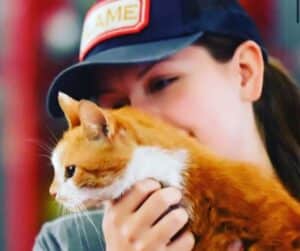
In statements released by the firefighters following Flame’s passing, the crew emphasized the reciprocity of their relationship with the late feline:
"Flame arrived at our doors as a broken, starving stray asking for nothing more than a meal and a safe place to lay his head. What we didn’t realize was that he was carrying the exact medicine our station needed. He brought light, laughter, and an indescribable comfort into our darkest shifts. We thought we were rescuing him from the streets, but looking back, Chief Flame rescued every single one of us right back."
Community members echoed these thoughts across digital platforms, noting how a simple stray cat managed to humanize the often-stoic profession of firefighting, proving that strength and tenderness are not mutually exclusive.
Future Outlook
The physical spaces Flame once occupied around the Belmont Fire Department may remain quiet, but his institutional footprint is permanent. The station has vowed to honor his memory, ensuring that new recruits understand the legacy of the orange stray who walked in off the street and demanded—and earned—the title of Chief.
The story of Flame stands as a universal reminder of the healing power of compassion. It challenges preconceived notions about animal behavior, breaks down workplace cynicism, and highlights the profound emotional architecture of first responder culture.
Long after the apparatus engines quiet down for the night, the memory of Chief Flame remains etched into the foundation of the Belmont Fire Department—a timeless testament to the fact that the most meaningful chapters of our lives often begin with an unexpected visitor, a shared meow, and the courage to open a door.