
Executive Overview
For a migratory songbird, the journey south is an epic, high-stakes voyage across thousands of miles of shifting terrain. Launching from the boreal forests of eastern Canada or the deep woods of New England, these tiny dynamos navigate a gauntlet of mountains, agricultural valleys, and sprawling urban landscapes. Their ultimate goal: a safe place to rest and refuel before undertaking grueling over-water crossings of the Gulf of Mexico or the Caribbean Sea.
At the terminus of the continental landmass lies South Florida—a critical ecological bottleneck where the landscape abruptly surrenders to the ocean. For thousands of birds annually, the 13,000-acre Corkscrew Swamp Sanctuary serves as an indispensable sanctuary. Recognized internationally as a Ramsar Wetland of International Importance, designated as a regional gateway site for the Great Florida Birding and Wildlife Trail, and celebrated as an Audubon Important Bird Area, this sprawling sanctuary on the Atlantic Flyway has recorded more than 268 bird species over the years.
Yet, beyond its established role as a dependable highway for winged travelers, Corkscrew has increasingly become a theater for the unexpected. Recent sightings of rare, out-of-range "vagrant" species—such as a surprise September visit by a Canada Warbler, alongside lingering Western Tanagers and Lazuli Buntings—highlight the dynamic, often unpredictable nature of avian migration.
Driven by shifting weather patterns, genetic quirks, and navigational errors, these wandering birds open a window into the complex mechanisms of avian flight. Supported by cutting-edge tracking technology like the Motus Wildlife Tracking System and Audubon’s Bird Migration Explorer, scientists are beginning to decode the mysteries of how birds navigate, why they sometimes go astray, and what these deviations mean for the future of bird populations in a rapidly changing world.
Detailed Chronology: The Journey, the Stray, and the Science
To understand the extraordinary events unfolding at sanctuaries like Corkscrew, one must first trace the grueling timeline of an autumn migration.
The Boreal Launch and the Atlantic Flyway
The journey typically begins in late summer across the northern latitudes. Triggered by shortening photoperiods and hormonal shifts, songbirds embark on nocturnal flights fueled entirely by hyperphagia—a period of intense eating that doubles their body weight in fat. Guided by the stars, the Earth’s magnetic field, and an innate genetic compass, they push southward, funneling into major migratory corridors like the Atlantic Flyway.
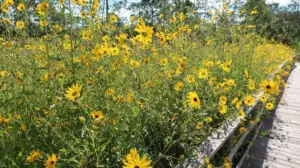
By the time these birds reach the subtropical mosaic of habitats protected within Corkscrew Swamp Sanctuary, they are physically depleted. The sanctuary’s ancient cypress strands, wet prairies, and marshes provide the critical insect biomass and safe cover required for exhausted travelers to recuperate.
The September Discovery: A Rare Canada Warbler
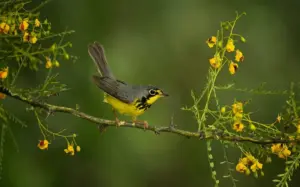
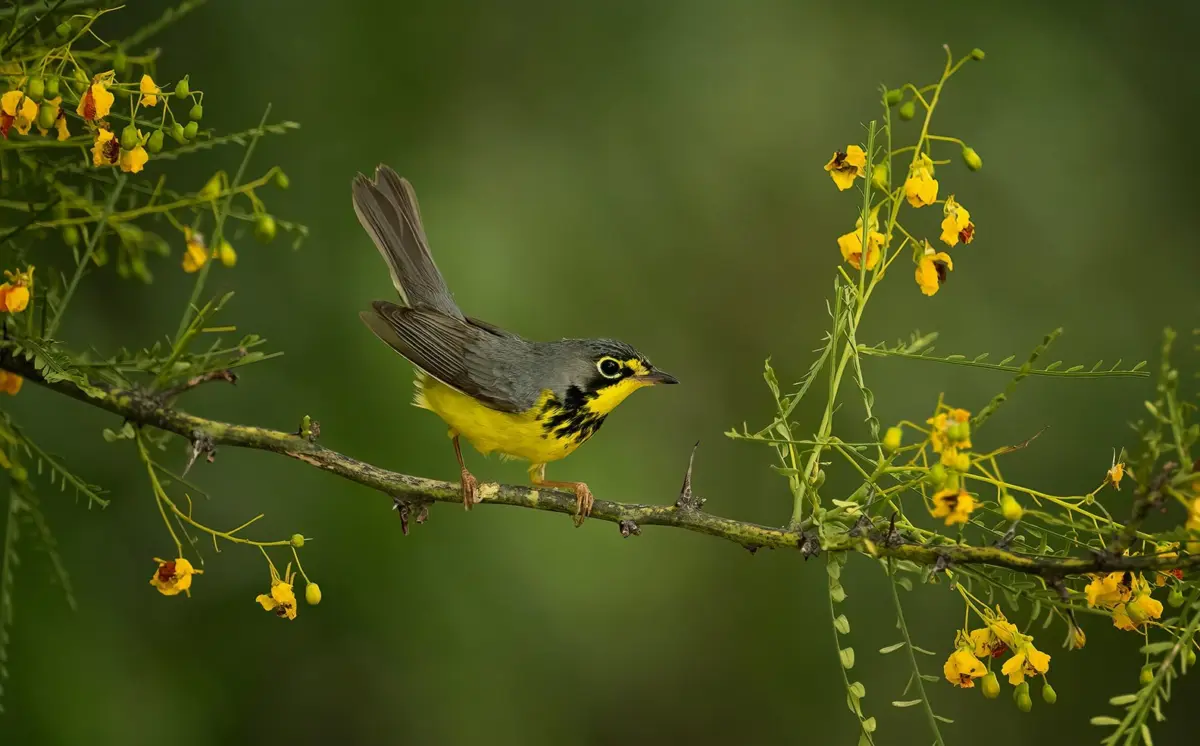
It was against this backdrop of routine autumn arrivals that Sanctuary Director Keith Laakkonen made a remarkable discovery in September. While surveying the mosaic of habitats near North Lettuce Lake, Laakkonen spotted a Canada Warbler (Cardellina canadensis) actively foraging in the canopy.
To the casual observer, spotting a small, brightly colored warbler might seem commonplace in a biodiversity hotspot like Florida. To ornithologists, however, this sighting was deeply unusual. Standard range maps for the Canada Warbler do not typically include Florida. Following their breeding season in the northern forests, the vast majority of Canada Warblers travel west of the Appalachian Mountains, skirting the Gulf Coast directly toward Mexico and Central America, thereby bypassing the southeastern United States entirely.
"There are always a few Canada Warblers that come down through Florida this time of year," Laakkonen notes, qualifying the rarity of the event. "The southeast coast of the Sunshine State gets more than we do here in southwest Florida."
According to eBird data compiled by Sanctuary officials, Laakkonen’s sighting represented only the third time a Canada Warbler has been officially documented at Corkscrew. While at least seven individuals have been recorded across greater Collier County over recent decades, the true number passing through remains hidden. Collier County’s immense geographic footprint—spanning a land area larger than the entire state of Delaware—means that countless migratory anomalies pass through undetected beneath the dense forest canopy.
Supporting Context & Metrics: Decoding Avian Navigation and Vagrancy
The appearance of out-of-range species like the Canada Warbler raises fundamental questions about how birds navigate and why they occasionally fail.
The Mechanics of Avian Flight and Orientation
Avian navigation is an evolutionary masterpiece, relying on a redundancy of sensory systems:
- Magnetoreception: Specialized proteins in the avian eye, known as cryptochromes, allow birds to "see" the inclination of the Earth’s magnetic field, providing a persistent compass heading regardless of visibility.
- Celestial Navigation: During nighttime flights, songbirds use the rotation of the night sky around the North Star to calibrate their internal compasses.
- The Genetic Program: Young birds are born with an innate "migratory program"—an inherited vector map that dictates a generalized direction and distance.
However, this sophisticated navigation system is not infallible.
The Vulnerability of Youth and the Chaos of Weather
"The first migration is always the most difficult since young birds are relying solely on their internal map and don’t have the luxury of experience to guide them," explains Dr. Bryant Dossman, director of the Audubon Everglades Research Station. "Even small disturbances can lead them off course, and sometimes these internal maps can just be wrong when they haven’t experienced migration before."
Beyond youthful inexperience, external environmental forces can catastrophically disrupt migratory paths. Drastic weather events frequently act as spatial reset buttons for migrating flocks. A prime example occurred during Hurricane Idalia in 2023, when violent cyclonic storm systems swept hundreds of American Flamingos off their traditional migration routes between Cuba and Mexico, scattering them deep into Florida and across other southeastern states. Many of those displaced flamingos have elected to remain in the Sunshine State, establishing a permanent presence far outside their historical range.
The Phenomenon of Avian Vagrancy
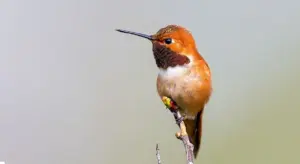
When individual birds turn up hundreds or thousands of miles off course, ornithologists classify them as "vagrants." Over the past several years, Corkscrew Swamp Sanctuary has played host to a revolving door of these rare visitors, including an overwintering Wilson’s Warbler (Cardellina pusilla), a Western Tanager (Piranga ludoviciana), and a Lazuli Bunting (Passerina amoena).
Dr. Dossman points out that Florida’s unique geographic configuration makes it a magnet for these biological anomalies. "We find them in Florida sometimes because we are along their general trajectory," he notes, explaining that the peninsula acts as a natural ecological trap and funnel for birds swept eastward by prevailing upper-level winds or led astray by corrupted internal maps.
Official Statements & Expert Perspectives
The intersection of local field observations and macro-level ecological research provides profound insights into the long-term evolutionary significance of migratory vagrancy. While casual birdwatchers marvel at the sudden appearance of a rare species in a local sanctuary, researchers view these events through the lens of population dynamics and evolutionary biology.
What Becomes of the Wanderers?
A central question facing avian researchers is the ultimate fate of birds that find themselves thousands of miles from their intended wintering grounds. Do they survive, perish, or forge new biological frontiers?
According to Dr. Dossman, tracking data offers the only definitive means of answering this question. The immediate outlook for a vagrant bird is frequently grim, marked by starvation, predation, or exhaustion. Yet, every rule has its exception.
"Sometimes a bird can get lucky, find good habitat, and survive winter to return north the following spring," Dr. Dossman explains. "Or it could be an early colonizer that returns the following year, potentially founding a population in a new area, which, over long enough timelines, is one way they end up becoming new subspecies."
This evolutionary perspective transforms vagrancy from a simple navigational error into a potential engine of speciation. Climate change, habitat fragmentation, and shifting weather patterns may increasingly test these internal maps, making sanctuaries that offer resilient habitats more crucial than ever.
Future Outlook: Technology, Tracking, and Conservation
As avian ecosystems face mounting pressures from global environmental change, conservationists are turning to sophisticated telemetry and data-sharing networks to monitor migratory species in unprecedented detail.
The Motus Wildlife Tracking System
Traditional banding methods provided historical data on bird movements, but they relied heavily on recapturing birds at specific locations—a notoriously low-yield endeavor. Today, the Motus Wildlife Tracking System, an international collaborative network coordinated by Birds Canada, utilizes automated radio telemetry to track small flying animals in real time.
Tiny, lightweight nanotags affixed to birds emit coded radio pulses detected by automated monitoring stations scattered across the globe. Since 2022, a dedicated Motus station installed at Corkscrew Swamp Sanctuary has successfully detected 28 individual birds representing 17 distinct species, quietly logging the passage of winged travelers as they thread their way through the Florida landscape.
The Bird Migration Explorer
Complementing on-the-ground telemetry is the Bird Migration Explorer, an innovative online initiative developed by Audubon’s Migratory Bird Initiative and its conservation partners. By aggregating data from Motus towers, satellite telemetry, citizen science platforms, and banding projects worldwide, the Explorer provides an interactive digital atlas. Anyone from amateur bird enthusiasts to professional researchers can now visualize the epic annual journeys undertaken by more than 450 bird species, gaining deep visibility into the connectivity of ecosystems and the shared threats birds face across hemispheric flyways.
A Century of Habitat Preservation
For more than 100 years, the National Audubon Society has worked tirelessly to protect the vital ecological stepping stones that birds rely upon for breeding, staging, and wintering. The discoveries at Corkscrew Swamp Sanctuary—from a lone Canada Warbler foraging in the cypress canopy to flocks of vagrant songbirds seeking refuge—serve as a powerful reminder of the sanctuary’s irreplaceable value.
As environmental pressures intensify, birds continue to vote with their wings, returning year after year to places like Corkscrew. In doing so, they not only enrich the experiences of the human visitors who walk the sanctuary’s boardwalks in search of tranquility and connection with nature, but they also underscore an enduring truth: protecting these fragile wetlands is essential to sustaining the wondrous, complex choreography of life on the wing.