
Executive Overview
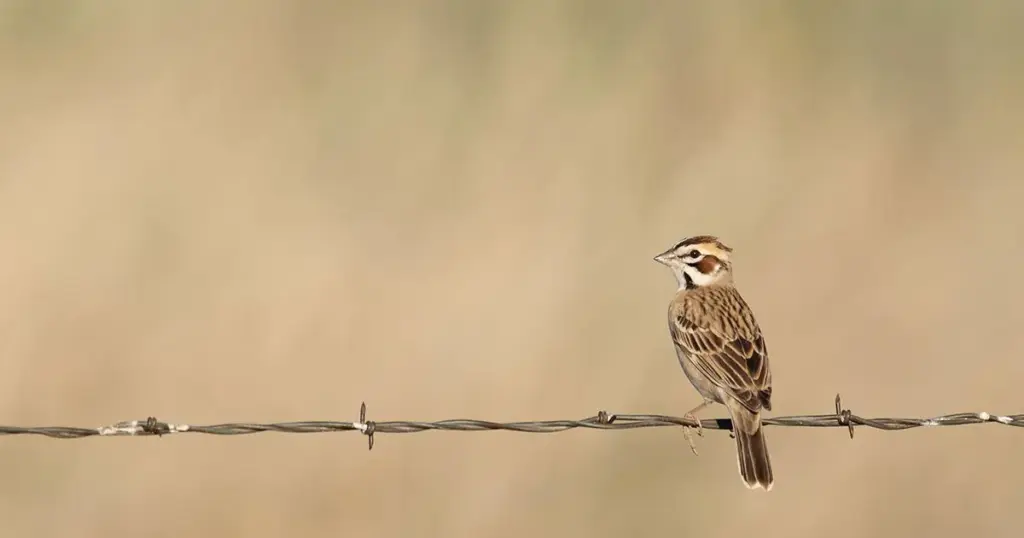
Across the city of Hopkins, Minnesota, a quiet metamorphosis is taking place on the exterior walls of local breweries, diners, tattoo parlors, and municipal buildings. A vibrant flock of avian murals has descended upon the municipality, transforming brick and mortar into an outdoor gallery of ecological urgency. A Yellow-bellied Sapsucker drills into the painted bark of a birch tree outside a local taproom; a Field Sparrow perches watchfully on the facade of a classic neighborhood diner; and an Indigo Bunting decorates the brickwork of a downtown tattoo shop.
These striking visual additions are part of the nationally renowned Audubon Mural Project, a public-art initiative that commissions artists across the United States to highlight bird species highly vulnerable to extinction due to a rapidly warming climate. For Hopkins, a city nestled within Hennepin County along the vital Mississippi Flyway migration route, the initiative is both a natural cultural fit and an urgent environmental declaration.
What began as a single resident’s deeply personal response to grief and ecological awakening has evolved into a sweeping civic movement. Galvanized by community fundraising, municipal partnerships, local arts organizations, and the creative labor of hundreds of schoolchildren, Hopkins has redefined how a town can engage with conservation. By blending fine art with rigorous ornithological science, the city has created a living museum that confronts global climate change through hyper-local visibility, proving that the fight for environmental preservation can begin right in one’s own backyard.
Detailed Chronology: From Backyard Grief to a Citywide Canvas
The story of the Hopkins Audubon Mural Project traces its roots back to personal transformation. Resident Francoise Shirley found solace in birdwatching in her backyard following the passing of her mother. What started as a coping mechanism soon blossomed into a profound connection to the natural world. However, as Shirley familiarized herself with the avian visitors frequenting her yard, she simultaneously encountered sobering scientific data regarding the catastrophic decline of common bird species across North America.
Faced with these grim statistics, Shirley experienced a common modern dilemma: What can one individual possibly do? Seeking an actionable path forward, she read an article in Audubon magazine detailing the national Audubon Mural Project. Realizing the potential of public art to bridge the gap between abstract climate data and visceral human emotion, Shirley resolved to bring the project to her hometown.
Shirley reached out to the City of Hopkins, the Hopkins Center for the Arts, and the Land of Lakes Bird Alliance—the local chapter of the National Audubon Society. All three entities embraced the vision with enthusiasm. Securing partial funding from the municipality and the arts center, the remaining financial needs were met through community crowdfunding. This grassroots funding model ensured that a vast cross-section of Hopkins residents held a literal and figurative stake in the initiative.
Phase One: Launching the Downtown Murals (September 2025)
In September 2025, the first wave of murals was completed, instantly altering the visual landscape of downtown Hopkins.
- Hoagie’s Family Restaurant (824 Mainstreet): Artist Audrey Carver painted a delicate tribute featuring a Clay-colored Sparrow and a Field Sparrow facing each other on two-foot-by-two-foot panels. Set against a soft yellow background evoking brushy pastures, the installation incorporates native prairie grasses and the insects upon which the sparrows feed.
- Dragonland Tattoo (923 Mainstreet): Artist Kada Goalen conceptualized a mural series titled "The Spaces Between." Originally commissioned for three birds, the building’s owner was so captivated that he funded an expansion to six species: an Indigo Bunting, a Scarlet Tanager, a Golden-winged Warbler, a Pine Grosbeak, a Wood Thrush, and a Brown Thrasher. Many of these species feed on berries, subtly nodding to Hopkins’ historic moniker as the "raspberry capital of the world."
- LTD Brewing (723 Mainstreet): Artist Adam Turman leveraged the natural crimson markings of the Yellow-bellied Sapsucker and the Red-headed Woodpecker. The mural depicts a sapsucker drilling into birch bark, capturing the ecological interplay of sap and the insects it attracts.
Winter and Spring 2026: Educational Outreach and Expansion
The completion of the initial downtown installations served as a launchpad for broad community engagement. In October 2025, Hopkins hosted its first-ever Migratory Bird Day celebration. Events quickly proliferated across farmer’s markets, toy stores, and coffee shops. Concurrently, the Land of Lakes Bird Alliance launched an educational course at the Hopkins Activity Center, pairing mural tours with practical lessons on how homeowners can make their properties more bird-friendly.
In the spring of 2026, the project expanded to youth education. Approximately 450 students—ranging from kindergarteners to fifth-graders at Alice Smith Elementary School—collaborated under the guidance of art teacher Nikki Frueh to paint four large murals. These installations featured the Henslow’s Sparrow, Cerulean Warbler, American Goshawk, and Boreal Owl. The finished pieces were unveiled at the school’s spring art show, accompanied by student-crafted clay birds and grid drawings.
Summer 2026: The Public Works Masterpiece
The momentum crested in the summer of 2026 with the unveiling of a monumental 80-foot-by-20-foot mural on the exterior of the City of Hopkins Public Works Department building (11100 Excelsior Boulevard). Painted by Colorado-based artist and former avian field researcher Catie Michel, the piece—titled "After Dark"—explores the interconnected webs of local nighttime species, featuring Wood Thrushes, Eastern Whip-poor-wills, moths, and native host plants.
Supporting Context & Metrics: The Science of Survival
While the murals offer undeniable aesthetic charm, their underlying message is rooted in sobering ornithological science. According to landmark data from the National Audubon Society’s Survival by Degrees report, climate change poses an existential threat to hundreds of North American bird species, driven by habitat loss, shifting thermal ranges, increased frequency of wildfires, and extreme weather events.
The species highlighted across Hopkins are not distant, exotic creatures; they are local residents facing severe climatic pressure:
| Species | Primary Habitat Vulnerability | Projected Climate Impact (Audubon Models) |
|---|---|---|
| Field Sparrow | Brushy pastures, overgrown meadows | May lose 72% of its summer breeding range due to heat waves and wildfires. |
| Clay-colored Sparrow | Brushy borders, young woodlands | Projected to lose 70% of its range, potentially eliminating its breeding presence in Minnesota. |
| Scarlet Tanager | Large interior forest blocks | Vulnerable to urbanization, heavy rain, and forest fragmentation; could lose 68% of summer range. |
| Golden-winged Warbler | Shrublands, damp thickets | Populations are severely declining; faces a catastrophic 100% loss of U.S. summer breeding range under current warming trends. |
| Yellow-bellied Sapsucker | Deciduous and mixed forests | Threatened by disappearing nesting grounds; projected to lose 88% of range, shifting north into Canada. |
| Red-headed Woodpecker | Forest clearings, open groves | Already a rare sight; faces a 94% range reduction, effectively clearing it from the American South and Midwest. |
| Boreal Owl | Dense coniferous and boreal forests | Pushed northward by warming temperatures, potentially losing 84% of its current summer range. |
These localized metrics underscore the rationale behind the project. As Marian Weidner, president of the Land of Lakes Bird Alliance, points out, urban birds face immediate, compounding threats from light pollution, building collisions, and the eradication of native flora. While global climate change requires international policy shifts, these murals remind residents that urban conservation—such as planting native species, keeping cats indoors, and applying window markers—remains an actionable local responsibility.
Official Statements and Artist Perspectives
The success of the Hopkins Audubon Mural Project relies heavily on the philosophy of its creators and community leaders, who view art not merely as decoration, but as a catalyst for empathy and stewardship.
Francoise Shirley emphasizes the inclusive nature of the civic fundraising and community response:
"We really got a huge segment of the population to be involved and feel ownership in this initiative. We wanted to bring awareness to the fact that birds in our very own backyards in Hopkins are vulnerable, not just those in other parts of the country or world."
For the participating artists, the project represents a profound intersection of creative expression and scientific advocacy:
- Audrey Carver, whose background is in environmental science and climate conservation before turning to full-time art, remarks on the synergy of her fields:
“When I’m able to incorporate my passion for environmental education and art to help people engage with their local ecosystem, it’s really an amazing opportunity.” - Kada Goalen, a Twin Cities native with 25 years of mural experience, highlights the intimate scale of her work at Dragonland Tattoo:
“I wanted it to be very approachable and really make sense to the environment around Hopkins. Hopkins has a special place in my heart. I love the community, and I love how much they support art, too.” - Adam Turman speaks to the emotional core of his public works:
“My whole goal when I do murals is to make people happy. To have an opportunity to go for a call right next door, in a city that’s wonderful and beautiful and loving and caring, that was really special.” - Catie Michel, whose public works background is informed by her time as a volunteer bird bander with the Bird Conservancy of the Rockies, offers a poetic lens on her massive public works mural:
“Perhaps this title [‘After Dark’] can also refer to a still-possible time in the future when these birds are no longer designated as especially vulnerable… When all bird—and all beings’—populations reach a balanced state, and when our societal systems reflect an ethos of collective care.”
Future Outlook: A Permanent Legacy of Conservation
As the wave of murals continues to integrate into the daily rhythms of Hopkins, the city stands as a national model for how municipal infrastructure, educational institutions, local businesses, and grassroots volunteers can unite under a common ecological banner.
The initiative has proven that public art does not need to be passive. By anchoring global climate data to tangible, local species painted on the walls of everyday establishments, Hopkins has fostered a permanent cultural shift. From elementary school students proudly identifying the Boreal Owl to patrons discussing the habitat needs of the Field Sparrow outside a neighborhood diner, the project ensures that conversations about conservation remain active, accessible, and deeply embedded in the community’s identity.
Moving forward, the partners behind the Hopkins Audubon Mural Project intend to expand their educational programming, maintain building safety retrofits to prevent bird-window collisions, and monitor local biodiversity. Through the stroke of a brush and the collective will of a engaged citizenry, Hopkins has shown that even as climate pressures mount, the community’s commitment to protecting its feathered neighbors will only continue to take flight.