
Executive Overview
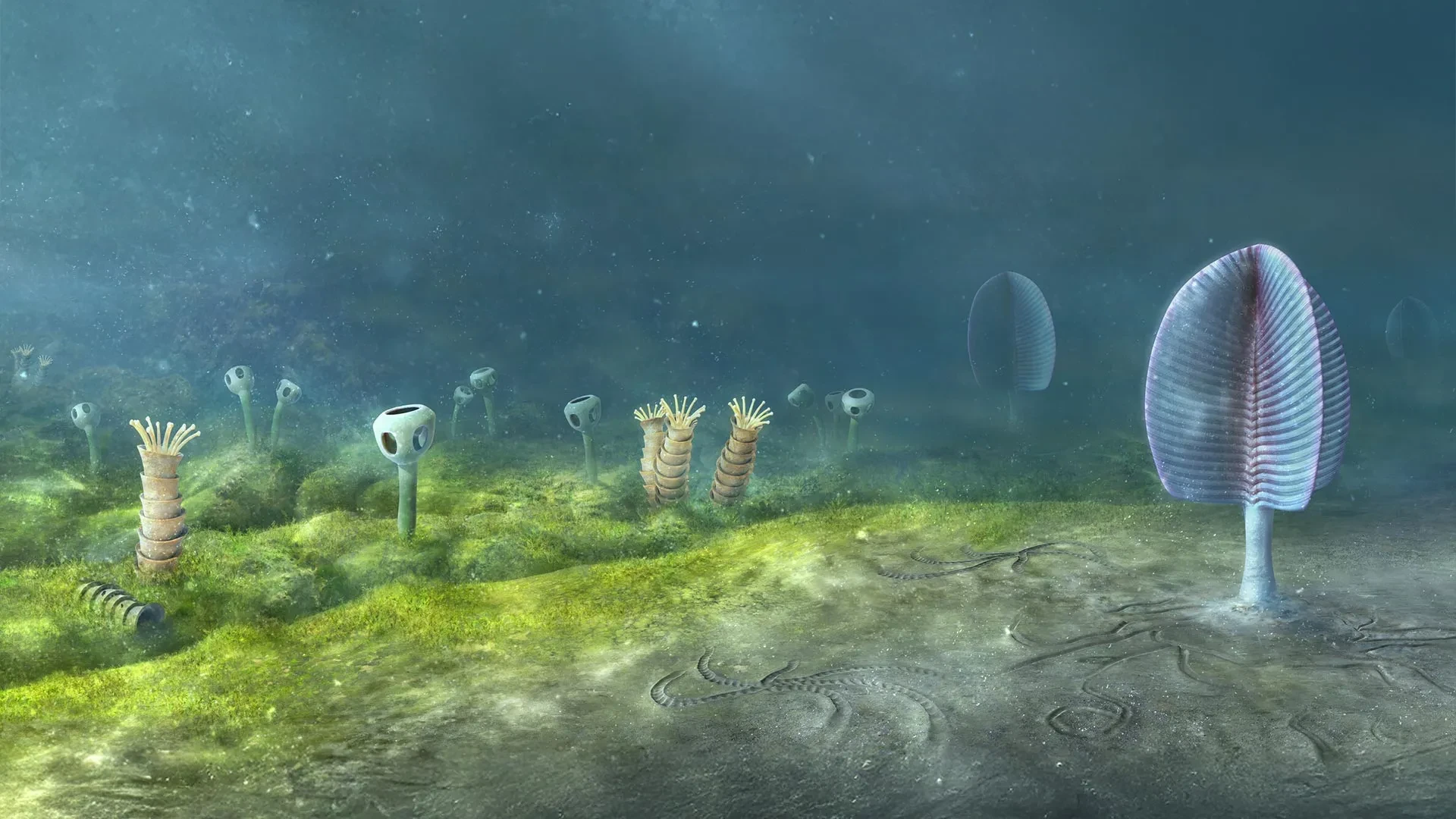
In a groundbreaking study that upends conventional paradigms in evolutionary biology and paleontology, an international team of researchers has revealed that the animal kingdom may have originated up to 200 million years earlier than previously indicated by the clear fossil record. Published in Science Advances, the research directly challenges a foundational assumption that has guided scientists for decades: the belief that the absence of animal fossils in remarkably preserved ancient deposits proves that animals simply did not exist at the time.
Led by a team from the University of Oxford—in collaboration with institutions including the University of California, Berkeley, ETH Zürich, and Yale University—the study centers on an exhaustive examination of exquisite microfossils from the Kheseen Biota in Mongolia. By demonstrating that animals can be entirely absent from exceptionally preserved deposits even during epochs when we know they walked, swam, or burrowed on Earth, the researchers have dismantled a key benchmark used to cap the maximum age of animal evolution.
When the research team recalibrated molecular clock models using older geological constraints, the estimated genesis of animal life was pushed backward by approximately 200 million years. This adjustment places the dawn of the animal kingdom deep within the Neoproterozoic Era, roughly 800 to 700 million years ago. This radical timeline suggests that Earth’s earliest animals may have predated—or miraculously survived—some of the most catastrophic global glaciation events in planetary history, commonly known as "Snowball Earth."
As the scientific community grapples with these revelations, textbooks may need to be rewritten, and a multidisciplinary hunt must begin to find elusive, soft-bodied pioneers in rocks previously dismissed as too primitive to host animal life.
Detailed Chronology: From the Cambrian Explosion to the Neoproterozoic Era
To understand the magnitude of the new findings, one must examine the timeline that has puzzled paleontologists for generations. For centuries, the fossil record presented an evolutionary paradox often termed "Darwin’s Dilemma."
The Illusion of Abrupt Appearance
Historically, the most prominent pulse of complex animal evolution appeared to occur rapidly during the Cambrian Period, spanning roughly from 539 to 487 million years ago. During this window, known as the Cambrian Explosion, a dizzying array of complex body plans—including arthropods, mollusks, and early chordates—burst onto the geological scene, leaving behind a wealth of hard-shelled and skeletal body fossils.
However, evolutionary theory, reinforced by decades of genetic and molecular analyses, strongly suggested that the root of the animal tree (Metazoa) must lie much deeper in time. If complex phyla were already fully differentiated by the early Cambrian, their ancestral lineages must have split hundreds of millions of years prior. Yet, reliable, unambiguous body fossils of animals from those older strata remained notoriously scarce, leaving a vast ghost lineage shrouded in mystery.
The Role of Exceptional Fossil Deposits (Lagerstätten)
To resolve this discrepancy, scientists turned to ancient Konservat-Lagerstätten—rare, extraordinarily preserved fossil deposits where soft tissues, microorganisms, and delicate embryonic structures are fossilized in microscopic detail. These sites act as windows into primeval ecosystems, offering a census of what lived in a given body of water at a specific point in time.
At the epicenter of the traditional dating framework has been the Weng’an Biota in South China, a roughly 590-million-year-old fossil deposit from the Ediacaran Period. The Weng’an Biota is famous for preserving microscopic organisms, algae, and proto-embryos with jaw-dropping fidelity.
Because paleontologists searched the Weng’an rocks exhaustively and found no definitive animal fossils, a consensus emerged: If animals had been alive 590 million years ago, a deposit as pristine as Weng’an would surely have captured them. Consequently, scientists used the age of the Weng’an Biota to establish a firm "maximum age constraint," arguing that the animal kingdom could not have evolved significantly before 590 million years ago.
The new Oxford-led study breaks this foundational assumption wide open.
Supporting Context & Metrics: The Mongolia Microfossil Test
To test the validity of the Weng’an assumption, the international research team traveled to Central Asia to examine an even more challenging archive of ancient life: the Kheseen Biota in Mongolia.
Breaking the Weng’an Paradigm
The Kheseen Biota is a geological formation roughly 40 million years younger than the Weng’an Biota, placing it deeper in the Ediacaran Period. Interestingly, the Kheseen and Weng’an assemblages share several key species of microfossils, providing a reliable correlation between the two sites.
Crucially, by the time the Kheseen Biota formed, scientists already have definitive, ironclad proof from other global localities—such as Namibia and South China—that multicellular animals were actively roaming the globe.
The research team collected and analyzed more than 140 rock samples, utilizing advanced scanning electron microscopy (SEM) to inspect previously undocumented locations within the Kheseen formation. Their analysis revealed a treasure trove of exquisitely preserved microfossils. Among them were acritarchs—enigmatic, tiny spherical organisms adorned with intricate spines and branching projections—alongside fragile, embryo-like structures complete with internal cell divisions.
Yet, despite the phenomenal preservation quality of the Kheseen microfossils, not a single specimen could be confidently identified as an animal.
Recalibrating the Molecular Clock
The implications of the Kheseen Biota are profound. As Senior Author Associate Professor Ross Anderson noted, the site shatters the long-held premise that exceptional fossil preservation guarantees the entrapment of animal remains. The Kheseen microfossils are just as exquisitely preserved as those at Weng’an, yet animals are entirely absent from the assemblage—despite indisputable evidence that animals existed elsewhere on Earth at that time.
This absence proves that animals either inhabited ecological niches distinct from those sampled by these microfossil deposits, or that the specific geochemical micro-environments required to fossilize delicate animal tissues simply were not present.
Consequently, the absence of animal fossils in the 590-million-year-old Weng’an Biota can no longer be used as definitive proof that animals had not yet evolved.
With this constraint removed, the researchers turned their attention to much older, pre-Ediacaran deposits dating from roughly 850 to 730 million years ago. These included:
- The Svanbergfjellet Formation (Norway)
- The Bitter Springs Group (Australia)
- The Chuar Group (Arizona, USA)
These ancient, fossil-rich sedimentary layers are fully capable of preserving microscopic life. By utilizing these older geological formations to constrain their evolutionary models, the team ran advanced molecular-clock analyses. This computational technique synthesizes genetic differences among living species, calibrated against known fossil dates and evolutionary mutation rates, to mathematically deduce when common ancestors split.
When the molecular clocks were anchored to these deeper timeframes, the estimated origin of the animal kingdom shifted backward by roughly 200 million years. The newly calculated range places the emergence of animals between 800 and 700 million years ago.
The Biomarker Connection and "Snowball Earth"
This deeply rooted timeline aligns intriguingly with prior biochemical clues. For years, organic geochemists have studied chemical fossils—known as biomarkers—extracted from ancient rocks. Specific lipid molecules, such as 24-isopropylcholestane, serve as molecular fingerprints for demosponges. These biomarkers have been detected in strata dating back at least 650 million years, predating the oldest macro-animal body fossils by tens of millions of years.
The earliest animals would have been diminutive, gelatinous, and entirely soft-bodied. Lacking mineralized shells, bones, or spicules, they possessed an extremely low preservation potential, easily degrading long before sediment could lithify around them.
Pushing the origin of animals back to 800–700 million years ago introduces an astonishing historical context: animal life may have originated before, or managed to survive through, "Snowball Earth."
Beginning around 720 million years ago, the Cryogenian Period ushered in the most extreme ice ages in geological history. Massive continental ice sheets marched all the way to the equator, plunging the planet into a deep freeze. Whether early animals nested in equatorial hydrothermal refugia or sparked evolutionary innovations in response to these extreme environmental pressures remains one of the most compelling questions in modern geobiology.
Official Statements and Expert Perspectives
The publication of this study has generated widespread discussion across the global paleontology and geobiology communities. The researchers themselves emphasize both the boldness of their conclusions and the humility required in reading Earth’s deep archive.
First author Orin Lole Durbin, who initiated the research as an undergraduate at the University of Oxford and is now a PhD student at Virginia Tech, reflected on the nature of the quest:
"Pre-Ediacaran body fossils still elude us, and this analysis does not definitively prove that animals walked the Earth 800 million years ago. However, our new fossil evidence from Mongolia undermines one of the main arguments for restricting animal origins to the Ediacaran interval. Meanwhile, our molecular-clock analyses demonstrate just how far back their evolutionary roots could potentially extend."
Associate Professor Ross Anderson of the Oxford University Museum of Natural History, who served as senior author on the paper, underscored the methodological shift required by the findings:
"The Kheseen Biota breaks the dogma that the exceptional microfossils of Weng’an mean we would have seen animal fossils in the assemblage had they existed at the time. The Kheseen microfossils are just as well-preserved, yet animals continue to be absent—despite the fact we know at that point they existed. Until new physical evidence of pre-Ediacaran fauna becomes available, the precise birth date of the animal kingdom remains a moving target, but our interpretive framework has fundamentally changed."
Independent experts note that while molecular clocks are powerful mathematical tools, they rely on assumptions about mutation rates that can carry inherent uncertainties. Nevertheless, the convergence of the Mongolian taphonomic data, older geological constraints, and organic biomarker records creates a highly robust, mutually reinforcing case for a much older Metazoan genesis.
Future Outlook: The Hunt for the Oldest Animals
As the scientific community digests the implications of the Oxford-led study, the roadmap for future research is becoming clear. Pinpointing the exact genesis of animal life will require a coordinated, multi-pronged approach that transcends traditional fossil hunting.
1. Expanding the Search Across Diverse Environments
Paleontologists must broaden their search horizons, investigating pre-Ediacaran sedimentary deposits from a wider array of geographic locations, paleolatitudes, and depositional environments. By examining shallow-water marine settings, deep-water basins, and restricted lagoons, researchers can better map how early ecological communities were distributed and why certain environments preserved micro-organisms while failing to capture macroscopic or soft-bodied fauna.
2. Integrating Multidisciplinary Lines of Evidence
Future investigations will increasingly rely on the convergence of three distinct scientific pillars:
- Body Fossils and Microfossils: Utilizing high-resolution microscopy, micro-CT scanning, and synchrotron imaging to scrutinize Ediacaran and Cryogenian rocks for overlooked microscopic animal larvae or resting stages.
- Trace Fossils: Searching for subtle bioturbation—such as ancient tracks, trails, and burrows—that indicate the mechanical movement of early, worm-like organisms through sediment, which often preserves better than soft tissue bodies.
- Chemostratigraphy and Biomarkers: Advancing analytical chemistry techniques to isolate and verify indigenous molecular fossils (biomarkers) in rocks dating back 800 million years and beyond, ensuring contamination-free signatures of early multicellular metabolism.
Conclusion
The research published in Science Advances marks a pivotal turning point in our understanding of planetary history. By dismantling the assumption that an absence of fossils equals an absence of life, the University of Oxford-led team has cleared away a major roadblock in evolutionary biology.
While the elusive physical body fossils of pre-Ediacaran animals remain hidden from view, the combination of exceptional Mongolian microfossils and calibrated molecular clocks suggests that the story of animal life began much earlier than we thought. As scientists venture back into the deep, frozen chapters of Earth’s history to search for our most distant ancestors, one thing is certain: the biography of the animal kingdom is far older, richer, and more resilient than the physical stone record initially let on.