
Executive Overview
For decades, the humble potato has presented an outsized logistical challenge for the global agricultural sector. Highly susceptible to bruising, impact damage, and structural degradation during harvesting and transport, the crop is responsible for millions of dollars in annual revenue losses across the supply chain. While agricultural engineers have historically focused on making harvesting machinery heavier, faster, or more automated, a critical link in the quality-assurance chain has long been neglected: human capital. Operator error, inconsistent training, and the complexities of handling sophisticated machinery under tight harvest windows remain persistent vectors for crop damage.
In a groundbreaking move to bridge the gap between advanced agricultural machinery and field-level expertise, consumer packaged goods (CPG) giant PepsiCo has joined forces with leading agricultural machinery manufacturer Grimme. Supported by immersive learning technology provider Altoura, the partnership has successfully developed hyper-realistic digital replicas—commonly known as "digital twins"—of Grimme’s flagship EVO and SE series potato harvesters.
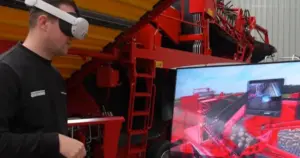
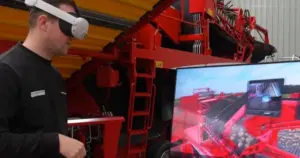
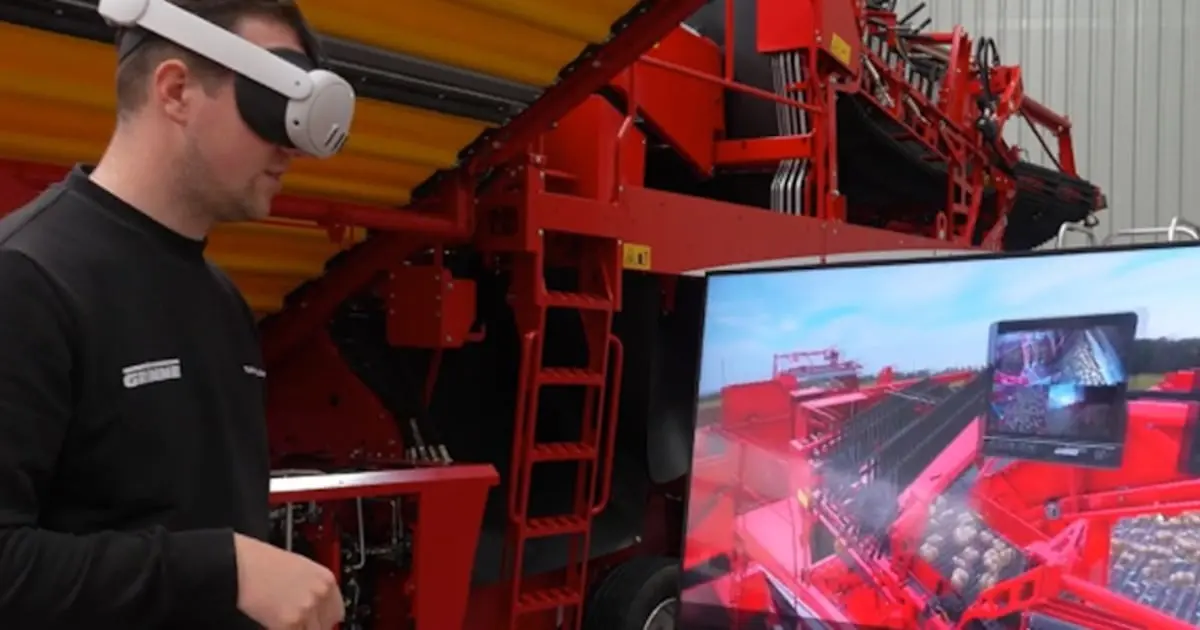
This cutting-edge training platform allows machine operators, agronomists, and farm workers to virtually inspect massive harvesters, remove mechanical panels, diagnose internal configurations, and simulate harvesting operations in an immersive 3D environment. Designed primarily for Virtual Reality (VR) headsets, the software is engineered for maximum accessibility, capable of running smoothly on tablets, smartphones, and standard desktop computers. Crucially, once the training module is downloaded via the Altoura application, operators do not require an active Wi-Fi connection or mobile service—a vital design feature for remote farming communities operating in the world’s most productive agricultural belts.
Initial pilots of the program have yielded staggering results. According to metrics released by PepsiCo, implementing the digital twin training platform increased the yield of bruise-free potatoes by an astonishing 87% during pilot phases, which included a remarkable 1.7-fold reduction in severe crop bruising. Following successful rollouts across Latin America and Europe, the initiative highlights how immersive technologies are shifting from the realm of corporate manufacturing floors to the muddy trenches of global agriculture. By tackling the root causes of operator error and supply chain waste, PepsiCo and Grimme are providing a masterclass in modernizing ag-tech workforce development.
Detailed Chronology: From Concept to Global Field Deployment
The genesis of this transformative ag-tech initiative did not happen overnight. It represents a systematic convergence of industrial manufacturing simulations, supply chain optimization, and a strategic desire to address labor constraints at the farm gate.
Phase 1: Identifying the Industrial Analogy
The concept of bringing immersive training to the agricultural sector was born out of cross-departmental pollination within PepsiCo. Rob Meyers, Vice President of Global Agriculture at PepsiCo, noted that the spark for the project came from observing how other divisions within the sprawling CPG enterprise utilized advanced simulation technologies. Earlier, PepsiCo made headlines by partnering with industrial tech giants Siemens and NVIDIA to deploy artificial intelligence and industrial digital twins for manufacturing and production optimization.
Recognizing the immense potential of virtual simulation, PepsiCo’s agricultural leadership asked a pivotal question: If digital twins can optimize complex factory lines and manufacturing plants, why can’t they be used to master the intricacies of a multi-ton potato harvester operating in unpredictable field conditions?
Phase 2: Building the Alliance and Technology Stack
To bring the vision to life, PepsiCo partnered with Grimme, a globally recognized authority in potato harvest technology, and Altoura, a specialist in immersive learning and spatial computing. The engineering teams set out to create exact digital counterparts of Grimme’s EVO and SE series harvesters.
Unlike traditional 2D manuals or instructional videos, the digital twins built by Altoura offer fully interactive, spatial experiences. Users can walk around the virtual machine, step inside the cab, disassemble internal sorting mechanisms, and observe how adjustments to chain speeds, roller angles, and share depths impact potato bruising in real time.
Phase 3: Global Pilot Testing (Brazil and Mexico)
With the software finalized, PepsiCo and Grimme initiated field testing in Latin America, launching pilot programs in Brazil and Mexico. These regions provided rigorous testing grounds due to varying soil compositions, harvest conditions, and operational scales.
During these initial trials, the partners measured a direct correlation between operator immersion in the virtual training modules and a dramatic reduction in crop damage. Operators who trained on the digital twins demonstrated superior machine calibration skills in the field, leading to the headline-grabbing 87% increase in bruise-free harvests.
Phase 4: Expansion to Europe and Showcase at Global Agro University
Buoyant by the success of the Latin American trials, the collaboration expanded across the Atlantic. Last year, PepsiCo and Grimme rolled out the digital twin training platform to farming partners in Poland and Romania—two critical European hubs for potato production.
To further evangelize the technology, the companies showcased the interactive VR harvesters at PepsiCo’s prestigious Global Agro University in Germany. This educational showcase allowed agronomists, regional farm managers, and industry stakeholders to experience firsthand how spatial computing can transform baseline agricultural education.
Supporting Context & Metrics: The Economics of Potato Bruising and Labor Challenges
To fully appreciate the significance of the PepsiCo-Grimme partnership, one must examine the high-stakes economics of potato farming and the structural labor shortages currently plaguing the global agricultural landscape.
The True Cost of Crop Bruising
Potatoes are delicate commodities. Beneath their seemingly rugged skin lies high water content and starch structures that bruise easily under mechanical pressure, drops, or excessive vibration during harvesting, grading, and transport. Internal bruising often goes unnoticed during initial packaging, only to manifest as dark, unmarketable blemishes by the time the product reaches grocery store shelves or processing plants.
The financial fallout is staggering. Across the global supply chain, mechanical damage accounts for millions of dollars in lost revenues annually. For farmers operating on tight profit margins, a high bruising rate can mean the difference between a profitable season and significant financial distress.
However, as Rob Meyers points out, the financial equation heavily favors technology adoption:
"The loss of revenue for a farmer due to bruising can be very high, and the VR technology costs are only a fraction of this risk."
Bridging the Agricultural Labor Gap
Beyond crop damage, the agricultural sector faces a compounding crisis: a chronic shortage of skilled, experienced labor. Farming has become increasingly mechanized, requiring operators to master sophisticated machinery equipped with advanced hydraulics, electronics, and precision-ag software. Yet, agriculture remains heavily reliant on seasonal, geographically dispersed workforces.
Training seasonal operators traditionally presents logistical nightmares. Language barriers, varying technical literacy, and the sheer cost of taking physical multi-thousand-dollar harvesters out of commission for hands-on training sessions severely limit traditional educational methods.
The PepsiCo-Grimme digital twin platform directly attacks this bottleneck. By moving the training environment into virtual reality or accessible mobile screens, farms can scale their educational programs effortlessly. An operator in rural Romania, a seasonal worker in Mexico, or an agronomist in Poland can all access standardized, expert-level training tailored to their native language before ever stepping foot near a live machine.
Official Statements and Localized Deployment Strategies
A cornerstone of the initiative’s success has been its deliberate, localized approach to software rollout. Technology adoption in agriculture often fails when urban-developed solutions are forced onto rural farming communities without accounting for regional nuances.
Rob Meyers, VP of Global Agriculture at PepsiCo, emphasized this philosophy in an interview with AgNavigator:
"Adapting to local realities is often more important to driving adoption at scale. As we expand into new markets, we’re continuing to refine the experience, including language support and training content. The goal isn’t to introduce complexity. It’s to make proven expertise available to more operators, in more places, before they enter the field."
This localization strategy ensures that the virtual harvesters reflect regional harvesting practices, soil types, and specific machinery configurations used by local growers. By prioritizing usability over unnecessary technological flash, PepsiCo and Grimme have built a tool that resonates with everyday farmers who may have previously been skeptical of immersive technologies.
Furthermore, the technological architecture reflects a deep understanding of rural infrastructure limitations. While high-end Virtual Reality headsets—such as Meta Quest or enterprise-grade visors—provide the most immersive spatial experience, the Altoura-backed platform is intentionally hardware-agnostic. Farmers without VR hardware can access the exact same instructional content via tablets, smartphones, and desktop computers.
Even more impressive is the offline functionality. Recognizing that many agricultural fields lack reliable cellular service or high-speed broadband, the application is designed to function entirely offline once downloaded. Operators can sync their training modules while in town or at a farm office, and take the digital twin directly into remote fields without worrying about dropped connections.
Future Outlook: The Next Frontier of Immersive Agriculture
As the agricultural industry stares down the barrel of a changing climate, labor scarcity, and tightening sustainability mandates, the PepsiCo-Grimme collaboration offers a compelling glimpse into the future of farming.
The Evolution of Digital Twins in Ag-Tech
While digital twins have established deep roots in aerospace, manufacturing, and smart cities, their application in primary agricultural production is still in its infancy. The success of the potato harvester project signals that we are witnessing the dawn of a broader movement.
In the coming years, industry analysts expect digital twin technology to expand beyond harvesting machinery into tractors, sprayers, irrigation systems, and entire farm ecosystems. By simulating real-world agricultural machinery operations, companies can preemptively identify mechanical failure points, optimize fuel efficiency, and train operators to minimize carbon footprints alongside physical crop damage.
Scaling Up and Broadening Horizons
For PepsiCo, the potato harvester pilot is merely a stepping stone. Having proven the efficacy of VR and digital twins in drastically cutting waste (achieving an 87% increase in bruise-free yields), the CPG giant is actively looking at how similar immersive learning frameworks can be applied to other key crops in its global supply chain, such as corn, oats, and specialized seasoning crops.
As spatial computing hardware becomes more affordable, lightweight, and user-friendly, the barriers to entry for everyday farmers will continue to drop. The sight of a farm worker reviewing mechanical configurations through a VR headset or an interactive tablet will likely transform from an experimental novelty into a standard agricultural best practice.
Ultimately, the PepsiCo and Grimme initiative proves that solving some of agriculture’s oldest and most stubborn problems—like a bruised potato—doesn’t always require inventing a heavier machine or a harsher chemical. Sometimes, the most powerful tool a farmer can possess is a clearer, more accessible understanding of the machinery they already own.