In the ecosystem of digital media, short-form video content depicting domesticated animal behavior frequently serves as a window into canine cognition, social hierarchy, and breed-specific traits. A recent viral video published on Instagram featuring Bear, a full-grown English Mastiff, and his equally massive canine sibling, has captured widespread attention, generating over 7,500 likes and thousands of engagements across pet-focused digital communities.
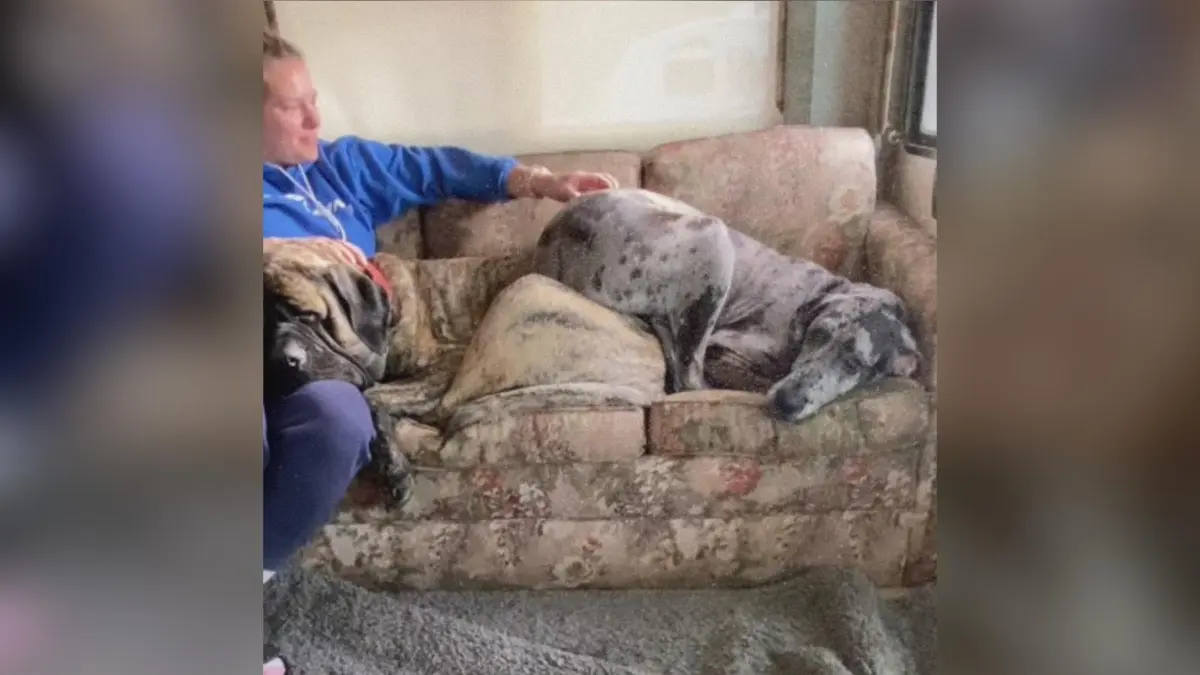
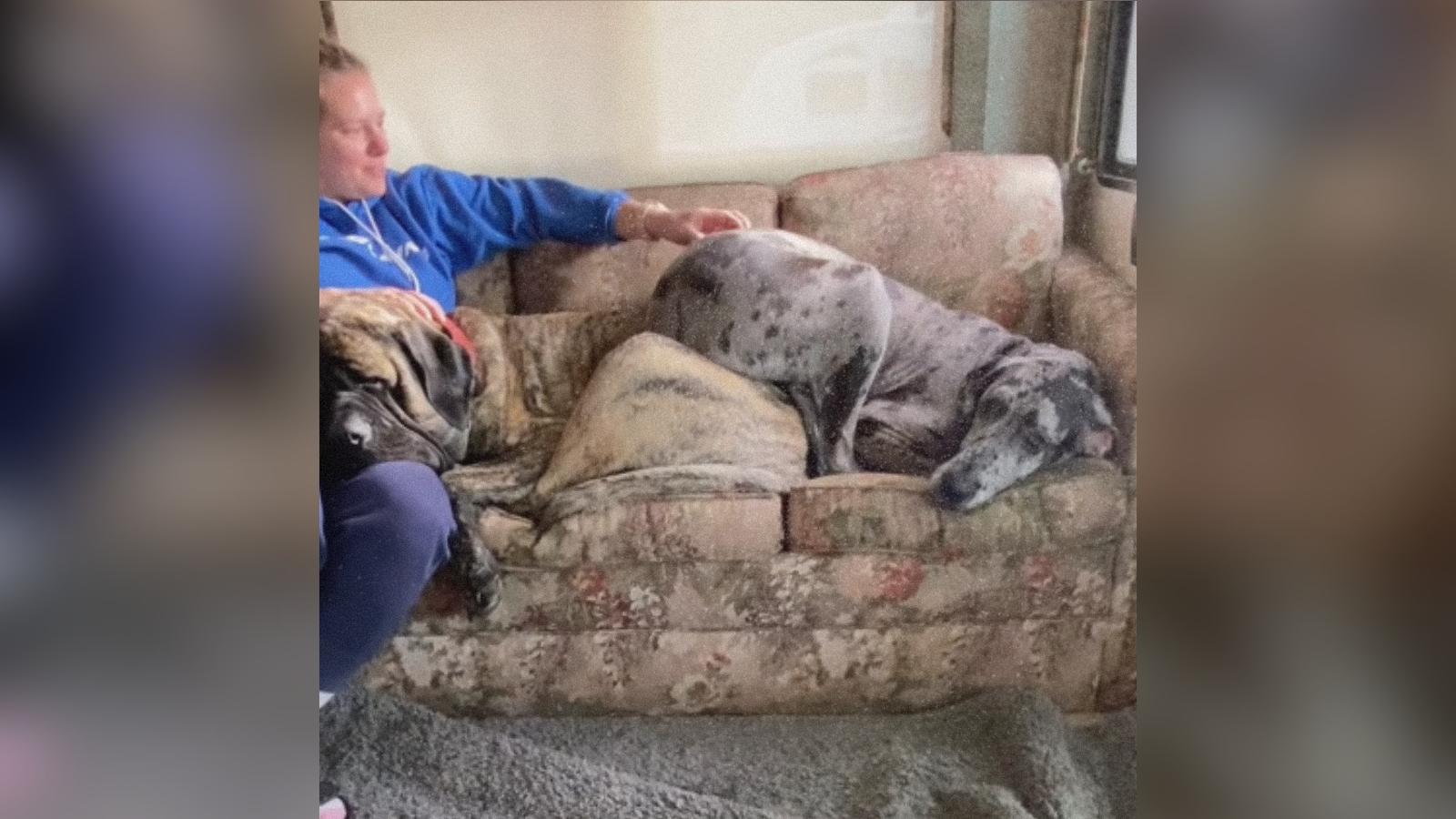
The interaction, recorded in a residential living room, captures a moment of physical negotiation over furniture access. Bear, who had initially claimed virtually the entire surface area of a family sofa, was confronted by his sibling’s desire to join the resting area. Rather than triggering a territorial dispute or forcing a repositioning, the event culminated in an extraordinary display of passive tolerance: the intruding Mastiff deliberately backed onto Bear, using his sibling’s body as a literal extension of the furniture.
This case study in domestic canine behavior illustrates critical aspects of giant breed temperaments. Far from showing aggression or spatial guarding, both animals demonstrated the low-arousal, highly tactile behavior characteristic of the English Mastiff breed (Canis lupus familiaris). This article provides a comprehensive journalistic analysis of the event, breaking down the chronology of the interaction, analyzing the underlying behavioral metrics and digital reception, presenting community commentary, and evaluating the broader implications for giant breed guardianship.
Detailed Chronology of the Sofa Negotiation
To fully understand the behavioral dynamics captured in the footage, a sequential breakdown of the interaction offers critical insight into how giant dogs negotiate space, proximity, and shared household resources.
+-----------------------------------------------------------------------------------+
|                        TIMELINE OF THE CANINE INTERACTION                         |
+-----------------------------------------------------------------------------------+
| 1. Baseline Occupation  : Bear sprawls across sofa; head resting in owner's lap.   |
| 2. Sibling Approach     : Second Mastiff enters frame, assessing limited spatial availability. |
| 3. Execution Phase      : Sibling mounts sofa rear-first, maneuvering over Bear.   |
| 4. Structural Cushioning: Sibling sits directly onto Bear’s midsection ("If I fits...").|
| 5. Zero-Arousal State   : Bear remains completely unfazed; no vocalization or movement. |
+-----------------------------------------------------------------------------------+
Phase 1: Baseline Occupation and Environmental Setup
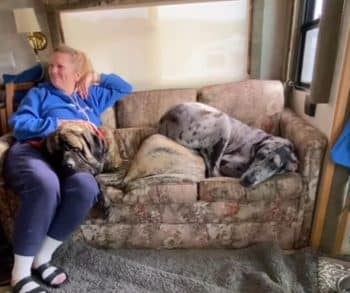
The clip opens with Bear fully extended across a large, floral-patterned living room couch. Weighing well into the upper registers typical of male English Mastiffs—frequently between 160 and 230 pounds—Bear’s physical frame naturally monopolized almost the entirety of the seating surface. His head was comfortably anchored on his female owner’s lap at one terminus of the sofa, creating a high-value physical bond that combined physical comfort with social proximity.
At this baseline stage, Bear exhibited complete physiological relaxation. His muscular tone was slack, his respiratory rate steady, and his eyes half-lidded—indicators of a low-stress environment where environmental threats were entirely absent.
Phase 2: The Sibling’s Approach and Spatial Assessment
The tranquil state was interrupted when Bear’s sibling, a second giant-breed dog of comparable physical stature, approached the furniture with the explicit intention of lounging. Upon reaching the edge of the sofa, the second dog encountered an immediate spatial deficit:
The primary seating cushions were occupied by Bear’s torso and limbs.
The northern anchor of the couch was occupied by the owner.
The remaining usable upholstery measured only a fraction of the second dog’s body length.
Standard canine behavioral models suggest three primary outcomes in resource-constrained scenarios: displacement of the occupant, abandonment of the objective, or tactile adaptation. The second Mastiff selected the latter.
Phase 3: The "Reverse-Sit" Execution
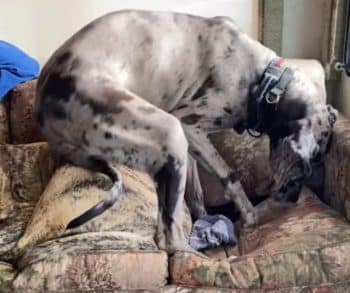
Rather than attempting a head-first entry or nudging Bear off the cushions, the approaching sibling executed a deliberate reverse maneuver onto the far edge of the sofa. Elevating his hindquarters onto the frame, the dog systematically lowered his back half directly onto Bear’s flank and ribcage.
By utilizing Bear’s broad body as a secondary support layer, the intruding dog effectively converted a two-dimensional seating surface into a three-dimensional stacked lounge. The maneuver mirrored the informal Internet adage, "If I fits, I sits," demonstrating an uncanny sense of spatial improvisation.
Phase 4: Resolution and Passive Acceptance
The most striking element of the video occurred during the post-settling phase. As the weight of the second giant dog settled across his midsection, Bear offered zero resistance. He did not vocalize, shift his position, growl, or even lift his head from his owner’s lap.
The interaction concluded with both dogs coexisting in a dense, multi-layered pile of fur and muscle, while the household owners laughed at the sheer absurdity of the arrangement.
Supporting Context & Metrics
Social Media Engagement Analysis
The video’s distribution via Instagram provides quantifiable evidence of the public’s fascination with giant breed behavior. The post demonstrated rapid organic reach driven by high completion rates and user resharing.
Digital media analysts note that animal videos exhibiting contrast—specifically extreme physical size paired with exceptionally gentle or passive behavior—consistently outperform standard pet content. The juxtaposition of a 200-pound dog being used as a literal chair cushion generates high emotional resonance and shareability.
Behavioral Science: Why Do Giant Dogs Lap-Stack?
To the untrained observer, one dog sitting directly atop another might appear to be an act of dominance or physical disrespect. However, veterinary behaviorists offer a far more nuanced interpretation rooted in canine social structure and breed genetics.
          [ CANINE TACTILE DYNAMICS IN MULTI-DOG HOMES ]

     +-----------------------+           +-----------------------+
     |   Physical Contact    |           |    Thermal Economy    |
     |   Releases Oxytocin   |           |    Sustains Body Heat |
     +-----------+-----------+           +-----------+-----------+
                 |                                   |
                 +-----------------+-----------------+
                                   |
                                   v
                    +-----------------------------+
                    |  Tactile Affiliation &      |
                    |  Co-Sleeping Behaviors      |
                    +--------------+--------------+
                                   |
                                   v
                    +-----------------------------+
                    | Passive Toleration in       |
                    | Giant Breeds (e.g., Mastiff)|
                    +-----------------------------+
Tactile Affiliation: Dogs are naturally pack-oriented animals that utilize physical contact as a mechanism for social bonding. "Stacking" or leaning against one another elevates oxytocin levels in both animals, reinforcing intra-pack cohesion.
Thermal and Comfort Maximization: Despite their immense size, English Mastiffs have relatively short coats and a strong preference for soft surfaces. When floor space or furniture is cold or hard, another dog’s body represents a warm, yielding alternative.
Low Arousal Thresholds: English Mastiffs were historically bred for guarding, but modern breeding standards emphasize extreme patience, low reactivity, and emotional stability. Bear’s lack of reaction reflects a exceptionally high threshold for physical annoyance, a hallmark trait of well-adjusted giant breeds.
Public Reactions & Official Statements
Community Commentary
The commentary section beneath the Instagram publication served as a real-time repository of audience analysis, with viewers highlighting both the humor and the distinct psychological profile of the Mastiff breed.
User @ViewerOne: "Bear Bear doesn’t care care. Not even a flinch from him. Oh mastiffs… the best examples of being laid back."
User @ViewerTwo: "Room for all."
This sentiment was echoed across hundreds of interactions, with dog owners sharing parallel experiences regarding giant breeds’ complete lack of spatial awareness and absolute insistence on seeking physical closeness with their human and animal family members.
Statements from Pet Guardians and Behavior Experts
While formal corporate statements are absent in organic viral clips, comments synthesized from the pet guardians’ post caption succinctly summarized the household’s perspective:
"If I fits, I sits," noted the owner in the post’s caption, summarizing the relentless determination of giant breeds to fit into spaces far smaller than their anatomical dimensions would naturally allow.
Professional trainers reviewing the footage noted that the interaction highlights the importance of raising giant dogs in structured, low-stress environments. When dogs feel completely secure in their home, resource competition over furniture rarely devolves into conflict, allowing for peaceful—if visually absurd—resolutions.
Future Outlook & Implications for Giant Breed Guardianship
The viral popularity of Bear and his brother brings renewed attention to the realities, benefits, and responsibilities associated with owning giant dog breeds. As urban and suburban residential spaces evolve, the dynamic between large pets and household infrastructure remains an area of interest for prospective owners and animal welfare advocates alike.
+-----------------------------------------------------------------------------------+
|               FUTURE CONSIDERATIONS FOR GIANT BREED OWNERSHIP                     |
+-----------------------------------------------------------------------------------+
| Area of Focus             | Key Takeaway / Future Outlook                         |
+---------------------------+-------------------------------------------------------+
| Spatial Planning          | Need for heavy-duty, reinforced furniture or dedicated |
|                           | oversized orthopedic dog bedding.                     |
| Joint & Skeletal Health   | Managing weight distribution to prevent premature     |
|                           | strain on hips, elbows, and spinal columns.           |
| Social Media Influence    | Rising public interest driving awareness of giant     |
|                           | breed care requirements and calm temperaments.        |
+-----------------------------------------------------------------------------------+
1. Furniture Infrastructure and Household Ergonomics
As demonstrated in the video, standard residential furniture is rarely engineered to support the combined weight of two giant-breed dogs and a human owner simultaneously. Veterinary orthopedists caution that while shared couch lounging is harmless fun, owners must ensure that dogs do not suffer joint strain when mounting or dismounting elevated surfaces. The trend toward purchasing specialized, high-density orthopedic memory foam beds for giant breeds is expected to grow alongside rising ownership rates.
2. Responsible Giant Breed Advocacy
While videos like Bear’s showcase the incredibly gentle nature of English Mastiffs, experts emphasize that such docility is the result of deliberate breeding, proper socialization, and responsible management. Public exposure to viral pet media serves a dual purpose: it entertains millions while providing an educational baseline on how calm, well-adjusted animals interact within a secure domestic environment.
3. Final Analytical Synthesis
The moment captured between Bear and his sibling remains a classic example of canine behavioral adaptability. In an environment defined by limited
furniture real estate, the two Mastiffs chose cooperation over conflict, converting an impossible spatial puzzle into a viral moment of lighthearted domestic harmony. For Bear, the golden rule of the living room remained uninterrupted: so long as his head stayed on his mom’s lap, everything else—even a 200-pound brother sitting directly on his back—was simply minor background noise.