
Executive Overview
Long before a puppy learns to sit, heel on a loose leash, or navigate a crowded intersection to guide a person with visual impairments, a complex, invisible world of neurological development is already underway. At organizations like Dogs Inc, the journey of a future service or guide dog begins at the literal inception of life—during the delicate neonatal stage.
While newborns may appear entirely vulnerable, spending their first weeks sleeping, nursing, and relying entirely on their mother and littermates, their brains and nervous systems are experiencing explosive growth. To maximize this critical window, animal behaviorists and breeding programs utilize science-based protocols such as Early Neurological Stimulation (ENS).
Far from being a form of early obedience training, ENS is a gentle, standardized series of tactile exercises designed to introduce mild, controlled physical stimulation to the neonatal puppy. When combined with progressive socialization, structured environmental enrichment, and positive reinforcement, ENS lays the robust neurobiological foundation required for a dog to maintain lifelong emotional resilience, adaptability, and unwavering focus. This comprehensive report explores the science, stages, and profound impact of early-life interventions on the development of elite working dogs.
Detailed Chronology: From Neonatal Development to the Adolescent Threshold
A puppy’s journey from a blind, deaf newborn to a confident, highly skilled working partner is marked by distinct developmental phases. Each stage presents unique physiological milestones and specific behavioral windows that shape how the animal perceives and reacts to the world.

1. The Neonatal Stage (Birth to 2 Weeks)
During the neonatal stage, puppies exist in a sensory-limited world. Their eyes and ears remain sealed, and they are utterly dependent on their dam (mother) for warmth, nutrition, and elimination. They cannot yet regulate their own body temperature. Despite their outward helplessness, the brain is developing at an astonishing rate.
This is the precise window during which Early Neurological Stimulation is deployed. Because the nervous system is plastic and rapidly forming, brief daily stressors—such as those introduced via ENS protocols—stimulate the neurological system, improving cardiovascular performance, enhancing stress tolerance, and increasing adrenal gland resilience.
2. The Transitional Stage (2 to 4 Weeks)
As puppies cross into the transitional period, their eyes and ears open, forever changing how they interact with their environment. By approximately four weeks of age, puppies begin to walk, wag their tails, and vocalize with barks and whimpers. Their deciduous (baby) teeth erupt, signaling a dietary shift from exclusive nursing to weaning and soft food.
Socially, this is when puppies begin actively engaging with their littermates. Play fighting, chasing, and tumbling teach critical lessons in bite inhibition and canine communication, anchored by the invaluable behavioral guidance of the mother.

3. The Socialization Period (3 to 12 Weeks)
Often considered the most critical psychological window in a dog’s life, the socialization period bridges early puppyhood with independent learning.
- 3 to 8 Weeks: Puppies begin learning basic obedience cues in short, gamified training sessions using positive reinforcement. Crate training is introduced to foster early independence and establish comforting routines.
- 8 to 12 Weeks: By this juncture, puppies should be systematically exposed to a rich tapestry of sights, sounds, surfaces, and human demographics. Meeting novel people, exploring unfamiliar flooring, and experiencing gentle handling help inoculate the puppy against future anxieties.
- The Fear Periods: As puppies mature, they encounter an average of four distinct developmental "fear periods," during which negative experiences can leave deep, lasting impressions. Consequently, trainers and puppy raisers must introduce new stimuli thoughtfully and pair them exclusively with positive outcomes.
4. The Adolescent Stage (6 Months to 12 Months and Beyond)
Adolescence in dogs can begin as early as six months of age, mirroring human teenage years. During this phase, young dogs frequently test boundaries, question established routines, and experience shifting hormonal drives. Female dogs typically undergo their first heat cycle, while males exhibit hormone-driven exploratory behaviors.
Structured puppy classes (often recommended around 16 weeks and onward) help reinforce obedience, while continued socialization ensures the dog remains comfortable around other species, novel environments, and complex public spaces.
Supporting Context & Metrics: The Science of ENS and Canine Resilience
To understand the value of Early Neurological Stimulation, one must examine its origins and underlying biological mechanisms. Originally developed as part of the United States military’s "Bio Sensor" program (later popularized as the "Super Dog" program), ENS was engineered to improve the performance of working and military dogs.

The Five Core ENS Exercises
The protocol consists of five gentle, physical movements performed once daily on each puppy between days three and sixteen of life. Each exercise lasts approximately 3 to 5 seconds:
- Tactile Stimulation: Holding the puppy in one hand, the handler gently tickles the pad of one foot using a Q-tip.
- Head Up: Holding the puppy perpendicular to the ground (head pointing up, tail pointing down), the handler supports the body.
- Head Down: Holding the puppy so its head is pointed downward toward the ground at a 45-degree angle.
- Supine Position: Resting the puppy on its back in the palm of the handler’s hand, allowing it to relax for a few seconds.
- Thermal Stimulation: Placing the puppy on a damp, cool towel for a brief period.
Physiological Impacts
Scientific observations of dogs subjected to early handling protocols reveal several notable physiological changes compared to unhandled controls:
- Improved Cardiovascular Performance: Enhanced heart rate efficiency during physical exertion.
- Stronger Heart Beats: Increased cardiac reserve and overall structural resilience.
- Hormonal Adaptability: Greater tolerance to stress and more regulated cortisol responses when faced with novel stimuli.
- Greater Disease Resistance: Enhanced immune system functioning, leading to better overall baseline health.
However, experts emphasize that ENS is merely one chapter in a much larger story. A working dog’s temperament, health, and eventual success are governed by an intricate matrix of genetics, veterinary health care, nutrition, environmental enrichment, and lifelong training. ENS is a catalyst for neurological readiness; it does not replace the ongoing work of socialization and formal education.
Official Perspectives: The Philosophy of Early Intervention at Dogs Inc
Organizations dedicated to breeding and training elite service animals view early development through a holistic lens. Representatives from Dogs Inc stress that preparing a puppy for a life-changing career as a guide or service dog requires intentional investment from day one.

"Guide dogs and service dogs carry an immense responsibility," notes a lead canine development specialist. "They cannot simply possess basic obedience skills; they must navigate chaotic, high-distraction environments—such as crowded subway stations, bustling airports, and dense urban sidewalks—while remaining calm, focused, and emotionally steady under pressure. Those elite qualities do not materialize overnight. They are built systematically, starting in the neonatal nursery."
According to institutional guidelines, early handling programs like ENS create a baseline of biological adaptability. When paired with volunteer puppy raisers who introduce the growing dogs to diverse everyday situations, these animals develop the emotional cushion required to bounce back from unexpected disturbances.
Furthermore, the organization stresses the importance of positive reinforcement. By ensuring that every milestone—from the first introduction to a crate to navigating complex public access training—is framed as a positive, rewarding experience, trainers prevent fear-based behavioral pathologies. The result is a well-adjusted, confident partner capable of empowering individuals with independence and mobility.
Future Outlook: The Evolution of Modern Working Dog Breeding
As the fields of canine science, epigenetics, and animal behavior continue to advance, the protocols used to raise service dogs are becoming increasingly sophisticated. The future of breeding programs like those at Dogs Inc lies in bridging traditional animal husbandry with cutting-edge behavioral research.
Integrating Epigenetics and Enrichment
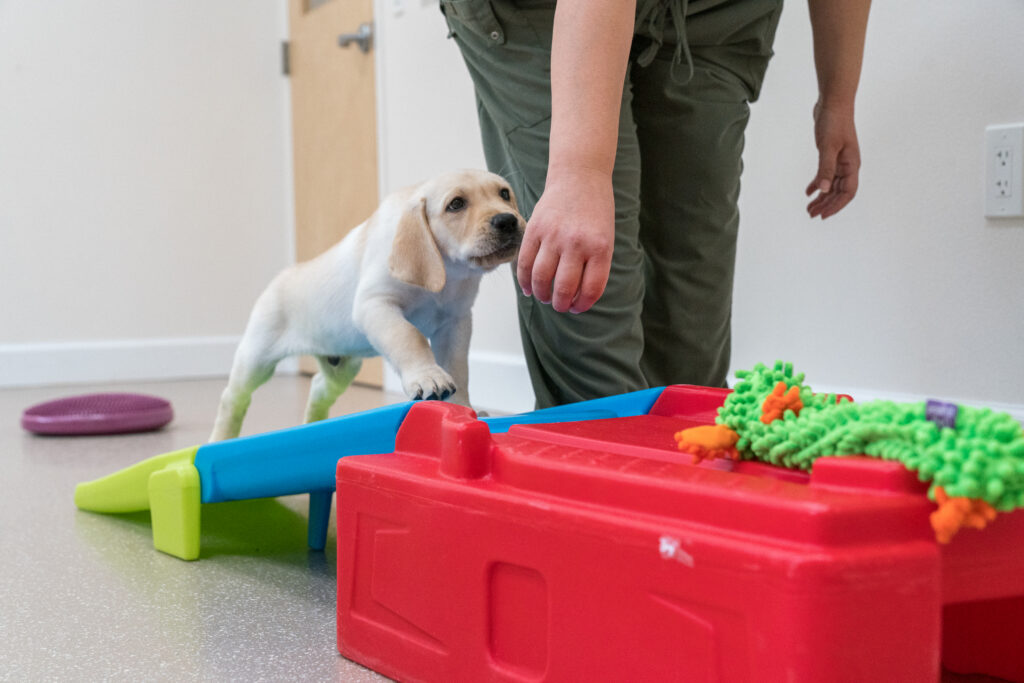
Researchers are increasingly focused on how early environmental enrichment interacts with canine genetics. While breeders can selectively pair dogs with superior health and temperament profiles, the expression of those genes—epigenetics—is heavily influenced by early neonatal experiences. Protocols like ENS, combined with enriched whelping environments (such as sensory toys, variable textures, and controlled sound clips), are setting new benchmarks for puppy resilience.
Lifelong Learning and Public Awareness
Looking ahead, the emphasis on early development is extending outward to educate the public and volunteer puppy raisers. Understanding the nuances of canine developmental windows allows handlers to support adolescents through fear periods effectively, minimizing behavioral dropouts and maximizing graduation rates for working dogs.
Ultimately, the first few weeks of a puppy’s life establish the trajectory for a lifetime of service. By combining rigorous, science-backed interventions like Early Neurological Stimulation with compassionate, lifelong training, organizations like Dogs Inc ensure that their dogs are ready to answer the call—transforming tiny paws into life-changing partners for individuals in need.