
Executive Overview
For centuries, the fundamental definition of life relied on a clear boundary: organisms were composed of cells, possessed their own metabolic machinery, and could independently synthesize proteins to sustain existence. Viruses defied this neat categorization from the moment of their scientific conceptualization. Consisting of little more than packets of genetic material wrapped in protein coats, viruses are incapable of independent replication. They exist in a twilight zone between chemistry and biology, acting as obligate intracellular parasites that hijack host cellular machinery to propagate.
Yet, far from being mere biological anomalies or modern pathogens, viruses have been co-evolving alongside cellular life since the dawn of Earth’s biosphere. A growing cadre of evolutionary biologists and virologists now argue that these microscopic entities were not just passive observers of early evolution, but active architects.
At the center of this paradigm shift is a radical hypothesis first proposed over two decades ago: the cell nuclear virus origin theory, also known as viral eukaryogenesis. First independently conceptualized in 2001 by Professor Masaharu Takemura of the Tokyo University of Science (TUS) and Dr. Philip Bell of Macquarie University, this theory suggests that the defining feature of complex, eukaryotic life—the membrane-bound cell nucleus—may have originated from an ancient, large DNA virus that successfully established a permanent, symbiotic residency within an archaeal ancestor.
This already compelling hypothesis has received a profound empirical boost. In a newly published study in the Journal of Virology, Professor Takemura and a collaborative team from the National Institute of Natural Sciences (NINS), Japan—including graduate students Jiwan Bae and Narumi Hantori, alongside Dr. Raymond Burton-Smith and Professor Kazuyoshi Murata—have announced the discovery of a novel giant DNA virus. Dubbed ushikuvirus after Lake Ushiku in Ibaraki Prefecture, Japan, where it was isolated, this newly characterized microbe provides crucial missing links in the evolutionary chain connecting giant viruses to the architecture of eukaryotic cells.
Beyond reshaping our theoretical understanding of macroevolution, the characterization of ushikuvirus and its relatives opens up vital new avenues in biomedical research, offering potential strategies to combat dangerous, amoeba-borne human pathogens. This article provides an exhaustive examination of the discovery, its historical context, structural mechanics, and the profound implications it holds for the future of biology.
Detailed Chronology: The Quest to Unmask Viral Origins
To fully grasp the significance of ushikuvirus, one must trace the historical trajectory of virology and evolutionary theory over the last century. For decades, standard evolutionary models treated viruses as degenerate forms of cellular life—organisms that had streamlined themselves over millennia, shedding unnecessary metabolic genes to become pure parasites. Alternatively, some models viewed them as primordial genetic elements that escaped from ancestral cells early in planetary history.
However, these reductionist frameworks struggled to account for the astonishing complexity, size, and genomic repertoire of certain viral lineages. A turning point occurred in 2001, when Professor Masaharu Takemura and Dr. Philip Bell independently formulated the viral eukaryogenesis hypothesis.
The Birth of Viral Eukaryogenesis
The viral eukaryogenesis model addresses one of the most significant evolutionary leaps in Earth’s history: the transition from simple prokaryotes (bacteria and archaea, which lack internal membrane-bound compartments) to complex eukaryotes (organisms ranging from single-celled amoebae to plants, fungi, and human beings, all characterized by a distinct, membrane-bound nucleus housing their genetic material).
The traditional consensus struggled to explain how a complex nucleus could evolve de novo from the cytoplasm of a prokaryotic host through gradualist adaptation alone. Takemura and Bell proposed an alternative: what if the nucleus was introduced from the outside?
According to their hypothesis, a large, complex DNA virus infected an ancient archaeal host. Rather than killing the host through standard lytic cycles, the virus established a stable, long-term symbiotic presence within the host cytoplasm. Over vast stretches of evolutionary time, the viral genome integrated with host genetic material, absorbed crucial regulatory and structural genes, and gradually evolved into the permanent, protected command center we now call the cell nucleus. If this hypothesis holds true, humanity and all other complex life forms are, quite literally, the descendants of a viral infection.
The 2003 Turning Point: The Discovery of Giant Viruses
For years, the viral eukaryogenesis theory remained a compelling, albeit speculative, conceptual model due to a lack of empirical analogues among contemporary viruses. That changed dramatically in 2003 with the discovery of the first giant DNA viruses, such as Mimivirus.
Unlike the microscopic viruses that cause the common cold or influenza, giant viruses boast physical dimensions and genomic capacities that rival, and in some cases exceed, those of parasitic bacteria. When these behemoths infect host cells, they construct intricate intracellular compartments known as virus factories. These factories are often surrounded by specialized membranes and serve as localized hubs for DNA replication and transcription—functioning, in essence, as primitive, temporary cell nuclei.
The discovery of virus factories breathed new life into the viral eukaryogenesis hypothesis, providing a physical, observable mechanism by which viral replication machinery could mimic and eventually give rise to stable nuclear architecture.
The Expansion of the Giant Virus Family Tree
In the two decades following the discovery of Mimivirus, researchers launched global expeditions to unearth more of these genomic treasure troves. Scientists identified several key families, including the Mamonoviridae—a family of giant DNA viruses that infect Acanthamoeba (single-celled microorganisms found in soil and water)—and clandestinovirus, a closely related virus that targets Vermamoeba, a different genus of amoeba.
Each new discovery revealed a staggering diversity in capsid structures, infection strategies, and replication mechanisms. Yet, despite this wealth of data, significant gaps remained in understanding how these various giant viral lineages branched, adapted to different hosts, and related to the broader evolutionary tree. This was the scientific landscape into which ushikuvirus emerged.
Supporting Context & Metrics: Anatomy of a Giant Discovery
The isolation and characterization of ushikuvirus represent a triumph of modern microbiological fieldwork and high-resolution imaging. Isolated from the nutrient-rich waters of Lake Ushiku in Ibaraki Prefecture, Japan, ushikuvirus targets Vermamoeba hosts, placing it in an ecological and phylogenetic neighborhood shared by other fascinating giant viruses, such as clandestinovirus and members of the Mamonoviridae family.
Structural Uniqueness and Morphological Divergence
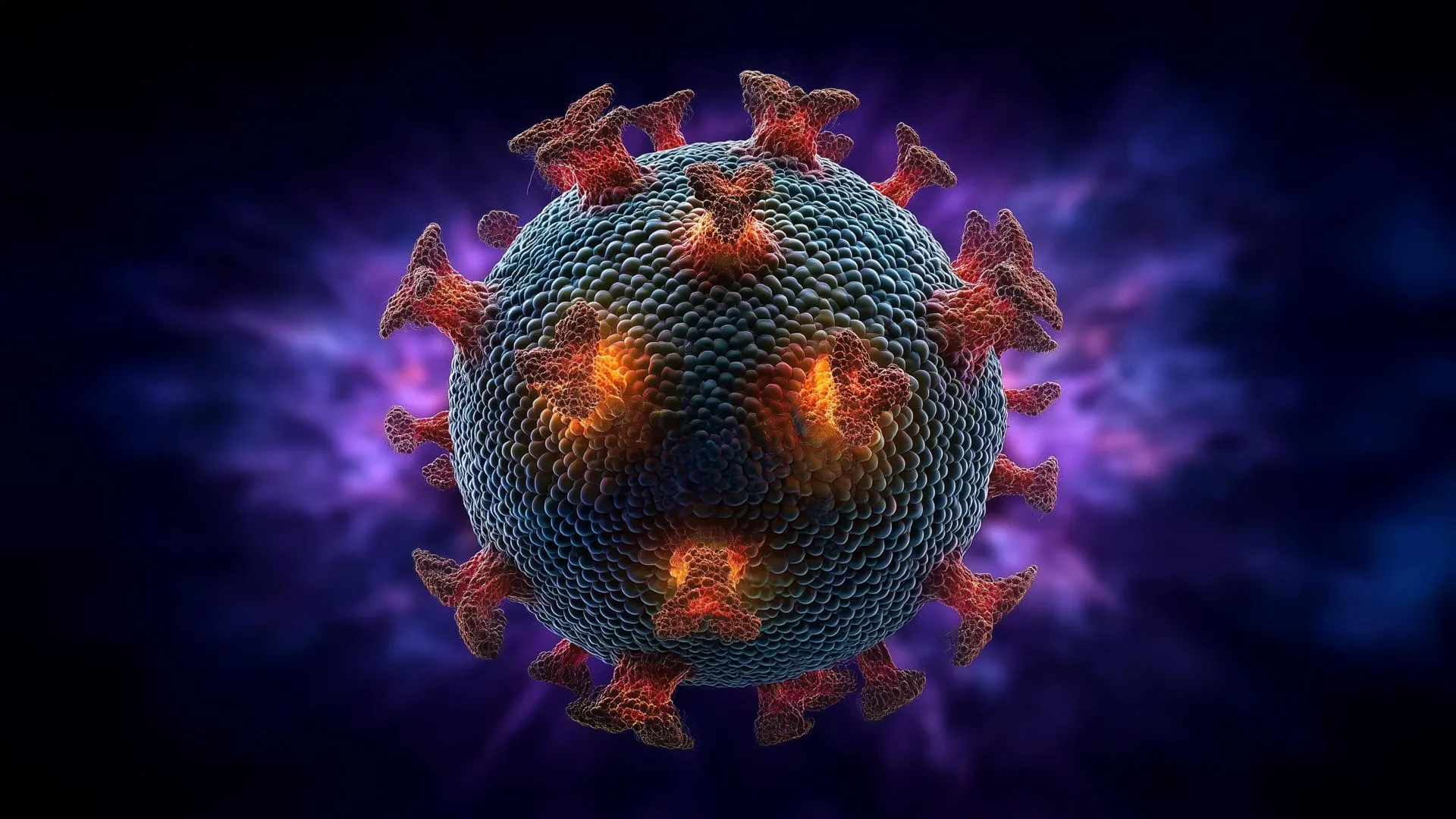
While giant viruses share a general penchant for large genomes and complex structures, their physical phenotypes vary widely. Ushikuvirus exhibits striking similarities to Medusavirus—a well-known member of the Mamonoviridae family famed for its distinctive icosahedral (twenty-sided) geometric shape and dense array of short spikes protruding from its capsid surface.
However, a closer microscopic examination conducted by the TUS and NINS research team revealed critical, defining differences that set ushikuvirus apart:
- Cytopathic Impact: Unlike standard viral infections that rapidly lyse host cells, ushikuvirus triggers a dramatic and unusual cytopathic effect, causing infected Vermamoeba cells to swell and grow to abnormal, hypertrophic dimensions.
- Capsid Surface Architecture: While the virus possesses an icosahedral-like core, its surface is heavily decorated with complex, multi-tiered spike structures. These spikes are topped with unique cap-like formations, and certain variants feature delicate, filament-like extensions never before documented in Medusavirus or its immediate relatives.
- Replication Mechanics: Perhaps the most profound divergence lies in the virus’s replication strategy. Both Medusavirus and clandestinovirus typically execute their reproductive cycles within an intact, structurally preserved host nucleus. Ushikuvirus, by contrast, shatters and actively breaks down the host’s nuclear membrane during the replication phase to manufacture new viral progeny.
This aggressive dismantling of the nuclear membrane bridges a vital conceptual gap in virology. It suggests an evolutionary spectrum: on one end are viruses that peacefully utilize or co-exist with an intact nucleus (reminiscent of the Mamonoviridae), while on the other end are disruptive behemoths like pandoraviruses that obliterate nuclear structures to harvest host resources. Ushikuvirus sits at a fascinating phylogenetic crossroads, illuminating how these distinct reproductive strategies may have evolved as adaptations to divergent host environments over evolutionary epochs.
Official Statements and Expert Perspectives
The discovery of ushikuvirus is not merely a cataloging exercise; it provides empirical fuel for ongoing debates regarding the origin of eukaryotic life and the deep phylogeny of the virosphere.
Reflecting on the broader significance of the research, Professor Masaharu Takemura emphasized the uncharted potential sitting within aquatic and terrestrial ecosystems:
"Giant viruses can be said to be a treasure trove whose world has yet to be fully understood. One of the future possibilities of this research is to provide humanity with a new view that connects the world of living organisms with the world of viruses."
Takemura’s career has been dedicated to untangling these complex interconnections. Having authored over 120 scientific papers and garnered more than 2,500 citations, his long-term research agenda focuses on validating the viral eukaryogenesis model while simultaneously improving global "virus literacy" through targeted educational initiatives.
Addressing the specific taxonomic and evolutionary weight of the new discovery, Takemura noted:
"The discovery of a new Mamonoviridae-related virus, ‘ushikuvirus,’ which has a different host, is expected to increase knowledge and stimulate discussion regarding the evolution and phylogeny of the Mamonoviridae family. As a result, it is believed that we will be able to get closer to the mysteries of the evolution of eukaryotic organisms and the mysteries of giant viruses."
The collaborative nature of the study was heavily underscored by the inclusion of early-career researchers. Master’s degree students Jiwan Bae and Narumi Hantori of the Graduate School of Science at TUS played instrumental roles in the research pipeline, working alongside senior microscopists Dr. Raymond Burton-Smith and Professor Kazuyoshi Murata at the Exploratory Research Center on Life and Living Systems (ExCELLS) within NINS. Their combined expertise in structural biology and virology allowed the team to capture the high-resolution images required to map the unique surface caps and filament structures of ushikuvirus.
Future Outlook: Evolutionary Horizons and Biomedical Applications
As the scientific community digests the implications of the Journal of Virology publication, the ripples of this discovery extend far beyond theoretical evolutionary biology. The future trajectory of this research encompasses two distinct pillars: deep evolutionary exploration and practical clinical applications.
Unraveling the Tree of Life
The primary academic goal moving forward is to integrate genomic sequencing data from ushikuvirus into broader phylogenetic models. By sequencing the complete genome of ushikuvirus and comparing its protein-coding genes against both host amoebae and other giant viruses, researchers hope to identify conserved ancestral genes that survived the transition from ancient viral symbionts to modern eukaryotic nuclei.
Furthermore, researchers are actively searching for other undiscovered giant viruses in diverse aquatic environments across Japan and the globe. Each new isolate acts as a crucial puzzle piece, helping scientists reconstruct the ancient ecological pressures that shaped cellular life billions of years ago.
Potential Healthcare and Pathological Implications
While giant viruses like ushikuvirus and its relatives are traditionally studied in the context of amoebic hosts, their discovery carries tangible biomedical value. Certain species of amoebae—most notably Acanthamoeba—are not benign environmental organisms; they are opportunistic pathogens capable of causing severe, often fatal human diseases, including amoebic keratitis (a painful corneal infection often linked to contact lens wear) and granulomatous amoebic encephalitis (GAE), a devastating infection of the central nervous system.
By achieving an unprecedented understanding of how giant viruses interact with, infect, and dismantle single-celled hosts like amoebae, biomedical researchers can begin to evaluate these viruses—or the specific proteins and lytic enzymes they produce—as biological control agents. Harnessing viral mechanisms to target and eliminate pathogenic amoebae could eventually lead to the development of novel therapeutic approaches for infections that currently prove difficult to treat with conventional antimicrobials.
Conclusion
The discovery of ushikuvirus stands as a testament to the hidden depths of the microbial world. By challenging long-held assumptions about viral replication, structural diversity, and host interaction, ushikuvirus reinforces the validity of the cell nuclear virus origin theory. It reminds us that viruses are not merely external enemies to be feared and eradicated, but profound evolutionary partners whose ancient encounters with primitive cells helped forge the complex, conscious life that populates Earth today. As research led by pioneers like Professor Takemura continues to unearth these genomic leviathans, humanity steps ever closer to answering the ultimate biological question: Where did we come from?
This research was supported by the Japan Society for the Promotion of Science (JSPS) KAKENHI grant number 20H03078 and the Joint Research program of the Exploratory Research Center on Life and Living Systems (ExCELLS program No. 22EXC601-4).