
Executive Overview
Long before a puppy learns to sit on command, heel neatly on a leash, or master the complex navigation required to guide a visually impaired individual through a bustling metropolitan environment, a profound transformation is already underway behind the scenes. In the quiet, dimly lit whelping boxes of specialized breeding and training facilities, the foundational architecture of a future guide or service dog is being meticulously constructed.
At Dogs Inc, the preparation of elite working dogs begins long before formal obedience training ever commences. It starts in the neonatal stage—the critical first two weeks of a puppy’s life—utilizing a specialized, science-backed protocol known as Early Neurological Stimulation (ENS). While ENS is only one small chapter in the comprehensive, multi-year curriculum required to produce a fully qualified service dog, it represents a vital cornerstone of a holistic developmental philosophy.
This article explores the physiological realities of the neonatal period, the mechanics and intended outcomes of Early Neurological Stimulation, how ENS differs from subsequent socialization phases, and why intentional early interventions are non-negotiable for producing the calm, resilient, and focused temperament demanded of modern guide and service dogs.
Detailed Chronology: The Developmental Stages of a Service Dog
Understanding the value of ENS requires examining the rapid, sequential phases of canine development. A puppy’s journey from a vulnerable newborn to a confident working partner is marked by distinct biological windows, each requiring specialized care and environmental management.

1. The Neonatal Stage (Birth to 2 Weeks)
During the neonatal phase, puppies are entirely dependent on their mother and littermates for survival. At this stage, their eyes and ears are sealed shut, rendering them blind and deaf. They are incapable of regulating their own body temperature, relying instead on maternal warmth and huddling with littermates.
Despite their apparent fragility and inactivity—which consists almost entirely of nursing and sleeping—immense physiological developments are occurring. The brain and central nervous systems are undergoing exponential growth. It is precisely during this delicate window, when the nervous system is most malleable, that Early Neurological Stimulation is introduced to gently challenge and strengthen the developing physiological pathways.
2. The Transitional Stage (2 to 4 Weeks)
As puppies cross the threshold into the transitional stage, their world dramatically expands. Around two weeks of age, their eyes and ears begin to open, flooding their developing brains with new sights and sounds. By four weeks of age, puppies achieve significant motor milestones: they begin to stand, walk clumsily, and even experiment with barking.
Simultaneously, their deciduous "baby" teeth begin to erupt, signaling the biological shift away from exclusive nursing toward soft gruel and eventually solid food. This stage bridges the gap between internal neurological growth and active external engagement with their environment.

3. The Socialization Period (3 to 12 Weeks)
Often considered the most critical psychological window in a dog’s life, the socialization period overlaps with the late transitional stage and extends through the third month. During this phase, puppies transition from passive observers to active explorers.
- Building Positive Associations: Between 3 and 12 weeks, puppies must be thoughtfully exposed to a vast array of novel stimuli, including different human demographics, varied flooring textures, environmental sounds, and interactions with other well-adjusted dogs.
- Preventing Behavioral Pathology: Proper exposure during this window is vital for preventing the development of fear, anxiety, and defensive aggression in adult dogs. By the 8-week mark, these experiences lay the foundation for a friendly, adaptable temperament.
- Navigating Fear Periods: Most puppies experience an average of four distinct "fear periods" as they grow and mature. During these times, negative or traumatic experiences can leave lasting psychological scars. Consequently, professional organizations emphasize positive reinforcement and slow, controlled introductions to new concepts.
4. Adolescent Development and Beyond (6 Months to 1 Year)
As puppies mature into adolescence—beginning anywhere from 6 months of age—they undergo hormonal shifts that mirror human teenage years. Female dogs typically experience their first heat cycle, while males exhibit hormone-driven behaviors and boundary-testing tendencies.
Concurrent with these physical changes, the dog’s capacity for formal learning expands. By 12 to 16 weeks, puppies engage in structured puppy classes and short, positive-reinforcement training sessions. Crate training reinforces independence and domestic routine, while continued exposure to diverse species and environments ensures lifelong adaptability.
Supporting Context & Metrics: The Science of Early Neurological Stimulation
Originally developed for military canine programs and later popularized by the United States Canine Development Center, Early Neurological Stimulation exposes neonatal puppies to mild, brief stressors designed to stimulate the neurological system.

How ENS Exercises Are Performed
ENS is strictly a physiological exercise protocol, not a form of behavioral training. Because neonates are profoundly delicate, the exercises must be performed exclusively by trained handlers adhering to strict, standardized protocols. Each exercise lasts for only three to five seconds per puppy, per day, minimizing any potential distress while maximizing physiological impact.
The standard five-step ENS routine includes:
- Tactile Stimulation: The handler gently tickles the puppy’s foot between the toes using a Q-tip. This stimulates neurological pathways in the extremities.
- Head Held Erect: The puppy is held perpendicularly, with its head pointing straight up toward the ceiling, challenging its vestibular system.
- Head Pointed Down: The puppy is turned upside down so that its head points toward the floor, stimulating spatial awareness and cardiovascular adjustments.
- Supine Position: The puppy is placed flat on its back in the palm of the handler’s hand, resting comfortably while experiencing a vulnerable physical posture.
- Thermal Stimulation: The puppy is placed on a damp, cool towel for a few seconds to introduce a mild, non-harmful thermal variation.
Documented Physiological Benefits
Decades of anecdotal observation and scientific inquiry suggest that neonatal stimulation yields quantifiable biological advantages. While ENS is not a silver bullet that guarantees a perfect temperament—genetics, health, environment, and ongoing socialization are equally critical—research indicates several primary benefits:
- Improved Cardiovascular Performance: Enhanced heart rate regulation and cardiac reserve.
- Stronger Stress Tolerance: Greater adaptability when confronted with novel environmental stressors later in life.
- Enhanced Immune System: Improved disease resistance and overall physical hardiness.
- Greater Adrenal Function: More balanced hormonal responses to challenging situations, preventing panic and fostering problem-solving capabilities.
Official Statements and Institutional Philosophy
Organizations dedicated to breeding and training elite working animals operate under the understanding that excellence is engineered from conception onward. Leadership at institutions like Dogs Inc emphasize that a successful service dog career is built through continuous, intentional investment at every stage of the life cycle.

"Preparing future guide dogs and service dogs is an art and a science that begins long before formal harnesses are fitted or directional cues are taught," notes a senior canine development specialist at Dogs Inc. "Every touch, every environmental introduction, and every carefully managed challenge during those first few weeks compounds over time. ENS is our first opportunity to tell a puppy’s nervous system that the world is an interesting, manageable place."
Institutional philosophy dictates that early interventions must never cross the line into sensory overload. The goal of ENS and early puppy-raising programs is to foster resilience without breaking trust. By pairing early neurological conditioning with structured socialization, puppy raising, and positive reinforcement training, organizations ensure that graduates possess the emotional fortitude required for life-changing partnerships.
Future Outlook: Raising Life-Changing Partners
The ultimate measure of a service dog training program is the capability and longevity of its working dogs. Guide dogs and service dogs face intense, unpredictable environments daily. They must guide handlers through chaotic traffic intersections, maintain composure in crowded airports, remain focused amidst distractions in hospitals, and offer unwavering emotional and physical support.
These extraordinary attributes cannot be forged overnight. They are the cumulative result of a meticulously structured developmental continuum:
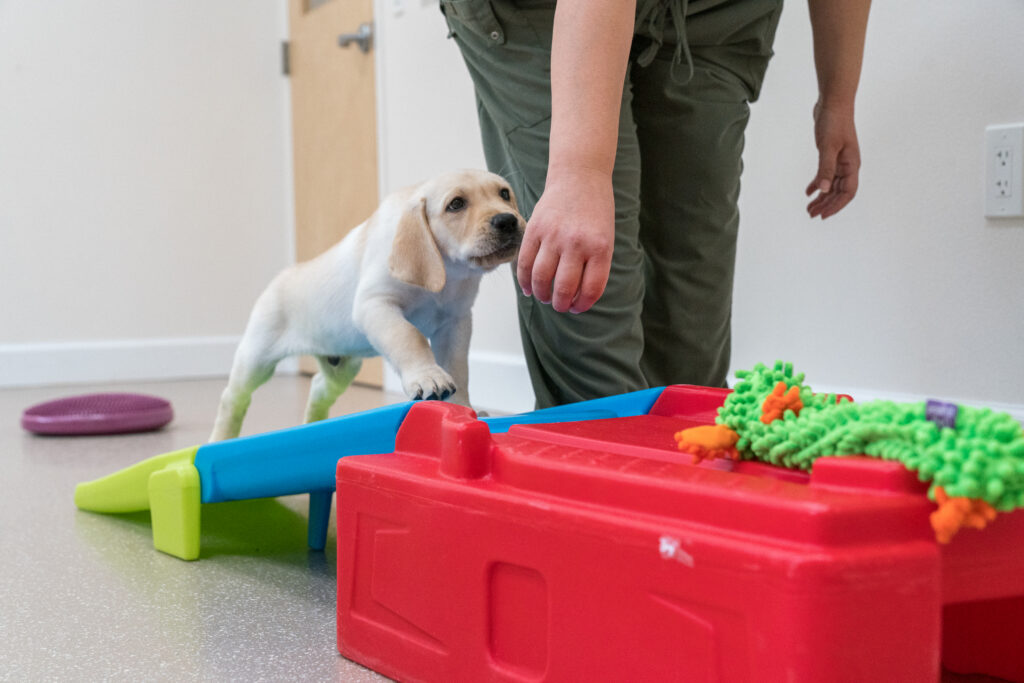
- Day 1 to 14: Neonatal care and Early Neurological Stimulation to prime the nervous system.
- Week 3 to 12: Transitional milestones and immersive socialization to build confidence and social fluency.
- Month 2 to 12+: Professional puppy raising, advanced obedience, and specialized task training.
As breeding and behavioral science continue to evolve, programs like those at Dogs Inc remain at the forefront of canine development. By respecting the biological windows of infancy and applying evidence-based protocols like ENS, these organizations ensure that tomorrow’s service dogs are prepared for whatever challenges lie ahead—turning tiny paws into life-changing partnerships.