
Executive Overview
Along the southeastern shores of the Great Salt Lake, a quiet ecological transformation is unfolding at Audubon’s Gillmor Sanctuary. For decades, vast stretches of this critical wetland and upland interface were choked by dense stands of invasive tamarisk trees—a non-native, water-thirsty plant that degraded habitats and drove away native wildlife. Thanks to a multi-year, intensive restoration initiative spearheaded by National Audubon Society staff, local conservation partners, and dedicated volunteers, the landscape is experiencing a dramatic rebirth. More than a thousand acres of tamarisk have been cleared, and the land has been painstakingly re-seeded with native grasses, shrubs, and forbs.
Yet, restoring the flora was only half the battle. For the Burrowing Owl (Athene cunicularia)—a charismatic, ground-dwelling raptor that relies on open, unobstructed vistas and subterranean cavities for shelter and nesting—a critical component was still missing. Natural burrows, historically excavated by badgers, prairie dogs, and desert tortoises, had collapsed over time. This natural degradation was further accelerated by the passage and wallowing of heavy livestock, including cattle and bison. Without secure nesting cavities, the returning owls had nowhere to raise their young.
To bridge this ecological gap, Audubon mobilized a broad coalition of Salt Lake Valley conservation groups, academic institutions, and community volunteers to construct and install reinforced, upcycled artificial nest burrows. The results of this intervention have exceeded all expectations. Following the installation of the initial phase of burrows, nesting pairs moved in with astonishing speed. During the very first breeding season, an overwhelming majority of the new sites were occupied, and every single active nest successfully fledged owlets. This milestone not only highlights the resilience of the Burrowing Owl but also serves as a masterclass in how targeted habitat restoration, paired with innovative engineering and community science, can reverse population declines for vulnerable grassland species.
Detailed Chronology: From Tamarisk Chokepoint to Thriving Sanctuary
Phase 1: Eradicating the Tamarisk Canopy
The journey toward restoring the Gillmor Sanctuary for ground-nesting birds began with a massive clearing operation. Invasive tamarisk (genus Tamarix, commonly known as saltcedar) had established dense monocultures across hundreds of acres of upland and riparian zones. Because Burrowing Owls depend on a wide-angle field of view to scan for approaching predators and spot scurrying prey—such as rodents, large insects, and reptiles—the thick, arboreal canopy of the tamarisk rendered the landscape completely uninhabitable for the species.
Conservation crews and heavy machinery systematically cut down and removed the invasive trees. By eliminating the tamarisk canopy, sunlight was finally able to reach the soil, allowing long-dormant native seed banks to germinate. To accelerate this ecological recovery, human hands stepped in where nature needed a push: volunteers and staff meticulously hand-seeded large tracts with native grasses, sagebrush, and herbaceous forbs. As the native vegetation rebounded, small mammals and insects returned, re-establishing the foundational trophic levels required to support a healthy raptor population.
Phase 2: Diagnosing the Subterranean Bottleneck
With the landscape cleared and re-seeded, staff anticipated the spontaneous return of Burrowing Owls. While transient owls began utilizing the open terrain for foraging, sustained nesting attempts remained low. Ecologists soon identified the limiting factor: a severe shortage of viable underground burrows.
In a pristine ecosystem, Burrowing Owls rely almost exclusively on abandoned burrows dug by fossorial mammals like badgers and prairie dogs. However, at Gillmor Sanctuary, historic burrow networks had steadily caved in. This natural structural failure was compounded by the physical weight of large grazing animals, such as bison and cattle, which frequently walked directly over subterranean chambers, collapsing the soft earthen roofs. Without safe, deep subterranean cavities to protect brooding females and flightless chicks from harsh weather and mammalian or avian predators, successful reproduction was severely constrained.
Phase 3: The Coalition Builds the Subsurface
Recognizing that waiting for local badger populations to dig dozens of new burrows could take decades, Audubon turned to its extensive network of regional conservation partners and community volunteers.
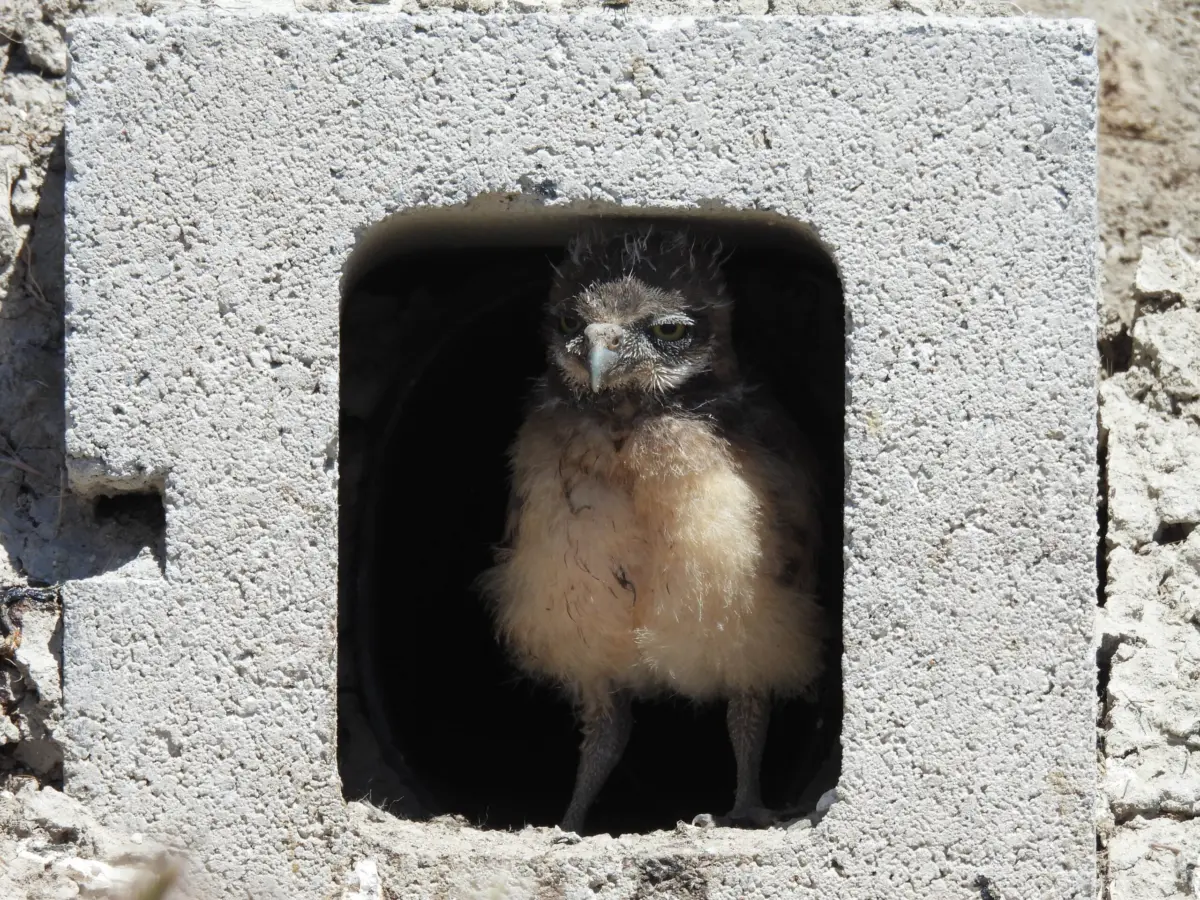
In a coordinated effort across the Salt Lake Valley, engineers, conservationists, and volunteers designed a durable, predator-resistant artificial burrow system. Constructed using upcycled materials, these engineered habitats featured reinforced structural supports capable of bearing the heavy weight of cattle and bison walking overhead without compromising the safety of the interior cavity.
Strategic placement was vital. Field teams selected sites within the newly cleared zones where vegetation remained short and sparse, granting the owls an unobstructed, 360-degree view of their surroundings. This visual clarity is paramount for the survival of Burrowing Owls, allowing them to detect coyotes, raptors, and other potential threats long before they reach the nest.
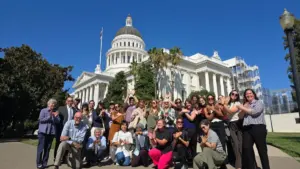
During coordinated field days, representatives and students from HawkWatch International, Tracy Aviary, Sageland Collaborative, Friends of Great Salt Lake, Great Salt Lake Institute, The Jordan River Commission, Salt Lake Community College, and the Boy Scouts of America joined Audubon’s Gillmor Sanctuary and Saline Lakes teams. Armed with shovels and construction tools, the coalition successfully installed the first batch of 18 artificial burrows, creating nine complete, multi-chambered nesting sites.
Supporting Context & Metrics: By the Numbers
To fully grasp the scope and immediate impact of the Gillmor Sanctuary Burrowing Owl project, examining the underlying data and ecological metrics provides a clear window into its success:
- 1,000+ Acres: The scale of upland and riparian habitat cleared of invasive tamarisk trees, opening up historic vistas for grassland and desert-scrub wildlife.
- 18 Artificial Burrows Installed: The total number of reinforced subterranean chambers constructed during the initial phase, grouping into 9 distinct nesting sites (each site typically features a primary nest burrow and a secondary "satellite" burrow used by the male or by fledglings for escape).
- 32 Total Burrows Planned: The final target for the sanctuary, which will yield 16 complete nesting sites once the secondary expansion phase is finished.
- 7 out of 9 Occupied: Despite initial projections estimating that it could take up to two full years for cautious Burrowing Owls to discover and trust the artificial structures, 77% of the newly installed sites were occupied during their very first breeding season.
- 3 Days to Residency: The record turnaround time for occupancy; one newly installed artificial burrow welcomed a resident pair of Burrowing Owls just 72 hours after volunteers finished packing the earth around its entrance.
- 100% Fledging Success: Observations across the spring and summer breeding season confirmed that every single active nest successfully raised and fledged healthy owlets.
Financial and Institutional Backbone
This complex undertaking was made possible through a blend of grassroots community labor and high-level institutional backing. Financial support was spearheaded by competitive grants, notably the National Fish and Wildlife Foundation’s (NFWF) America the Beautiful Challenge Grant, alongside critical funding from the Browning Foundation. This financial infrastructure enabled the acquisition of durable construction materials, monitoring equipment, and native seeds required to sustain long-term ecological restoration.
Official Statements & Expert Perspectives
The triumph at Gillmor Sanctuary has generated significant enthusiasm within the regional conservation community, underscoring the power of collaborative, science-driven habitat management.
"When you strip away invasive trees and restore the native understory, you heal the land at a fundamental level. But wildlife conservation often requires us to look at the micro-scale—down to the very holes in the ground that species depend on for survival," noted an Audubon project coordinator during field monitoring. "By combining heavy-duty engineering with community-powered conservation, we’ve effectively fast-tracked decades of natural subterranean recovery."
Partners who rolled up their sleeves in the mud and dust echoed these sentiments. Representatives from HawkWatch International—who have worked alongside Audubon to monitor local raptor populations—emphasized the broader implications for the Great Salt Lake ecosystem.
"Burrowing Owls are a quintessential indicator species for the health of our western grasslands and saline lake uplands," stated a field researcher involved in the monitoring initiative. "When we see high occupancy rates and a 100% fledging success rate in engineered habitats right out of the gate, it tells us two things: first, that the regional population is primed and searching for secure habitat; and second, that our restoration prescriptions are hitting the exact ecological targets required to sustain them."
Volunteers, many of whom spent grueling hours digging trenches and positioning wooden and PVC nesting boxes beneath the desert sun, expressed profound connection to the results.
"Knowing that an owl moved into a burrow you helped install just days before is an indescribable feeling," shared a volunteer from the Salt Lake Community College conservation corps. "You realize that conservation isn’t just an abstract concept happening in distant forests—it’s something tangible we can build with our own hands right here in our backyard."
Future Outlook: Sustaining the Momentum
While the initial results of the Gillmor Sanctuary Burrowing Owl project have surpassed all benchmarks, Audubon and its partners view this success not as a destination, but as a foundation for long-term ecological stewardship.
Expanding Subterranean Infrastructure
Buoyed by the rapid occupancy rates of the first 18 burrows, field crews are already laying plans for the next phase of construction. An additional 14 artificial burrows are scheduled for installation, bringing the grand total to 32 burrows across 16 distinct nesting sites. This expanded network will provide sufficient spacing and redundancy to support a growing, resilient population of owls while minimizing territorial disputes between rival breeding pairs.
Long-Term Population Monitoring
The work at Gillmor Sanctuary extends far beyond construction; it represents a living laboratory for grassland restoration ecology. In partnership with HawkWatch International, Audubon researchers will continue to track local Burrowing Owl demographics, survivorship rates, and juvenile dispersal patterns. Continuous monitoring will allow scientists to evaluate how grassland species respond dynamically to ongoing habitat management, fine-tuning techniques such as managed grazing, targeted weed control, and supplemental seeding.
Integrating Watershed and Upland Strategies
The success of the upland nesting sites is inextricably linked to the broader health of the Great Salt Lake ecosystem. As saline lake levels fluctuate and regional wetlands face mounting pressures from human development and climate change, protecting high-elevation refugia like Gillmor Sanctuary becomes increasingly vital. Audubon’s ongoing initiatives aim to integrate upland restoration with broader watershed protections, ensuring that water, food webs, and nesting grounds remain interconnected and resilient.
Ultimately, the story of the Burrowing Owls at Gillmor Sanctuary proves that environmental degradation is not an irreversible fate. Armed with simple tools—a saw, a shovel, native seeds, and an deeply committed community of conservationists and volunteers—we possess the capacity to heal the landscape, turning silent, choked earth back into a vibrant, echoing home for the wild.