
Executive Overview
The companion animal grooming sector has undergone a profound transformation over the past decade. Driven by the humanization of pets and rising disposable incomes, canine hygiene products have evolved from basic cleansing soaps into sophisticated, dermatologically engineered solutions. Today’s dog owner seeks products that deliver more than just basic dirt removal; there is a growing demand for long-lasting, high-performance scents capable of neutralising stubborn organic odors while supporting the skin barrier.
This market shift has brought the sensory performance of pet shampoos to the forefront of product development. However, creating a shampoo that smells exceptional to human handlers while remaining gentle and non-irritating to a dog’s sensitive dermal layers presents a complex chemical challenge. Dogs possess an exceptionally acute sense of smell—boasting up to 300 million olfactory receptors compared to a human’s five to six million—making strong artificial fragrances a potential source of respiratory or behavioral distress. Furthermore, canine skin exhibits a significantly different pH level than human skin, rendering conventional human cosmetic formulations unsuitable and potentially harmful.
This report evaluates the current landscape of high-performance, best-smelling dog shampoos. By examining key formulation trends—including baking soda odor neutralization, botanical oil hydration, probiotic microflora support, and soap-free surfactant bases—this investigation provides an authoritative analysis of top market performers, dermatological metrics, expert recommendations, and future innovations shaping canine hygiene.

Detailed Chronology and Product Evaluation
The evolution of canine coat care reflects broader advancements in cosmetic chemistry and veterinary dermatology. Historically, dog bathing relied on harsh industrial detergents or basic livestock soaps that frequently stripped the coat of essential lipids and caused secondary contact dermatitis. The modern era, however, prioritizes bio-compatible surfactants, plant-derived essential lipids, and targeted functional additives.
Below is an analytical breakdown of the leading formulations that currently define performance standards in canine fragrance, coat conditioning, and dermal safety.
+-----------------------------------------------------------------------------------+
|                        EVOLUTION OF CANINE COAT CARE                              |
+-----------------------------------------------------------------------------------+
| Historical Era: Harsh detergents, unbuffered livestock soaps, heavy masking scents |
| Transition Era: Introduction of basic pH-balanced soaps and synthetic perfumes     |
| Modern Era:     Botanical lipids, baking soda chemisorption, probiotic microflora |
+-----------------------------------------------------------------------------------+
1. Arm & Hammer Ultra Fresh 2-in-1 Detangling Shampoo & Conditioner
- Key Fragrance Profile: Prickly Pear and Cucumber
- Primary Active Mechanism: Sodium Bicarbonate (Baking Soda) Odor Neutralization
- Dermal & Coat Conditioners: Coconut Oil, Silk Proteins, Hydrating Botanical Extracts
- Formulation Integrity: Sulfate-Free, Paraben-Free
Analytical Overview:
Arm & Hammer leverages its proprietary baking soda technology to target malodors at a molecular level. Rather than attempting to mask organic smells with heavy perfumes, the sodium bicarbonate matrix acts via chemisorption to neutralize acidic odor compounds produced by cutaneous yeast and bacteria. The integration of hydrolyzed silk proteins and coconut oil assists in reducing inter-strand friction, making it an effective choice for long-haired or mat-prone breeds. The resulting prickly pear and cucumber scent provides a crisp, refreshing profile that appeals to owners without overwhelming the animal’s olfactory system.

2. Hempz Petz Deodorizing Dog Shampoo
- Key Fragrance Profile: Creamy Citrus Orange and Red Raspberry
- Primary Active Mechanism: Botanical Lipid Replenishment & Essential Fatty Acid Delivery
- Dermal & Coat Conditioners: 100% Pure Natural Hemp Seed Oil, Shea Butter, Pineapple Extract
- Formulation Integrity: Gluten-Free, Paraben-Free, Cruelty-Free
Analytical Overview:
Hempz Petz focuses heavily on lipid barrier restoration through cold-pressed hemp seed oil, which is naturally rich in Omega-3 and Omega-6 fatty acids. These lipids reinforce the stratum corneum, reducing transepidermal water loss (TEWL) during the cleansing process. The scent profile—a blend of citrus orange and red raspberry—utilizes fruit extracts that provide a clean, vibrant aroma. The addition of shea butter ensures deep moisture retention, making this formulation particularly suited for dogs with dull, brittle coats or mild environmental dryness.
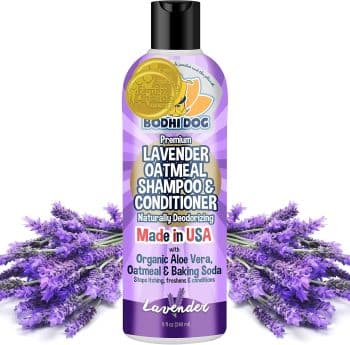
3. Bodhi Dog Organic Lavender Oatmeal Shampoo & Conditioner
- Key Fragrance Profile: Natural Lavender
- Primary Active Mechanism: Colloidal Oatmeal Anti-Pruritic Action & Aromatherapeutic Deodorization
- Dermal & Coat Conditioners: Organic Oat Proteins, Aloe Vera, Coconut Oil
- Formulation Integrity: Hypoallergenic, USA-Manufactured, Eco-Friendly Packaging
Analytical Overview:
Designed specifically for sensitive or hyper-reactive canine skin, Bodhi Dog utilizes organic colloidal oatmeal combined with aloe vera to soothe localized inflammation and pruritus (itching). Lavender extract serves a dual purpose: it acts as a mild natural deodorizer while offering potential aromatherapeutic benefits that may help reduce bath-time anxiety. The formula avoids synthetic dyes and harsh surfactant bases, making it an optimal hypoallergenic option for dogs suffering from seasonal environmental allergies.
4. Probiotic Deshedding Shampoo & Conditioner Formulations
- Key Fragrance Profile: Mild Botanical / Fresh Clean
- Primary Active Mechanism: Topical Probiotic Microbiome Balancing & Hair Follicle Release
- Dermal & Coat Conditioners: Beneficial Bacterial Ferm-Lysates, Essential Oils, pH-Balanced Surfactants
- Formulation Integrity: Soap-Free, Microbiome-Supportive
Analytical Overview:
Probiotic-infused grooming solutions represent a cutting-edge shift in canine skin care. By applying beneficial microbial lysates directly to the skin, these formulas help suppress opportunistic pathogenic bacteria and yeast responsible for chronic "doggy odor." Concurrently, the conditioning agents lubricate the hair shaft and loosen undercoat fibers within the hair follicles, facilitating the removal of dead fur during the bath cycle and dramatically reducing shedding around the home.

      Pathogenic Yeast/Bacteria + Organic Debris = Persistent Malodor
                                 │
                                 ▼
         [ Probiotic Lysates + Sodium Bicarbonate Matrix ]
                                 │
                                 ▼
      Disruption of Odor Biofilms + Restoration of Healthy Skin Flora
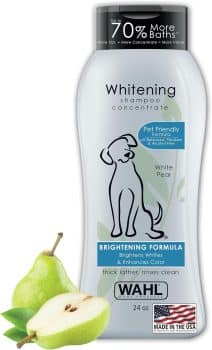
5. Wahl Whitening Shampoo (White Pear Scent)
- Key Fragrance Profile: White Pear
- Primary Active Mechanism: Optical Color Enhancement via High-Concentration Coconut Surfactants
- Dermal & Coat Conditioners: Coconut-Derived Cleansers, Plant Extracts
- Formulation Integrity: Alcohol-Free, Paraben-Free, pH-Balanced
Analytical Overview:
Wahl’s professional-grade whitening formula relies on coconut-derived cleansing agents designed to yield a dense, rich lather using minimal product. The formula enhances white and light-colored coats through high-efficiency soil removal rather than bleaching agents or harsh chemical brighteners. The subtle white pear scent provides a delicate, clean fragrance profile that persists without triggering sensitivity in animals prone to contact allergies.
6. TropiClean Berry & Coconut Deep Cleansing Shampoo
- Key Fragrance Profile: Tropical Berry and Coconut
- Primary Active Mechanism: Soap-Free Deep Cleansing & Natural Moisture Balance
- Dermal & Coat Conditioners: Berry Extract, Coconut Extract, Aloe Vera
- Formulation Integrity: Paraben-Free, Dye-Free, Soap-Free (Will not wash off spot-on flea treatments)
Analytical Overview:
TropiClean’s deep-cleansing product is engineered to break down heavy sebum deposits and accumulated dirt without stripping protective skin lipids. Its soap-free composition ensures compatibility with topical flea and tick preventive treatments. The formulation leaves a sweet, fruit-forward scent, leveraging natural botanical extracts to maintain coat softness and manageability.
7. Arm & Hammer Super Deodorizing Shampoo
- Key Fragrance Profile: Kiwi Blossom / Cucumber Mint
- Primary Active Mechanism: High-Concentration Odor Neutralization Matrix
- Dermal & Coat Conditioners: Baking Soda, Hydrolyzed Wheat Protein, Essential Extracts
- Formulation Integrity: Paraben-Free, Safe for Use with Topical Treatments
Analytical Overview:
Engineered specifically for high-odor environments or working dogs exposed to challenging outdoor conditions, this formula utilizes a concentrated sodium bicarbonate base to break down organic odor molecules. Its crisp cucumber-mint scent offers immediate freshness, while wheat proteins reinforce hair strand integrity.

Supporting Context and Technical Metrics
Understanding the scientific rationale behind canine product formulation requires analyzing physiological differences between canine and human skin, as well as the olfactory dynamics of fragrance retention.
Comparative Dermal Physiology: Canine vs. Human Skin
Using human cosmetic products on canine patients is a primary contributor to secondary skin disorders. Canine skin differs substantially from human skin in thickness, cell turnover rate, and physiological pH.
+------------------------------------+------------------------------------+
| CANINE EPIDERMIS                   | HUMAN EPIDERMIS                    |
+------------------------------------+------------------------------------+
| Epidermal Thickness: 3-5 cell layers| Epidermal Thickness: 10-15 layers  |
| pH Range: 6.2 to 7.4 (Neutral/Alk) | pH Range: 4.5 to 5.5 (Acidic)     |
| Hair Follicles: Compound (Multiple) | Hair Follicles: Simple (Single)    |
| Turnover Time: 20-22 days          | Turnover Time: 28 days             |
+------------------------------------+------------------------------------+
Because human skin possesses an acidic "acid mantle" (pH ~5.5), human shampoos are formulated with an acidic pH. When applied to canine skin (pH 6.2–7.4), acidic formulations disrupt the natural protective barrier, stripping lipids and creating an ideal microenvironment for pathogenic organisms such as Staphylococcus pseudintermedius and Malassezia pachydermatis.

Olfactory Considerations and Fragrance Safety
While human consumers prioritize long-lasting fragrance, product designers must accommodate canine sensory biology.
- Olfactory Receptor Density: Dogs possess up to 300 million olfactory receptors within their nasal cavity, compared to roughly 6 million in humans. A fragrance that seems mild to a human can prove overwhelming to a dog if concentrated with synthetic musks or high-volatility essential oils.
- Toxicity Profile of Essential Oils: Certain botanicals frequently used in human aromatherapy—such as tea tree oil (Melaleuca alternifolia), pennyroyal, wintergreen, and citrus oils containing high d-limonene levels—can exhibit systemic toxicity in dogs if ingested during self-grooming or absorbed dermally at high concentrations. Formulations must utilize diluted, pet-safe botanical extracts.
Bathing Frequency Guidelines
Veterinary dermatologists generally recommend a bathing cadence dictated by breed, coat morphology, and lifestyle:
- Standard Maintenance: Bathing every 4 to 6 weeks is sufficient for indoor dogs with normal skin barriers. This frequency prevents dirty buildup without draining epidermal lipids.
- High-Frequency Bathing: Working dogs, animals with severe environmental allergies, or those undergoing medicated bathing protocols may require weekly washing. In such cases, non-stripping, soap-free, lipid-replenishing shampoos are essential.
- Inter-Bath Care: To maintain coat freshness without liquid baths, waterless sprays, grooming wipes, and regular mechanical brushing (which redistributes natural cutaneous oils) should be utilized.
Official Statements and Industry Perspectives
Veterinary Dermatological Insights
In evaluating the efficacy of scented shampoos, board-certified veterinary dermatologists emphasize the necessity of distinguishing between superficial malodor and medical skin conditions.

"A pleasant fragrance should never be used to mask underlying dermatological pathology," notes Dr. Elizabeth Vance, DVM, DACVD. "Persistent, sharp, or musty odors in dogs are frequently primary symptoms of bacterial pyoderma, Malassezia dermatitis, or severe otitis externa. While a high-quality deodorizing shampoo is ideal for routine hygiene, dog owners must consult a veterinarian if an unpleasant odor recurs within 24 to 48 hours post-bath, as this typically signals an underlying infection or systemic disease."
Grooming Industry Safety Standards
The International Professional Groomers, Inc. (IPG) and leading industry trade bodies advocate for strict ingredient transparency in canine cosmetic lines. Grooming safety organizations highlight the following formulation criteria:
- Paraben Elimination: Parabens (methyl-, ethyl-, propyl-parabens) act as synthetic preservatives but have been scrutinized for potential endocrine-disrupting properties. Modern formulas utilize gentler preservative systems derived from plants or mild organic salts.
- Sulfate Reduction: Sodium Lauryl Sulfate (SLS) generates heavy foam but acts as a harsh surfactant that can compromise the lipid bilayer. Leading manufacturers favor milder, coconut-derived options like Sodium Cocoyl Glycinate or Coco-Glucoside.
- Phthalate-Free Fragrance Systems: Phthalates are commonly used to extend scent longevity in synthetic perfumes. Responsible pet brands prohibit phthalates to minimize toxicological risks during coat licking and grooming.
Future Outlook and Technological Innovations
The canine grooming industry is poised for continued scientific advancement, driven by biotechnology, sustainable manufacturing, and personalized care solutions.
+-----------------------------------------------------------------------------------+
|                        FUTURE HYGIENE INNOVATIONS                                 |
+-----------------------------------------------------------------------------------+
| 1. Microbiome-Centric Therapeutics: Live probiotic topical sprays & enzymes       |
| 2. Microencapsulation Scent Delivery: Friction-activated fragrance release        |
| 3. Sustainable & Biodegradable Packaging: Zero-waste solid bars & refill stations  |
| 4. Custom Genomic Formulations: Breed-specific & DNA-tailored skin care          |
+-----------------------------------------------------------------------------------+
1. Microbiome-Centric Formulations
Future shampoo developments will move beyond passive ingredient safety toward active microbiome restoration. Researchers are working with bacterial ferment-lysates and postbiotics that selectively inhibit malodor-causing bacteria while promoting commensal skin flora, effectively engineering long-term odor resistance without chemical fragrancing.
2. Microencapsulated Time-Release Aromatics
To solve the trade-off between scent longevity and pet comfort, manufacturers are investigating microencapsulation technology. In these formulations, fragrance molecules are enclosed in microscopic, pet-safe lipid shells that adhere to the hair shaft. Physical friction—such as petting, movement, or brushing—gradually breaks these capsules, releasing small bursts of fresh scent over days or weeks without exposing the animal to an initial burst of overpowering perfume.
3. Sustainability and Clean Beauty Formulations
Eco-conscious consumers are pushing the pet sector toward zero-waste packaging, concentrated waterless shampoo bars, and completely biodegradable, reef-safe surfactant blends. As these sustainable options enter the market, they are proving that high-performance cleansing, effective deodorization, and environmental responsibility can comfortably coexist.
Conclusion
Selecting the ideal dog shampoo requires balancing sensory appeal with strict dermatological safety. Products that rely on mild, pH-balanced cleansing bases, natural deodorizing agents like baking soda or probiotics, and non-irritating botanical lipids represent the optimal standard for modern canine care. By prioritizing the structural health of the canine skin barrier, pet owners can ensure their companions enjoy a clean, comfortable, and beautifully fragranced coat.