
Executive Overview
In the fast-evolving landscape of companion animal care, standardized pet first aid and CPR training have become gold standards for pet parents, groomers, shelter workers, and veterinary professionals alike. Yet, long before these life-saving modules were integrated into mainstream pet-care curriculums, an ambitious enterprise had to start from the ground up—quite literally.
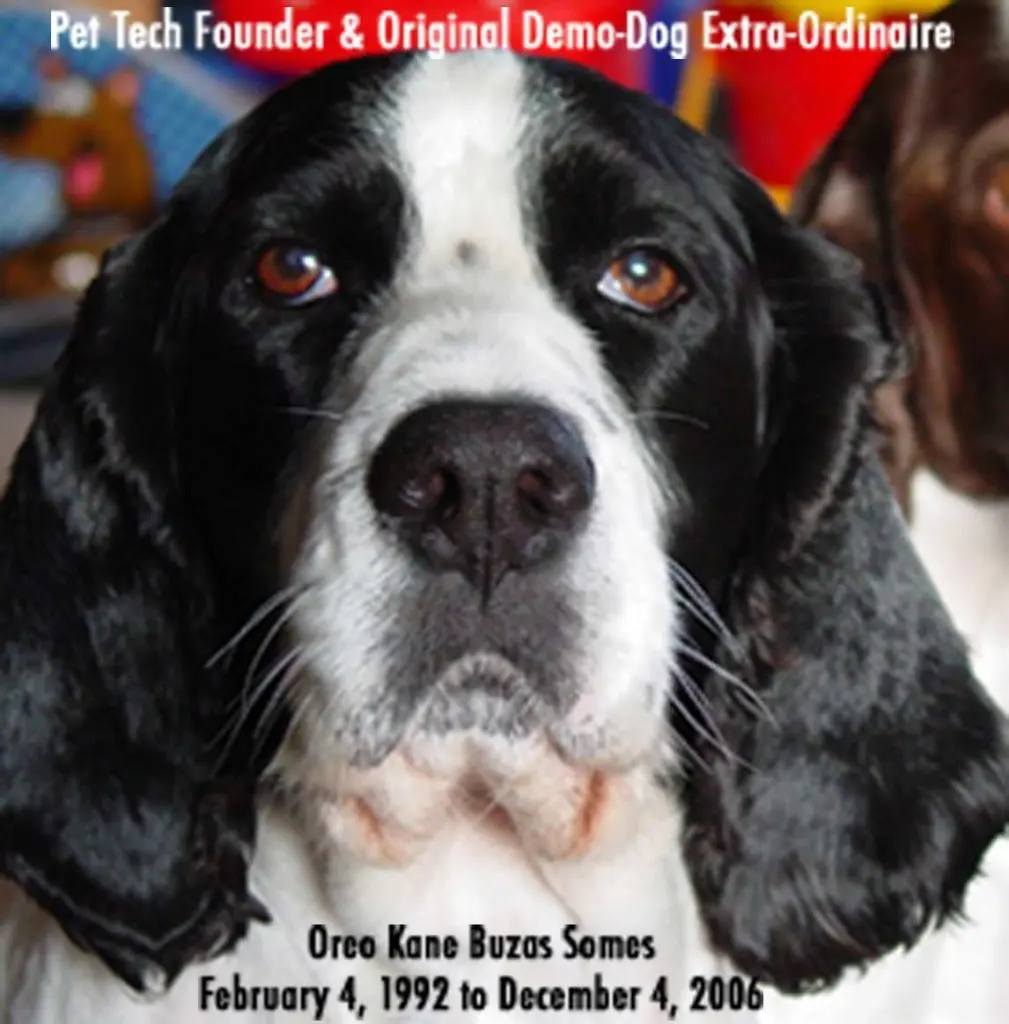
This is the origin story of Pet Tech, an organization built on a foundation of entrepreneurial grit, educational innovation, and an extraordinary canine pioneer named Oreo. Far more than just a family pet, Oreo served as Pet Tech’s official Canine Co-Founder and Demo-Dog Extraordinaire. Her contributions to the company’s formative years transcended marketing; she was a working professional who understood her role, welcomed students, assisted in hands-on medical training demonstrations, and provided the irreplaceable emotional comfort of a "fur-fix" to learners spending hours away from their own animals.
Beyond honoring the legacy of a remarkable dog, this retrospective explores the foundational era of Pet Tech, tracing its roots back to an unconventional 2-car garage conversion in Southern California. It examines the operational bootstrapping required to launch a niche educational enterprise in an era before digital marketing dominated the landscape, while also highlighting unique business strategies—such as integrating working pets into corporate tax structures—that continue to empower pet professionals today. Through archival insights, historical anecdotes, and a look at the enduring philosophy of pet safety, this article details how vision, dedication, and a love for animals transformed a humble garage startup into an industry-leading educational institution.
Detailed Chronology: From Garage Blueprint to Industry Standard
The Genesis in a Suburban Garage
Every iconic enterprise has an origin story rooted in resourceful beginnings. For Apple, it was a Silicon Valley garage; for Microsoft, a cramped Albuquerque office. For Pet Tech, the birthplace of innovation was a humble two-car garage converted into a high-functioning corporate headquarters.
In the early days of establishing the company, space and capital were at a premium. Rather than seeking out expensive commercial real estate leases that could have prematurely drained the fledgling startup’s finances, the founders looked inward—and right in their own backyard. The project required engineering ingenuity and manual labor, prompting the founders to fly Ken Somes in from Michigan to spearhead the structural transformation.
The conversion of the space was nothing short of a masterclass in spatial optimization. The raw concrete floors were insulated and laid with professional-grade carpeting, instantly subverting the industrial feel of a typical garage. A television was strategically mounted in the corner for multimedia training presentations, while a towering six-foot whiteboard was bolted to the drywall to map out business strategies, curriculum developments, and operational logistics. Electrical lines were systematically retrofitted throughout the perimeter to power dual administrative desks alongside an impressive ten-foot conference table capable of hosting planning sessions and partner meetings.
The Great Reveal: Client Reactions
Perhaps the most amusing and telling aspect of the early Pet Tech headquarters was the visitor experience. Arriving clients and prospective instructors would navigate a residential property, walk down the side of the main house, stroll past the backyard swimming pool, and finally approach the discreet side entrance of the converted garage office.
Upon stepping across the threshold, visitors were routinely rendered speechless. The stark contrast between the residential exterior and the sleek, highly professional corporate interior elicited reactions that founders often likened to the dramatic reveals seen on television makeover shows. Visitors would freeze in their tracks, absorbing the full scope of the workspace—the crisp whiteboards, the organized desks, and the collaborative conference space.
Looking back, company leadership acknowledges that without the financial and operational runway provided by that improvised two-car office, Pet Tech might not have survived its critical infancy. It was a physical manifestation of bootstrapping: doing whatever it took to establish a credible, functional professional baseline with minimal overhead.
Enter Oreo: The Canine Co-Founder
As the operational infrastructure solidified, the company faced a unique educational hurdle: how do you teach human learners practical, tactile life-saving skills—such as taking a pulse, performing rescue breathing, or conducting a snout-to-tail assessment—without causing undue stress to live animals?
The answer arrived in the form of Oreo, a dog whose temperament, intelligence, and boundless patience made her uniquely qualified for the role. Oreo was not merely present; she was an active participant in the educational process. From the moment students walked through the door, Oreo was on duty. She established a welcoming routine, greeting each attendee individually before taking her place in the classroom ecosystem.
For students enrolled in rigorous, multi-hour certification courses, being separated from their own pets could induce mild anxiety. Oreo stepped in to fill that emotional gap, offering a much-needed "fur-fix" during breaks. More importantly, she served as a living, breathing model for hands-on clinical training. Students learned how to gently reach back, locate vital points, and check for a pulse under her steady, reassuring guidance.
Her crowning performance in every class occurred during the signature Snout-To-Tail Assessment module. Without fail, once the medical check was successfully completed, Oreo would instinctively roll over onto her back, signaling that it was time for her well-earned, non-negotiable final belly rub.
Supporting Context & Metrics: The Economics of Working Pets
While Oreo’s contributions to morale and instruction were immeasurable, her role within the company extended deep into the realms of marketing, public relations, and corporate finance. In the modern entrepreneurial landscape, maximizing business efficiency while navigating complex tax codes is paramount. For Pet Tech instructors, integrating animals into the business model unlocked unique fiscal advantages.
The Business of Being a Mascot
Oreo was omnipresent in the visual identity of early Pet Tech collateral. She was the face of the brand in training manuals, promotional photographs, instructional videos, and digital marketing assets. Furthermore, she traveled extensively alongside the executive team, serving as the official mascot and greeter at industry conventions, trade shows, and educational conferences across the country.
Because Oreo’s presence was directly tied to the generation of company revenue—acting as a visual anchor for marketing campaigns and an indispensable teaching assistant in certification classes—her care shifted from a personal expense to a legitimate business necessity.
Navigating the IRS: Working Animals and Tax Strategy
Under standard tax guidelines, personal pets are categorized as domestic companions, meaning expenses related to their food, grooming, and veterinary care are strictly out-of-pocket, non-deductible personal expenditures. However, when an animal is formally integrated into a commercial enterprise as a working asset, the regulatory landscape shifts.
For Oreo, essentials such as high-quality dog food, toys, professional training, and veterinary care were evaluated through the lens of business utility. Because she was a corporate demo-dog, marketing model, and trade show representative, these expenditures qualified as standard operational costs.
- Marketing & Promotional Assets: Costs associated with photoshoots, video productions, and promotional appearances featuring the animal.
- Nutritional Maintenance: Premium food required to keep a working demo-dog in peak physical condition for public appearances and physical training demonstrations.
- Veterinary Care: Routine and preventative healthcare necessary to ensure the animal’s fitness for travel, public interaction, and active classroom participation.
- Professional Gear: Specialized equipment, traveling crates, and branded accessories utilized during business travel and events.
Disclaimer: While Pet Tech’s leadership openly shares how they leveraged these provisions, financial advisors and corporate accountants always emphasize that classification depends heavily on the specific business structure, documentation of the animal’s working hours, and compliance with local tax jurisdiction laws.
The Universal Currency: Treats and Motivation
No discussion of Oreo’s corporate contributions would be complete without acknowledging her compensation package, which relied heavily on a specialized currency: liver treats and peanut butter.
Oreo’s dedication to her craft was legendary, but her enthusiasm was noticeably amplified when high-value rewards were introduced. During a specialized training workshop hosted at a local dog wash facility, the instructor casually mentioned to the classroom that Oreo held a particular fondness for liver treats. So profound was the students’ affection for the canine co-founder that one attendee immediately left the classroom, walked over to the facility’s retail store, and purchased a massive, industrial-sized container of premium liver treats as a token of appreciation.
This symbiotic relationship—hard work met with premium rewards—cemented a corporate culture that valued appreciation, connection, and a genuine love for animals above all else.
Official Statements & Reflections
Reflecting on the journey from a makeshift garage office to a globally recognized pet CPR and first aid training organization, the founders often emphasize that the human-animal bond was not just the subject of their business—it was the very engine driving it.
"Oreo was truly the Canine Co-Founder of Pet Tech. What made her a Demo-Dog Extraordinaire is that she knew she had a job to do and loved every minute of it. She would greet every student as they came in class, go from student to student allowing them to reach back and check for her pulse, and generally give our students their much-needed ‘fur-fix’ while away from their own furry family members."
— Thom Somes, Pet Tech Co-Founder
The ethos established by Oreo has since been replicated by dozens of certified Pet Tech instructors worldwide. Many educators across the global network have integrated their own companion animals—including demo-cats—into their instructional models. These working animals assist in demonstrating safe handling techniques, feline and canine vital sign assessments, and emergency response postures, proving that the model pioneered in a Southern California garage was universally scalable.
Furthermore, the operational philosophy of the early days remains a guiding light for small business owners entering the pet care sector. The willingness to adapt residential spaces, leverage personal assets creatively, and maintain an unwavering focus on customer experience illustrates the blueprint for resilient entrepreneurship.
Future Outlook: The Enduring Legacy of Pet Care Education
As Pet Tech continues to expand its reach, training thousands of pet professionals, corporate partners, and devoted pet parents in emergency preparedness, the foundational lessons of the 2-car office and the legacy of Oreo remain profoundly relevant.
The pet care industry has undergone a massive paradigm shift. Pets are no longer viewed merely as property or outdoor companions; they are firmly established as core family members. This cultural evolution has driven an unprecedented demand for advanced safety, health, and wellness education. Pet parents are increasingly unwilling to leave their animals’ well-being to chance, seeking out certified professionals who possess formal training in disaster preparedness, CPR, and advanced first aid.
In this modern era of high-tech digital learning, virtual seminars, and automated platforms, the core philosophy championed by Oreo and her human counterparts remains wonderfully analog: hands-on empathy, tactile learning, and genuine emotional connection.
Whether it is a student learning how to check a pulse on a furry assistant or an entrepreneur transforming a residential garage into an educational empire, the ingredients for long-term success remain unchanged. They require vision, resourcefulness, an uncompromising dedication to quality, and, ideally, a very good dog waiting by the door with an appetite for liver treats and a readiness to roll over for a belly rub when the work is done.