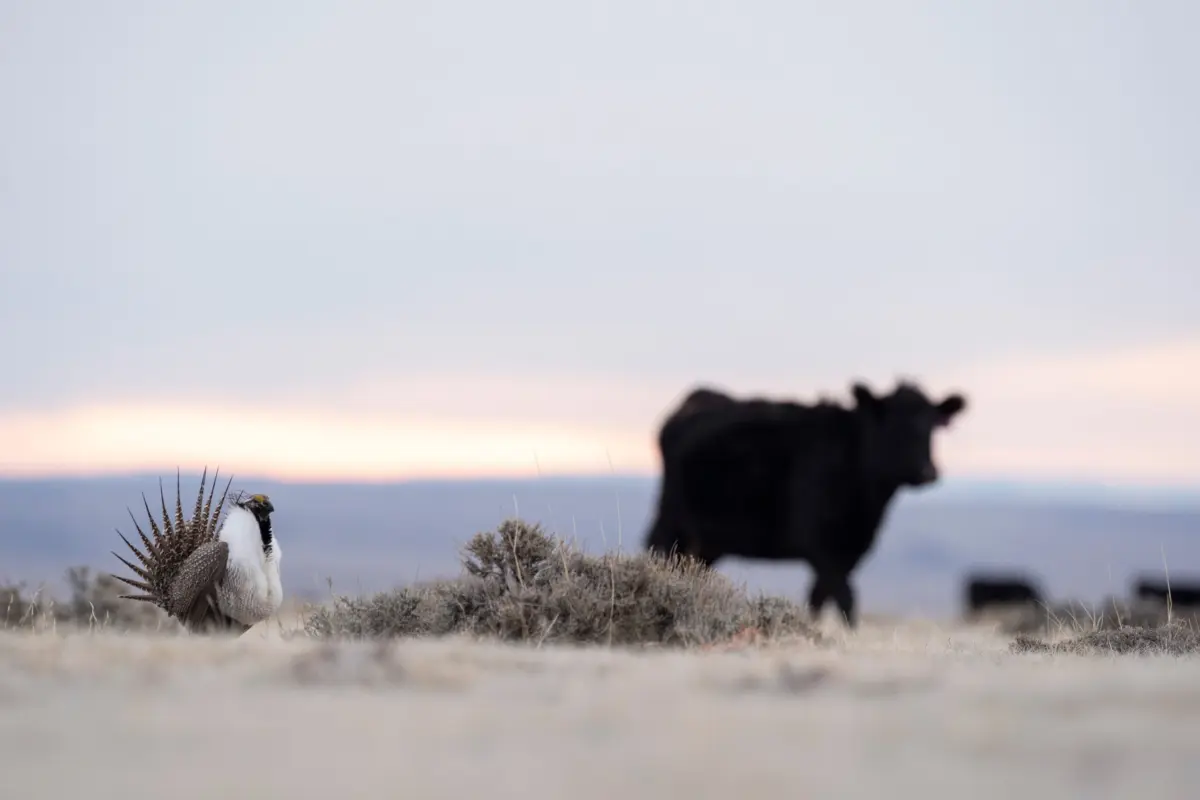

ALCOVA, WYO. — In a landmark development for Western conservation and sustainable agriculture, the National Audubon Society officially announced that Pathfinder Ensign Ranches has achieved Audubon’s prestigious Bird-Friendly Land Certification. Secured through the rigorous Audubon Conservation Ranching (ACR) program, this milestone not only validates the property’s commitment to ecological stewardship but also dramatically expands a conservation network that now encompasses more than 1.4 million acres across Wyoming—the largest state-level footprint within the national initiative.
Historically celebrated as the Pathfinder Ranch, the sprawling central Wyoming property is now owned and operated by Ensign Ranches. The new stewardship has seamlessly integrated modern regenerative practices with a deep-seated legacy of environmental conservation. By meeting stringent, science-based benchmarks for habitat management, soil health, and animal welfare, Pathfinder Ensign Ranches joins an elite tier of agricultural producers nationwide proving that commercial livestock operations and rich biodiversity are not mutually exclusive, but rather mutually reinforcing.
Executive Overview: A Paradigm Shift in Working Lands Conservation
The intersection of private enterprise and wildlife conservation has never been more critical. Across North America, grassland ecosystems are facing an unprecedented crisis. According to state-of-the-birds assessments, terrestrial biomes—particularly North American grasslands—have experienced the steepest population declines of any avian group since 1970. The primary drivers behind this ecological retreat include systematic habitat loss, aggressive woody plant encroachment, and intensive chemical applications associated with modern industrial agriculture.
Because the vast majority of these critical grassland habitats reside on privately owned land, traditional government intervention or purely protected public reserves cannot shoulder the burden of conservation alone. Meaningful ecological recovery requires the active, voluntary participation of the farmers and ranchers who manage these working landscapes every day.
Pathfinder Ensign Ranches represents the gold standard of this collaborative approach. Situated in an ecologically vital transition zone featuring native grasslands, expansive sagebrush steppes, and critical water resources like the Pathfinder Reservoir, the ranch provides an irreplaceable haven for declining wildlife. By earning the Audubon Bird-Friendly Land Certification, Ensign Ranches has proven that the production of high-quality beef and bison can be harnessed as a dynamic tool for landscape restoration, counteracting the forces of habitat fragmentation and species decline on a massive scale.
Detailed Chronology: Evolution of a Historic Western Landscape
To fully understand the significance of Pathfinder Ensign Ranches’ certification, one must examine the rich history and deliberate evolution of the land itself.
From Frontier Crossroads to Conservation Pioneer
Long before it became a focal point for ecological restoration, the Pathfinder landscape was a crucible of American westward expansion. Historic arteries of the frontier—including the Oregon, Mormon, California, and Pony Express Trails—converged and cut directly through what is now the ranch. For generations, this rugged terrain bore the footprints of pioneers, traders, and cattlemen drawn to the fertile river valleys and expansive grazing grounds of central Wyoming.
In the decades preceding the recent transition in ownership, visionary visionaries recognized that the true value of the Pathfinder lay not just in its agricultural output, but in its ecological integrity. Demonstrating extraordinary foresight, previous owners placed nearly 18,000 acres of the historic ranch under a binding conservation easement with the Wyoming Stock Growers Land Trust. This legal instrument permanently shields these working lands from subdivision and intensive development, ensuring their protection in perpetuity.
The Ensign Ranches Era and the Sage-Grouse Initiative
When Ensign Ranches assumed stewardship of the property, the executive leadership team inherited both a remarkable ecological legacy and a profound responsibility. Rather than charting a new, untested course, Ensign Ranches committed to amplifying the ranch’s conservation infrastructure.
Crucially, the Pathfinder holds the distinction of being the nation’s first and most expansive Greater Sage-Grouse conservation bank. Created to preserve some of the largest remaining contiguous habitats for this imperiled bird, the bank operationalized mitigation banking to protect sagebrush ecosystems. The recent integration of the Audubon Conservation Ranching program serves as the logical next chapter in this chronology—embedding science-driven habitat metrics directly into the daily operational matrix of the ranch.
Supporting Context & Metrics: The Science of Regenerative Ranching
The mechanics behind Audubon’s Bird-Friendly Land Certification are neither symbolic nor easily attained. Producers must undergo rigorous, periodic evaluations verifying that their land management directly benefits biodiversity. At the heart of Pathfinder Ensign Ranches’ success is a sophisticated system of rotational and regenerative grazing designed to mimic the historic movement patterns of native herbivores like the American bison.
Creating Habitat Heterogeneity
In natural grassland and sagebrush ecosystems, uniformity is the enemy of biodiversity. Different avian species require distinctly different structural stages of vegetation to thrive. To achieve this ecological diversity—known as habitat heterogeneity—Pathfinder’s managers employ a carefully calibrated mosaic of intensive, short-duration grazing alongside extended periods of vegetative rest.
- Short-Stature Pastures: Through high-intensity, short-duration grazing events, managers intentionally reduce vegetative height in designated pastures. This creates open, short-stature grasslands that are explicitly favored by ground-nesting and foraging species such as the Mountain Plover and the Horned Lark.
- Rest-Rotation Pastures: Conversely, neighboring pastures are granted extended recovery periods free from livestock grazing. This allows native grasses, forbs, and shrubs to mature fully, establishing the taller, denser plant structures required by species like the Sage Thrasher, Brewer’s Sparrow, and the iconic Greater Sage-Grouse.
This dynamic management strategy yields systemic ecological dividends: soils become more resilient to drought, root systems plunge deeper to sequester carbon, plant species diversity flourishes, and the entire landscape develops a heightened buffer against climate volatility.
A Broader Ecological Footprint
While birds serve as the primary biological indicators for the ACR program, the ripple effects of bird-friendly management extend across the entire faunal web. Pathfinder Ensign Ranches supports thriving populations of large ungulates, including elk, mule deer, and pronghorn.
Furthermore, the ranch has undertaken ambitious inter-agency wildlife restoration efforts. In active partnership with the Wyoming Game and Fish Department, Pathfinder is working to reintroduce native bighorn sheep into the rugged Sweetwater Rocks—restoring a native species to a landscape it has been absent from for well over a century.
Nationwide, the Audubon Conservation Ranching initiative continues to gather unstoppable momentum. More than 160 farms and ranches across the United States are now certified, bringing approximately 4.7 million acres under bird-friendly management. Within this national matrix, Wyoming commands the largest state-level conservation footprint, with 13 certified ranches managing over 1.4 million acres of critical habitat.
Official Statements: Perspectives from Conservationists and Ranch Leadership
The convergence of agricultural production and avian conservation relies entirely upon transparent, collaborative dialogue between ecologists and land managers. Leaders from both the National Audubon Society and Ensign Ranches have underscored the mutual benefits of this partnership.
Cidney Handy, Range Ecologist for the Audubon Conservation Ranching program in Wyoming, emphasized the unique ecological value of the Pathfinder property:
"With its expansive sagebrush country, native grasslands, and healthy riparian corridors, Pathfinder Ensign Ranches provides exceptional habitat for a wide range of bird species. The ranch sits in a key ecological transition zone, and the way it’s managed is incredibly beneficial for not only our grassland birds but other wildlife as well."
Echoing these sentiments, Chris Robinson, CEO of Ensign Ranches, highlighted the commercial and philosophical alignment driving the business forward:
"Regenerative management and targeted habitat restoration are built into our ranching strategy. Audubon’s certification helps assure and monitor the value of bird-friendly management. What’s good for birds is also beneficial for rangelands and the viability of our business. We want to support precious species in Wyoming, like the Greater Sage-Grouse, that rely on our land for breeding and foraging."
For consumers, the certification provides a tangible marketplace connection. Producers who meet Audubon’s rigorous standards are authorized to utilize the official Audubon Certified Bird-Friendly Land seal on their product packaging. This empowers conscious consumers to vote with their wallets, transforming everyday grocery purchases into direct investments in American grassland conservation.
Future Outlook: The Horizon of Sustainable Agribusiness
As Pathfinder Ensign Ranches looks toward the future, its leadership remains steadfast in balancing commercial agricultural productivity with uncompromising environmental stewardship. The challenges facing Western rangelands—ranging from shifting climatic patterns and persistent invasive weed pressures to the ever-present threat of habitat fragmentation—demand nothing less than proactive, adaptive management.
Enrollment in the Audubon Conservation Ranching program acts as a force multiplier for the ranch’s existing strategic goals. By continuously monitoring soil health, avian populations, and botanical diversity, Pathfinder Ensign Ranches is helping to forge a new economic model for rural communities. In this model, ecological health is treated not as a charitable externality, but as the foundational capital asset upon which long-term business profitability depends.
Ultimately, the success of Pathfinder Ensign Ranches serves as a compelling blueprint for the future of American agriculture. It demonstrates that when ranchers are equipped with science-based tools and partnered with conservation organizations, working lands can simultaneously feed a nation and preserve the irreplaceable biodiversity of the American West for generations to come.