
Executive Overview
As autumn sweeps across the Northern Hemisphere, billions of birds take flight on epic journeys southward, navigating an invisible highway of the skies. For these migratory species, this seasonal passage is far from a simple journey; it is a gauntlet of survival. Science consistently shows that migration is statistically the most dangerous period in a bird’s annual cycle, marked by starkly elevated mortality rates compared to the relatively stationary breeding and non-breeding periods. Research from the National Audubon Society has demonstrated, for instance, that the southbound migration of warblers represents the highest-risk phase of their entire annual lifecycle.
To survive these marathon flights across continents and oceans, migratory birds depend on an uninterrupted network of healthy, accessible habitats where they can rest, refuel, and seek shelter. Yet, this intricate ecological web is fraying. Across the Americas, nearly half of all migratory bird species are currently in population decline. In the United States and Canada alone, breeding populations of migratory birds have plummeted by a staggering 2.5 billion individuals since 1970. Simultaneously, another 460 species face severe conservation threats throughout Latin America and the Caribbean. Because these creatures traverse borders, continents, and hemispheres, a population loss registered in a northern breeding ground is inextricably linked to environmental pressures and habitat degradation thousands of miles away.
Against this backdrop of ecological urgency, a transformative conservation mechanism has emerged. Earlier this fall in Kenya, a powerful international coalition—comprising the National Audubon Society, BirdLife International, and CAF (Development Bank for Latin America and the Caribbean)—formally launched the Flyways Nature Bond Framework. Representing the future of hemispheric conservation, this pioneering initiative leverages cutting-edge science to identify high-impact habitats and species that stand to benefit most from sustainable development and targeted financial investments.
By strategically deploying conservation finance along the major flyways of the Americas, the Flyways Nature Bond Framework aims to reverse alarming population declines while simultaneously fortifying human communities against the compounding threats of climate change. This in-depth report explores the genesis, mechanics, ecological imperatives, and future outlook of a framework that seeks to unite financial markets with planetary stewardship.
Detailed Chronology: The Genesis and Launch of the Flyways Nature Bond Framework
The realization that traditional, localized conservation funding is insufficient to protect continent-spanning migratory species catalyzed years of strategic planning, inter-agency negotiation, and scientific synthesis among global environmental and financial institutions.
Laying the Scientific Groundwork
Long before its official unveiling, the initiative required a rigorous, data-driven foundation. Audubon scientists, collaborating with partners under the Americas Flyways Initiative, undertook the massive task of analyzing ecological data across the Western Hemisphere. Instead of spreading finite conservation dollars thinly across thousands of disparate projects, the coalition used the best available migration science to pinpoint where capital investment would yield the highest possible ecological return.
Through this analytical process, researchers selected 112 representative migratory bird species across the Americas. By mapping the overlapping pathways, critical stopover sites, and wintering grounds of these sentinel species, the coalition identified key corridors where investing in bird-friendly infrastructure and natural climate solutions would maximize conservation impact. This scientific backbone transformed abstract conservation goals into a precise, actionable framework capable of guiding decision-makers and financial institutions as they allocate precious capital across international borders.
The Official Unveiling in Kenya
The culmination of these preparatory efforts materialized earlier this fall. Gathered on the international stage in Kenya, leaders from Audubon, BirdLife International, and CAF officially formalized the launch of the Flyways Nature Bond Framework.
The choice of an international development bank like CAF as a core partner signaled a profound paradigm shift: conservation was no longer viewed merely as a philanthropic endeavor, but as an essential component of sustainable economic development and sovereign financial planning. By bridging the worlds of high-level finance and ornithological science, the coalition created a structured financial mechanism—the Nature Bond—designed to channel unprecedented levels of capital into habitat preservation and green infrastructure along the migratory corridors of the Americas.
Supporting Context & Metrics: The Anatomy of Migratory Peril and Ecological Interconnectedness
To understand the necessity of the Flyways Nature Bond Framework, one must examine the staggering scale of migration, the compounding threats faced by avian species, and the dual benefits of investing in natural infrastructure.
The Deadly Gauntlet of Migration
Migration is an evolutionary marvel, but it is also an existential trial. Driven by innate biological cues, birds fly thousands of miles twice a year, relying on celestial navigation, magnetic fields, and topography. However, the modern landscape they traverse has been radically altered by human activity.
- Elevated Mortality: Statistical models confirm that mortality rates spike during migration. Exhaustion, severe weather events driven by climate change, starvation due to lost habitat, and direct human-made hazards create a lethal matrix.
- The Warbler Vulnerability: Audubon science highlights that for wood warblers and many other songbird species, the southbound journey is the most perilous window of the year, where the risk of mortality far outpaces that of breeding grounds.
- The Macro Decline: The statistics paint a sobering picture. The loss of nearly 2.5 billion birds in the U.S. and Canada since 1970 represents a systemic collapse of avian biodiversity. In Latin America and the Caribbean, 460 species face elevated conservation risks, driven by the rapid conversion of forests, wetlands, and grasslands into agricultural and urban landscapes.
A Case Study in Hemispheric Vulnerability: The Hudsonian Godwit
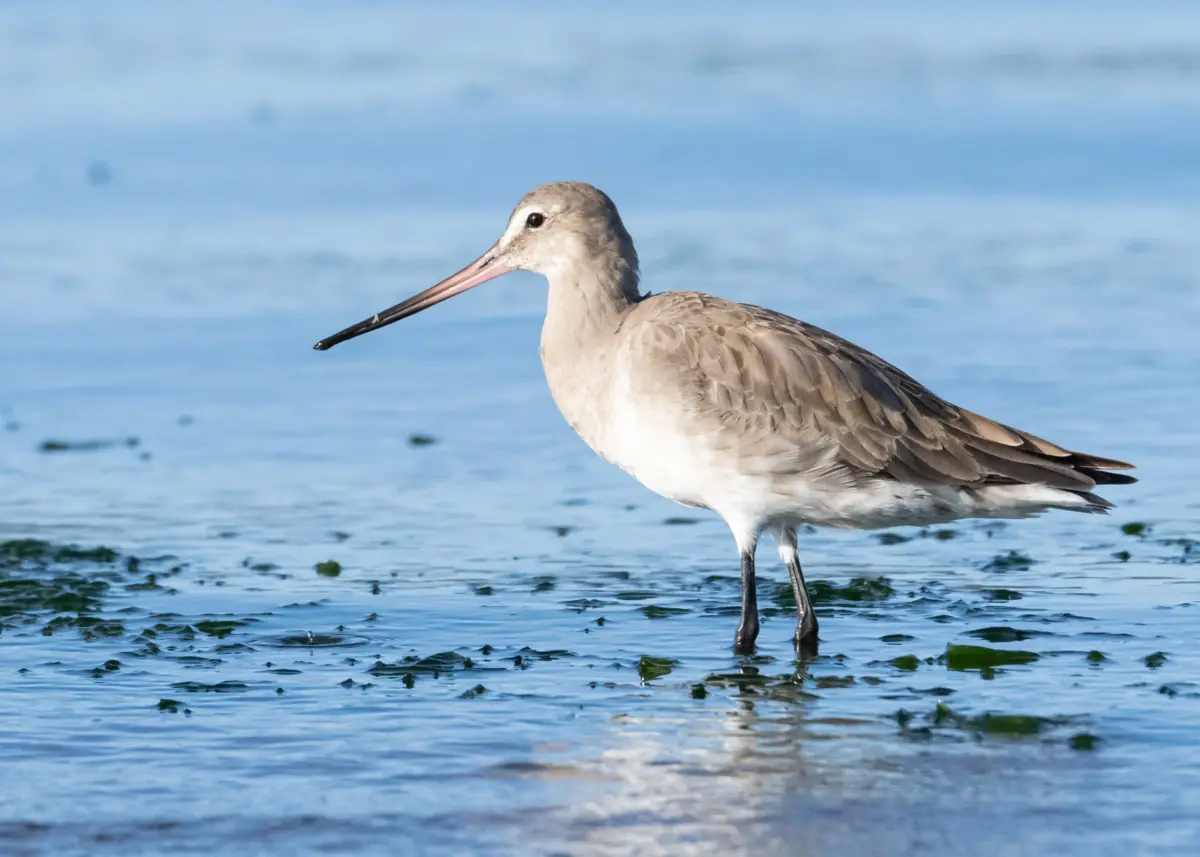
To fully grasp how continental pressures interconnect, consider the Hudsonian Godwit (Limosa haemastica). This remarkable shorebird undertakes a herculean annual migration, flying non-stop for thousands of miles between its wintering grounds in southern Chile and its breeding grounds in the Canadian tundra.
Along this staggering route, the Hudsonian Godwit encounters a barrage of anthropogenic and natural challenges:
- Habitat Loss at Both Ends: Coastal mudflats and wetlands in South America and Canada are degraded by industrial development, aquaculture, and rising sea levels driven by global climate change.
- Light Pollution: Urban sprawl along migratory flyways creates artificial night lighting that disorients nocturnal migrants, pulling them off course into brightly lit cities where building collisions are common.
- Infrastructure Hazards: Communication towers, wind turbines, and power lines present physical barriers that claim the lives of millions of birds annually.
The plight of the Hudsonian Godwit illustrates a fundamental ecological truth: because these birds belong to the entire hemisphere, protecting them requires coordinated stewardship across every country they cross.
Dual-Purpose Conservation: Nature-Based Solutions and Bird-Safe Infrastructure
The Flyways Nature Bond Framework is explicitly designed to address these multi-layered threats through two primary project pillars:
- Nature-Based Solutions: These projects focus on the active conservation, restoration, and sustainable management of critical habitats—such as wetlands, forests, coastal mangroves, and grasslands—that serve as essential refueling and nesting stations for migratory birds.
- Bird-Safe Infrastructure Integration: Recognizing that human development will continue, this pillar mandates the integration of bird-friendly design criteria into infrastructure projects. This includes retrofitting buildings with collision-deterrent glass, designing wildlife-permeable power lines, and managing lighting to minimize disorientation during peak migration windows.
Crucially, these interventions do not exclusively benefit birds. The very same ecosystems that shelter migratory species—coastal wetlands, sweeping forests, and resilient grasslands—provide indispensable services to human communities. Healthy wetlands mitigate catastrophic flood and storm risks; forests and grasslands store massive amounts of carbon, helping to stabilize the global climate; and intact watersheds safeguard local water supplies while supporting sustainable regional livelihoods.
Official Statements and Strategic Vision
The architecture of the Flyways Nature Bond Framework rests on the convergence of ecological science and institutional financial commitment. Leaders from the founding organizations have repeatedly emphasized that the future of conservation relies on breaking down silos between environmental advocacy and economic development.
Aurelio Ramos, Audubon’s Managing Director for Latin America and the Caribbean, has long championed the concept that investing in sustainable development and nature is not an expense, but a high-yield investment with tangible capital returns. In previous analyses on migratory birds and capital return, Ramos underscored that protecting natural habitats preserves the foundational assets upon which regional economies depend.
Similarly, leadership across BirdLife International and CAF have framed the Nature Bond as an essential instrument to unlock sovereign and private capital for environmental stewardship. By embedding science-based criteria into financial bonds, investors are provided with transparent, measurable metrics regarding biodiversity protection and climate resilience. This alignment ensures that every dollar mobilized through the framework is targeted at high-leverage geographies—specifically addressing the 112 representative species identified by the Americas Flyways Initiative.
Future Outlook: The Road Ahead for Hemispheric Conservation
As the Flyways Nature Bond Framework transitions from its initial launch phase into active implementation, its success will depend on sustained international cooperation, rigorous scientific monitoring, and the willingness of financial markets to embrace natural capital as a core asset class.
Scaling Up Investment
The immediate horizon involves operationalizing the framework across pilot countries in Latin America, the Caribbean, and North America. By structuring bonds that tie financial returns or debt relief to measurable conservation outcomes, the initiative creates powerful incentives for governments to protect critical migratory corridors. If scaled successfully, the framework could unlock billions of dollars for ecological restoration, transforming how developing nations finance climate resilience and biodiversity protection.
Bridging Science and Policy
As climate change accelerates and human populations expand, the pressures on migratory species will only intensify. The Flyways Nature Bond Framework provides a dynamic, science-driven compass for decision-makers. Rather than relying on guesswork or reactive emergency funding, regional planners, conservationists, and financial institutions can utilize migration science to direct resources precisely where they will prevent species collapse and protect vulnerable human communities.
Staying Informed and Engaged
The journey of the Flyways Nature Bond Framework is just beginning. Stakeholders, conservationists, and global citizens can follow ongoing developments, programmatic milestones, and project rollouts by visiting official updates on Audubon.org. For those seeking deeper insights into the intersection of capital investment and environmental preservation, foundational essays—such as Aurelio Ramos’s reflections on migratory birds and capital return—remain accessible online, with Spanish-language resources available for regional audiences seeking to engage with the initiative across the Americas.
Ultimately, the Flyways Nature Bond Framework serves as a powerful reminder that human prosperity and the survival of migratory wildlife are inextricably linked. By investing in the flyways that connect the hemisphere, we are not only saving billions of birds from the perils of migration; we are securing a resilient, habitable planet for generations to come.