
Executive Overview
A groundbreaking archaeological discovery on the isolated Baltic island of Stora Karlsö is fundamentally altering how scientists understand the historical relationship between ancient humans and wolves. Researchers analyzing ancient remains dating back 3,000 to 5,000 years have identified specimens genetically confirmed as pure wolves. Because the tiny island sits isolated in the open sea and completely lacks native land mammals, these apex predators could not have arrived through natural migration. Instead, they were deliberately transported across the water by humans—most likely via boat—during the Neolithic and Bronze Ages.
Published in the Proceedings of the National Academy of Sciences (PNAS), the multi-institutional study was spearheaded by an international coalition of researchers from the Francis Crick Institute, Stockholm University, the University of Aberdeen, and the University of East Anglia. By combining advanced osteoarchaeological examination with state-of-the-art ancient genomics and stable isotope analysis, the research team uncovered an intricate, overlooked chapter of prehistoric life.
The data indicates that these ancient wolves lived alongside human seal hunters and fishers, shared a marine-heavy diet, exhibited signs of physical isolation, and, in at least one instance, survived a debilitating limb injury that would have proven fatal in the wild. Far from adhering to the traditional, linear trajectory of dog domestication—where wolves slowly morphed into domestic canines through passive adaptation—these findings reveal an unexpected scenario: prehistoric communities actively capturing, transporting, managing, and potentially caring for wild wolves thousands of years ago, experimenting with a form of coexistence that ultimately left no modern genetic legacy.
Detailed Chronology of the Discovery
Unearthing the Stora Fårvar Cave
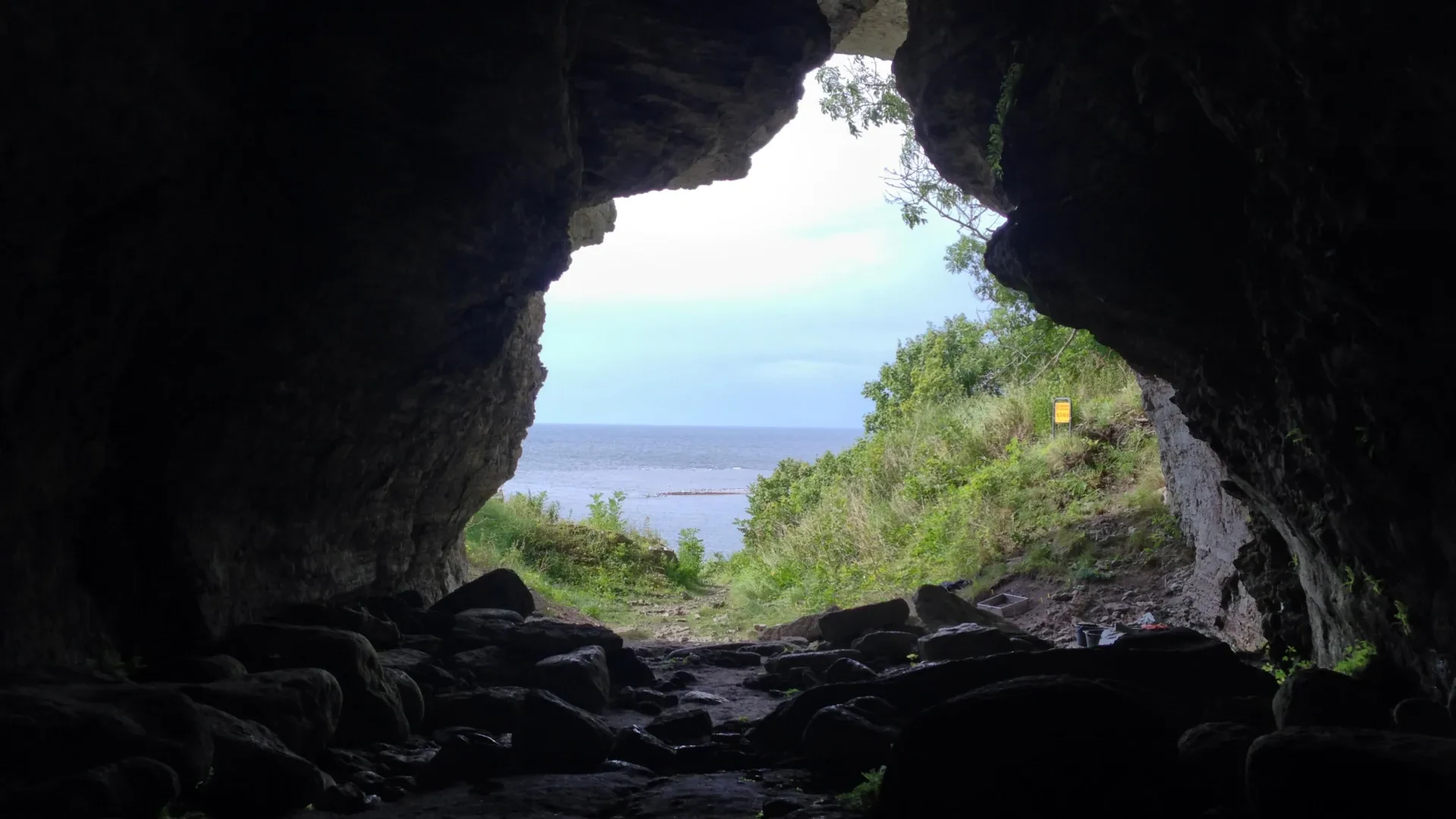
The journey toward this paradigm-shifting discovery began deep within the limestone layers of Stora Fårvar cave, a prominent archaeological site situated on the rugged terrain of Stora Karlsö. Throughout the Stone Age and early metalworking eras, the cave served as a frequent, highly strategic encampment for generations of seasonal seal hunters and marine fishers. These prehistoric maritime groups utilized the island as a base for exploiting the rich seal populations of the Baltic Sea.
Over decades of excavation, archaeologists recovered rich layers of faunal remains, artifacts, and skeletal fragments. Among these collections were canid bones that initially presented a morphological puzzle. Given the era and the presence of early canids in human settlements, researchers naturally hypothesized that the remains belonged to early domestic dogs (Canis lupus familiaris). However, as genetic and isotopic techniques advanced, scientists subjected these bones to rigorous laboratory analysis, unlocking a sequence of revelations that challenged every pre-existing assumption about the site.
Tracing the Maritime Journey
Measuring a mere 2.5 square kilometers, Stora Karlsö is a remote outcropping situated off the western coast of Gotland, Sweden. Ecologically, the island is defined by its isolation and total absence of native terrestrial mammals. Wolves are powerful swimmers, yet crossing miles of open, frigid Baltic Sea water to colonize an unpopulated, resource-scarce rock stack is biologically implausible.
Faced with this immutable geographic reality, researchers concluded that human intervention was the only viable explanation. Prehistoric mariners must have captured wolves on the mainland and transported them across the open water by boat. This logistical reality alone places the Stora Karlsö canids in an entirely separate category from typical archaeological specimens. These animals were not merely scavengers hanging around the periphery of human camps; they were deliberate cargo, hauled across dangerous marine expanses to an isolated island settlement.
Genetic Validation and Isotopic Insights
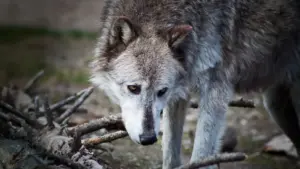
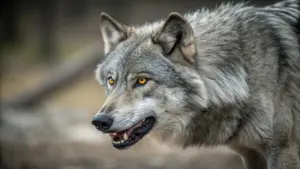
Once the specimens were safely in the laboratory, genetic sequencing confirmed a startling reality: the remains belonged strictly to wolves (Canis lupus). Detailed mitochondrial and nuclear DNA extraction showed zero evidence of domestic dog ancestry. Genetically, these island inhabitants were indistinguishable from other ancient Eurasian wolves of the same period.
However, their lifestyle and biological markers told a vastly different story. Stable isotope analysis—a powerful biochemical technique that reconstructs an organism’s long-term diet by examining carbon and nitrogen ratios preserved in bone collagen—revealed that the island wolves consumed an exceptionally high proportion of marine protein. Their diets mirrored those of the human seal hunters sharing the cave, heavily comprising seals and marine fish. In a natural environment, wolves rarely target marine mammals directly as a primary caloric source. The isotopic signature thus provided definitive biochemical proof that humans were provisioning these captive or managed wolves with portions of their own catches.
Supporting Context & Metrics: Quantifying the Anomaly
To fully grasp the magnitude of the Stora Karlsö discovery, researchers had to contextualize the physical and genetic metrics of the specimens against a vast comparative database of ancient and modern canids.
| Analytical Metric | Observation / Data Point | Significance to Research |
|---|---|---|
| Geographic Isolation | 2.5 sq. km island with zero native land mammals | Proves deliberate human transport via watercraft |
| Chronological Range | 3,000 to 5,000 years before present (Neolithic & Bronze Age) | Establishes a multi-millennial timeline of human-wolf interaction |
| Genetic Classification | Pure wolf ancestry (Canis lupus); zero dog introgression | Dismisses the hypothesis that the animals were early domestic dogs |
| Dietary Profile | High marine protein intake (seals and fish) | Indicates direct provisioning and feeding by human inhabitants |
| Genetic Diversity | Exceptionally low in complete genome samples | Points toward population bottlenecks, isolation, or active management |
| Physical Pathology | Severe, healed long-bone fracture in a Bronze Age specimen | Suggests prolonged survival via human care and reduced need for independent hunting |
The Paradox of Low Genetic Diversity
One of the most striking quantitative anomalies discovered during the genomic analysis was the severely depressed genetic diversity found within the complete genome of a primary specimen. Genetic diversity—the total number of genetic characteristics in the genetic makeup of a species—typically remains robust in wild populations spanning broad continental ranges.
When genetic diversity plummets, it usually signals a severe population bottleneck, where a population is drastically reduced in size due to environmental catastrophe, or points directly toward selective breeding and artificial isolation imposed by human management. While natural drift on a small island could theoretically account for some reduction over extended periods, the extreme nature of the bottleneck observed in these wolves strongly implies human curation, intentional breeding restriction, or keeping animals in confined, controlled environments.
The Pathology of Care: Surviving Severe Injury
Adding a poignant physiological dimension to the isotopic and genetic data, osteoarchaeological examination of a Bronze Age wolf specimen revealed severe, long-term trauma to a limb bone. In a pristine wilderness setting, a crippling skeletal injury of this magnitude is effectively a death sentence. An injured wolf cannot run, chase, or bring down large prey, quickly leading to starvation or death by predation.
Remarkably, the Stora Karlsö wolf survived long enough for the bone to undergo extensive healing, leaving permanent, distinct markers of recovery on the skeleton. This pathological evidence provides compelling support for the hypothesis that the animal was actively cared for by humans. Whether kept in a fenced enclosure, tethered within the settlement, or simply provisioned with scraps while immobilized, the wolf experienced a quality of life—and a safety net—unobtainable in the wild.
Official Statements & Expert Analysis
The international research team emphasizes that these findings demand a fundamental rewriting of how archaeologists view the boundaries between wild and domestic animal management in prehistory.
"The discovery of these wolves on a remote island is completely unexpected," stated Dr. Linus Girdland-Flink of the University of Aberdeen, a lead author of the study. "Not only did they have ancestry indistinguishable from other Eurasian wolves, but they seemed to be living alongside humans, eating their food, and in a place they could only have reached by boat. This paints a complex picture of the relationship between humans and wolves in the past."
Traditional archaeological paradigms have long analyzed human-canid interactions through a singular, teleological lens: the domestication pathway. In this established framework, wolves gradually evolved into dogs through a protracted process of self-domestication, hanging around human rubbish dumps, slowly adapting to human environments, and eventually being shaped into loyal companions and working animals. The Stora Karlsö discovery shatters this neat narrative, proving that prehistoric populations engaged in sophisticated, varied behavioral experiments with wild fauna that did not conform to the standard evolutionary track toward modern dogs.
"It was a complete surprise to see that it was a wolf and not a dog," noted Pontus Skoglund of the Ancient Genomics Laboratory at the Francis Crick Institute and senior author of the study. "This is a provocative case that raises the possibility that in certain environments, humans were able to keep wolves in their settlements, and found value in doing so."
Elaborating on the genetic implications, Anders Bergström of the University of East Anglia and co-lead author highlighted the uniqueness of the genomic data:
"The genetic data is fascinating. We found that the wolf with the most complete genome had low genetic diversity, lower than any other ancient wolf we’ve seen. This is similar to what you see in isolated or bottlenecked populations, or in domesticated organisms. While we can’t rule out that these wolves had low genetic diversity for natural reasons, it suggests that humans were interacting with and managing wolves in ways we hadn’t previously considered."
Bridging the gap between physical anthropology and cultural archaeology, Jan Storå, Professor of Osteoarchaeology at Stockholm University, emphasized the power of interdisciplinary science in uncovering lost historical chapters:
"The combination of data has revealed new and very unexpected perspectives on Stone Age and Bronze Age human-animal interactions in general and specifically concerning wolves and also dogs. It points to a forgotten chapter in the history of humans and wolves, one that hints at experiments in coexistence that never ultimately produced the dogs we know today."
Future Outlook & Archaeological Implications
The identification of managed wolves on Stora Karlsö opens up sweeping new avenues of inquiry for archaeological research across Europe and the broader Eurasian continent. By proving that prehistoric human communities possessed the capability—and the cultural motivation—to transport, feed, and care for wild apex predators on isolated offshore bases, the study forces researchers to re-examine faunal assemblages at coastal and island sites worldwide.
Re-Evaluating Legacy Collections
In light of these findings, museum archives and university osteology laboratories are poised to re-examine legacy canid remains previously categorized simply as "large dogs" or "wild wolves." Many specimens recovered from Neolithic and Bronze Age contexts may have been prematurely dismissed as natural fauna or domestic stock without undergoing rigorous ancient DNA extraction and stable isotope testing. Implementing high-resolution genomics across broader European excavation sites could reveal that human-wolf co-management was far more widespread than previously suspected.
Unlocking the Motivations of Coexistence
The central question remaining for paleo-anthropologists is why Neolithic and Bronze Age maritime communities invested time, energy, and resources into keeping wild wolves. Several hypotheses are currently being explored:
- Status and Prestige: Holding a dangerous apex predator captive on a remote island may have served as a powerful symbol of tribal authority, spiritual power, or elite status among maritime hunter-gatherer groups.
- Resource Tracking and Guarding: Even without full domestication, captive wolves could have provided psychological security, guarded marine caches from rival scavengers, or assisted in specialized hunting tasks in ways modern domestic dogs could not yet match.
- Pelt and Resource Utilization: Maintaining a captive population of wolves could have provided a steady, accessible supply of high-quality furs, bones, and teeth utilized for ceremonial and utilitarian tools during harsh Baltic winters.
A Lost Evolutionary Experiment
Ultimately, the Stora Karlsö discovery illustrates that human-animal relationships in prehistory were characterized by behavioral fluidity, local experimentation, and diverse adaptive strategies. Long before modern breeding standards codified the domestic dog, ancient communities were interacting with wild nature in complex, nuanced ways that left no permanent genetic footprint in modern canine populations.
As analytical techniques continue to advance, shedding new light on the dark recesses of ancient caves and long-forgotten island outposts, science is steadily recovering the rich, multifaceted tapestry of our ancestors’ interactions with the natural world—proving that the history of human civilization and the animal kingdom is far more intricate, surprising, and profound than written records could ever convey.