
NEW LONDON, WIS. (October 21, 2026) — In the rolling landscapes of central Wisconsin, where intensive row-crop agriculture often dominates the horizon, a quiet revolution is taking root. Bouressa Family Farm, a 360-acre operation steered by fifth-generation farmer Rachel Bouressa, has officially earned the National Audubon Society’s coveted Bird-Friendly Land Certification.
Secured through the rigorous Audubon Conservation Ranching (ACR) program, this milestone places Bouressa at the forefront of a national movement uniting agricultural productivity with ecological restoration. By prioritizing soil health, native prairie rehabilitation, and adaptive grazing, Bouressa is proving that modern working lands can serve as sanctuaries for some of North America’s most vulnerable wildlife.
Executive Overview
The crisis facing North America’s grassland ecosystems is both silent and severe. Since 1970, grassland birds have suffered the steepest population declines of any terrestrial biome on the continent, largely driven by habitat fragmentation, intensive chemical applications, and woody encroachment. Amidst this backdrop, the Audubon Conservation Ranching initiative offers a science-based counter-strategy: partnering directly with farmers and ranchers to transform working lands into thriving, biodiverse habitats without sacrificing agricultural viability.
For Bouressa Family Farm, achieving certification is the culmination of years of deliberate, "soil-first" land stewardship. Armed with a degree in agronomy and environmental science from the University of Wisconsin-Madison, Bouressa has reimagined her family’s property near New London. Through strategic practices such as rotational grazing, wetland restoration, and the removal of intrusive tree rows to de-fragment open spaces, her farm has transformed into an ecological haven. Today, it stands as a shining example within Wisconsin’s Forest Transition Zone—a vital proving ground where sustainable ranching and avian conservation intersect.
Detailed Chronology: From Dairy Barns to Regenerative Grazing
The history of Bouressa Family Farm is a narrative of resilience, adaptation, and generational stewardship.
- The Dairy Era (Pre-1990s to 2014): For nearly two decades, Rachel’s parents operated the property as a conventional dairy farm. In the 1990s, recognizing the ecological and economic benefits of managed grazing, they transitioned their dairy cows to pasture-based systems. This early pivot laid the philosophical groundwork for the sustainable practices that would follow.
- The 2014 Turning Point: Tragedy struck in 2014 when a catastrophic barn fire destroyed much of the farm’s core infrastructure. Rather than walking away, Rachel Bouressa returned to the property to chart a new path forward. She pivoted the enterprise away from conventional dairy, establishing a cow-calf and grass-finishing beef operation, opening an on-farm retail store, and welcoming nature-minded travelers via Hipcamp.
- The "Soil-First" Transition (2020s): Drawing heavily on her academic background in environmental science, Bouressa fully embraced regenerative agriculture. She implemented adaptive multi-paddock grazing, allowing pastures long recovery periods to build deep root systems, sequester carbon, and retain moisture.
- Audubon Certification (October 2026): Following exhaustive third-party audits confirming compliance with rigorous environmental and animal welfare standards, Bouressa Family Farm officially achieved Audubon Bird-Friendly Land Certification, cementing its status as an ecological leader in the Great Lakes region.
Supporting Context & Metrics: The State of Grasslands and ACR Impact
To understand the weight of Bouressa’s achievement, one must examine the broader ecological landscape of North American agriculture.
The Grassland Bird Crisis
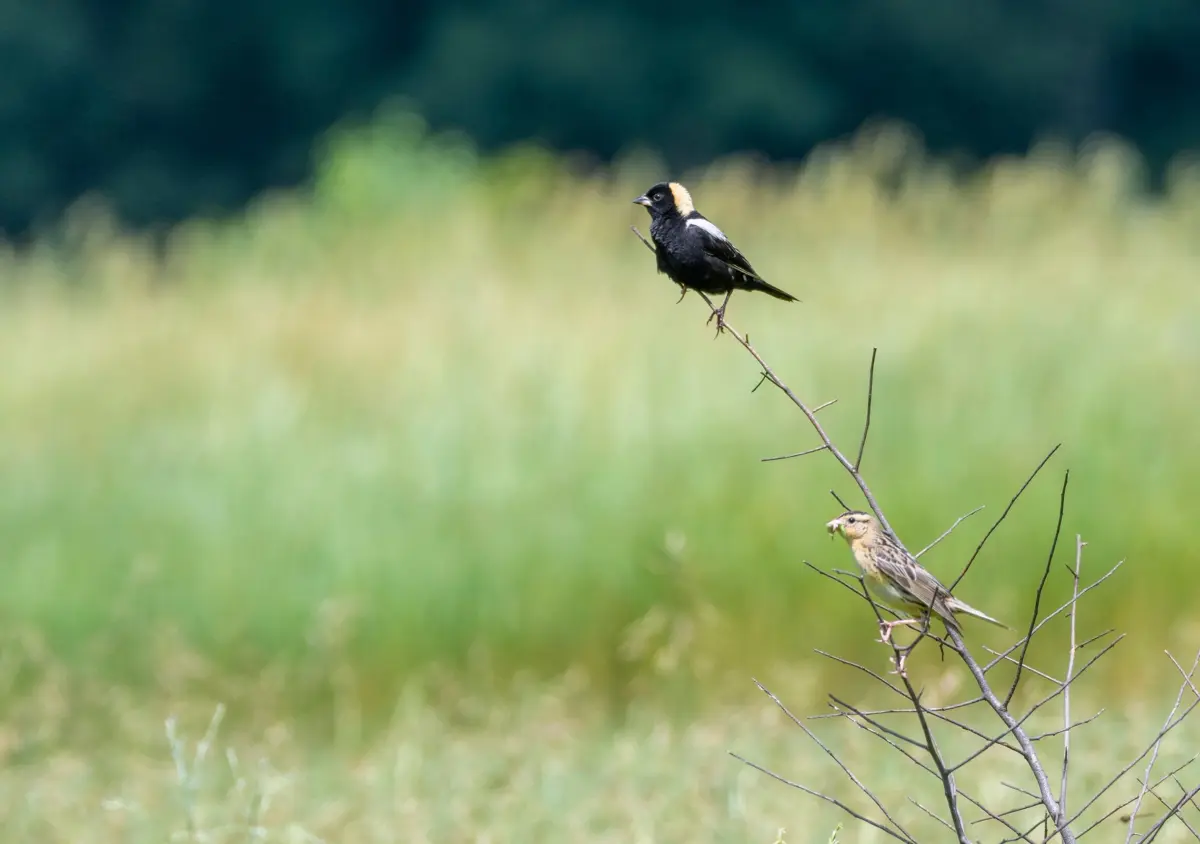
According to the State of the Birds reports, grassland avifauna are experiencing unprecedented declines. Species that once blanketed the central and northern plains now struggle to find contiguous, undisturbed nesting grounds. In Wisconsin’s Forest Transition Zone—an ecotone historically defined by a mix of forests and openings that has seen heavy agricultural conversion—grass-based farming operations are critical lifelines. Properties like Bouressa Family Farm provide essential nesting and foraging grounds for priority species, including:
- Bobolinks (Dolichonyx oryzivorus)
- Eastern Meadowlarks (Sturnella magna)
- Savannah Sparrows (Passerculus sandwichensis)
- Grasshopper Sparrows (Ammodramus savannarum)
- Dickcissels (Spiza americana)
Scaling Conservation Nationwide
The Audubon Conservation Ranching program represents a massive, scalable effort to combat these declines through consumer-backed market forces.
- National Footprint: The program currently spans more than 160 farms and ranches across 15 states, bringing approximately 4.7 million acres under bird-friendly management.
- Wisconsin Impact: In Wisconsin, the footprint has expanded to 2,000 acres distributed across seven certified farms.
- Market Reach: Beef and bison products carrying the Audubon Certified Bird-Friendly Land seal are now distributed in more than 2,000 retail stores nationwide, allowing everyday consumers to vote for habitat preservation with their purchasing power.
Official Statements and Perspectives
The partnership between independent agricultural producers and conservation scientists is central to the success of the ACR model.
Ashly Steinke, Range Ecologist for the Audubon Conservation Ranching program in Wisconsin, commended Bouressa’s holistic decision-making process:
"Rachel is the epitome of a rancher who makes decisions based not only on farm economics, but also pertaining to her environment and her community," Steinke noted. "It has been a pleasure working with Rachel to increase biodiversity on her farm through restoring wetlands and native prairie to removing tree rows to de-fragment grassland ecosystems found on the farm."
For Bouressa herself, the integration of wildlife management into daily operations has fundamentally changed how she interacts with the landscape:
"Since working with Audubon, I’ve added a wildlife lens to all my habitat management decisions, managing for a mosaic of different grass heights that different bird species need to thrive," Bouressa explained. "I’ve seen the impact and success of managed grazing and tree line removal on my farm with the return of nesting Bobolinks. Now I see birds across the whole farm, my emerald oasis surrounded by cropland."
Beyond her own fences, Bouressa has emerged as a vocal advocate for regenerative systems. Serving on the Wisconsin Natural Resources Board and as director-at-large on the Wisconsin Farmers Union Board, she frequently engages with fellow producers to demystify conservation ranching.
"I am lucky to have enough land that I don’t need to max out production at the expense of habitat," Bouressa reflected. "I want to demonstrate that we can have productive agricultural systems while also protecting and prioritizing our natural resources."
Future Outlook: The Intersection of Agriculture and Ecology
As Bouressa Family Farm integrates its new certification into its business model—offering consumers certified grass-finished beef that tells a story of ecological restoration—the broader implications for regional agriculture are profound.
The success of the Audubon Conservation Ranching program signals a paradigm shift in how rural communities view sustainability. No longer framed as a zero-sum game where farmers must choose between economic survival and environmental health, regenerative ranching demonstrates that healthy soil, clean water, and abundant bird populations are financial and ecological assets.
Moving forward, the roadmap for Wisconsin’s agricultural sector will likely rely on scaling these collaborative models. By bridging the gap between rigorous scientific monitoring and practical farm management, pioneers like Rachel Bouressa are ensuring that the rural landscapes of tomorrow remain vibrant, resilient, and rich with the songs of returning grassland birds.