
Executive Overview
Long before a puppy learns to sit on command, heel alongside a handler, or navigate bustling public spaces as a guide, an intricate cascade of biological and neurological development is already underway behind the scenes. At organizations like Dogs Inc, the journey of transforming a newborn canine into a calm, focused, and life-changing service partner begins not in formal training academies, but in the quiet, controlled environment of the neonatal whelping box.
Modern canine science confirms that the earliest weeks of a puppy’s life represent a critical window of neurobiological opportunity. During a stage when newborns are blind, deaf, and entirely dependent on their mother and littermates, profound changes are occurring within their developing central nervous systems. To harness and support this vital growth phase, organizations dedicated to breeding elite working dogs employ specialized, science-based protocols. Foremost among these is Early Neurological Stimulation (ENS)—a series of brief, highly controlled tactical exercises designed to optimize neurological pathways before the puppy’s eyes and ears even open.
While ENS is only one foundational element within a comprehensive, multi-year developmental pipeline, it exemplifies a broader commitment to intentional, evidence-based breeding and rearing. By understanding how early experiences, genetic predispositions, and progressive socialization intersect, organizations can better prepare future guide and service dogs to meet the rigorous demands of supporting individuals with disabilities. This report examines the science of ENS, explores the sequential milestones of canine development, and highlights how strategic early intervention shapes the resilient companions of tomorrow.
Detailed Chronology: From Neonatal Foundations to Adolescent Maturity
The development of a service dog candidate is a continuous, highly orchestrated continuum. Each developmental window presents distinct physiological milestones and behavioral opportunities that require tailored handling, environmental enrichment, and structured training.

The Neonatal Stage (Birth to 2 Weeks)
The neonatal period is defined by utter vulnerability and profound physiological growth. Newborn puppies spend the vast majority of their time nursing and sleeping. Because they cannot yet see or hear, and are physiologically incapable of regulating their own body temperature, they rely entirely on their dam and human caregivers for survival.
Despite their apparent fragility, a tremendous amount of internal development is occurring. The brain and central nervous system are rapidly forming neural connections. This is precisely where Early Neurological Stimulation is introduced. Implemented during this narrow two-week window, ENS utilizes brief, gentle tactile and thermal stressors to stimulate the neurological system, encouraging cardiovascular performance and stress tolerance.
The Transitional Stage (2 to 4 Weeks)
As puppies cross the threshold into the transitional stage, their sensory world dramatically expands. Around two weeks of age, their eyes and ears begin to open, introducing them to sights and sounds for the very first time. By four weeks old, puppies achieve key motor milestones: they begin to stand, walk with unsteady coordination, and emit their first barks.
Physically, their baby teeth begin to erupt, signaling the gradual transition from exclusive nursing toward soft gruel and, eventually, solid food. Socially, they begin interacting more dynamically with their littermates, learning critical early lessons in bite inhibition, canine body language, and peer communication under the watchful eye of the mother.

The Socialization Period (3 to 12 Weeks)
Often considered the most influential developmental window, the socialization period overlaps with the latter half of the transitional stage and extends through the third month of life. This is when a puppy’s brain is uniquely wired to absorb novel experiences and integrate them without excessive fear.
- Weeks 3 to 8: Puppies actively explore their immediate surroundings, forming positive associations with human handling, diverse household noises, different textures, and various surfaces. Interactions with their mother and littermates continue to refine their social competence.
- Weeks 8 to 12: By eight weeks of age, many puppies transition to their volunteer puppy-raising homes. During this crucial phase, they are intentionally exposed to a wide array of novel stimuli—meeting diverse people, visiting unfamiliar environments, and encountering other animals. This structured exposure builds emotional resilience, fosters adaptability, and actively prevents the onset of fear-based behavioral issues later in life.
- The Onset of Formal Learning: By three months (12 weeks) of age, puppies are fully equipped to begin learning basic obedience cues in short, positive-reinforcement-based training sessions. Routine elements, such as crate training, are integrated to encourage independence and emotional regulation.
Adolescent Milestones and Fear Periods (6 Months to 12 Months)
As puppies mature into adolescence—a phase that can begin as early as six months—they frequently test boundaries, much like human teenagers. Throughout this stage, hormonal shifts occur as the dogs approach reproductive maturity. Females typically experience their first heat cycle, while males exhibit new hormone-driven behaviors.
Furthermore, canine behavioral science notes that most puppies navigate an average of four distinct "fear periods" as they grow. During these temporary developmental dips, puppies may exhibit sudden hesitations or heightened sensitivity toward familiar or unfamiliar objects. Handlers must navigate these windows with patience, relying on positive reinforcement and thoughtful exposure to ensure temporary anxieties do not crystallize into permanent phobias.
Supporting Context & Metrics: The Science of Early Neurological Stimulation
To fully appreciate the impact of Early Neurological Stimulation, one must examine its biological mechanics and historical context. Originally developed as part of the "Biosensor" program (commonly known as the "Army’s Dog Program") and later popularized by canine researchers, ENS was designed to improve the performance and stress resilience of working dogs.

The Mechanics of ENS Exercises
ENS protocols consist of five specific, gentle exercises performed once daily between days three and sixteen of a puppy’s life. Each exercise lasts approximately three to five seconds per puppy:
- Tactile Stimulation: Holding the puppy in one hand, the handler gently tickles the pad of one foot using a Q-tip or finger for three to five seconds. This stimulates neurological pathways through the peripheral nervous system.
- Head Erect: Holding the puppy perpendicularly (straight up) with both hands so its head is pointed toward the ceiling, the handler supports the body for three to five seconds. This challenges the vestibular system, which controls balance and spatial orientation.
- Head Down: Reversing the previous posture, the handler holds the puppy pointed downward toward the ground for three to five seconds, stimulating different gravitational receptors.
- Supine Position: The puppy is placed gently on its back, resting in the palm of the handler’s hand, and held in this relaxed, exposed position for three to five seconds.
- Thermal Stimulation: A damp towel is placed inside a refrigerator for a brief period. The puppy is then placed on top of this cool towel (without being chilled) for three to five seconds, introducing a mild, safe thermal stressor.
Documented Physiological Benefits
Proponents and researchers of ENS point to several measurable physiological improvements resulting from these early exercises:
- Improved Cardiovascular Performance: Enhanced heart rate and improved cardiovascular output under mild stress.
- Stronger Heartbeats: Increased autonomic nervous system resilience.
- Stress Tolerance: Greater adaptability to environmental stressors, allowing the dog to recover quickly from novel or startling stimuli.
- Greater Disease Resistance: Anecdotal and observational data suggest that early sensory stimulation may positively correlate with robust immune responses, though genetics and maternal antibodies remain primary drivers of health.
The Multifactorial Nature of Temperament
Organizations like Dogs Inc emphasize that while ENS is a powerful foundational tool, it is not a magic cure-all. A service dog’s ultimate temperament, emotional stability, and professional suitability are determined by a complex interplay of factors:
- Genetics: Careful selective breeding for stable temperaments, health, and working drive.
- Maternal Care: The quality of nurturing provided by the dam.
- Health and Nutrition: Optimal veterinary care and tailored nutritional programs.
- Socialization and Training: Continuous, positive exposure to human society and environmental challenges throughout puppyhood and adolescence.
Official Perspectives and Institutional Insights
Preparing a dog for a life of service requires an institutional commitment to excellence, patience, and continuous improvement. Leading working-dog organizations view early development not as a series of isolated tasks, but as a cohesive, lifelong educational journey.

"Long before a puppy learns to sit, walk on a leash, or one day guide someone through the world, a lot is already happening behind the scenes," notes the animal care team at Dogs Inc. "Early Neurological Stimulation is just one small piece of the bigger picture, but it reflects the thoughtful approach that helps support healthy development from the very beginning."
Industry experts stress that early puppy development is not about manufacturing "perfect" dogs through rigid conditioning; rather, it is about cultivating resilience, curiosity, and emotional maturity. By introducing mild, manageable challenges during safe developmental windows, handlers help puppies build an internal toolkit for problem-solving.
Furthermore, institutions recognize the vital partnership between professional breeding staff and volunteer puppy raisers. While staff members manage the neonatal and transitional phases—administering ENS, monitoring health milestones, and ensuring proper early nutrition—volunteer puppy raisers step in during the socialization period. These volunteers shoulder the immense responsibility of exposing young dogs to public transportation, crowded sidewalks, medical offices, and diverse community settings. This collaborative framework ensures that every dog receives both specialized early neurological care and broad, real-world socialization.
Future Outlook: Building the Working Partners of Tomorrow
The field of canine development continues to evolve as modern veterinary science, animal behavior research, and genetic mapping intersect. Looking ahead, organizations dedicated to producing guide and service dogs are refining their protocols to further optimize the bridge between early puppyhood and formal working careers.
Emerging Trends in Canine Development
- Data-Driven Matching: Utilizing behavioral assessments and developmental tracking metrics during the puppy-raising phase to better predict whether a candidate is best suited for guide work, facility support, or specialized mobility assistance.
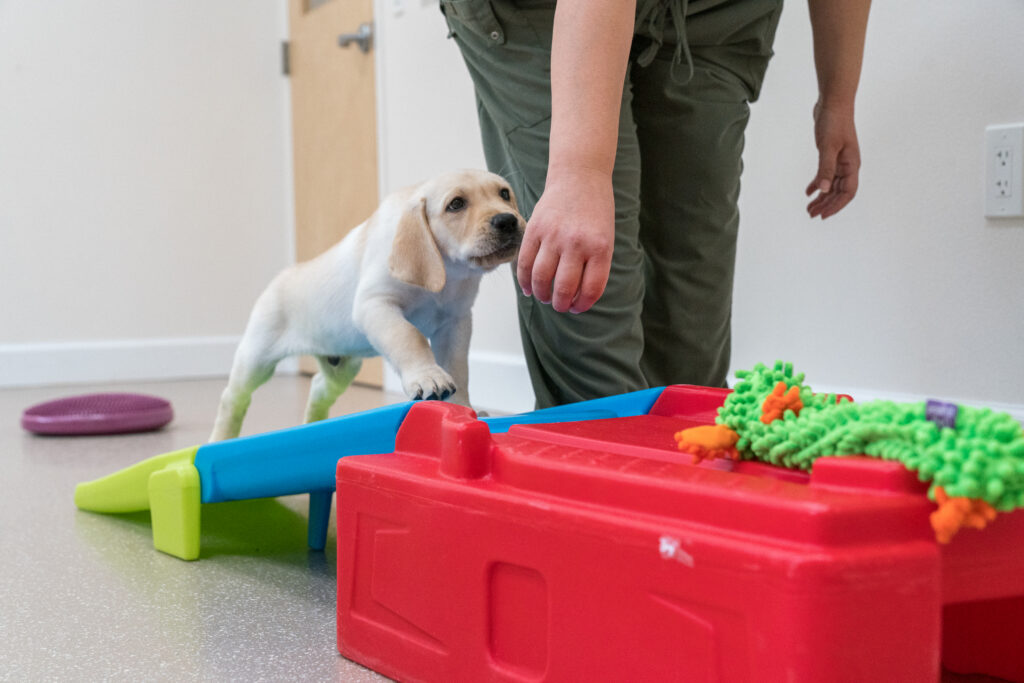
- Advanced Enrichment Protocols: Expanding beyond traditional ENS to include customized auditory desensitization programs, scent-discrimination games tailored for young puppies, and proprioceptive obstacle courses designed to enhance physical body awareness.
- Holistic Wellness Tracking: Integrating long-term health and behavioral data analytics to evaluate the lifelong impact of neonatal and adolescent interventions on working longevity and retirement age.
The Ongoing Mission
The transition from a vulnerable neonatal puppy to a confident, life-changing service partner is a testament to deliberate, science-backed care. By acknowledging that development begins on day one, organizations like Dogs Inc set a high standard for animal welfare and operational efficacy.
As these future guide and service dogs mature past the transitional stage, through adolescence, and into formal training, the meticulous foundation laid during their first two weeks of life pays dividends. Armed with robust stress resilience, superior adaptability, and a lifetime of positive reinforcement, these remarkable dogs step out into the world ready to unlock independence, safety, and freedom for individuals who depend on them most.