
Executive Overview
In the quiet rhythms of everyday neighborhoods, profound acts of compassion often unfold far away from the spotlight. The story of John, a dedicated social studies teacher, devoted husband, and self-proclaimed "permissive cat daddy," is a testament to the quiet power of individual empathy. For decades, John lived a life anchored in education, community engagement, and an unwavering love for animals—specifically, the often-overlooked and underserved population of community cats.
Though he spent much of his early life believing he was allergic to felines, a single stray cat shifted the trajectory of his existence three decades ago. That fateful encounter unlocked a reservoir of compassion that transformed John into a tireless protector of outdoor cats, a champion of Trap-Nevir-Return (TNR) principles, and, ultimately, a visionary benefactor whose estate planning will secure the future of felines globally through Alley Cat Allies.
This comprehensive feature explores John’s remarkable life, examining how his personal journey from a perceived allergy sufferer to a devoted feline caretaker mirrors the broader evolution of community cat advocacy. Through reflections shared by his wife of 42 years, Deb, we examine the intersection of education, humor, and animal welfare. Furthermore, this article investigates the structural impact of planned giving in the non-profit sector, the systemic importance of Trap-Nevir-Return programs, and how individual legacies can transcend generations to redefine the landscape of animal protection worldwide.
Detailed Chronology: From Supposed Allergies to a Lifetime of Feline Advocacy
The Early Years and the Classroom Legacy
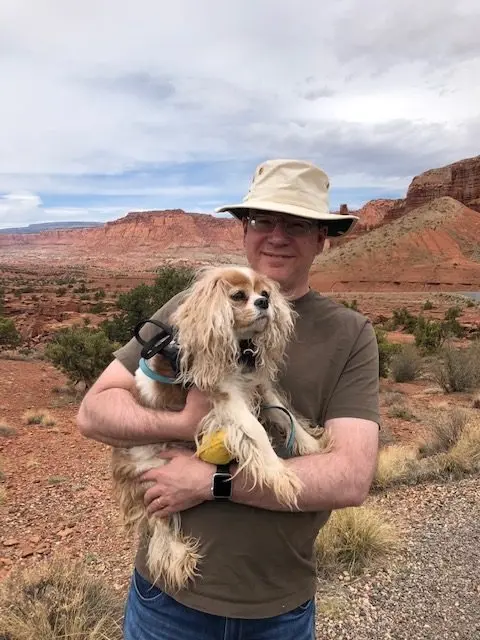
To understand John’s profound dedication to animals, one must first understand the man himself. By trade, John was a social studies teacher—a profession that requires patience, intellectual curiosity, and a deep-seated desire to improve the world for the next generation. To his students, John was much more than an educator delivering lectures on history and civics; he was a mentor, a comforting presence, and an entertainer armed with an endless supply of classic "dad jokes" that reliably drew groans and fond laughter in equal measure.
Described by his wife, Deb, as a "consummate extrovert," John thrived on connection. Whether he was engaging teenagers in a lively classroom debate or chatting with neighbors across the fence, his warmth was infectious. Yet, despite his social nature and expansive heart, there was one frontier he believed he could never cross: the world of cats. For years, John operated under the assumption that he was severely allergic to felines, keeping his distance from what he assumed would be a source of constant physical discomfort.
The Fateful Feline Intervention
Fate, however, often has a way of rewriting our assumptions. Approximately thirty years ago, the barrier between John and the feline world dissolved when a stray cat appeared in his life, stubbornly and affectionately attaching itself to him. To John’s surprise, the anticipated allergic reactions never materialized. Instead, a deep, transformative bond took root.
This initial encounter opened the door to a lifelong passion. Twenty-five years ago, a second stray cat wandered into their orbit. Demonstrating the playful wit that made him beloved in the classroom, John drew inspiration from classic Warner Brothers cartoons and named her "Puddy Cat"—affectionately shortened to "Pud."
Pud proved to be more than just a temporary visitor; she became an integral member of the family, sharing their home for an astonishing sixteen and a half years. As Deb fondly recalls, John’s transition from a cautious observer to a devoted cat guardian was swift and complete. He earned the endearing title of a "permissive cat daddy," spoiling his indoor companions and extending his protective instincts outward into the neighborhood.
Extending Compassion to the Outdoors
John’s circle of care soon expanded past his own front door. Inspired by a similarly compassionate neighbor, John began feeding, monitoring, and protecting several community cats in his neighborhood. For decades, he took on the responsibility of ensuring these outdoor cats had daily nourishment, safe havens from the elements, and watchful eyes looking out for their well-being.
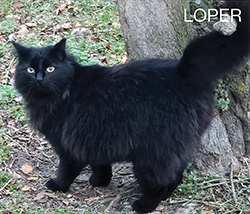
At the time of his passing, John’s legacy of daily care lived on through their indoor-outdoor cat, Gray, alongside a welcoming committee of four distinct community cats who relied on his stewardship: Miss Kitty, Sylvestra, Mini, and Loper. These cats were not merely stray animals to John; they were neighbors, individuals with distinct personalities, and sentient beings deserving of dignity, safety, and respect.
Solidifying a Global Legacy
John’s commitment to animal welfare did not end with his daily acts of neighborhood care. Looking toward the future, he made the profound decision to include Alley Cat Allies in his estate plans. By choosing to leave a bequest to the organization, John ensured that his lifelong passion for protecting cats would scale far beyond his immediate neighborhood, creating a ripple effect of compassion that spans the globe.
Through this planned gift, John’s voice and values will continue to advocate for cats and kittens everywhere, funding life-saving programs, educational initiatives, and systemic changes that protect vulnerable feline populations for generations to come.
Supporting Context & Metrics: The Mechanics of Planned Giving and TNR
The Lifesaving Impact of Trap-Nevir-Return (TNR)
At the heart of modern community cat advocacy—and championed by organizations like Alley Cat Allies—is the practice of Trap-Nevir-Return (TNR). For decades, municipal animal control systems relied on catch-and-kill policies to manage outdoor cat populations. These methods were not only inhumane but fundamentally ineffective, failing to address the underlying biological reality known in animal management as the "vacuum effect." When cats are removed from an area, surviving or new cats simply move in to take advantage of available food sources, quickly replenishing the population.
TNR breaks this cycle. Through TNR:
- Trap: Community cats are humanely trapped using specialized, safe equipment.
- Neuter/Spay: The cats are transported to licensed veterinarians where they are sterilized, vaccinated against rabies, and typically ear-tipped (a universal, painless symbol indicating a sterilized community cat).
- Return: After a safe recovery period, the cats are returned to their outdoor home where they can live out their lives naturally without contributing to population growth.
Statistically, communities that implement robust TNR programs see a dramatic, long-term reduction in shelter intake numbers, a decrease in nuisance behaviors associated with unsterilized cats (such as roaming, howling, and spraying), and a massive increase in the public health and safety of both human and animal residents. Organizations like Alley Cat Allies serve as the vanguard of this movement, providing legal advocacy, veterinary resources, and grassroots education to communities seeking humane alternatives to animal control.
The Power of Planned Giving in Non-Profit Sustainability
John’s choice to include Alley Cat Allies in his estate plans highlights a critical funding mechanism that keeps major animal welfare organizations operational: planned giving. While day-to-day donations (such as annual appeals and monthly contributions) provide essential operating capital, bequests and planned gifts form the bedrock of long-term organizational stability.
According to charitable sector analyses, planned gifts allow non-profits to:
- Build Endowments: Secure financial cushions that protect programs against economic downturns or unexpected spikes in animal rescue demands.
- Fund Large-Scale Advocacy: Underwrite extensive legislative campaigns aimed at changing state and local laws regarding animal cruelty and shelter protocols.
- Deploy Rapid Emergency Response: Maintain reserves necessary to respond immediately to natural disasters, hoarding crises, or large-scale neglect situations.
By integrating Alley Cat Allies into his will, John joined a dedicated community of visionaries who understand that the fight for animal protection requires institutional endurance. His foresight ensures that long after he is gone, his resources will actively dismantle cruelty, fund life-saving spay/neuter operations, and educate the public on the inherent value of every cat’s life.
Official Statements and Reflections
The personal dimension of John’s legacy is preserved eloquently through the words of his wife, Deb. Reflecting on their 42 years together, she paints a vivid picture of a man whose capacity for love was boundless.
Recalling their unexpected entry into the feline world, Deb shared:
"Interestingly enough, John thought for years that he was allergic to cats! Then 30 years ago, we had a stray show up and get attached to John. 25 years ago, another stray showed up. John, with his love of Warner Brothers cartoons, named her Puddy Cat… Pud lived with us for 16½ years."
Beyond his role as a cat guardian, Deb emphasized the deep community bonds John forged throughout his life:
"He was a social studies teacher whose students loved him dearly (even for his never-ending dad jokes), a ‘consummate extrovert,’ and a very ‘permissive cat daddy.’"
Voicing her passionate support for the broader mission of animal welfare organizations, Deb expressed her deep appreciation for institutional advocacy:
"I am grateful that organizations like Alley Cat Allies exist."
These reflections encapsulate the core philosophy that drove John: that compassion is not a passive emotion, but an active, daily commitment to improving the world for those who cannot speak for themselves.
Future Outlook: Continuing John’s Mission Worldwide
As we look toward the future of animal advocacy, stories like John’s serve as both an inspiration and a blueprint. The challenges facing community cats—ranging from misinformation and municipal neglect to harsh environmental conditions—require sustained, systemic responses. Yet, the engine of this movement remains individual human hearts: teachers who tell bad jokes, husbands who open their doors to stray cats, and citizens who refuse to look away when a vulnerable animal needs help.
John’s legacy demonstrates that anyone can be a changemaker. Whether through feeding outdoor cats in a local alleyway, supporting humane TNR policies, or making the visionary choice to include animal welfare organizations in estate planning, everyday individuals hold the power to shape a more humane world.
How You Can Make a Difference
Alley Cat Allies relies on the generosity of supporters to carry out its global mission of protecting cats and kittens. There are several ways to follow in John’s footsteps and create a lasting impact:
- Make a Direct Gift Today: Support ongoing rescue, education, and advocacy efforts by contributing at alleycat.org/Donate.
- Explore Planned Giving: To secure the future of cats for generations to come, consider establishing a bequest or planned gift. Learn more at alleycat.org/PlannedGiving, scan the planned giving QR code found in our literature, or call 866-309-6207 to speak with a representative.
- Contribute via Workplace Giving: Federal employees and members of the military can support Alley Cat Allies through the Combined Federal Campaign using CFC #10964 (EIN #52-1742079).
John’s story reminds us that love leaves a trace. Through his classroom, his family, his neighborhood cats, and his enduring gift to Alley Cat Allies, John’s compassion will continue to echo across the world, offering safety, dignity, and a voice to cats everywhere.