In a landmark legal enforcement action, the United States Department of Justice (DOJ), acting on behalf of the Food and Drug Administration’s Center for Veterinary Medicine (FDA CVM), has filed a federal civil complaint seeking a permanent injunction against Arrowhead Pet Food, operating as Darwin’s Pet Food. The legal maneuver, if granted by a federal court, would immediately force the Washington-based direct-to-consumer manufacturer to cease all production and distribution of its raw pet food products.
The federal complaint alleges that Darwin’s Pet Food has engaged in widespread, ongoing violations of the Federal Food, Drug, and Cosmetic Act (FD&C Act). Specifically, federal prosecutors cite 21 U.S.C. § 331(a), which prohibits the introduction or delivery for introduction into interstate commerce of any food that is adulterated, and 21 U.S.C. § 342(a)(4), which classifies food as adulterated if it has been prepared, packed, or held under insanitary conditions whereby it may have become contaminated with filth or rendered injurious to health. The FDA contends that the company is a "repeat offender" regarding bacterial pathogens such as Salmonella and Listeria monocytogenes.
While federal regulators frame the legal injunction as a necessary step to protect public health, the enforcement action has ignited a major controversy across the pet food landscape. Prominent consumer advocacy groups, led by TruthaboutPetFood.com and the Association for Truth in Pet Food, argue that the FDA’s sudden aggression against a fresh, human-grade raw pet food manufacturer exposes a deep regulatory double standard.
An analysis of federal inspection records and recall histories from 2017 through 2025 demonstrates that major commercial pet food conglomerates—responsible for systemic, life-threatening contaminations involving euthanasia drugs, lethal fungal toxins, and severe nutrient toxicity—have repeatedly escaped permanent injunctions. Consequently, consumer advocates are threatening formal federal administrative complaints with the Government Accountability Office (GAO), alleging that the FDA CVM is engaging in selective enforcement, mismanaging federal funds, and violating its constitutional mandate of equal regulatory oversight.
Detailed Chronology: A Tale of Two Regulatory Realities (2017–2025)
To evaluate the FDA’s assertion that Darwin’s Pet Food represents an intolerable risk requiring total business closure, regulatory records over the eight-year period between 2017 and 2025 provide critical context. A comparative examination reveals a stark disparity between the government’s treatment of fresh raw pet food producers and its leniency toward multi-billion-dollar commercial kibble and canned food manufacturers.
The DOJ’s complaint against Darwin’s focuses on a sequence of regulatory inspections, testing samples, and warning letters issued between 2017 and 2025. The FDA CVM maintains a strict, zero-tolerance policy for microbiological pathogens in raw pet foods, asserting that the presence of Salmonella or Listeria poses indirect risks to human handlers and direct risks to companion animals.
Because Darwin’s utilizes fresh, raw meat ingredients rather than ultra-high-heat thermal processing (extrusion), trace bacterial detections triggered a series of regulatory disputes. The FDA argues that Darwin’s ongoing operation without installing validated pathogen-reduction steps constitutes an unacceptable hazard, justifying permanent enjoinment under federal law.
The Unchecked Record of Major Commercial Conglomerates
In sharp contrast to the government’s attempt to shutter Darwin’s, major corporate manufacturers producing ultra-processed kibble and canned feeds have accumulated extensive histories of critical safety failures over the exact same period without facing DOJ injunctions.
The J.M. Smucker Company
The J.M. Smucker Company, a giant in the commercial pet feed market, managed a portfolio of widely distributed brands that suffered critical safety breaches between 2017 and 2020:
January 3 & January 6, 2017: Mass recalls issued for 9Lives, EverPet, and Special Kitty canned cat foods due to severe thiamine (Vitamin B1) deficiency, a condition capable of inducing irreversible neurological damage and death in felines.
February 14, 2018: Smucker was forced to withdraw multiple product lines—including Gravy Train, Kibbles ‘n Bits, and Skippy wet dog foods—after investigative lab testing confirmed contamination with Pentobarbital, a lethal barbiturate used by veterinarians to euthanize livestock and pets.
December 7, 2018: Additional 9Lives wet cat food lots recalled for low thiamine levels.
December 5, 2019: Undisclosed processing defects forced recalls of Special Kitty wet cat food.
July 3, 2020: Natural Balance Ultra Premium Chicken Liver Paté canned cat food recalled due to dangerous, elevated levels of choline chloride.
Despite introducing a potent veterinary euthanasia drug into the commercial food supply chain and repeatedly failing basic nutritional adequacy standards, J.M. Smucker was never targeted by the DOJ or FDA for permanent shut-down orders.
Sunshine Mills, Inc.
Sunshine Mills, a major private-label contract manufacturer, represents one of the most prolific repeat offenders in modern pet food history. Between 2018 and 2021, the company engaged in a sweeping series of systemic recalls affecting dozens of store brands:
SUNSHINE MILLS SYSTEMIC SAFETY FAILURES (2018–2021)

2018: TOXIC VITAMIN D SURGE
├── Nov 2: Natural Life & Nutrisca (Excess Vitamin D)
├── Nov 6: Orlando Brand (Excess Vitamin D)
├── Nov 9: Natural Life Pet Products (Excess Vitamin D)
├── Nov 27: Sunshine Mills Corporate Lines (Excess Vitamin D)
├── Nov 28: ANF Pet Foods (Excess Vitamin D)
├── Nov 29: Elm Pet Foods (Excess Vitamin D)
└── Dec 5: Abound / Kroger / King Soopers (Excess Vitamin D)

2020–2021: AFLATOXIN & SALMONELLA
├── Aug 26, 2020: Nature's Menu (Salmonella)
├── Sept 3, 2020: Family Pet, Heartland Farms, Paws Happy Life (Aflatoxin)
├── June 4, 2021: Sportsman's Pride, Sprout, Intimidator, FRM Gold (Salmonella)
└── July 29, 2021: Evolve, Triumph, Wild Harvest, Nurture Farms, Heart to Tail (Aflatoxin)
November–December 2018 (Vitamin D Toxicity Crisis): Over a two-month span, Sunshine Mills issued a rolling cascade of recalls across nine separate brands (including Nutrisca, Natural Life, Orlando, ANF, Elm, and Kroger’s Abound line) due to massive excesses of Vitamin D. Formulating errors caused acute hypercalcemia, renal failure, and pet deaths across the United States.
August 2020: Recalls triggered for Nature’s Menu dry dog food contaminated with Salmonella.
September 2020 & July 2021 (Aflatoxin Contaminations): Multiple product lines—including Family Pet, Heartland Farms, Paws Happy Life, Evolve, Triumph, Wild Harvest, Nurture Farms, and Heart to Tail—were found contaminated with Aflatoxin. Aflatoxin is a lethal liver toxin produced by Aspergillus molds that grow on low-grade agricultural grains.
June 2021: Recalls affecting Sportsman’s Pride, Sprout, Intimidator, and FRM Gold Select due to recurring Salmonella contamination.
Despite this unparalleled sequence of chemical, fungal, and bacterial safety failures, Sunshine Mills continues to manufacture hundreds of thousands of tons of commercial pet food daily without federal court interference.
Supporting Context & Metrics: Regulatory Disparity & The Rendering Industry
To fully understand the legal mechanics behind the DOJ’s lawsuit against Darwin’s Pet Food, one must examine the specific provisions of the Federal Food, Drug, and Cosmetic Act cited by federal prosecutors—and how those exact statutory provisions are ignored when applied to industrial rendering operations.
The Statutory Legal Framework
The federal complaint against Darwin’s relies on 21 U.S.C. § 342(a)(4), which defines an adulterated food as follows:
"A food shall be deemed to be adulterated… if it has been prepared, packed, or held under insanitary conditions whereby it may have become contaminated with filth, or whereby it may have been rendered injurious to health."
In establishing this precedent, the FDA CVM maintains that any production environment where raw ingredients could harbor potential contamination falls under the definition of "insanitary conditions." However, consumer advocates point out that the FDA selectively enforces this statute while systematically turning a blind eye to the core supply chain of ultra-processed pet food: the rendering industry.
THE STATUTORY DISPARITY: LAW VS. ENFORCEMENT

┌─────────────────────────────────────────────────────────────────────────┐
│                       21 U.S.C. § 342(a)(4) & (5)                        │
│                   FEDERAL ADULTERATION STATUTE                          │
└────────────────────────────────────┬────────────────────────────────────┘
                                     │
                  ┌──────────────────┴──────────────────┐
                  ▼                                     ▼
┌───────────────────────────────────┐ ┌───────────────────────────────────┐
│     HUMAN-GRADE RAW PET FOOD      │ │    INDUSTRIAL RENDERING PLANTS    │
│    (e.g., Darwin's Pet Food)      │ │   (Commercial Kibble Ingredients) │
├───────────────────────────────────┤ ├───────────────────────────────────┤
│ • Fresh, inspected meats          │ │ • 4D livestock (Dead, Dying,      │
│ • Sourced from human food chain   │ │   Diseased, Disabled animals)     │
│ • Cold-chain stored               │ │ • Open-air decaying raw material  │
│ • Tested for trace pathogens      │ │ • Exposed to pests and filth      │
├───────────────────────────────────┤ ├───────────────────────────────────┤
│ FDA REGULATORY ACTION:            │ │ FDA REGULATORY ACTION:            │
│ STRICT ZERO-TOLERANCE ENFORCEMENT │ │ ADMINISTRATIVE "DISCRETION"       │
│ Federal Lawsuit & Shut-Down Order │ │ Full Tolerance & Immunity         │
└───────────────────────────────────┘ └───────────────────────────────────┘
The Rendering Industry Exposure
Under federal statutory law, rendered meals (such as meat and bone meal, animal fat, and poultry by-product meal) are legally classified as pet food ingredients. Under 21 U.S.C. § 342(a)(5), a food is explicitly defined as adulterated:
"If it is, in whole or in part, the product of a diseased animal or of an animal which has died otherwise than by slaughter."
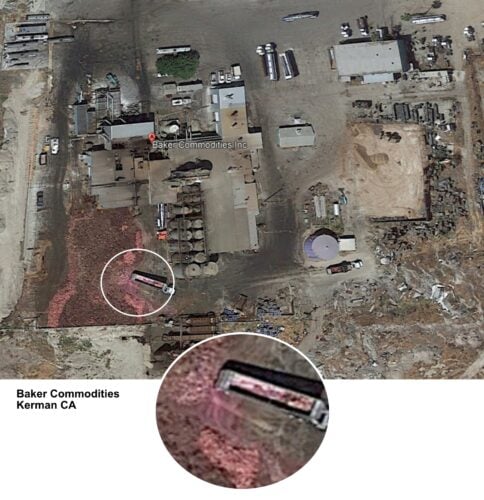
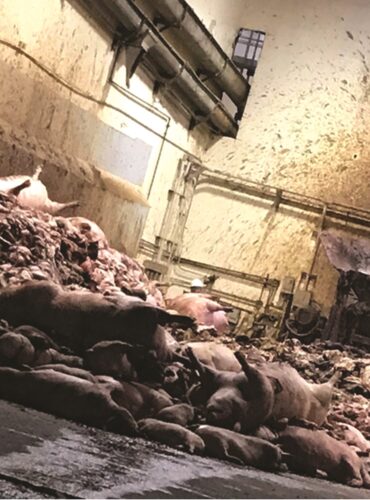
Industrial rendering operations routinely process "4D" livestock—animals that are Dead, Dying, Diseased, or Disabled—alongside supermarket refuse, plastic wrapping, and condemned animal offal. These materials are routinely stored in open-air concrete bunkers, exposed to weather, insects, rodents, and avian scavengers, directly violating section 342(a)(4) regarding insanitary conditions.
Instead of enforcing federal law against rendering companies and the major pet food manufacturers purchasing these ingredients, the FDA utilizes non-binding "Compliance Policy Guides" (CPGs). Through these administrative guides, the FDA exercises uncodified "enforcement discretion," allowing commercial feed manufacturers to use diseased, non-slaughtered animal tissues and unhygienic rendered materials in pet food.
This administrative structure creates an irreconcilable paradox:
A fresh pet food manufacturer sourcing human-grade meat undergoes severe federal prosecution under 342(a)(4) for microscopic pathogen presence.
A commercial kibble manufacturer sourcing rendered meal made from decaying, diseased carcasses held in open-air facilities is granted complete federal regulatory immunity under administrative discretion.
Official Statements & Industry Reaction
The filing of the DOJ complaint against Darwin’s Pet Food has drawn sharp, contrasting responses from federal regulatory leaders and pet food consumer advocates.
The Regulatory Position
In an official public statement released alongside the Department of Justice filing, federal leadership emphasized consumer protection and risk mitigation:
"Every American pet owner deserves confidence that the food they feed their animals is safe and will not pose health risks to their families."
— Timothy Schell, Ph.D., Director of the FDA’s Center for Veterinary Medicine (CVM)
The FDA maintains that civil injunctions are reserved for facilities where administrative warning letters, regulatory meetings, and voluntary recall requests have failed to achieve sustained compliance with federal preventive controls.
The Consumer Advocacy Position
Susan Thixton, a prominent pet food consumer advocate, founder of TruthaboutPetFood.com, and representative at the Association for American Feed Control Officials (AAFCO), issued a scathing response challenging the FDA’s institutional integrity:
"If the FDA is truly interested in protecting the public—as this lawsuit claims—then pet owners should expect immediate, identical legal actions against commercial repeat offenders like J.M. Smucker and Sunshine Mills. Furthermore, based on the exact same statute citing insanitary conditions, every industrial rendering plant supplying the commercial kibble industry must be enjoined immediately.
"The FDA Center for Veterinary Medicine is demonstrating open bias, mismanaging federal funds, and failing to consistently enforce federal law across the pet food industry. If we do not promptly see corresponding injunctions filed against the massive repeat offenders in commercial feed, we will file a formal complaint with the Government Accountability Office (GAO) providing undeniable evidence that the FDA CVM is violating its official regulatory duties."
— Susan Thixton, Pet Food Consumer Advocate
Future Outlook: Legal Precedents and Regulatory Accountability
The DOJ’s attempt to permanently enjoin Darwin’s Pet Food represents a pivotal juncture in the history of pet food regulation. The outcome of this federal civil case will ripple across the pet care market, shaping administrative law, industry operations, and consumer trust for years to come.
POTENTIAL IMPACTS OF THE DOJ/FDA INJUNCTION ACTION

  1. RAW PET FOOD MARKET IMPACT
  └── Threatens direct-to-consumer fresh food sector through rigorous
      zero-tolerance pathogen mandates not applied to dry feed.

  2. ADMINISTRATIVE & LEGAL CHALLENGES
  └── Exposes FDA CVM to potential GAO investigations and legal challenges
      under the Administrative Procedure Act (APA) for arbitrary enforcement.

  3. TRANSPARENCY & CONSUMER AWARENESS
  └── Accelerates public scrutiny regarding rendered 4D ingredients,
      chemical contaminants, and structural regulatory bias.
Chilling Effect on Fresh and Raw Pet Food Producers
If the federal district court grants the injunction against Darwin’s, it will establish a lethal legal precedent for the fast-growing fresh and raw pet food sector. Small-to-medium-sized manufacturers operating without chemical sterilants or high-extrusion machinery will face existential legal exposure. The FDA’s strict, zero-tolerance standard for raw meat pathogens—contrasted with its tolerance of chemical toxins, fungal poisons, and euthanasia drugs in extruded kibble—could concentrate market power back into the hands of traditional feed conglomerates.
Potential Administrative and Congressional Oversight
The challenge mounted by consumer advocacy organizations carries severe risks for the FDA CVM. Should the advocacy groups fulfill their promise to file a formal complaint with the Government Accountability Office (GAO), federal investigators will audit the FDA CVM’s enforcement discretionary policies.
A formal investigation could force the FDA to justify its non-enforcement of 21 U.S.C. § 342(a)(5) regarding rendered 4D animals, potentially rendering its Compliance Policy Guides unlawful under the Administrative Procedure Act (APA) due to arbitrary and capricious enforcement patterns.
The Growing Divide in Pet Food Safety
For American pet owners, the lawsuit highlights a profound divide in food safety philosophy. While federal regulators prioritize eliminating microscopic bacterial risks inherent to raw agriculture, they simultaneously tolerate systemic chemical, toxicological, and structural quality failures in the commercial feed supply chain.
As the federal court considers the DOJ’s complaint against Darwin’s, the broader pet food industry faces an unprecedented reckoning over transparency, equal application of federal law, and the true definition of pet food safety.