The pet food industry is undergoing a historic shift driven by "pet humanization"—a demographic trend wherein pet parents increasingly view their companion animals as full family members. In response, global pet food conglomerates have adopted sophisticated culinary branding and convenient packaging designed to evoke human food experiences. Phrases like "Chicken in Alfredo Sauce" or "Warm Bowls" are prominently displayed alongside appetizing graphics on retail shelves. However, an examination of legal distinctions, cost-per-serving dynamics, and packaging formats reveals a growing divide between consumer perception and regulatory reality.
Under current regulatory definitions set by the Association of American Feed Control Officials (AAFCO) and overseen by the U.S. Food and Drug Administration (FDA), pet food falls into two distinct categories: Human Grade and Feed Grade. Human-grade pet foods must utilize exclusively human-edible ingredients and be produced in federally licensed human food processing facilities. Conversely, feed-grade pet foods are legally permitted to incorporate non-human-edible or rendered ingredients—including livestock material deemed unfit for human consumption—without disclosing ingredient quality on the product label.
An analysis by pet food consumer advocate Susan Thixton of TruthAboutPetFood.com highlights how major manufacturers, such as Mars Petcare, market feed-grade products that closely mimic human food aesthetics. By leveraging single-serving plastic containers and restaurant-inspired naming conventions, these products command premium retail prices that often surpass genuine human-grade alternatives. This practice raises serious questions regarding consumer transparency, daily feeding economics, and the environmental footprint of single-use plastic packaging.
Detailed Chronology and Marketing Case Studies
To understand how marketing strategies obscure ingredient classifications, it is necessary to examine two flagship product lines manufactured by Mars Petcare: Sheba "Perfect Portions" for cats and Cesar "Warm Bowls" for dogs. Both lines utilize packaging formats and culinary terminology that suggest home-cooked or gourmet quality, while remaining legally classified as feed-grade products.
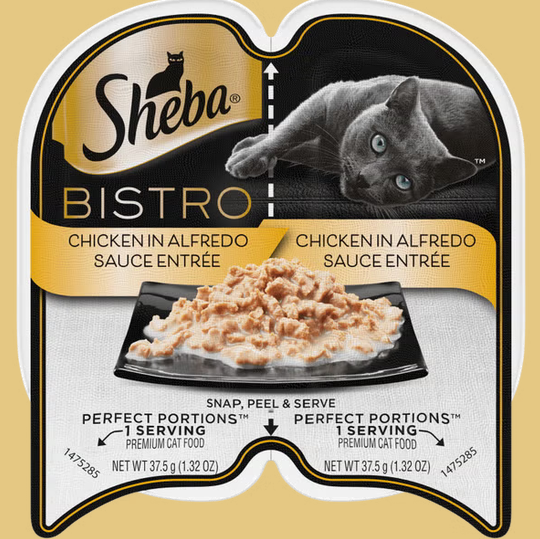
Sheba’s "Perfect Portions" line is marketed around convenience and portion control, utilizing plastic "twin-pack" trays that snap apart. Each individual plastic tray contains 1.32 ounces of wet cat food. Product variants, such as the "Bistro Chicken in Alfredo Sauce Entrée," use culinary terms associated with human Italian cuisine to appeal to pet owners.
However, an evaluation of the product’s feeding directions reveals a stark disparity between portion size and nutritional density:
Target Subject: A standard 10-pound adult cat.
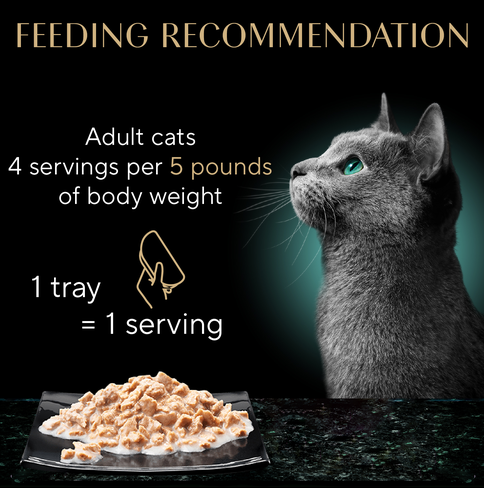
Manufacturer Feeding Recommendation: 8 individual trays (servings) per day.
Packaging Mechanics: Opening 8 individual trays daily requires unsealing four twin-packs, creating a continuous cycle of single-use waste.
Cost Analysis: On Chewy.com, a 24 twin-pack case (containing 48 individual 1.32 oz trays) is priced at $28.97 under an auto-ship discount ($30.49 for a one-time purchase).
Unit Economics: At $0.60 per individual tray (auto-ship rate), feeding a 10-pound cat 8 trays daily results in a daily expense of $4.80, or approximately $144.00 per month.
Case Study 2: Cesar "Warm Bowls" (Dog Food)
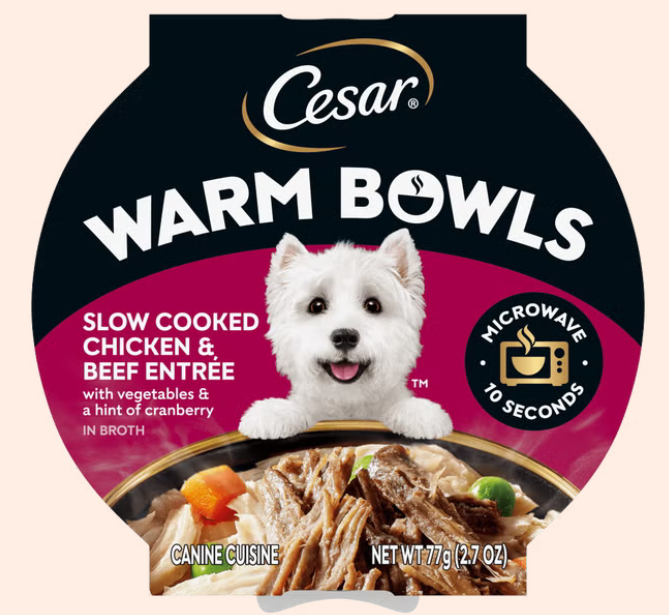
Similarly, Mars Petcare’s Cesar brand targets dog owners with its "Warm Bowls" line, featuring varieties such as "Chicken, Beef & Vegetables Entrée." The product is sold in individual 2.7-ounce plastic bowls designed to be microwaved prior to serving. The brand’s promotional copy asserts that "Nothing says I love you like a warm meal," leaning into emotional resonance to justify its design.
Applying the feeding guidelines to a modest-sized canine illustrates the financial commitment required:
Target Subject: A standard 10-pound adult dog.
Manufacturer Feeding Recommendation: 4 ¾ individual bowls per day.
Practical Usage: A pet owner must open 5 separate plastic bowls daily to meet daily caloric guidelines.
Cost Analysis: On Chewy.com, a 10-pack case of Cesar Warm Bowls costs $28.40 via auto-ship ($29.90 one-time purchase).
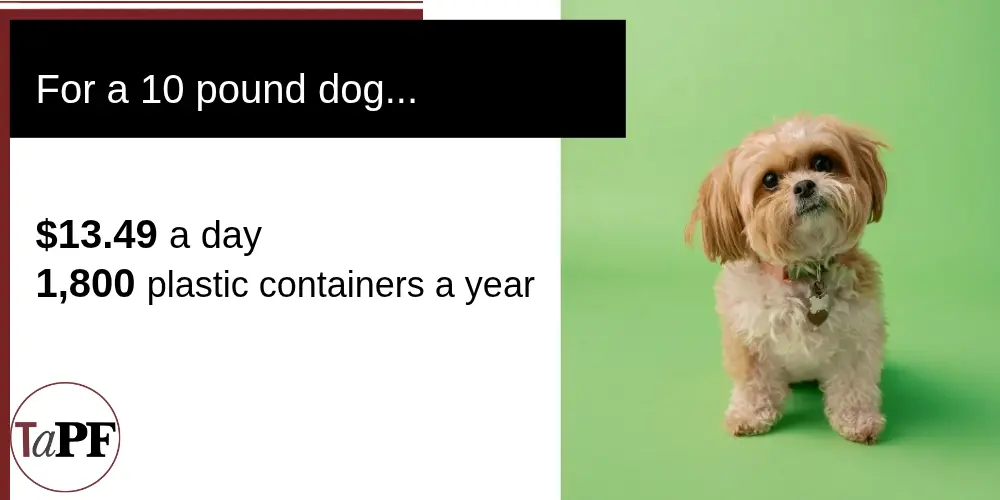
Unit Economics: At $2.84 per individual bowl (auto-ship rate), meeting the 4 ¾ bowl requirement costs $13.49 per day, amounting to $404.70 per month for a 10-pound dog.
Supporting Context and Quantitative Metrics
The economic and ecological implications of these feeding regimens become clear when projected over a full calendar year and compared against broader industry benchmarks.
The Financial Metric: Premium Pricing for Feed-Grade Ingredients
When converted to an annual cost structure, feeding a 10-pound pet these convenience-packaged feed-grade products represents a significant financial investment:
Annual Cat Feeding Cost (Sheba): $4.80/day × 365 days = $1,752.00 per year.
Annual Dog Feeding Cost (Cesar): $13.49/day × 365 days = $4,923.85 per year.
To contextualize these metrics, genuine human-grade dog food subscription services (which utilize 100% human-edible meat, produce, and supplements processed in USDA-inspected facilities) typically cost between $3.00 and $6.00 per day for a 10-pound dog. As a result, consumers purchasing feed-grade "Warm Bowls" may pay more than double the price of certified human-grade commercial diets, while receiving an undisclosed tier of feed-grade ingredients.
The Environmental Metric: Cumulative Plastic Output
Beyond the financial cost, the reliance on single-serving packaging generates substantial plastic waste. Because these wet food containers contain residual animal proteins and fats, they must be thoroughly washed before being accepted by municipal recycling facilities—assuming the specific polymer resin used is accepted locally.
                         ANNUAL PLASTIC CONTAINERS USED
                  (Single 10 lb pet fed per manufacturer directions)

   3,000 +---------------------------------------------------------+
         |  2,920 Plastic Trays                                    |
   2,500 |---------------------------------------------------------|
         |                                                         |
   2,000 |---------------------------------------------------------|
         |                                            1,825 Bowls  |
   1,500 |---------------------------------------------------------|
         |                                                         |
   1,000 |---------------------------------------------------------|
         |                                                         |
       0 +---------------------------------------------------------+
                              Sheba Cat                 Cesar Dog
Annual Plastic Output per Cat: 8 trays/day × 365 days = 2,920 individual plastic trays.
Annual Plastic Output per Dog: ~5 bowls/day × 365 days = 1,825 individual plastic bowls.
If a single household owns multiple pets, the cumulative volume of non-degradable waste scales accordingly, running counter to corporate sustainability commitments published by parent manufacturers.
Official Statements and Regulatory Landscape
The fundamental issue driving consumer confusion is the legal framework governing pet food definitions in the United States. Regulations enforced by the FDA and shaped by AAFCO model laws establish stark differences between human and animal feed safety standards:
Feed Grade Definition: Ingredients defined as "feed grade" are legally suitable for consumption by animals but may not meet human food safety standards. Under federal guidelines, feed-grade products can legally contain rendered materials, secondary tissue by-products, and agricultural processing waste that are explicitly prohibited in the human food supply chain.
Human Grade Claim Requirements: According to AAFCO official guidelines, for a pet food product to legally claim "Human Grade" on its label, every individual ingredient—including all vitamin and mineral pre-mixes—must be verified as human-edible. Furthermore, the final product must be manufactured, packaged, and held in accordance with federal regulations for human food manufacturing (21 CFR part 117).
Because feed-grade regulations do not require manufacturers to disclose ingredient processing standards on packaging, brands are permitted to use imagery, styling, and product names that closely resemble human meals. While marketing terms like "Bistro" or "Warm Bowls" evoke higher culinary standards, they do not trigger federal human-grade compliance requirements.
Industry representatives frequently defend single-serve, feed-grade product lines by highlighting consumer demand for portion control, ease of feeding, meal freshness, and palatability. However, consumer advocacy groups contend that without clear, explicit labeling distinguishing human-edible ingredients from feed-grade material, pet owners are unable to make fully informed purchasing decisions.
Future Outlook and Consumer Guidance
As pet humanization continues to shape consumer spending, regulatory bodies face growing pressure to modernize labeling standards. Consumer advocates, led by organizations such as the Association for Truth in Pet Food (ATPF), are lobbying regulatory agencies like AAFCO and the FDA to mandate clear ingredient-grade disclosures directly on product packaging.
Actionable Steps for Pet Owners
To navigate marketing claims and avoid overpaying for feed-grade products, advocates recommend the following steps:
Request Written Guarantees: Contact the manufacturer directly and ask for a signed, written statement confirming that all ingredients used in the formulation—including micronutrient supplements—are certified human-edible, and that the product is manufactured in a licensed human food facility.
Examine the Daily Cost-per-Calorie: Calculate the actual cost per day based on recommended feeding amounts rather than the unit price of an individual package. As demonstrated by the Sheba and Cesar case studies, small packaging formats can obscure high daily feeding costs.
Review Legal Label Claims: Look for explicit legal language stating "100% Human Grade" across the entire product. Terminology such as "made with human-grade ingredients" often indicates that only a portion of the recipe meets human standards, while the finished product remains legally feed grade.
Evaluate Packaging Impact: Consider the cumulative environmental footprint of multi-pack, single-serve trays versus larger, fully recyclable cans or bulk packaging options.
As transparency in pet food labeling remains an evolving regulatory issue, pet owners are encouraged to look beyond imagery and convenience-focused packaging to ensure their purchasing decisions align with their expectations for ingredient quality, environmental responsibility, and long-term value.