The global pet care industry is undergoing a profound paradigm shift. Driven by the "humanization of pets" and a growing emphasis on proactive wellness, pet owners are moving away from reactive veterinary medicine toward sophisticated, preventive home care regimens. Among the most critical, yet historically overlooked, facets of daily pet maintenance is ophthalmic health.
A dog’s eyes are not only highly expressive organs of communication but also delicate anatomical structures vulnerable to environmental hazards, genetic anomalies, and systemic diseases. The canine eye is exposed to a barrage of potential irritants daily, from airborne particulates and ultraviolet (UV) radiation to physical trauma from dense underbrush. Consequently, the market for specialized canine ophthalmic products—ranging from biocompatible cleansers and protective eyewear to advanced ocular nutraceuticals—has experienced unprecedented growth.
However, this commercial boom presents a dual-edged sword for pet owners and veterinary professionals alike. While daily hygiene and preventive shielding can mitigate minor irritations and cosmetic issues like tear staining, they also carry the risk of masking severe clinical conditions. Ophthalmic emergencies in dogs can escalate from minor discomfort to irreversible blindness in a matter of hours.
This investigative report examines the current state of canine ophthalmic wellness. It explores the physiological mechanisms governing canine eye health, evaluates the utility of leading commercial care products, analyzes breed-specific genetic and anatomical risks, and establishes clear clinical protocols for distinguishing routine maintenance from urgent veterinary emergencies.
Detailed Chronology: The Evolution of Canine Ophthalmic Care
To understand the modern landscape of pet ocular health, it is essential to trace how veterinary medicine and consumer trends have converged over the past half-century.
[1970s–1980s] Reactive Clinical Care ──> [1990s–2000s] Emergence of ACVO & Diagnostics ──> [2010s–Present] Proactive Consumer Wellness & Tech
The Era of Reactive Treatment (Pre-1990s)
For decades, canine eye care was almost entirely reactive. Ophthalmic issues were rarely addressed until clinical symptoms—such as severe corneal ulceration, advanced cataracts, or systemic infections—became undeniably apparent. Treatment options were limited, and veterinary ophthalmology as a distinct specialty was in its infancy. Home care was largely restricted to improvised solutions, such as flushing irritated eyes with human-grade saline or using damp washcloths to remove dried discharge, often introducing harmful bacteria in the process.
The Rise of Specialty Medicine and Diagnostic Standards (1990s–2000s)
The establishment and growth of the American College of Veterinary Ophthalmologists (ACVO) paved the way for standardized diagnostic protocols. Board-certified specialists began educating general practitioners on the importance of early detection for conditions like Keratoconjunctivitis Sicca (KCS, or "dry eye"), glaucoma, and progressive retinal atrophy (PRA). During this period, the industry recognized that canine ocular anatomy required tailored solutions, leading to the development of species-specific veterinary pharmaceuticals.
The Consumer-Driven Preventive Wellness Boom (2010s–Present)
Over the last decade, pet owners have increasingly demanded access to professional-grade tools for home maintenance. Ophthalmic wellness has transitioned from the clinical margins to the mainstream retail market. Innovations in material sciences led to the creation of high-performance canine goggles (such as those engineered for military and working dogs), while advancements in animal nutrition introduced targeted ocular antioxidants like lutein and zeaxanthin into daily dietary regimens. Today, the challenge is no longer a lack of tools, but rather educating consumers on how to use these highly specialized products safely and scientifically.
Supporting Context & Metrics: The Biological and Product Landscape
Effective canine ophthalmic care relies on understanding the biological mechanisms of the eye and selecting the appropriate tools for maintenance.
The Biological Mechanism of Tear Staining: The Porphyrin Pathway
One of the most common cosmetic concerns among dog owners is tear staining—the reddish-brown discoloration that develops beneath the medial canthus (inner corner) of the eye. This phenomenon is often misunderstood as a sign of poor hygiene, but it is actually rooted in systemic biochemistry.
Systemic Iron Metabolism ──> Porphyrins Excreted in Tears/Saliva ──> Contact with Air & Light ──> Oxidation (Reddish-Brown Stain)
The primary culprit behind tear staining is a class of iron-rich, naturally occurring molecules called porphyrins. When the body breaks down red blood cells, porphyrins are produced as waste products. In humans, these byproducts are primarily excreted through the gastrointestinal tract. In dogs, however, a significant volume of porphyrins is excreted through tears, saliva, and urine.
When porphyrin-laden tear fluid pools on the fur surrounding the eyes, it reacts with ambient air and sunlight. This oxidation process stains the hair shafts. While harmless on its own, chronic moisture in these facial folds can create a warm, dark environment conducive to secondary yeast (Malassezia) or bacterial infections, which can produce a foul odor and cause localized dermatitis.
Anatomical Risk Factors: The Brachycephalic Vulnerability
Canine ocular anatomy varies dramatically across breeds, creating distinct susceptibilities to disease and injury.
Brachycephalic Ocular Syndrome: Breeds characterized by shortened skull anatomy—such as Pugs, French Bulldogs, Shih Tzus, and Pekingese—possess shallow bony orbits. This causes a pronounced protrusion of the globe (exophthalmos). Because their eyelids often cannot close completely over the prominent eyeball (a condition known as lagophthalmos), the central cornea is prone to chronic drying, exposure keratitis, and ulceration.
Dolichocephalic and Genetic Risks: Conversely, long-nosed (dolichocephalic) breeds like Collies are predisposed to Collie Eye Anomaly (CEA), a congenital, inherited bilateral disease affecting the choroid and retina. Other breeds, such as Cocker Spaniels and Basset Hounds, exhibit structural eyelid defects like ectropion (drooping lower eyelids) or entropion (inward-rolling eyelids), both of which cause chronic mechanical irritation to the ocular surface.
Comparative Analysis of Ophthalmic Care Modalities
To manage these anatomical vulnerabilities, pet parents utilize a variety of over-the-counter (OTC) products. The table below classifies these modalities, evaluating their primary clinical purpose and key safety considerations.
Breaking down oxidized porphyrin deposits on hair shafts; detangling matted periocular fur.
Avoid cleansers containing tylosin tartrate (an antibiotic banned by the FDA for cosmetic use); exercise extreme caution with sharp comb tines near the globe.
Neutralizing free radicals in the retina and lens; supporting tear film quality.
Supplements are supportive, not curative; they cannot reverse mature cataracts or cure glaucoma.
Deconstructing the 9 Essential Tools for Home Care
When integrated into a veterinary-approved routine, certain consumer products can significantly improve a dog’s quality of life. Below is a detailed analysis of the leading tools currently utilized in canine ophthalmic maintenance.
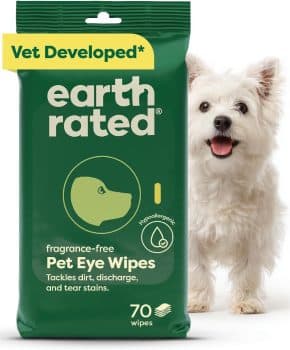
1. Earth Rated Dog Eye Wipes
Formulation & Design: These pre-moistened wipes are formulated with mild, hypoallergenic, fragrance-free ingredients designed specifically for the sensitive skin surrounding the canine eye. They contain no added alcohol or harsh chemicals that could cause stinging upon contact.
Clinical Utility: Ideal for daily removal of dried discharge (crust) from the medial canthus. By softening and lifting dried mucus without the need for vigorous rubbing, they protect the delicate periocular skin from friction-induced alopecia and dermatitis.
Limitations: They are strictly topical. They cannot treat underlying causes of excessive lacrimation (tearing) and must never be used to wipe the eyeball itself.
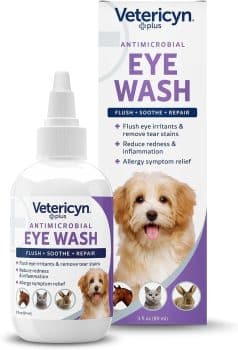
2. Vetericyn Plus Dog and Cat Eye Wash
Formulation & Design: An isotonic solution formulated with hypochlorous acid (HOCl), a mild, naturally occurring antimicrobial agent produced by the body’s white blood cells. It is pH-balanced to match canine tear film, ensuring it does not sting or irritate open ocular tissues.
Clinical Utility: Engineered for direct application to the eye to flush out loose debris, dust, pollen, or hair. It is highly effective for post-trail cleaning or soothing eyes irritated by environmental allergens.
Limitations: While useful for minor irritations, flushing will not resolve structural abnormalities like distichiasis (extra eyelashes rubbing the eye) or dry eye (KCS), which require veterinary intervention.
3. Angels’ Eyes Dog & Cat Tear Stain Wipes
Formulation & Design: Textured wipes pre-soaked in a gentle cleansing solution designed to break down the protein and iron structures of oxidized porphyrins on the hair shaft.
Clinical Utility: Regular use prevents the buildup of sticky discharge and reduces the aesthetic impact of tear staining on white or light-colored coats.
Limitations: These wipes only address the external stains already present on the fur; they do not alter the systemic production of porphyrins or reduce excessive tear production.
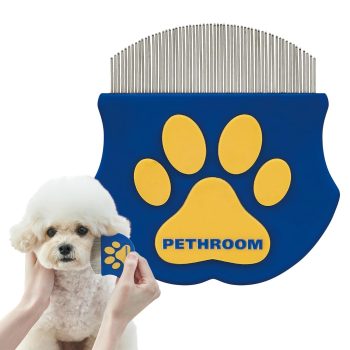
4. Stainless Steel Tear Stain Remover Comb
Formulation & Design: A specialized grooming tool featuring ultra-fine, closely spaced stainless steel teeth with rounded tips to protect the skin from accidental punctures.
Clinical Utility: Used to gently comb through the periocular hair to remove hardened tear crusts and debris that wipes cannot easily dissolve. This is particularly useful for long-haired breeds like Maltese, Shih Tzus, and Poodles.
Limitations: Requires a calm, cooperative dog. Sudden head movements during use can lead to accidental corneal trauma. It should only be used on fur that has been pre-softened with an eye wash or warm water.
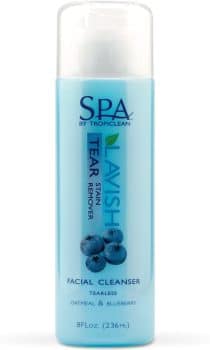
Formulation & Design: A lightly foaming facial cleanser enriched with natural exfoliating and soothing agents, including oatmeal, blueberry, white tea, and vitamin E.
Clinical Utility: Designed for use during bathing, this shampoo deeply cleanses the facial folds and muzzle, lifting stubborn stains and eliminating the odors associated with damp, yeast-prone facial wrinkles.
Limitations: Despite its gentle formulation, it is a surfactant-based soap and must be thoroughly rinsed away. Care must be taken to prevent direct contact with the cornea, which can cause chemical conjunctivitis.
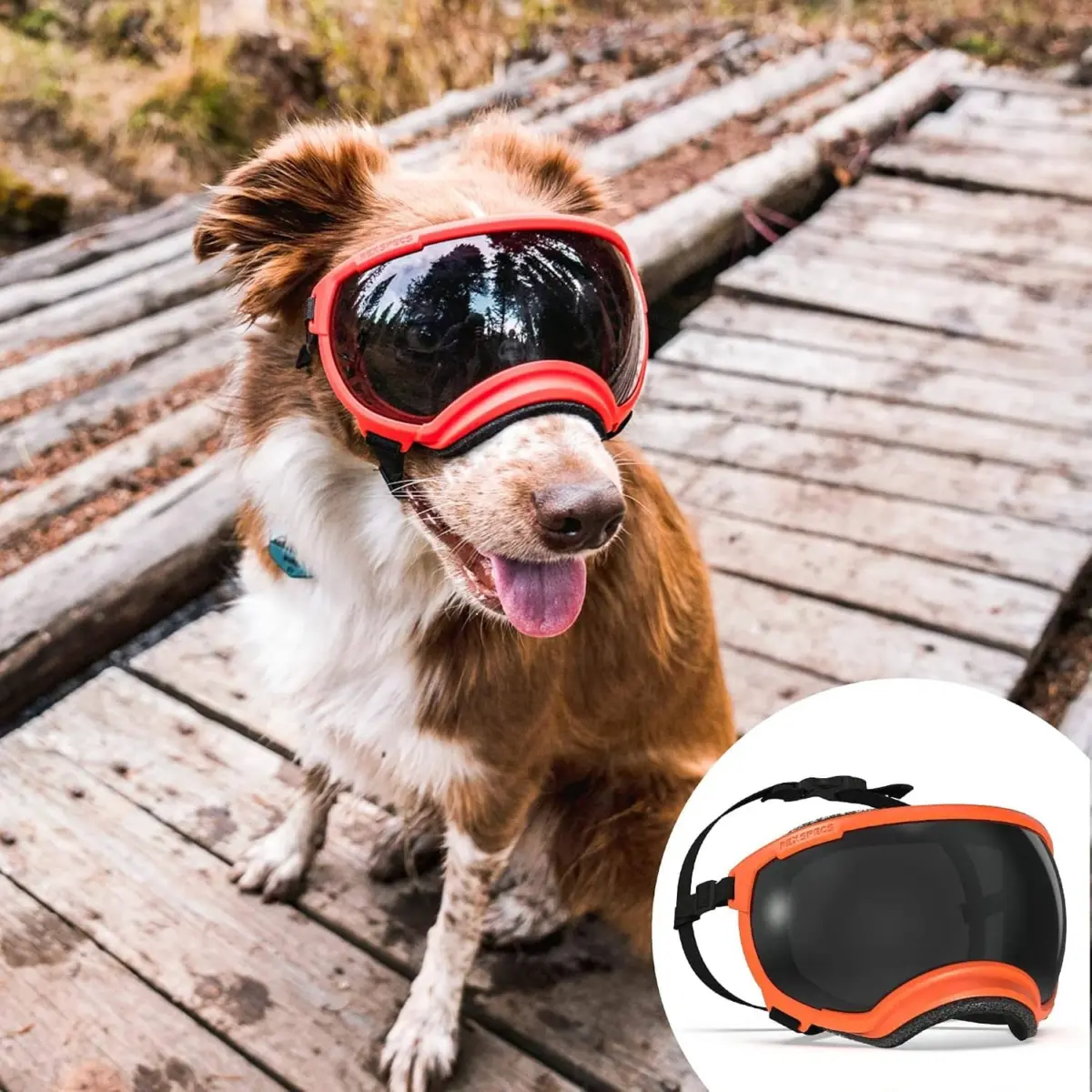
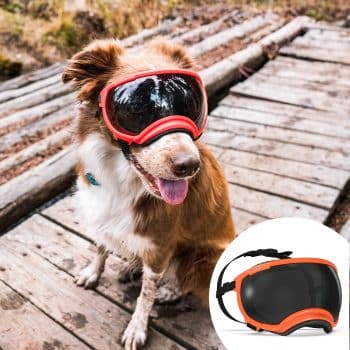
6. Rex Specs V2 Dog Goggles
Formulation & Design: Professional-grade protective eyewear featuring a flexible, ventilated frame and impact-resistant polycarbonate lenses. The lenses offer UV400 protection, blocking 99.9% of harmful UVA and UVB rays.
Clinical Utility: Essential safety gear for working dogs (K9 search and rescue, hunting dogs) and active pets exposed to high-velocity wind, sand, brush, or intense sunlight (such as during high-altitude hikes or rides in open vehicles). They are also highly recommended for dogs diagnosed with Pannus (Chronic Superficial Keratitis), an immune-mediated condition exacerbated by UV exposure.
Limitations: Requires a structured, positive-reinforcement training period to ensure the dog accepts the physical sensation of wearing goggles.
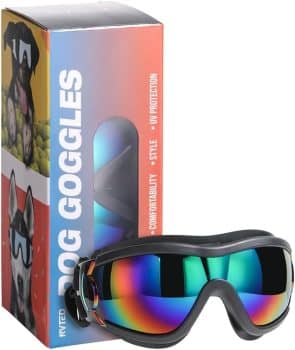
7. NVTED Dog Sunglasses Goggles
Formulation & Design: A lightweight, budget-friendly alternative to professional goggles, featuring padded frames, adjustable elastic straps, and tinted lenses with basic UV protection.
Clinical Utility: Suitable for casual use, such as protecting a dog’s eyes from windburn during car rides or providing basic sun shading for light-sensitive senior dogs.
Limitations: They lack the high-impact resistance, wide peripheral field of view, and advanced ventilation systems of military-grade gear, making them less suitable for rugged outdoor adventures.
8. Ocu-GLO Eye Support Supplement
Formulation & Design: A clinically formulated nutraceutical blend containing a potent combination of antioxidants, including lutein, zeaxanthin, grape seed extract, omega-3 fatty acids, green tea extract, and alpha-lipoic acid.
Clinical Utility: Developed by veterinary ophthalmologists to support retinal health, slow the progression of senile cataracts, and bolster the eye’s natural defense mechanisms against oxidative damage. It is frequently recommended for aging dogs, diabetic dogs prone to rapid cataract development, and breeds predisposed to progressive retinal atrophy (PRA).
Limitations: It is a supportive supplement, not a cure. It cannot reverse established blindness or repair structurally damaged ocular tissues.
Formulation & Design: An oral supplement formulated with natural antioxidants and anti-inflammatory botanicals, such as cranberry powder, Oregon grape root, and marshmallow root.
Clinical Utility: Unlike topical wipes, these chews work systemically to reduce the inflammatory pathways and oxidative stressors that can contribute to excessive tearing and porphyrin excretion.
Limitations: Results are gradual and require daily, consistent administration. They will not resolve structural tearing issues, such as blocked nasolacrimal ducts or eyelid abnormalities.
Official Statements: Clinical Protocols and Expert Consensus
To ensure pet safety, veterinary ophthalmologists emphasize the distinction between routine grooming and clinical diagnostics.
Is the dog exhibiting squinting, redness, cloudiness, or pain?
 ├── YES ──> CLINICAL EMERGENCY: Seek immediate veterinary attention. Do NOT use OTC products.
 └── NO  ──> ROUTINE MAINTENANCE: Safe to use approved wipes, washes, and supplements.
The Perils of Self-Prescribing and Delayed Care
A primary concern among veterinary specialists is the misuse of over-the-counter human medications in dogs.
"Under no circumstances should pet owners administer human eye drops containing vasoconstrictors (such as tetrahydrozoline) or leftover prescription steroid drops to a dog," warns Dr. Elizabeth Alvarez, DVM, DACVO. "If a dog has an undiagnosed corneal ulcer—which can look identical to a simple red eye—applying a steroid drop can lead to rapid enzymatic ‘melting’ of the cornea, resulting in globe rupture and irreversible loss of the eye within 24 to 48 hours."
Diagnostic Indicators: Epiphora vs. Ocular Disease
Veterinary protocols demand a systematic diagnostic approach to epiphora (excessive tearing). Before assuming a tear stain is simply cosmetic, general practitioners perform several in-clinic tests:
Schirmer Tear Test (STT): Measures basal and reflex tear production to rule out Keratoconjunctivitis Sicca (KCS) or compensatory overproduction of tears due to chronic dryness.
Fluorescein Staining: A fluorescent green dye is applied to the cornea to detect epithelial defects (ulcers, abrasions) and to assess the patency of the nasolacrimal (tear duct) drainage system via the Jones test (observing if dye exits the nostrils).
Tonometry: Measures intraocular pressure (IOP) to screen for glaucoma (elevated pressure) or uveitis (decreased pressure).
Future Outlook: Innovations in Veterinary Ophthalmology
The field of canine ophthalmic care is poised for significant technological and scientific advancements over the next decade.
Current Care (Manual Flushing, Basic OTC Wipes)
  └──> Future Horizon (Targeted Gene Therapy, Biosynthetic Corneas, Smart Wearables)
Targeted Gene Therapy and Inherited Disease Prevention
The most promising frontier in veterinary ophthalmology is the development of gene therapies targeting inherited retinal diseases. With genetic screening tools now widely accessible to breeders and pet parents, researchers are developing therapies to arrest the progression of diseases like Progressive Retinal Atrophy (PRA) before clinical blindness occurs. Early trials using adeno-associated virus (AAV) vectors to deliver functional copies of mutated genes have shown remarkable success in restoring photoreceptor function in affected dogs.
Advanced Biomaterials and Regenerative Medicine
The treatment of deep corneal ulcers and stromal abscesses is being revolutionized by regenerative medicine. Veterinary surgeons are increasingly utilizing decellularized amniotic membrane scaffolds and biosynthetic corneal implants to promote rapid, scar-free healing of severe corneal wounds. Additionally, the development of sustained-release drug delivery systems—such as biodegradable subconjunctival implants—promises to eliminate the need for pet owners to administer frequent, daily eye drops for chronic conditions like glaucoma or dry eye.
Smart Wearables and Remote Monitoring
As pet wearable technology advances, we can expect the integration of biometric sensors into protective dog goggles. Future iterations of canine eyewear may not only shield the eyes from physical debris but also monitor intraocular pressure, UV exposure levels, and corneal moisture in real-time. This data could be transmitted directly to veterinary clinics, allowing for the proactive management of chronic conditions and the immediate detection of acute ophthalmic emergencies.
By combining diligent home hygiene, appropriate physical protection, and targeted nutritional support with prompt clinical evaluation, pet owners can preserve their dogs’ vision and ensure their expressive, beautiful eyes remain healthy and comfortable throughout their lives.