
Originally featured in the Alley Cat Action® 2026 Summer Newsletter. Read the full newsletter edition here.
Executive Overview
In the relentless landscape of animal rescue, stories of survival often balance on a razor’s edge between tragedy and triumph. Every year, thousands of vulnerable cats and kittens face extraordinary perils—ranging from severe malnutrition and traumatic injuries to large-scale hoarding situations that threaten their very survival. Yet, within these harrowing circumstances, the resilience of feline life continually shines through, amplified by the unwavering dedication of rescuers, veterinary professionals, and compassionate animal advocates.
The Alley Cat Action® 2026 Summer Newsletter highlights three distinct, deeply moving rescue narratives that capture the essence of modern animal welfare work. These stories—featuring a brave little black cat named Neo, an indomitable survivor of a 91-cat rescue named Cricket, and a devoted mother cat named Strudel alongside her playful litter—serve as powerful reminders of what can be accomplished when a community unites behind a shared mission of protection and healing.
This comprehensive report explores the grueling medical journeys, triumphant recoveries, and systemic implications of these rescue operations. By examining the logistical challenges of large-scale interventions, the specialized veterinary care required for complex orthopedic conditions, and the foundational importance of preventative spay/neuter programs, we gain a profound understanding of the dedication required to safeguard feline lives from their earliest days to their golden years.
Detailed Chronology: Stories of Survival and Transformation
To truly appreciate the scope of these rescues, one must examine the individual timelines of recovery that transformed broken, frightened animals into thriving, affectionate companions. Each case presented unique clinical challenges that tested the limits of emergency veterinary medicine and the boundless patience of caretakers.
Neo: The Distinguished Survivor
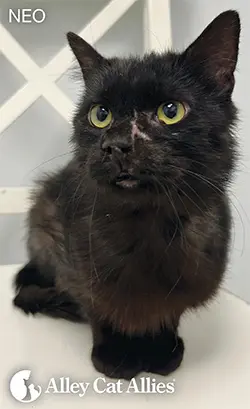
When Neo first entered the care of rescue personnel, his physical state presented a deeply alarming picture. Most striking at first glance was a massive, severe wound spanning his face—an injury that would cause any rescuer immediate concern. However, as medical evaluations progressed, it quickly became apparent that the facial trauma was merely the surface-layer symptom of a systemic health crisis.
The small black cat was suffering from acute malnutrition, leaving him severely underweight and dangerously frail. Compounding his physical weakness was a debilitating illness that had compromised his immune system, pushing him to the absolute brink of survival. For a cat in such a fragile state, the margin for error was virtually nonexistent.
[Intake: Severe Facial Wound & Malnutrition]
       │
       ▼
[Emergency Veterinary Triage & Stabilization]
       │
       ▼
[Surgical Intervention for Facial Trauma]
       │
       ▼
[Weeks of Intensive Nutritional & Medical Recovery]
       │
       ▼
[Full Healing: The Badge of Bravery]
Yet, beneath his emaciated frame and battered exterior beat the heart of an uncompromising fighter. Following emergency triage and stabilization, Neo underwent complex surgery to address his facial wound. What followed was a rigorous, multi-week recovery protocol centered around intensive nursing care, targeted antibiotic therapies, and carefully calibrated nutritional rehabilitation to help him regain healthy body mass.
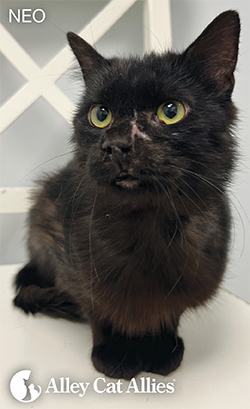
Today, Neo has made a miraculous and complete recovery. The extensive medical interventions saved his life, but they also left a permanent physical testament to his ordeal: a distinct scar across his nose. Rather than viewing this mark as a blemish, his caretakers and adopters celebrate it as a badge of honor. Far from diminishing his appearance, the scar lends him a distinguished, roguish charm—a visible reminder that this sweet-natured feline is, above all else, incredibly brave.

Cricket: Defying Gravity and Diagnosis
While individual rescue cases often involve localized trauma, large-scale property interventions present an entirely different magnitude of chaos and logistical strain. Earlier this year, a staggering 91 cats and kittens were discovered living in cramped, highly compromised conditions on a single property in Alabama. Alley Cat Allies immediately mobilized, stepping in to cover the critical veterinary costs necessary to evaluate and treat the massive influx of animals.
In multi-cat rescue operations of this scale, the veterinary toll is immense. Miraculously, the majority of the 91 cats and kittens emerged with only minor injuries, manageable upper respiratory infections, or standard nutritional deficiencies. However, one young feline stood out from the crowd due to a rare and striking physical presentation: Cricket.
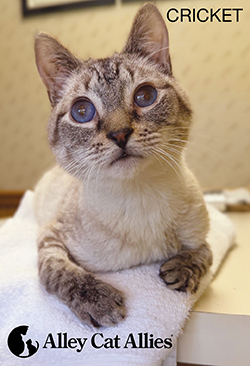
A close inspection of Cricket’s front legs immediately reveals unusual structural development. Following comprehensive diagnostics, veterinary specialists delivered an official diagnosis: carpal laxity, a congenital or developmental condition that severely compromises the stability of the wrist joints, leading to abnormal bending and impaired mobility.
[Discovery in Alabama: 91-Cat Hoarding Property]
       │
       ▼
[Emergency Intake & Mass Veterinary Triage]
       │
       ▼
[Diagnosis: Carpal Laxity in One-Year-Old Cricket]
       │
       ▼
[Targeted Treatment: Orthopedic Splinting & Physical Support]
       │
       ▼
[Result: Unstoppable Energy & High-Velocity "Zoomies"]
Rather than surrendering to a life of restricted movement, the one-year-old cat has approached his condition with boundless optimism. Cricket is currently undergoing specialized treatment protocols designed to strengthen and correct his leg alignment, which includes custom-fitted orthopedic splinting and physical therapy exercises.
Remarkably, his condition has done nothing to dampen his high-spirited personality. When he is not actively demanding attention, shoulder rides, and deep snuggles from his human handlers, Cricket is busy redefining the concept of the "zoomies." Propelled by an unstoppable zest for life, he sprints across rooms with joyful abandon, proving that physical differences do not define a cat’s capacity for happiness.
Strudel and Kittens: Breaking the Cycle of Shelter Vulnerability
The path to a safe, stable life often begins before a kitten is even born. For mother cats living on the streets or in high-capacity municipal shelters, the hazards of pregnancy and early motherhood are perilous. Without immediate intervention, maternal stress, nutritional deficits, and infectious shelter diseases can prove fatal to newborns.
Strudel’s journey is a textbook example of this precarious reality. Discovered alongside her tiny litter—Cherry, Berry, and Pebbles—Strudel was facing an uncertain future within the confines of an under-resourced shelter system. Without the timely intervention of rescue organizations and the financial backing of dedicated supporters, the young family might not have survived the critical early weeks of life.
From their earliest days to the present, Strudel, Cherry, Berry, and Pebbles have received comprehensive veterinary care, including specialized pediatric nutritional support, vaccinations, and parasite prevention. This proactive medical shield has allowed the kittens to develop normally, transforming vulnerable newborns into active, playful explorers who sleep soundly and live life to the fullest.
Crucially, this rescue narrative includes a vital step toward long-term population management: Strudel herself will be safely spayed. By ensuring that this will be her final litter, caretakers not only protect Strudel’s future health and longevity but also prevent the exponential cycle of reproduction that contributes to shelter overcrowding in the first place.
Supporting Context & Metrics: The Scale of Feline Welfare Challenges
To fully understand the gravity of cases like Neo, Cricket, and Strudel’s family, one must contextualize them within the broader framework of animal welfare in the United States. Large-scale property interventions, emergency medical treatments, and neonatal kitten care represent massive resource commitments for non-profit rescue networks.
The Impact of Hoarding and Multi-Cat Situations
Property rescues involving dozens of animals—such as the 91-cat Alabama operation—strain local shelter infrastructures to their breaking point. According to national animal welfare data, multi-cat environments frequently lead to:
- Rapid Disease Transmission: Cramped, unsanitary conditions accelerate the spread of upper respiratory infections, feline leukemia, and parasites.
- Nutritional Deficits: Competition for scarce food sources routinely results in severe emaciation and developmental stunting among younger cats.
- Behavioral Trauma: Animals rescued from confinement often require extensive socialization and psychological rehabilitation alongside physical healing.
Financial support from organizations like Alley Cat Allies plays a decisive role in these crises. By absorbing veterinary expenses that would otherwise bankrupt local municipal shelters, national networks ensure that animals receive immediate, high-tier medical interventions rather than facing secondary euthanasia due to budgetary constraints.
Pediatric and Neonatal Care Realities
Raising orphaned or shelter-born litters demands round-the-clock human intervention. Neonatal kittens (aged zero to four weeks) lack the ability to regulate their body temperature or eliminate waste independently. Providing comprehensive care entails:
- Bovine or specialized milk replacer formulas fed via syringe or bottle every two to three hours around the clock.
- Rigid temperature-controlled incubator management to prevent fatal hypothermia.
- Early preventative veterinary milestones, including deworming protocols, flea treatments, and initial wellness screenings.
When mother cats like Strudel are present, the survival rate increases significantly, provided the mother herself is adequately nourished and shielded from environmental stressors. Pairing maternal care with professional veterinary oversight creates the ideal environment for healthy physical and behavioral development.
Official Perspectives: Voices from the Front Lines
The success of these rescue operations underscores a fundamental truth in modern animal advocacy: grassroots dedication, sustained donor support, and professional veterinary science form an unbreakable triad of protection.
The Philosophy of Healing and Resilience
Rescuers who worked directly with Neo emphasize that physical scars and medical anomalies should never be mistaken for broken spirits. As veterinary staff noted during Neo’s post-surgical evaluation:
"We think Neo’s scar makes him look distinguished! And it’s a reminder that this sweet guy is also incredibly brave… We consider that mark on his nose a badge of bravery and honor!"
This perspective shifts the cultural paradigm surrounding "imperfect" or special-needs animals. Rather than viewing trauma survivors as damaged goods, progressive rescue organizations champion them as emblems of resilience, proving that animals possess an innate capacity to overcome the most severe forms of neglect and injury.
The Power of Community-Funded Veterinary Care
In the case of Cricket and Strudel’s litter, the defining factor between life and euthanasia was immediate financial resource allocation. Emergency stabilization, specialized orthopedic splinting for carpal laxity, and weeks of neonatal health monitoring require substantial funding.
Reflecting on the lifeline provided to Strudel’s family, rescue advocates highlight the direct correlation between donor generosity and survival rates:
"If not for your support, Strudel, Cherry, Berry, and Pebbles might not have made it out of the shelter where they were rescued. Thank you for helping us provide their medical treatment from their earliest days to today. Because we provide the care they need, they can play hard, sleep soundly, and live life to the fullest."
This sentiment encapsulates the core philosophy of community-supported animal welfare: collective action translates directly into individual salvation.
Future Outlook: The Road Ahead for Neo, Cricket, and Feline Advocacy
As Neo struts proudly with his distinguished facial scar, Cricket tears across the floor at high speeds with his splinted wrists, and Strudel’s kittens grow stronger by the day, the immediate future looks remarkably bright for these survivors. However, looking toward the broader horizon, animal welfare organizations must continue to address the systemic root causes that put cats in danger in the first place.
Priorities for Long-Term Feline Welfare
- Expansion of Spay/Neuter Access: As demonstrated by Strudel’s scheduled spay procedure, proactive sterilization remains the single most effective tool for ending the cycle of homelessness, shelter overcrowding, and neonatal vulnerability.
- Specialized Orthopedic Support Networks: Conditions like Cricket’s carpal laxity require specialized veterinary knowledge and equipment. Expanding access to affordable orthopedic care ensures that congenital or developmental anomalies do not become a sentence for abandonment or euthanasia.
- Rapid-Response Hoarding Intervention: Strengthening regional and national rescue partnerships ensures that when massive multi-cat crises occur—such as the 91-cat discovery in Alabama—relief is deployed rapidly to minimize suffering and secure optimal veterinary outcomes.
Ultimately, the stories of Neo, Cricket, and Strudel’s family serve as an inspiring blueprint for what is possible when compassion meets action. They remind us that behind every statistic in an animal rescue report is a living, breathing individual capable of immense love, profound bravery, and boundless joy. Through continued public support, advocacy, and uncompromising dedication, the rescue community will continue to rewrite the futures of vulnerable cats, one life at a time.