
Executive Overview
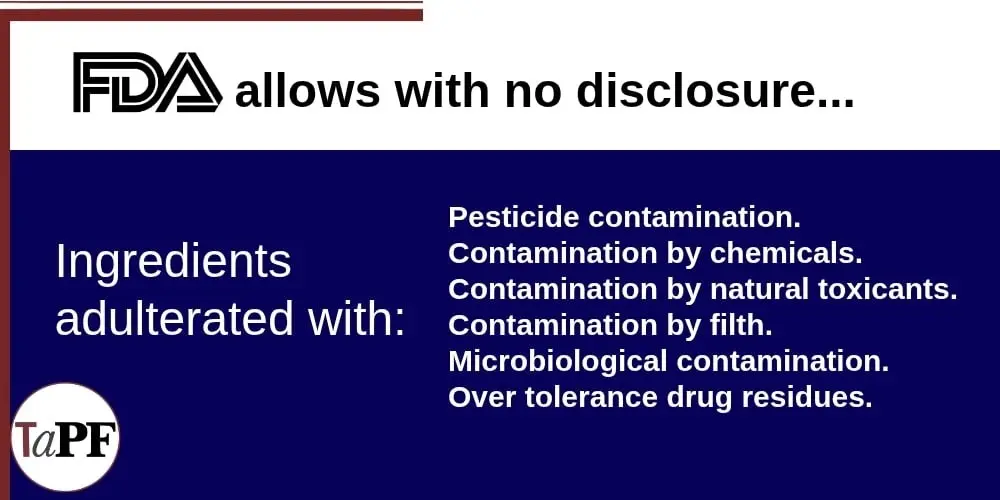
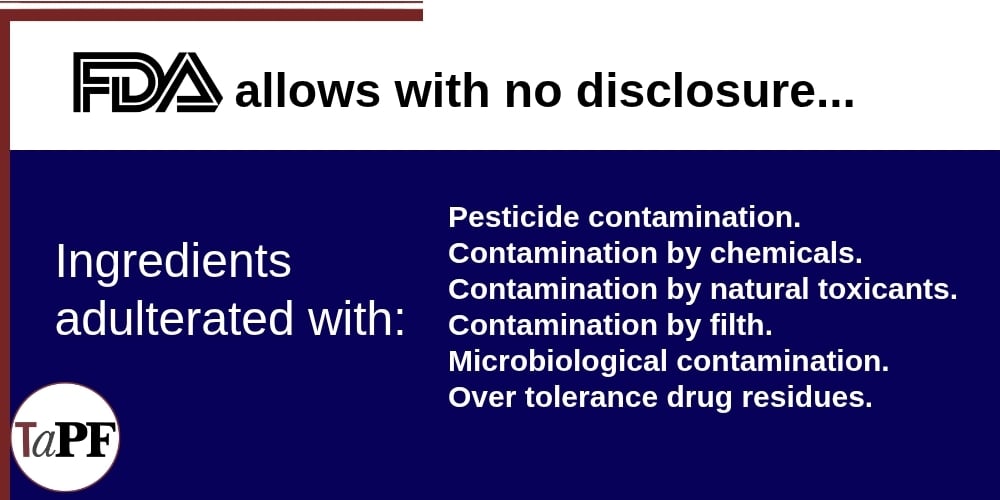
An ongoing investigation into federal food safety enforcement reveals a stark regulatory double standard: food deemed legally "adulterated" and unsafe for human consumption due to contamination by pest feces, floodwaters, sewage, toxic molds, or veterinary drug residues is routinely authorized for diversion into the animal feed and pet food supply chains.
Under a series of Compliance Policy Guides (CPGs) maintained by the U.S. Food and Drug Administration (FDA) and enforced through its Center for Veterinary Medicine (CVM), regulatory mechanisms exist to permit commercial entities to salvage damaged or contaminated food products. While the agency mandates that manufacturers obtain case-by-case approval and submit contaminated materials to specific treatments—such as high-heat processing to kill microbial pathogens—the resulting ingredients enter commercial pet food lines without explicit labeling disclosure.
Consequently, while the FDA retains granular records identifying which specific feed manufacturers and pet food brands purchase and process these diverted adulterated materials, this information remains undisclosed to pet owners. This systemic policy framework raises critical questions regarding consumer transparency, ingredient integrity, and the long-term health implications for domestic animals fed biomass derived from human food waste streams.
Detailed Chronology and Regulatory Framework
The policy architecture governing the diversion of unsafe human food into animal feed is outlined in several long-standing FDA Compliance Policy Guides. These directives set the parameters under which regional FDA district offices, the Center for Food Safety and Applied Nutrition (CFSAN), and the Center for Veterinary Medicine (CVM) exercise regulatory discretion, opting not to enforce standard statutory prohibitions against adulterated food when those items are re-routed to animal feed.
       +--------------------------------------------------------------+
       |             Human Food Identified as Adulterated             |
       |  (Contaminated via Pests, Sewage, Mold, or Drug Residues)    |
       +--------------------------------------------------------------+
                                      |
                                      v
       +--------------------------------------------------------------+
       |             Formal Industry Diversion Request                |
       |         (Submitted by Consignee to FDA CVM/CFSAN)            |
       +--------------------------------------------------------------+
                                      |
                                      v
       +--------------------------------------------------------------+
       |             FDA Case-by-Case Review & Approval               |
       |  (Requires Thermal Processing, Testing, or Conditioning)     |
       +--------------------------------------------------------------+
                                      |
                                      v
       +--------------------------------------------------------------+
       |          Incorporation into Animal Feed & Pet Food           |
       |       (Ingredients Obscured Under Generic Label Terms)       |
       +--------------------------------------------------------------+
1. CPG Sec. 675.100: Pest Excreta and Pathogen Sterilization
Under Section 402(a)(3) of the Federal Food, Drug, and Cosmetic Act (FD&C Act), food containing filth, decomposition, or extraneous matter is classified as adulterated. However, CPG Sec. 675.100 (Diversion of Contaminated Food for Animal Use) establishes an explicit pathway to divert human food contaminated with rodent, cockroach, or bird excreta into animal feed lines.
The agency’s background documentation explicitly acknowledges the biological hazards associated with such waste:
"FDA does not object to the diversion to animal feed of human food adulterated with rodent, roach, or bird excreta. However, since rodent, roach, or bird excreta are vectors for microorganisms deleterious to the health of animals, including such things as parasite eggs, salmonella, leptospira, or other pathogenic organisms, diversion has not been authorized except following a heat treatment appropriate to destroy such organisms."
The operational policy dictates that any diversion of pest-contaminated food—whether initiated voluntarily by a manufacturer or conducted pursuant to a federal court order—must undergo thermal processing. To execute this, the converting party must contact the CVM on a case-by-case basis to submit their proposed decontamination protocol for agency approval. Once thermal treatment is verified to render pathogens inert, the excreta-contaminated material is cleared for manufacturing into commercial animal feed and pet foods.
2. CPG Sec. 675.300: Moisture-Damaged Grain, Floodwaters, and Sewage
Agricultural commodities subject to natural disasters or industrial accidents present acute microbiological and chemical hazards. In CPG Sec. 675.300 (Moisture Damaged Grain), the FDA details how grains compromised by floodwaters, fire-suppression efforts, or severe mold outbreaks may be salvaged for animal consumption.
The agency’s historical context highlights the severity of potential contaminants involved in these events:
"In the past CVM has authorized the diversion of moisture-damaged grain as well as other food materials for animal feed use. Such authorization has always had to take into consideration the nature and source of the water since fires from grain elevator explosions are often quenched using sea water or river water which may contain sewage, pathogenic organisms, chemical wastes or other toxic substances. Similar problems are posed when foodstuff is flooded following hurricanes or other natural disasters. Even more serious is the mold growth which may occur in wet foods."
Under the binding policy, moisture-damaged and mold-contaminated foodstuffs are evaluated for feed conversion through joint consultations between the CVM and CFSAN. Authorizations hinge on assessing the source of moisture, evaluating the toxicological profile of suspected chemical or industrial contaminants, and determining whether secondary conditioning can stabilize fungal proliferation and reduce mycotoxin vectors (such as aflatoxins or vomitoxin) to tolerable thresholds for livestock or companion animals.
3. CPG Sec. 675.200: Drug Residues, Chemical Contaminants, and Salvaged Meats
The broadest mechanism for processing adulterated commodities is codified in CPG Sec. 675.200 (Diversion of Adulterated Food to Acceptable Animal Feed Use). This guide authorizes the salvage of human food rejected for statutory violations and allows it to be reclassified for animal consumption based on differential tolerance standards.
The policy rationale states:
"In the past, FDA has authorized the salvage of human or animal food considered to be adulterated for its intended use by diverting that food to an acceptable animal feed use. Most of these instances have involved, but have not been limited to, the interpretation of section 402(a)(3) and (4) of the Federal Food, Drug, and Cosmetic Act to allow different standards for foods intended for human use vs. food intended for animal use… Diversion requests, however, have also included USDA detained meat and poultry products contaminated with drug or other chemical residues, as well as food and feed under voluntary industry recall or quarantine…"
Under CPG 675.200, diversion requests are adjudicated on an ad hoc basis. The regulatory mechanism permits meat and poultry products detained by the United States Department of Agriculture (USDA) for containing violative veterinary drug residues or industrial chemicals to be repurposed into animal diets, provided the concentrations are deemed non-hazardous to the target animal species.

Supporting Context and Industry Metrics
The Legal Framework of Adulteration
To understand the implications of these compliance policies, one must examine the baseline standards set by the Federal Food, Drug, and Cosmetic Act. Under federal law, a food is deemed adulterated if it meets any of the following statutory criteria:
| FD&C Act Section | Statutory Criteria | Standard Application in Human Food | Diverted Application in Animal Feed |
|---|---|---|---|
| Section 402(a)(1) | Contains any poisonous or deleterious substance that may render it injurious to health. | Zero tolerance for violative chemical or drug residues. | Permitted on an ad hoc basis if residue levels meet animal tolerance thresholds. |
| Section 402(a)(3) | Consists in whole or in part of any filthy, putrid, or decomposed substance. | Rejected if filth exceeds minimal Defect Action Levels (DALs). | Reclassified via thermal or chemical conditioning (e.g., heat-treating fecal matter). |
| Section 402(a)(4) | Prepared, packed, or held under insanitary conditions where it may have become contaminated. | Mandatory quarantine, recall, or destruction of affected inventory. | Diversion permitted upon submission of an approved mitigation and re-processing plan. |
The Labeling Disconnect and Supply Chain Obscurity
While federal regulations require animal feed manufacturers to submit advance requests specifying the nature of the adulteration, the source of the waste, and the proposed treatment, these regulatory disclosures do not carry over to retail packaging.
When adulterated human food is processed into animal feed ingredients, it is integrated into standardized commodity definitions established in coordination with the Association of American Feed Control Officials (AAFCO). Consequently:
- Meat containing violative antibiotic residues or held under unsanitary conditions is rendered and declared on pet food packaging under broad terms such as "meat meal," "poultry by-product meal," or "animal fat."
- Grains exposed to floodwaters containing industrial runoff or mold growth are blended or heat-treated and listed simply as "ground yellow corn," "wheat flour," or "grain distillers dried solubles."
As a result, pet owners cannot determine from a product’s ingredient list whether a formula contains clean, primary-source agricultural commodities or salvaged biomass previously flagged by federal inspectors for fecal, chemical, or biological contamination.
Official Statements and Regulatory Mechanics
The regulatory rationale for allowing the diversion of adulterated food rests primarily on agricultural economics and waste management policy. According to historical positions maintained by the FDA CVM and CFSAN, converting compromised human food into animal feed preserves valuable caloric and protein resources while preventing large volumes of biomass from entering municipal landfills.
The regulatory approval loop for diversion requests follows a strict internal protocol:
- Initiation: The owner or consignee of the adulterated food submits a formal written application to the local FDA District Office and CVM.
- Data Submission: The applicant must provide detailed analytical testing data detailing the exact nature and concentration of contaminants (e.g., micro-biological panels, heavy metal screenings, mycotoxin assays, or drug residue profiles).
- Safety Assessment: CVM toxicologists and microbiologists evaluate whether the proposed processing method (such as extrusion, rendering, or acid conditioning) will neutralize the hazards to the target animal species.
- Authorization: If cleared, the FDA issues a formal letter permitting diversion under monitored conditions.
Despite the stringent administrative oversight required for approval, advocacy groups emphasize that this system operates as a closed loop. While the FDA tracks every consignment of adulterated food approved for animal feed, it does not maintain a public registry of these approvals or require manufacturers to disclose when diverted streams are used.
       +-------------------------------------------------------------+
       |               FDA & CVM Regulatory System                   |
       |  (Possesses precise records of adulterated food approvals,  |
       |   consignees, chemical residues, and receiving facilities)   |
       +-------------------------------------------------------------+
                                      |
                                      | [Information Restricted]
                                      v
       +-------------------------------------------------------------+
       |                     General Consumers                       |
       |   (Provided only standardized AAFCO ingredient labels;      |
       |    no visibility into raw material safety history)          |
       +-------------------------------------------------------------+
Pet food consumer advocate Susan Thixton, founder of TruthaboutPetFood.com and representative at the Association for Truth in Pet Food, highlighted this lack of transparency in a public statement:
"The FDA knows EXACTLY which pet food manufacturers include adulterated ingredients contaminated with all types of substances. The FDA knows EXACTLY which livestock feed manufacturers include adulterated ingredients. But the FDA doesn’t tell you. The FDA does not require the manufacturer to tell you either. The ingredient list gives you no clues if the chicken includes drug residues, or the grain includes pesticides or sewage."
Future Outlook and Freedom of Information Act (FOIA) Filings
The Search for Public Transparency
In response to the systemic opacity surrounding ingredient diversion, consumer advocacy organizations are utilizing federal disclosure laws to compel agency transparency. On September 17, 2026, a Freedom of Information Act (FOIA) request was formally filed with the FDA, requesting all approved adulterated food diversion records spanning from January 1, 2020, through September 17, 2026.
The request specifically demands the disclosure of:
- The names of all commercial consignees that applied for and received diversion authorizations.
- The specific nature of the adulteration identified in each approved request (e.g., rodent filth, chemical residues, pathogen contamination, or moisture damage).
- The final destination facilities where the adulterated materials were processed into commercial feed or pet food products.
+-----------------------------------------------------------------------------------+
|                            FOIA REQUEST TIMELINE & GOALS                          |
+-----------------------------------------------------------------------------------+
|  Filing Date:         September 17, 2026                                          |
|  Target Window:       January 1, 2020 – September 17, 2026                        |
|  Primary Objectives:  1. Identify commercial consignees purchasing adulterated food. |
|                       2. Disclose specific contaminant profiles (drugs, mold, filth)|
|                       3. Track processing facilities supplying pet food brands.   |
|  Anticipated Delay:   Multi-year agency backlogs typical for CVM/CFSAN FOIA queues. |
+-----------------------------------------------------------------------------------+
Institutional Backlogs and Regulatory Implications
Historical precedent indicates that public access to these records may face significant delays. Administrative backlogs within the FDA’s FOIA offices regularly result in processing delays ranging from three to five years for complex agricultural records, particularly when requests involve commercial confidential information or proprietary trade secrets claimed by corporate submitters.
The outcome of this FOIA request will serve as a critical benchmark for federal transparency:
- If the FDA releases unredacted consignee data, pet owners will, for the first time, gain direct visibility into which commercial feed mills and pet food brands incorporate diverted, adulterated ingredients into their supply chains.
- If the agency redacts corporate identities, citing commercial confidentiality exemptions under Exemption 4 of the FOIA, it will likely prompt legal challenges regarding whether public health and food safety transparency supersede corporate commercial interests.
As regulatory scrutiny mounts and consumer awareness surrounding pet food sourcing expands, the ongoing friction between federal compliance policies and public demand for full ingredient disclosure remains a central conflict in federal food safety administration.