
Executive Overview
In an extraordinary intersection of public service and animal welfare, Lieutenant Kenny Jay Mata transformed a routine media assignment into a critical rescue operation. While location-scouting and filming a public safety announcement near a high-risk low-water crossing, Lieutenant Mata observed a severely distressed dog navigating moving vehicular traffic. Recognizing the immediate threat to both public safety and the animal’s life, Mata initiated a tactical, low-stress intervention that ultimately brought the animal to safety.
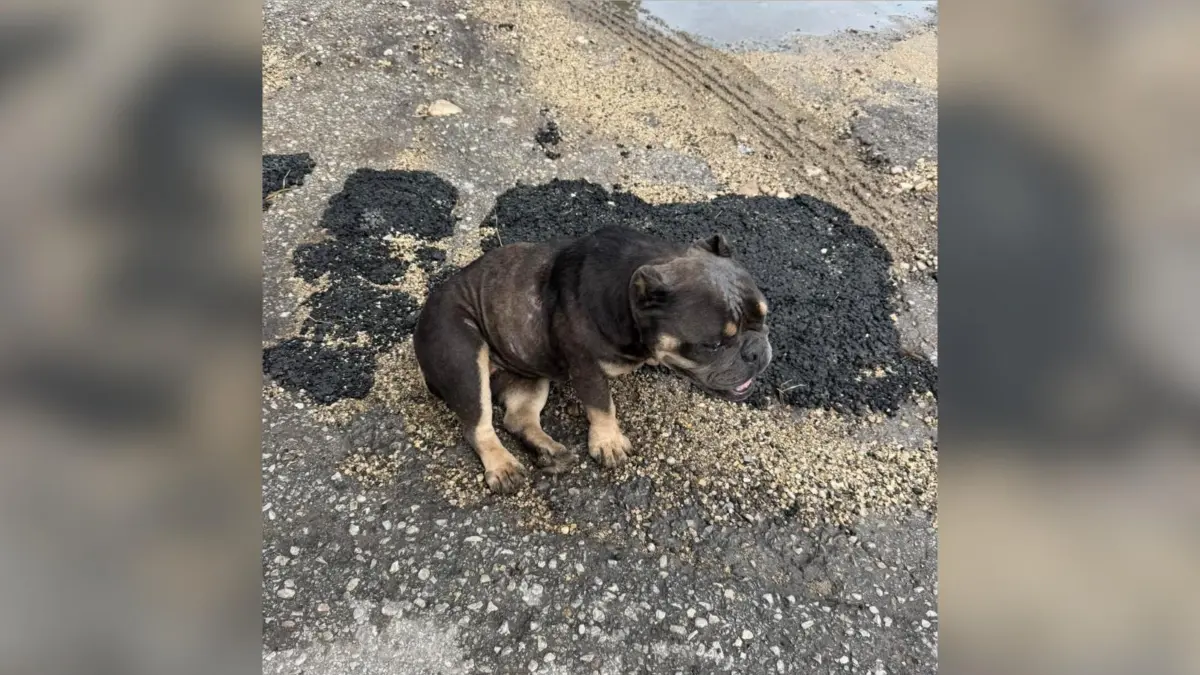
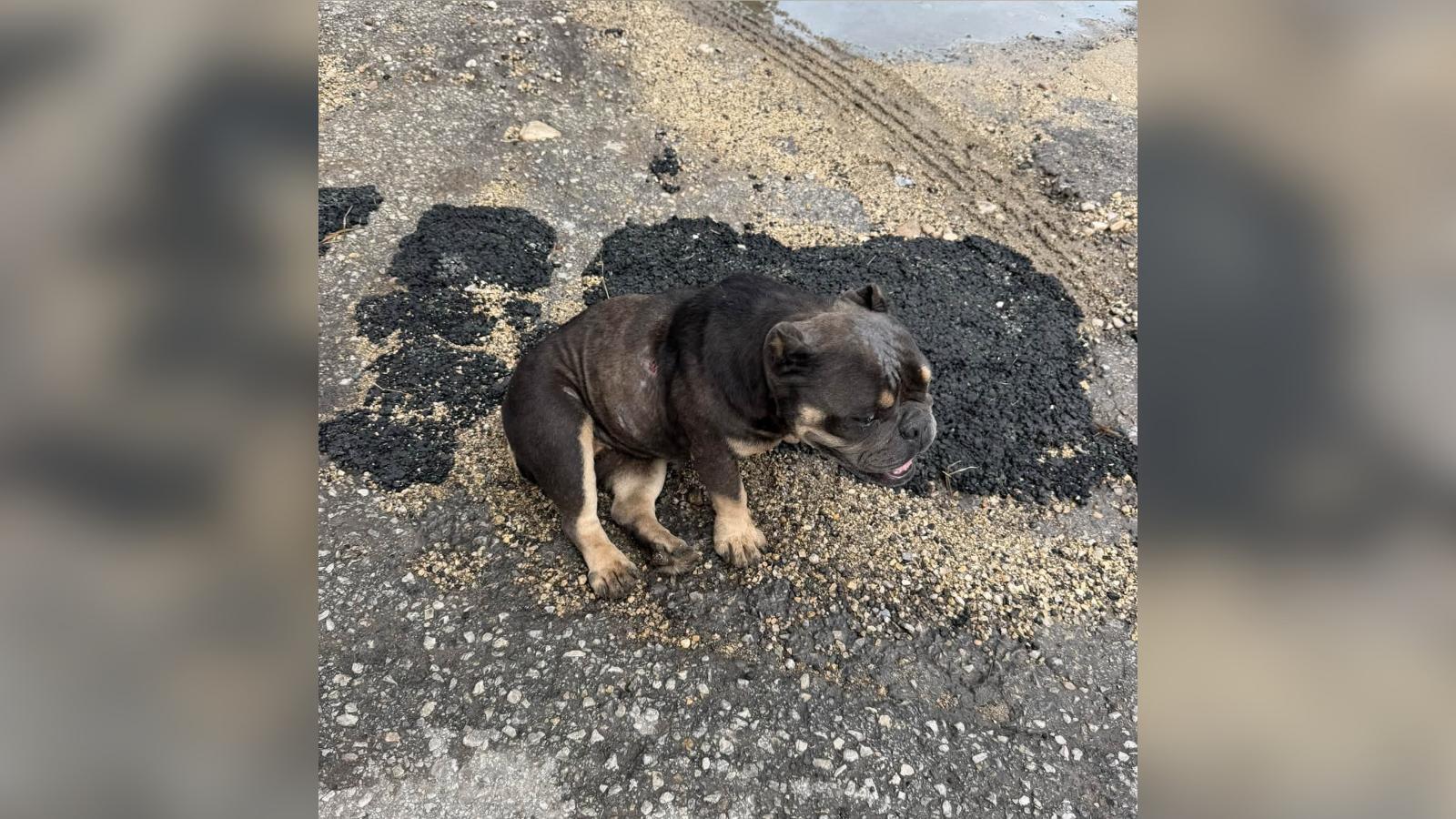
Subsequent clinical evaluation revealed that the approximately six-year-old female dog was suffering from a complex array of chronic health conditions, including severe malnutrition, widespread dermatological and ear infections, intestinal parasites, and heartworm disease. Lacking a microchip or any identifying markers, the animal faced an uncertain future within an already burdened municipal rescue system.
Moving beyond his official duty, Lieutenant Mata and his wife made the decision to assume full legal and financial responsibility for the canine. Now named Khloe Jay, the dog has been permanently integrated into the Mata household, where she is currently undergoing comprehensive medical rehabilitation. This case highlights the vital role of field-level situational awareness, the severe clinical realities of neglected strays, and the profound impact of individual compassionate action within community safety frameworks.
Detailed Chronology
[Phase I: Field Sighting] ──► [Phase II: Tactical Rescue] ──► [Phase III: Clinical Triage] ──► [Phase IV: Formal Adoption]
  • Low-water crossing        • De-escalation stance       • Diagnostic battery          • Permanent home placement
  • Active traffic threat     • Patient trust-building     • Heartworm/parasite diagnosis • Ongoing medical regimen
Phase I: Initial Field Sighting and Risk Assessment
The incident began while Lieutenant Kenny Jay Mata was on assignment executing a public service announcement focused on community safety protocols. The filming location was situated near a low-water crossing—a roadway design known for variable traffic patterns, limited shoulder space, and heightened driver distraction.
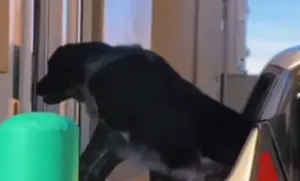
During production, Lieutenant Mata spotted a stray dog wandering erratically near the roadway. The animal exhibited signs of acute disorientation and fear, moving perilously close to passing vehicles. In environments such as low-water crossings, loose animals present a double threat: immediate physical harm to the animal and sudden vehicular swerving or braking hazards for motorists.
Phase II: Tactical De-Escalation and Field Securing
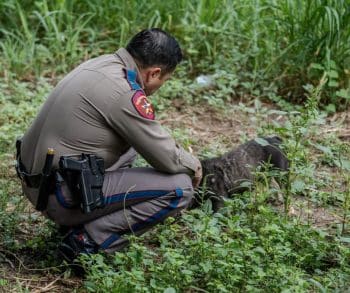
Understanding that an aggressive approach would likely trigger the animal’s flight response—potentially driving her directly into oncoming lanes—Lieutenant Mata implemented proven animal de-escalation techniques:
- Initial Assessment: Observing the dog’s posture (lowered head, hyper-vigilance, defensive avoidance).
- Space Management: Halting direct forward movement upon noticing the dog’s initial attempt to flee.
- Posture Modification: Lowering his center of gravity by kneeling on the ground to reduce perceived threat levels.
- Auditory Stabilization: Utilizing soft, rhythmic vocalizations to create a calming sensory environment.
- Trust Establishment: Allowing the canine to set the pace of approach until physical control could be established without coercion.
Through sustained patience, Lieutenant Mata successfully enticed the frightened dog to close the distance, allowing him to safely secure her away from the active roadway.
+-----------------------------------------------------------------------------------+
|                        TACTICAL APPROACH PROTOCOL                                 |
+-----------------------------------------------------------------------------------+
|  [Distressed Animal] <--- (Spatial Distance) ---> [Officer / Rescuer]            |
|                                                          |                        |
|  1. Avoid direct eye contact & rapid movement            v                        |
|  2. Lower physical profile (Kneeling posture) ───────────+                        |
|  3. Soft vocal reassurance                               v                        |
|  4. Patient trust building ──────────────────────────────+                        |
|                                                          v                        |
|  RESULT: Safe field capture

 without triggering high-speed flight into traffic     |
+-----------------------------------------------------------------------------------+
Phase III: Clinical Evaluation and Diagnostic Assessment
Following her removal from the hazardous environment, the dog was immediately transported to a veterinary facility for a comprehensive health assessment. Clinical examinations established that she was approximately six years old and in a state of severe bodily compromise.
+-----------------------------------------------------------------------------------+
|                        VETERINARY DIAGNOSTIC PROFILE                              |
+-----------------------------------------------------------------------------------+
| Metric / Condition   | Clinical Findings                                          |
+----------------------+------------------------------------------------------------+
| Estimated Age        | ~6 Years Old                                               |
| Identification       | Microchip Absent / No Physical Tags                        |
| Nutritional Status   | Severe Malnutrition / Emaciation                           |
| Dermatological       | Extensive Skin Infections & Otitis Externa (Ear Infection) |
| Systemic / Parasitic | Heartworm Positive (Dirofilaria immitis)                   |
| Gastrointestinal     | Active Intestinal Parasitic Infection                      |
+----------------------+------------------------------------------------------------+
A standard microchip scan produced negative results, indicating an absence of registered ownership records. With no owner history or microchip data available, the veterinary team concluded that the dog had likely endured prolonged neglect or abandonment.
Phase IV: Legal Custody, Naming, and Transition
Recognizing that the animal’s extensive medical needs would make her a difficult candidate for traditional shelter placement, Lieutenant Mata and his wife stepped forward to assume full responsibility. They formally adopted the dog, granting her a permanent home and naming her Khloe Jay.
Supporting Context & Metrics
The Broader Impact of Stray Canine Populations on Public Safety
Unattended domestic animals near roadways represent a persistent safety concern across urban and suburban corridors. According to national transportation and animal control statistics:
- Vehicular-Animal Collisions: Stray animals account for thousands of localized traffic disruptions annually, often leading to secondary motor vehicle accidents when drivers swerve abruptly.
- Microchipping Disparities: Fewer than 20% of lost or stray dogs entering municipal shelters without a microchip are successfully reunited with original owners, compared to over 50% for microchipped pets.
- Shelter Capacity Pressures: Open-intake shelters frequently operate near maximum capacity, making medical cases involving heartworm disease or chronic infections particularly vulnerable to euthanasia if foster or permanent adopters are unavailable.
                  REUNIFICATION RATES FOR STRAY CANINES
       +-------------------------------------------------------+
       | Microchipped Pets     [==================] ~52%       |
       | Non-Microchipped Pets [====] ~17%                     |
       +-------------------------------------------------------+
Understanding Khloe Jay’s Medical Challenges
To appreciate the scope of care required for Khloe Jay, it is necessary to examine the pathology of her diagnosed conditions:
-
Heartworm Disease (Dirofilaria immitis):
- Mechanism: Transmitted via mosquito bites, larvae migrate to the pulmonary arteries and heart, maturing into adult worms that can exceed 10 inches in length.
- Impact: Causes severe pulmonary arterial inflammation, heart failure, and multi-organ dysfunction.
- Treatment: Requires a lengthy, multi-step medical protocol involving strict exercise restriction, preparatory antibiotics, and targeted injections to eradicate adult worms safely.
-
Severe Malnutrition and Dermatological Compromise:
- Mechanism: Prolonged lack of adequate protein, essential fatty acids, and micro-nutrients weakens the skin barrier.
- Impact: Secondary bacterial and fungal infections flourish, resulting in painful lesions, fur loss, and systemic stress.
-
Intestinal Parasitism:
- Mechanism: Internal parasites colonize the digestive tract, competing for nutrient absorption.
- Impact: Exacerbates weight loss, causes anemia, and further compromises immune response.
       PATHWAY OF CHRONIC NEGLECT & MEDICAL RECOVERY

  [Prolonged Exposure] ──► [Multi-System Decline] ──► [Targeted Intervention]
  • Stray Wandering         • Heartworm Infection       • Parasitic Eradication
  • Nutritional Deficit     • Epidermal Degradation     • Nutritional Therapy
  • Lack of Parasite Control• Severe Emaciation         • Controlled Rehabilitation
Official Statements & Industry Perspectives
Law Enforcement and Public Service Commitment
Reflecting on the incident, representatives within law enforcement and community outreach emphasize that public safety extends beyond standard regulatory enforcement.
"Public service is ultimately about preserving life and maintaining safety across all aspects of our community. Lieutenant Mata’s actions at the low-water crossing demonstrate the situational awareness and compassion that define exemplary service. By taking immediate action, he eliminated a traffic danger and saved a vulnerable life."
Veterinary Medical Commentary
Veterinary professionals familiar with complex stray rehabilitation highlight the dedication required to manage multi-condition rescues:
"Treating a canine patient presenting simultaneously with heartworms, severe malnutrition, dermatological infections, and intestinal parasites requires a long-term commitment. It is not merely a matter of administering a single medication; it involves months of strict activity restriction, carefully managed nutritional scaling, and systematic pharmaceutical interventions. The decision by Lieutenant Mata and his family to take on this medical journey provides this dog with a quality of life that would have been impossible on the streets."
Future Outlook & Rehabilitation Roadmap
Clinical Recovery Plan for Khloe Jay
Khloe Jay’s transition into her new home marks the beginning of a structured, multi-phase medical recovery process designed by veterinary experts.
+-----------------------------------------------------------------------------------+
|                        KHLOE JAY'S RECOVERY TIMELINE                              |
+-----------------------------------------------------------------------------------+
| Phase                  | Objective & Interventions                                |
+------------------------+----------------------------------------------------------+
| Phase 1: Stabilization | • High-density nutritional regimen                       |
| (Months 1–2)           | • Eradication of intestinal parasites                    |
|                        | • Medicated baths & antibiotics for skin/ear infections  |
+------------------------+----------------------------------------------------------+
| Phase 2: Heartworm     | • Deep-muscle adulticide injections                      |
| Treatment (Months 3–5) | • Strict cage rest/crate restriction to prevent embolisms|
|                        | • Continuous cardiac monitoring                          |
+------------------------+----------------------------------------------------------+
| Phase 3: Long-Term     | • Re-testing for heartworm clearance                     |
| Maintenance (Month 6+) | • Gradual physical activity reintroduction                |
|                        | • Permanent preventive medical regimen                   |
+------------------------+----------------------------------------------------------+
Institutional Lessons for Community Safety Programs
The story of Khloe Jay serves as a compelling case study for municipal public safety departments and community members alike:
- Integrated Safety Protocols: Demonstrating how public service personnel can address unexpected animal-related hazards safely during routine field operations.
- Microchipping Awareness: Underscoring the critical need for pet owners to microchip and keep registration details current to prevent pets from becoming untraceable strays.
- Community-Led Rescue Support: Illustrating the importance of public-private cooperation and individual adoption in mitigating the stray animal burden on municipal infrastructure.
Today, Khloe Jay resides safely in the Mata household. Once a frightened dog running along a dangerous roadside, she now faces a stable future supported by regular veterinary care, adequate nutrition, and a family dedicated to her complete recovery.