
Executive Overview
A high-stakes dispute between a pet owner and a regional animal rescue organization has ignited a broader national debate surrounding pet ownership rights, animal welfare obligations, and shelter accountability. The controversy centers on "Capone"—a dog recently renamed "Benedict" by rescue personnel—who disappeared from his home in late March 2021, only to become the subject of a contentious legal and ethical standoff between his owner, Jessica Palacio, and Unleashed Pet Rescue in Mission, Kansas.
What initially appeared to be a straightforward missing-pet recovery quickly transformed into a complex case involving allegations of severe veterinary neglect, inconsistent rescue protocols, and law enforcement intervention. While Palacio publicly campaigned for the return of her family pet, asserting that the shelter was wrongfully withholding her animal, Unleashed Pet Rescue founder Danielle Reno released photographic, veterinary, and clinical evidence asserting that the dog had suffered months of unmitigated medical neglect.
This comprehensive report examines the timeline of events, the underlying clinical and regulatory metrics, official positions from both parties, and the broader legal and ethical implications for animal welfare organizations operating at the boundary of property rights and anti-cruelty enforcement.
Detailed Chronology
[March 31, 2021] Capone reported missing by owner Jessica Palacio.
       │
[Early April 2021] Stray dog impounded; microchip scanned; email contact initiated.
       │
[Easter Weekend] Palacio visits Unleashed Pet Rescue; release denied; police called.
       │
[Mid-April 2021] Palacio contacts local media (FOX4 KC); public outcry ensues.
       │
[Late April 2021] Rescue Founder Danielle Reno broadcasts Facebook Live response with medical records.
Disappearance and Recovery (March 31 – Early April 2021)
On March 31, 2021, Capone, a family dog residing in the Kansas City metro area, escaped from his owner’s property. Over the subsequent days, his owner, Jessica Palacio, initiated localized search efforts. Unbeknownst to the family, the dog was impounded as a stray and brought to Unleashed Pet Rescue, an organization from which Palacio had originally adopted him years prior.

Upon standard intake procedures, rescue staff scanned the animal for a microchip. While the microchip was functional, the primary and secondary telephone numbers linked to the device were disconnected. However, because the animal had been originally placed through Unleashed Pet Rescue, staff cross-referenced their internal adoption database and located an active email address associated with Palacio.
The Standoff at Unleashed Pet Rescue
On Easter weekend, Unleashed Pet Rescue sent an automated or direct email notification to Palacio, informing her that Capone had been impounded at their facility and that standard reclaim fees would apply. Reassured by the message, Palacio gathered funds and traveled to the shelter to reclaim the animal.
Upon her arrival, shelter personnel refused to release Capone. According to Palacio, staff provided conflicting explanations regarding the dog’s status, ultimately asserting that he was "unavailable" for return. As tensions escalated within the lobby, Palacio refused to vacate the premises without her dog. Rescue management summoned local law enforcement to de-escalate the situation, culminating in Palacio being formally trespassed from the property under threat of arrest.
Media Escalation and Public Outcry
Frustrated by the shelter’s refusal to return her pet, Palacio brought her narrative to local news outlet FOX4 Kansas City. The resulting broadcast framed the story around a distressed mother and young child denied the return of their beloved pet despite possessing microchip proof of ownership. Palacio alleged that the shelter was attempting to force her to re-apply for adoption—a process she feared would be denied—and demanded the immediate release of her dog.

The story gained rapid momentum on social media, prompting public outrage directed at Unleashed Pet Rescue. Critics accused the organization of overreaching its authority, violating property rights, and unlawfully retaining a microchipped family pet.
The Rescue’s Official Response and Counter-Evidence
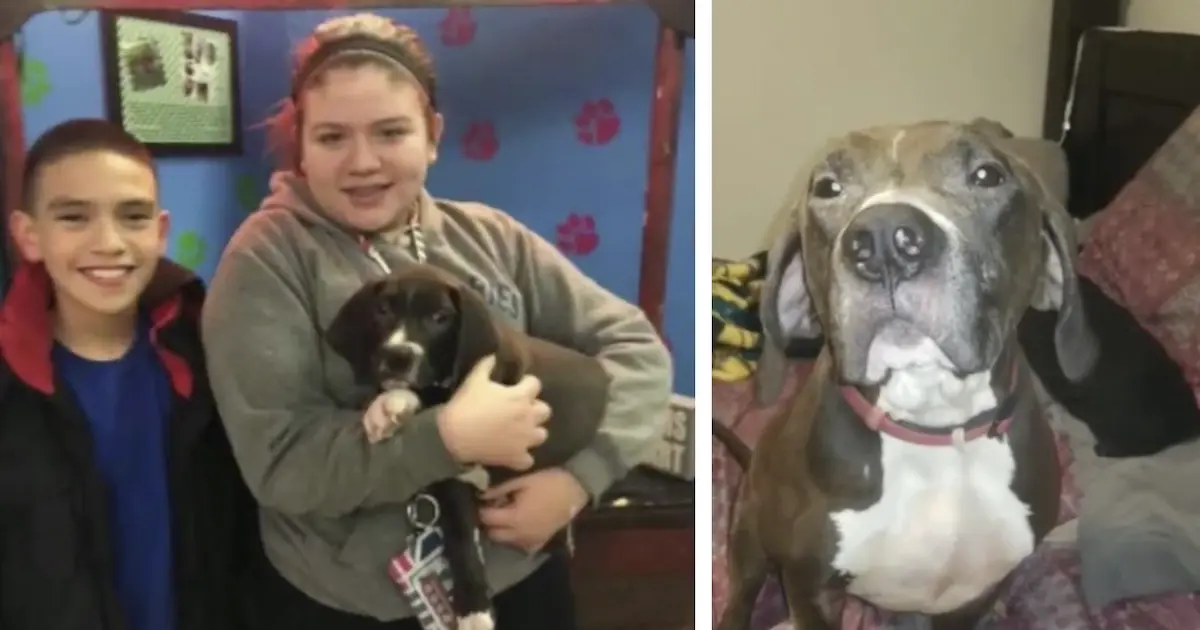
Faced with escalating public pressure and online backlash, Unleashed Pet Rescue founder Danielle Reno hosted a detailed Facebook Live broadcast to present the organization’s rationale. Appearing alongside the dog—whom the rescue had renamed "Benedict"—Reno presented a striking physical contrast to the historic photos supplied by Palacio to news outlets.
Reno demonstrated that the dog was suffering from advanced, severe dermatological inflammation covering over 50 percent of his body, characterized by widespread excoriation, loss of fur, and severe secondary infections. Reno publicly detailed the internal communications that had transpired prior to the confrontation, citing veterinary records provided by Palacio herself that corroborated a long-standing absence of professional medical treatment.
Supporting Context, Veterinary Metrics, and Diagnostic Findings
To evaluate the claims made by both parties, it is necessary to examine the clinical data, standard animal management procedures, and veterinary compliance standards relevant to this case.

Clinical Presentation of the Animal
| Health Parameter | Standard Baseline | Condition Upon Intake at Shelter |
|---|---|---|
| Dermatological Status | Intact epidermis, full hair coat | >50% body surface erythema, raw excoriation |
| Fungal/Bacterial Load | Controlled commensal microflora | Severe systemic Malassezia (yeast) dermatitis |
| Secondary Contamination | Clean physical collar/fur | Collar caked in heavy yeast exudate and debris |
| Pruritus Index | Normal / Non-impairing | Severe (self-mutilation, bleeding from scratching) |
| Veterinary Visit Recency | Annual minimum (<12 months) | Absent for 11 consecutive months |
| Active Medical Therapy | Active prescription management | No recorded skin medication since 2019 |
According to statements made by Reno during the live video broadcast, the dog’s physical state was not indicative of an acute condition developed during the few days he was missing. Rather, the extent of epidermal thickening, lichenification, and heavy fungal burden demonstrated chronic, long-term absence of veterinary intervention. The rescue noted that the yeast infection had permeated the animal’s physical collar to such an extent that the gear could not be sanitized and had to be discarded.
Chronic Allergy Exposure ──> Lack of Medical Intervention ──> Severe Pruritus & Self-Trauma
                                                                     │
Systemic Yeast Infection <── Environmental & Epidermal Breakdown <───┘
Analysis of Veterinary Compliance
A critical focal point of the dispute involves the veterinary records submitted during the reclaim process. Standard animal shelter operating procedures mandate that owners reclaiming impounded animals provide proof of rabies vaccination and, in cases involving apparent physical distress, evidence that pre-existing medical conditions are under active management by a licensed veterinarian.
When requested by Unleashed Pet Rescue staff to provide medical documentation, Palacio produced records indicating:
- Last Documented Veterinary Exam: 11 months prior to the impoundment date.
- Last Prescribed Allergy Medication: Dating back to 2019, approximately two years prior to the incident.
While Palacio argued socially and publicly that seasonal allergies are notoriously difficult to manage and fluctuate in severity during spring months, veterinary experts note that chronic atopic dermatitis left untreated for prolonged periods causes extreme pain, secondary tissue damage, and heightened risk of systemic bacterial infection.

Microchip Governance and Reclaim Regulations
The case highlights a frequent point of friction in municipal animal control and rescue operations: the legal weight of a microchip versus animal neglect statutes.
- Microchip Data Integrity: A microchip functions as evidence of legal ownership. However, when contact details (such as phone numbers) are obsolete, shelters must rely on secondary database records.
- Statutory Standards of Care: Most municipal and state laws explicitly state that ownership rights are contingent upon adhering to basic standards of care, which include providing necessary veterinary treatment to prevent suffering.
- Shelter Discretion: When an impounded animal presents with clear signs of unaddressed medical trauma or severe illness, rescue facilities are often legally required—or contractually bound by city mandates—to withhold the animal until proof of adequate medical care is established, or to report the case to local animal control authorities for formal investigation.
Official Statements and Conflicting Narratives
The Owner’s Perspective: Jessica Palacio
Throughout her public statements to media outlets and online platforms, Jessica Palacio maintained that Capone was a deeply cherished member of her family whose loss caused significant distress to her young child.
Palacio emphasized the following points:
- Intentional Care: She asserted that she was fully aware of Capone’s severe seasonal allergies and maintained that the condition was managed to the best of her ability.
- Lack of Transparency: Palacio claimed shelter staff offered shifting justifications ("15 different stories") regarding why Capone could not be returned upon her arrival with the requested fees.
- Emotional Distress: She framed the rescue’s actions as an overreaching confiscation, stating: "I mean, I got like 15 different stories as to why I couldn’t take my dog… I don’t understand why this is a hard issue for you guys. I guess they thought I would give up by now, but I’m going to fight, I want my dog home."
     PUBLIC/MEDIA NARRATIVE                      SHELTER/CLINICAL NARRATIVE
┌───────────────────────────────┐           ┌───────────────────────────────┐
│ • Beloved family pet          │           │ • Severe, unmanaged dermatitis│
│ • Microchipped owner proof    │   VS.     │ • 11-month veterinary absence │
│ • Shifted shelter rationale   │           │ • No prescription care (2019) │
│ • Reclaim fee tendered        │           │ • Duty to prevent animal agony│
└───────────────────────────────┘           └───────────────────────────────┘
The Rescue’s Perspective: Danielle Reno & Unleashed Pet Rescue
Speaking on behalf of Unleashed Pet Rescue, Danielle Reno outlined the facility’s legal and ethical duty to prioritize animal welfare over property claims when clear physical distress is observed.

Key assertions from Reno included:
- Documented Medical Neglect: Reno asserted that the physical evidence—specifically the raw, bleeding skin and systemic yeast infection—contradicted claims that the dog’s medical needs were being met.
- Veterinary Evidence: The rescue noted that the owner’s own submitted vet records verified a nearly two-year gap in prescribed skin therapeutics.
- Ethical Obligation: Addressing the public pressure campaign mounted by the owner, Reno stated during her broadcast:
"So, the owner is contacting news agencies, they’re doing stories, they say that they want their dog back. They have said he’s a family pet, they have used a small child, that the child misses the dog… Guys, all of this, if they love the dog, if you care for the dog, would you let him itch himself bloody? He literally has scratched himself bloody."
Ethical Implications and Future Outlook
Animal Welfare vs. Property Rights in Rescue Law
The dispute over Capone/Benedict underscores an ongoing debate in American civil law regarding the status of companion animals. Under most state legal frameworks, pets are classified strictly as personal property. However, anti-cruelty statutes and municipal animal welfare codes create explicit exceptions where an owner’s property rights are limited by their duty of care.
When a shelter takes custody of a lost animal presenting severe medical distress, two legal frameworks collide:

- Property Reclaim Rights: The right of an owner to retrieve lost property upon paying reasonable impoundment and boarding fees.
- Humane Protection Mandates: The legal obligation of animal welfare organizations to prevent the return of an animal to an environment where it faces active, unmitigated suffering or neglect.
When rescues withhold animals based on clinical neglect, they often navigate a complex legal landscape. Without formal intervention from municipal animal control officers or a court order, withholding an animal can expose a shelter to civil litigation or conversion lawsuits from the original owner. Conversely, returning an animal in visible agony without mandated medical guarantees violates the core mission of animal rescue organizations.
Long-Term Recovery and Institutional Impact
Following the public statements by Unleashed Pet Rescue, the dog—retained under the name Benedict—was placed on an intensive medical protocol consisting of medicated baths, topical antifungal therapies, systemic antibiotics, and prescription anti-pruritic medications designed to break the itch-scratch cycle.
Intake & Assessment ──> Diagnostic Verification ──> Intensive Medical Protocol ──> Rehabilitation & Adoption
 (Stray Impoundment)     (Vet Record Audit)        (Antifungals/Prescriptions)    (Permanent Placement)
The case serves as a warning for pet owners and rescue organizations alike:
- For Pet Owners: It highlights the critical importance of keeping microchip contact details current and maintaining continuous, documented veterinary care—particularly for breeds prone to chronic dermatological or metabolic conditions.
- For Rescue Facilities: It demonstrates the necessity of transparent standard operating procedures, clear public communication strategies, and immediate collaboration with local law enforcement or municipal animal control authorities when impounded animals show signs of severe neglect.
As animal welfare standards continue to evolve, the case of Capone/Benedict remains a landmark instance where clinical data and physical evidence were brought to the forefront of a public media campaign, forever altering the trajectory of a missing pet dispute.