
Executive Overview
Antimicrobial resistance (AMR) stands as one of the gravest existential threats to global public health, animal husbandry, and environmental integrity in the twenty-first century. While much of the policy discourse surrounding AMR has traditionally centered on terrestrial livestock and human medicine, aquatic environments have increasingly emerged as critical vectors for the emergence, proliferation, and transmission of drug-resistant pathogens.
To confront this mounting crisis head-on, an international consortium of world-class academic institutions has secured a substantial £2.4 million (approximately US$3.2 million) research grant to investigate and mitigate antimicrobial resistance within Vietnam’s booming pangasius sector—one of the largest freshwater fish farming industries on the planet.
Led by the esteemed University of Stirling in Scotland, the 48-month research initiative brings together a multidisciplinary team of experts from the University of Glasgow, the University of Sydney, Can Tho University, and Vietnam National University. This comprehensive project is part of a broader, landmark investment exceeding £54 million (US$71.6 million) funded by UK Research and Innovation (UKRI). Spanning 18 distinct research and innovation projects, this national funding wave is engineered to tackle infectious diseases, curb antimicrobial resistance, and accelerate the development of next-generation veterinary vaccines across global agricultural and aquatic systems.
At its core, the project seeks to untangle the complex biological, environmental, and socio-economic threads linking intensive aquaculture production to the spread of resistant bacteria. By taking a holistic “One Health” approach—which recognizes that human, animal, and environmental health are inextricably linked—the research team aims to chart a sustainable path forward for Southeast Asian fish farmers who find themselves caught between declining treatment options and intense global market pressures.
Detailed Chronology & Project Evolution
The genesis of this £2.4 million initiative did not happen overnight; rather, it represents the culmination of years of targeted academic inquiry, mounting environmental surveillance data, and strategic international funding rounds.
- Laying the Groundwork (Pre-2023): For years, the University of Stirling’s Institute of Aquaculture has spearheaded pioneering investigations into aquatic animal health. Previous studies focused heavily on the development and deployment of next-generation fish vaccines within Southeast Asia. Researchers gathered baseline data on pathogen behavior, farm management systems, and the pharmacological vulnerabilities of commercially farmed freshwater species.
- The Identification of a Global Funding Priority (Early 2024): Recognizing the escalating threat of AMR across global supply chains, UK Research and Innovation (UKRI) structured a multi-million-pound funding call aimed at supporting interdisciplinary initiatives capable of delivering tangible solutions to infectious diseases and antimicrobial stewardship.
- Consortium Formation and Proposal Development (Mid-2024): Led by Professor Margaret Crumlish of the University of Stirling, an elite coalition of European, Australian, and Vietnamese institutions finalized a rigorous research proposal. The strategy leveraged the unique strengths of the University of Glasgow (advanced microbiology and genomics), the University of Sydney (veterinary and environmental epidemiology), and Vietnamese academic powerhouses Can Tho University and Vietnam National University (deep regional insights, local stakeholder access, and field trial infrastructure).
- Grant Award and Official Launch (Late 2024 / Early 2025): UKRI formally announced the allocation of the £2.4 million grant to the University of Stirling to lead the 48-month program. The project officially entered its execution phase, establishing field offices, aligning local regulatory partners, and scheduling the first wave of comprehensive on-farm water and sediment sampling across the Mekong Delta.
- The 48-Month Horizon (2025–2029): The multi-year roadmap is structured to transition progressively from diagnostic data collection and socio-economic surveying to the co-design of real-world interventions, stakeholder workshops, and the final delivery of an adaptable, globally exportable regulatory and management framework.
Supporting Context & Metrics: The Pangasius Paradox
To fully grasp the gravity of the research, one must understand the economic and ecological context of Vietnam’s pangasius industry, alongside the unique pharmacological challenges facing modern aquaculture.
The Scale of Vietnam’s Pangasius Industry
Vietnam is a global superpower in the export of whitefish, with the Mekong Delta serving as the beating heart of the country’s multi-billion-dollar pangasius (striped catfish, Pangasianodon hypophthalmus) farming sector. Millions of people depend directly or indirectly on this industry for their livelihoods, ranging from smallholder farmers and hatchery operators to processing plant workers and international logistics coordinators.
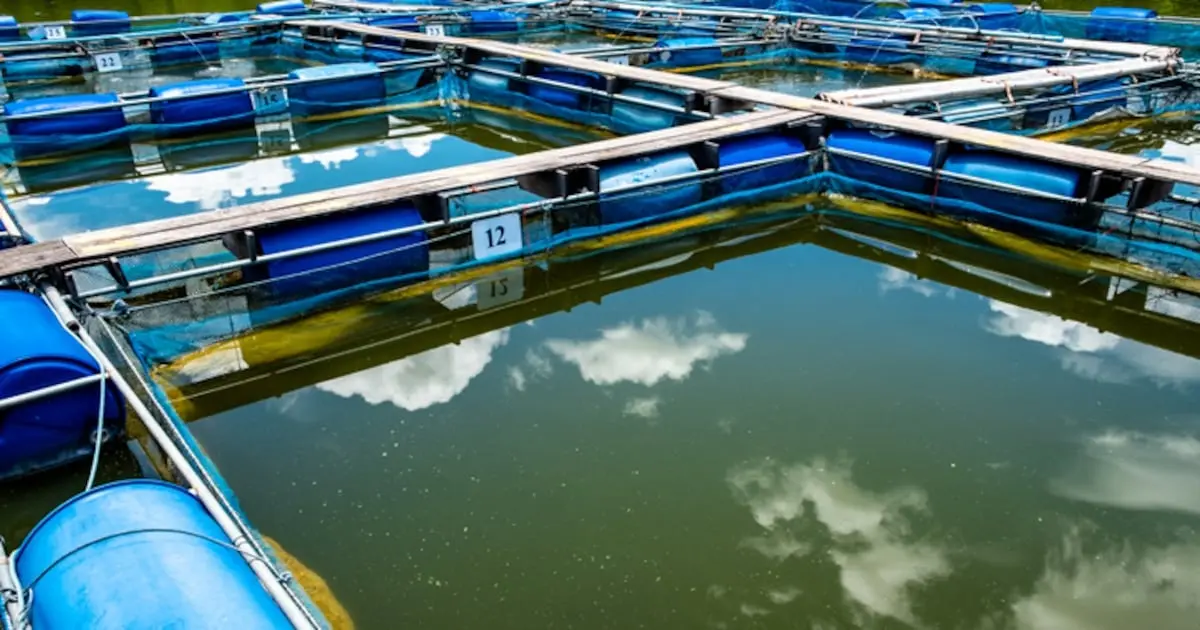
Pangasius is farmed at exceptionally high densities in earthen ponds and net pens flanking the Mekong River. While this intensive production model has successfully lifted rural economies and satisfied surging global demand for affordable protein in markets across Europe, North America, and Asia, it creates an artificial ecosystem highly vulnerable to infectious disease outbreaks.
The Antimicrobial Dilemma in Aquaculture
When fish are stocked at high densities, pathogens—such as bacterial strains of Edwardsiella, Aeromonas, and Streptococcus—can tear through a population with devastating speed. Historically, the standard industry response to these outbreaks has relied heavily on the prophylactic or therapeutic application of antimicrobials.
However, unlike terrestrial livestock farming, where animals are housed on dry land, aquaculture takes place directly within an open or semi-open aquatic medium. Consequently:
- Environmental Persistence: Antibiotics administered via medicated feed do not remain solely within the target fish. A significant percentage of the active pharmaceutical ingredients leach directly into pond water and settle into the nutrient-rich sediment below.
- Selective Pressure: The constant, low-level presence of antibiotics in water and sediment creates intense evolutionary pressure, encouraging resident and transient bacteria to develop resistance mechanisms.
- Horizontal Gene Transfer: Aquatic environments act as dynamic "melting pots" where resistant genes can be easily transferred between harmless environmental bacteria and dangerous zoonotic pathogens capable of infecting humans.
Farmers Caught in the Middle
A central pillar of the new research project is the recognition that farmers are not reckless actors operating in a vacuum; rather, they are often caught in an impossible bind.
As Professor Margaret Crumlish notes, aquaculture farmers in Southeast Asia frequently lack viable, cost-effective alternatives when conventional antibiotics begin to fail. When a farmer’s entire life savings are tied up in a pond of fish facing a sudden mortality event, and local markets lack reliable rapid diagnostics or accessible biological alternatives, the immediate economic imperative forces them to continue administering antibiotics—even as they observe declining efficacy.
This creates a vicious feedback loop: declining drug effectiveness drives higher application rates, which accelerates resistance, further degrading environmental health and risking human health through the food chain and occupational exposure.
Official Statements & Academic Insights
The severity of the challenge and the innovative design of the research program have drawn commentary from leading minds in veterinary science and international development.
"Antimicrobial resistance is a complex global challenge that respects no borders, affecting human, animal, and environmental health in equal measure. Aquatic ecosystems play a critically under-appreciated role in the emergence, maintenance, and spread of resistant bacteria," stated Professor Margaret Crumlish, lead researcher from the University of Stirling.
Crumlish emphasized that the upcoming 48-month initiative is designed to look far beyond simple laboratory diagnostics. By examining how antimicrobial resistance develops under real-world production pressures, the team aims to evaluate the genuine viability of sustainable disease management practices.
"Aquaculture farmers in South East Asia often find themselves with limited options when conventional antibiotics are no longer effective. They may continue to use these treatments simply because they do not have access to alternatives. This dynamic raises serious concerns for veterinary welfare, environmental safety, and human health," Crumlish added.
Addressing the structural complexity of the issue, the consortium has deliberately adopted an interdisciplinary framework. By uniting experts across aquaculture, microbiology, veterinary science, environmental science, social sciences, and the humanities, the project aims to map out the psychological, economic, and institutional factors that drive a farmer’s decision-making process.
According to project collaborators, understanding why farmers choose specific treatments is just as important as discovering how bacteria become resistant. By collaborating directly with local fish farmers, regional policymakers, feed manufacturers, and international seafood buyers, the research team aims to ensure that any proposed solutions are practical, affordable, and ready for immediate implementation under commercial production conditions.
Future Outlook: A Global Blueprint for Sustainable Aquaculture
Looking ahead to the conclusion of the 48-month program in 2029, the implications of this research extend far beyond the muddy banks of the Mekong Delta.
1. Translation into Real-World Interventions
The ultimate success of the £2.4 million initiative will be measured not merely by academic publications, but by tangible behavioral and technological shifts on the ground. By building upon the University of Stirling’s previous breakthroughs in next-generation fish vaccines, the project intends to translate empirical data into robust, field-tested disease-management strategies. These strategies will prioritize biosecurity, immune-boosting feed additives, rapid diagnostic tools, and targeted biological prophylactics over broad-spectrum antibiotics.
2. Policy Reform and Supply Chain Resilience
As international markets—particularly the European Union and the United States—tighten import standards regarding food safety, chemical residues, and environmental sustainability, Vietnamese pangasius producers face growing regulatory scrutiny. The insights generated by this consortium will provide policymakers in Vietnam with the scientific backing needed to draft progressive aquaculture policies, while offering global retailers verified transparency regarding antibiotic stewardship within their supply chains.
3. A Scalable, Global Framework
Perhaps the most significant legacy of the project will be its adaptability. While the immediate operational focus is locked onto Vietnam’s pangasius industry, the research team has explicitly committed to engineering an adaptable, modular framework. Once validated in Southeast Asia, this framework can be modified and exported to freshwater aquaculture sectors in other developing regions—such as sub-Saharan Africa, South Asia, and Latin America—that are rapidly industrializing their fish farming industries and facing identical antimicrobial resistance threats.
By bridging the gap between molecular microbiology and grassroots socio-economics, the University of Stirling-led consortium offers a beacon of hope. It demonstrates that with adequate funding, cross-disciplinary collaboration, and deep respect for the realities faced by local agricultural workers, the global community can forge a sustainable path forward that protects aquatic ecosystems, secures food supplies, and preserves the life-saving efficacy of antimicrobials for generations to come.