
Executive Overview
For millennia, dogs have occupied a unique space in human society, acting not merely as working companions or guards, but as fully integrated members of our families. Central to this profound interspecies bond is an uncanny, seemingly intuitive ability shared by domestic dogs: the capacity to read human emotions. Whether it is a reassuring smile that calms an anxious pet, a frown that elicits submissive posture, or tears that bring quiet, comforting physical contact, dogs have long demonstrated an advanced aptitude for interpreting our psychological states.
While pet owners and behavioral scientists have documented these empathetic behavioral cues for decades, the underlying neurological and biological mechanisms driving this phenomenon have remained largely opaque. How does the canine brain process a human smile? Can dogs differentiate between various forms of human distress or aggression?
A groundbreaking study published on August 7 in the Cell Press journal iScience has begun to lift the veil on these evolutionary mysteries. Spearheaded by an international team of researchers—including lead author Raúl Hernández-Pérez and senior author Laura Cuaya from the University of Vienna, alongside collaborators from the National Autonomous University of Mexico and Eötvös Loránd University in Hungary—the research provides the first direct neurological evidence of how domestic dogs process and categorize complex human facial expressions.
Using advanced functional brain imaging and machine learning techniques, the researchers discovered that human smiles trigger distinct, high-level cognitive and reward-based neural activity within the canine brain. Furthermore, the study delivers the first empirical proof that dogs do not simply lump negative human emotions into a single category of "distress." Instead, their brains display unique neural patterns when exposed to anger, fear, and sadness, proving that our canine companions possess a nuanced, sophisticated toolkit for reading human expressions.
This deep dive into the canine mind not only sheds light on the cognitive adaptations developed through thousands of years of co-evolution and domestication, but it also challenges us to reconsider the depth of our communication with our oldest animal allies.
Detailed Chronology: Unraveling the Canine Neural Response
The path to understanding how dogs process human facial expressions required a meticulous, multi-phase experimental design. To isolate how the canine brain reacts to specific emotional cues, the researchers conducted two distinct neuroimaging experiments using domestic pet dogs.
Phase One: Isolating the Neural Signature of Happiness
The investigative journey began by focusing on happiness. Previous behavioral studies had strongly indicated that positive human facial expressions hold special, reinforcing significance for dogs. To see if this preference was reflected at the neurological level, the researchers utilized non-invasive brain scanning technology.
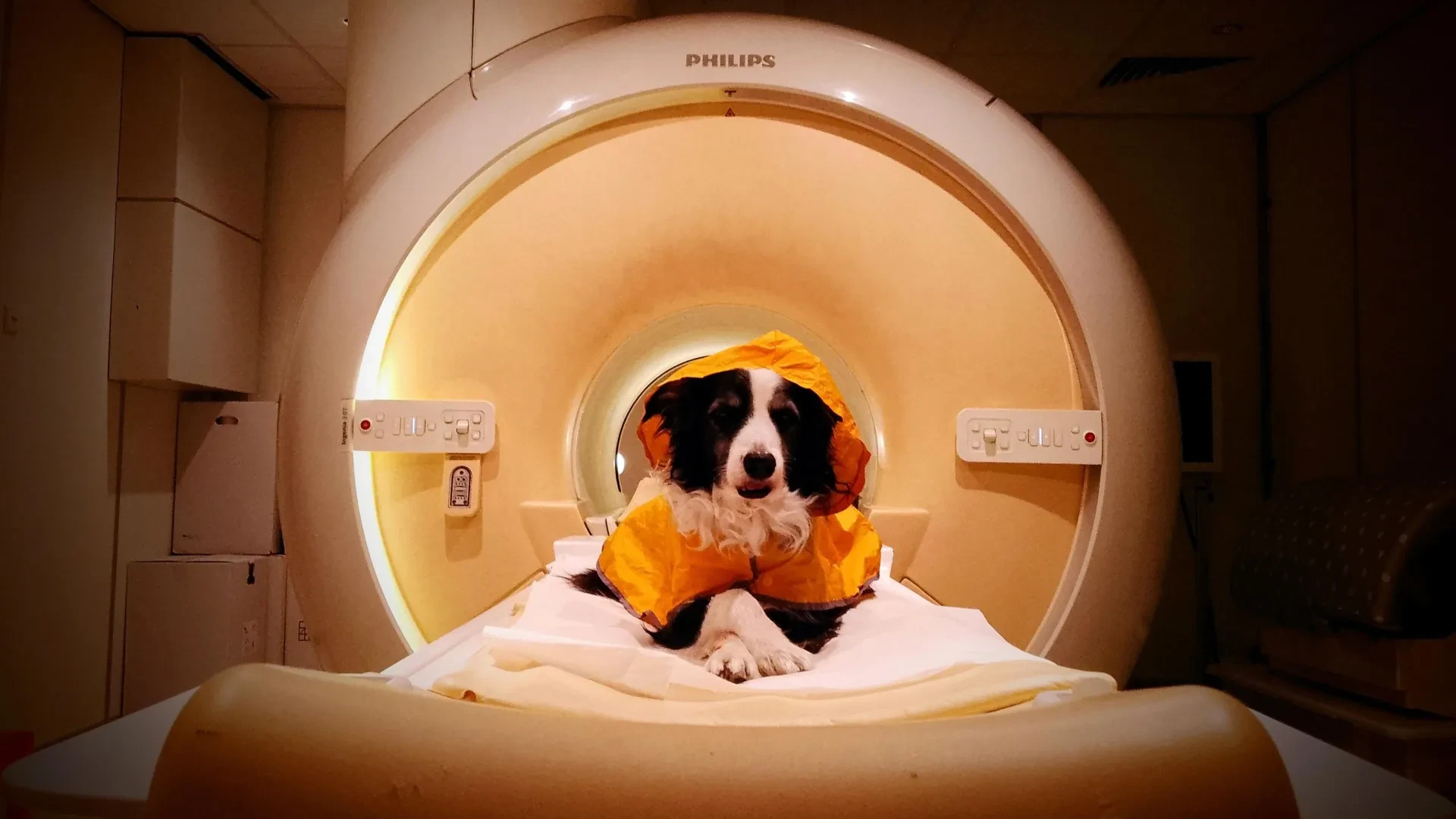
The first experiment involved eight pet dogs. These animals were trained to remain still inside an MRI scanner while viewing images of unfamiliar humans displaying either happy expressions or neutral faces. By comparing the neural scans corresponding to these visual stimuli, the researchers isolated where and how the canine brain reacted to a human smile.
The results were striking. When the dogs viewed happy human faces, researchers observed a significant surge in neural activity within two primary regions of the canine brain:
- The Temporal Cortex: An area heavily involved in higher-level cognitive processing, visual integration, and the interpretation of complex environmental stimuli.
- The Caudate Nucleus: A subcortical structure deeply embedded in the brain’s reward circuitry, traditionally associated with anticipation, pleasure, and positive reinforcement.
This targeted activation provided the first concrete neurological map showing that a human smile is not merely processed as a neutral visual input by a dog; it actively stimulates brain networks linked to reward and high-level cognition.
Phase Two: Expanding the Emotional Spectrum
Having established how dogs process happiness, the research team sought to determine whether these same brain regions reacted similarly to other, more complex emotional states, or if the canine brain possessed specialized pathways for handling a wider array of human expressions.
For the second phase of the experiment, the sample size was expanded to 12 dogs. These subjects were presented with a broader spectrum of human facial expressions, encompassing happiness, anger, fear, and sadness. To analyze the complex web of neural responses generated by these varied stimuli, the research team deployed advanced machine learning algorithms.
Machine learning proved vital in parsing the subtle differences in brain activity. The algorithms revealed that the neural response to happy faces remained uniquely distinct, driven by the specialized network linking the temporal cortex and the caudate nucleus. This made it relatively straightforward for the analytical models to separate a dog’s neurological reaction to a smile from its reaction to negative expressions like anger, fear, and sadness.
Phase Three: Mapping the Negative Emotional Landscape
Perhaps the most astonishing breakthrough of the study occurred during the whole-brain analysis of the second experiment. Beyond merely separating positive expressions from negative ones, the researchers discovered distinct, differentiated patterns of neural activity when the dogs were exposed to specific negative emotions.
Specifically, the canine brain registered unique neural signatures for fear that could be clearly separated from the patterns observed during exposure to anger and sadness. This finding represents the very first empirical evidence that dogs can cognitively distinguish among several distinct negative human facial expressions.
Rather than relying on a generalized "fight-or-flight" alarm system that treats all negative human expressions identically, the domestic dog’s brain processes human fear, anger, and sadness as separate, identifiable categories of social information.
Supporting Context & Metrics: Evolution, Domestication, and Methodology
To fully appreciate the weight of these findings, one must examine the broader evolutionary context and the rigorous methodological frameworks that underpinned the study.
The Evolutionary Divergence: Primates vs. Canines
When scientists study social and emotional processing in primates—such as chimpanzees or rhesus macaques—they are typically observing cognitive traits inherited from a shared evolutionary ancestor. The neural architecture supporting social communication in humans and other primates shares deep historical roots.
With dogs, however, the evolutionary story is entirely different. Canines split from the lineage leading to modern carnivores and primates tens of millions of years ago. Their path toward modern social intelligence was forged not through shared ancestry with humans, but through the crucible of domestication.
Over a span estimated to range from 15,000 to over 30,000 years, dogs evolved alongside human hunter-gatherers, agriculturalists, and urban societies. This unique evolutionary partnership placed a massive selective pressure on dogs to understand, predict, and cooperate with human behavior. Those ancestral canines that were best equipped to read human emotional cues—identifying a friendly human who would share food versus an angry human who posed a threat—survived and reproduced at higher rates. The result of this prolonged co-evolutionary pressure is the specialized neural wiring revealed by the iScience study.
Methodological Rigor and Sample Parameters
Conducting neuroimaging studies on conscious, awake dogs presents formidable scientific and technical challenges. Unlike human subjects who can be instructed to lie still and view images, dogs must be conditioned through positive reinforcement to voluntarily enter and remain calm inside an MRI machine without the use of chemical sedatives, which would alter natural brain activity.
- Subject Pool: The study utilized a total cohort of pet dogs (eight in the initial happiness phase, expanded to 12 in the multi-emotion phase). All participating dogs were domestic pets living closely with human families in standard home environments.
- Stimuli Control: To avoid confounding variables such as personal familiarity or vocal cues, the researchers used standardized visual stimuli—images of unfamiliar human faces displaying neutral, happy, angry, fearful, and sad expressions.
- Data Processing: By coupling functional magnetic resonance imaging (fMRI) with sophisticated machine learning pattern recognition, the researchers bypassed the limitations of subjective behavioral observation, capturing raw, objective data on real-time neural firing patterns.
A Multimodal Reality: Beyond the Still Image
While the study’s reliance on still images was necessary to isolate facial processing, the researchers are quick to contextualize their findings within the broader reality of canine-human communication.
In everyday life, dogs rarely interpret humans through static visual cues alone. Canine communication is inherently multimodal, drawing upon a simultaneous stream of sensory inputs:
- Facial Expressions: Subtle movements of the brow, eyes, and mouth.
- Body Language: Posture, tail carriage, ear orientation, and weight distribution.
- Auditory Cues: Tone of voice, vocal pitch, pacing, and volume.
- Olfactory Signals: Human chemical communication, including stress-related or fear-induced apocrine and eccrine sweat secretions picked up by the dog’s extraordinary olfactory system.
The fact that dogs can distinguish nuanced facial expressions even in the absence of these auxiliary signals underscores just how deeply specialized their visual processing centers have become for human interaction.
Official Statements & Expert Insights
The implications of this research extend far beyond academic curiosity, offering a fresh perspective on how we view our canine companions. The study’s primary architects emphasize that these findings should fundamentally reshape our understanding of animal sentience and interspecies relationships.
"Humans are really good at picking up small details on the face, and so are dogs," explains first author Raúl Hernández-Pérez from the University of Vienna. "This makes dogs very interesting. By studying their brains, we can understand what adaptations have developed to support their remarkable social and emotional understanding of humans."
Hernández-Pérez highlights that the convergence of human and canine facial processing skills represents one of the most remarkable examples of convergent behavioral adaptation in the animal kingdom, driven entirely by cross-species cooperation.
The activation of the caudate nucleus—the brain’s central reward hub—during the observation of human smiles provides a window into the emotional life of our pets, according to Laura Cuaya, senior author of the study and researcher at the University of Vienna, who initiated the work at the National Autonomous University of Mexico and expanded it via a collaboration at Eötvös Loránd University in Hungary.
"The activity in the caudate nucleus is particularly interesting," Cuaya notes. "It suggests that happy human faces may have emotional significance for dogs."
Addressing the wider philosophical and ethical implications of the research, Cuaya urges a shift in how society perceives and treats domestic animals:
"I would like people to see dogs as emotional beings. They have evolved with us to understand our expressions and cooperate with us, and recognizing that can change how we communicate with and care for them."
Cuaya also emphasizes the profound divergence between human and canine evolutionary histories, noting that while our primate intelligence is inherited, canine social intelligence is a gift of domestication:
"When we compare humans with primates, we are looking at abilities that may have come from a common ancestor. With dogs, the story is totally different. They followed a very different evolutionary path, yet through domestication, they developed the social abilities needed to understand and cooperate with us."
Future Outlook: The Next Frontier in Canine Cognition
As pioneering as these findings are, they represent only the beginning of a broader scientific movement to map the architecture of the canine mind. The research team has already outlined a comprehensive roadmap for future investigations designed to answer lingering questions and expand upon their current methodology.
1. Exploring Environmental and Social Variables
All dogs involved in the current study were domestic pets raised in human-centric family environments. This raises critical questions about the role of early socialization and ongoing exposure to humans. Future studies will seek to examine:
- Free-Ranging and Street Dogs: Investigating feral or street-dwelling dogs who experience a vastly different social environment to determine whether their ability to read human facial expressions is innate or learned through continuous, intimate exposure to human households.
- Shelter and Working Dogs: Evaluating how rescue dogs with histories of neglect or trauma process human expressions compared to therapy dogs or working breeds.
2. Adopting a Dog-Centered Approach
To move beyond human-centric experimental designs, upcoming research will take a more "dog-centered" approach. This includes:
- Multimodal Integration Studies: Analyzing how canine brains combine visual facial cues with auditory tone-of-speech and olfactory scent markers in real-time environments.
- Cross-Species Information Processing: Direct comparative studies examining how humans and dogs process identical emotional data sets, exploring potential symmetries and asymmetries in empathy and cognitive bias.
3. Practical Applications in Veterinary Care and Training
The practical ramifications of understanding how dogs process human emotions are immense. By proving that dogs can differentiate between anger, fear, and sadness, this research validates what experienced trainers and behaviorists have long argued: dogs are acutely sensitive to human emotional states.
- Behavioral Therapy: Recognizing that dogs process human negative emotions distinctly can improve therapeutic interventions for reactive or anxious dogs. Understanding that an owner’s specific negative emotion (such as fear versus anger) triggers distinct neural responses in the pet can help trainers design more effective behavioral modification programs.
- Animal Welfare: Recognizing dogs as active emotional participants in our households encourages more empathetic handling, reducing punitive training methods that exploit fear or confusion, and fostering environments that honor our shared evolutionary history.
Conclusion
The study published in iScience marks a milestone in cognitive ethology. By bridging neurology, evolutionary biology, and machine learning, researchers have proven that the bond between humans and dogs is written directly into the architecture of the canine brain. When a dog looks into our eyes and responds to a smile, a frown, or a tear, it is engaging in a sophisticated neurological dance shaped by thousands of years of shared history. As science continues to decode these intricate neural pathways, we are reminded that our dogs understand us far better than we ever imagined—and that our responsibility as their stewards is to strive for an equally profound understanding of them.