
Executive Overview
In the realm of modern environmental conservation, success is rarely achieved overnight. It is forged through decades of persistent advocacy, data-driven ecological restoration, grassroots community engagement, and an unwavering commitment to safeguarding fragile coastal ecosystems. For Corrie Folsom-O’Keefe, Director of Bird Conservation for Audubon Connecticut, this philosophy of hands-on stewardship has not only transformed the ecological landscape of Stratford, Connecticut, but has also earned her one of the region’s highest civic honors.
The Stratford Democratic Town Committee has officially named Folsom-O’Keefe as the 2026 recipient of the prestigious Terry Backer Environmental Champion Award. Named in loving memory of the late Terry Backer—a legendary environmental advocate, commercial fisherman, and tireless public servant who co-founded Long Island Soundkeeper and served in the Connecticut General Assembly—the award is bestowed upon individuals who embody Backer’s fierce dedication to environmental protection, community leadership, and the preservation of Connecticut’s invaluable natural resources.
The announcement highlights a remarkable era of ecological resurgence in Stratford, most visibly demonstrated by the dramatic recovery of endangered shorebird populations. At Long Beach in Stratford, where a solitary Piping Plover chick managed to fledge in 2019, a flourishing population of approximately 25 chicks successfully thrived during the recent summer season. This exponential growth stands as a testament to the targeted, science-based conservation strategies championed by Folsom-O’Keefe and her coalition of partners.
From spearheading the massive restoration of the 44-acre Great Meadows Marsh to founding the innovative WildLife Guards program—which employs local high school students as frontline conservation stewards—Folsom-O’Keefe’s work bridges the gap between complex environmental restoration and community-wide civic pride. In addition to the Terry Backer Award, her contributions have been formally recognized by the highest levels of state and federal government, including an Official Citation from the Connecticut General Assembly, a Certificate of Special Recognition from U.S. Senator Richard Blumenthal and U.S. Representative Rosa DeLauro, and an Official Statement from Connecticut Lieutenant Governor Susan Bysiewicz.
Detailed Chronology of Conservation Excellence
The journey toward the 2026 Terry Backer Environmental Champion Award is rooted in a long-standing career dedicated to avian protection and habitat rehabilitation. While the public recognition culminates in this prestigious honor, Folsom-O’Keefe’s impact has been methodically built over years of field-based leadership across Stratford’s most critical ecological zones.
Laying the Groundwork: Habitat Restoration at Great Meadows Marsh
One of the cornerstone achievements of Folsom-O’Keefe’s tenure at Audubon Connecticut has been her pivotal role in the revitalization of the Great Meadows Marsh, located within the Stewart B. McKinney National Wildlife Refuge. Salt marshes are among the most productive ecosystems on Earth, acting as natural buffers against storm surges, nurseries for marine life, and critical stopover sites for migratory birds. However, decades of historical degradation, ditching, and rising sea levels due to climate change had severely compromised the health of the 44-acre marshland.
Working in close collaboration with federal, state, and local partners, Folsom-O’Keefe helped guide conservation strategies aimed at restoring the tidal hydrology of the marsh, combating invasive Phragmites (common reed), and reintroducing native high-marsh vegetation. This complex ecological surgery required meticulous planning and administrative persistence. The successful restoration not only brought back vital tidal flows but also transformed a degraded landscape back into a thriving habitat for wading birds, waterfowl, and a multitude of marine organisms.
Mobilizing the Next Generation: The WildLife Guards Program
Recognizing that long-term conservation cannot rely solely on professional scientists and policy advocates, Folsom-O’Keefe pioneered the WildLife Guards program. This innovative initiative bridges environmental education with green-collar workforce development by employing local high school students during the busy summer months.
Stationed along Stratford’s bustling public beaches—where human recreation often intersects with nesting shorebirds—these young conservationists play a dual role. They actively monitor vulnerable nests, erect protective symbolic fencing around nesting territories, and serve as community educators. By engaging directly with beachgoers, the student guards explain why certain areas are cordoned off and how simple behavioral adjustments can save ground-nesting birds from accidental disturbance. This grassroots approach has simultaneously fostered a deep-seated conservation ethic among Stratford’s youth while drastically improving the nesting success rates of threatened coastal species.
Direct Intervention and Shorebird Recovery
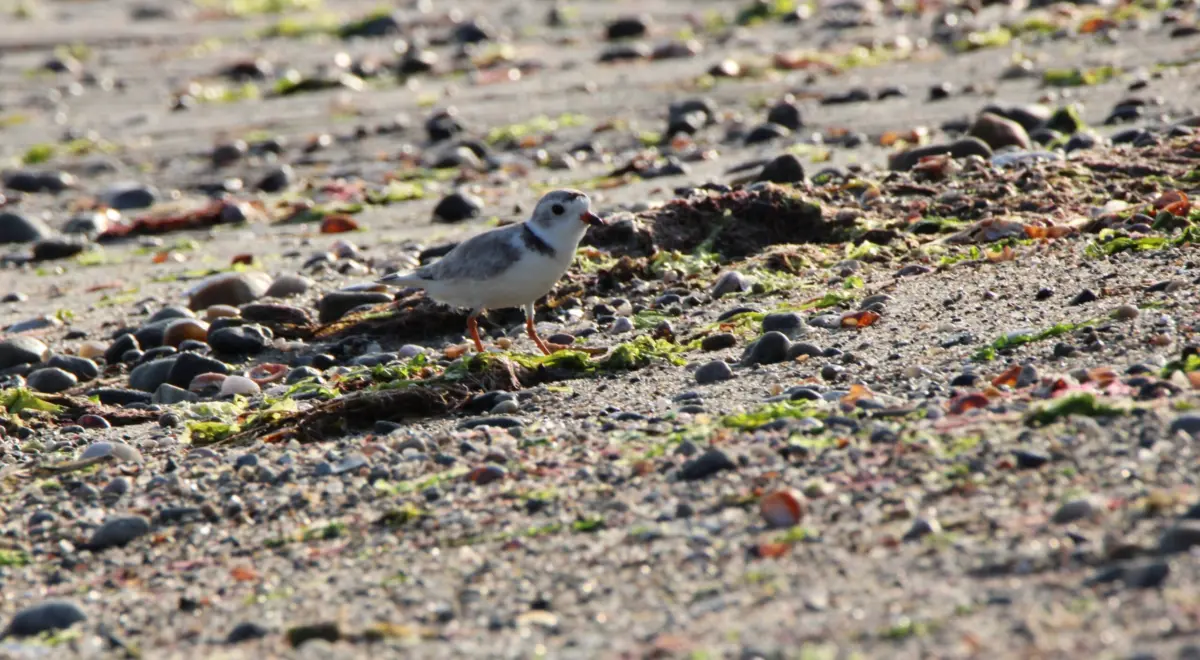
The tangible results of these multi-layered initiatives are most clearly observed in the population trajectories of state- and federally-listed shorebirds. The Piping Plover (Charadrius melodus), a small, sand-colored shorebird that nests exclusively on exposed coastal sand and gravel beaches, has long faced severe anthropogenic pressures, including habitat loss, human disturbance, and increased predation.
In 2019, the nesting situation at Stratford’s Long Beach was precarious; despite the presence of breeding pairs, only a single Piping Plover chick successfully fledged, underscoring the high vulnerability of the site. Under Folsom-O’Keefe’s leadership, Audubon Connecticut—in coordination with the Audubon Alliance for Coastal Waterbirds, municipal authorities, and dedicated volunteers—intensified protective protocols. These measures included optimized symbolic fencing, enhanced predator management, increased public outreach, and the watchful eyes of the WildLife Guards.
The payoff has been nothing short of extraordinary. Over subsequent breeding seasons, nesting productivity rebounded significantly, culminating in a banner year where approximately 25 chicks thrived at the same Long Beach site. This staggering statistical leap proves that targeted, human-managed protection can successfully reverse localized population declines, offering a blueprint for coastal resilience across the Atlantic Flyway.
Supporting Context & Metrics: The Science of Shorebird Conservation
To fully appreciate the magnitude of Corrie Folsom-O’Keefe’s achievements, it is essential to examine the broader ecological and institutional context in which Audubon Connecticut operates.
Birds as Environmental Sentinels
As a core entity of the National Audubon Society—a venerable nonprofit conservation organization with over 120 years of science-based impact—Audubon Connecticut approaches environmental protection through the lens of avian ecology. Birds are widely recognized by conservation biologists as premier bioindicators or "sentinels" of planetary health. Because birds occupy high trophic levels and are highly mobile, shifts in their population densities, reproductive success, and migration timing serve as early-warning systems for broader environmental degradations, ranging from climate change impacts to localized habitat destruction.
When coastal ecosystems like Stratford’s salt marshes and beaches are degraded, the impacts ripple immediately through avian populations. Conversely, when habitats are meticulously restored—as seen in Folsom-O’Keefe’s work at Great Meadows Marsh and the Stewart B. McKinney National Wildlife Refuge—the rapid rebound of species like the Piping Plover, Least Tern, and American Oystercatcher demonstrates the healing capacity of natural systems when given proper human assistance.
Key Conservation Metrics in Stratford
- 44 Acres: The scale of coastal salt marsh habitat restored at Stratford’s Great Meadows Marsh, significantly bolstering regional ecological resilience.
- 1 to 25 Chicks: The dramatic increase in fledged Piping Plover chicks at Long Beach, Stratford, illustrating the immense efficacy of intensified conservation protocols between 2019 and recent seasons.
- 1 Organization: Audubon Connecticut, representing a dynamic network of science-driven advocacy and community-based protection.
- 2.6 Million+ Supporters: The broader national backing of the National Audubon Society, amplifying local victories into hemispheric conservation strategies.
Official Statements and Tributes
The announcement of Folsom-O’Keefe as the 2026 Terry Backer Environmental Champion drew widespread praise from civic leaders, state legislators, and environmental administrators, each emphasizing her hands-on approach and embodiment of Terry Backer’s enduring legacy.
Kathleen Callahan, Chairwoman of the Stratford Democratic Town Committee, highlighted the alignment between Folsom-O’Keefe’s professional ethos and the spirit of the award’s namesake:
"The Stratford Democratic Town Committee is proud to recognize Corrie Folsom-O’Keefe as this year’s (2026) Terry Backer Environmental Champion. This award celebrates individuals who embody Backer’s legacy of environmental stewardship, public service, and deep commitment to community. As Director of Bird Conservation for Audubon Connecticut, Folsom-O’Keefe has been a steadfast partner in protecting Stratford’s natural assets—including Great Meadows Marsh and the Stewart B. McKinney National Wildlife Refuge. Her leadership reflects the spirit of service and environmental dedication that Terry Backer championed throughout his life."
Connecticut State Representative Joe Gresko, during his introductory speech celebrating the award recipient, pointed to Folsom-O’Keefe’s pragmatic, boots-on-the-ground work ethic:
"Corrie’s been getting her hands dirty for Stratford for years. State-endangered Piping Plovers in our Town are increasing in numbers, thanks to her efforts. In my experience, there are people who lead by walking the walk, and demonstrating for others how to get problems solved, and Corrie personifies that."
In recognition of her exceptional contributions, Folsom-O’Keefe was formally presented with multiple legislative honors during the award proceedings:
- An Official Citation from the Connecticut General Assembly, acknowledging her exemplary service to the state’s natural heritage.
- A Certificate of Special Recognition jointly issued by U.S. Senator Richard Blumenthal and U.S. Representative Rosa DeLauro, honoring her federal-level impact on wildlife conservation.
- An Official Statement from Connecticut Lieutenant Governor Susan Bysiewicz, praising her dedication to preserving public trust resources for future generations.
Future Outlook: Sustaining Momentum for Coastal Resilience
As climate change accelerates sea-level rise, intensifies coastal storm frequencies, and increases human developmental pressures on remaining wild spaces, the work of coastal conservationists becomes increasingly vital. The successes achieved under Corrie Folsom-O’Keefe’s leadership in Stratford provide both a practical roadmap and a vital source of inspiration for municipalities grappling with similar environmental challenges throughout Long Island Sound and beyond.
Looking ahead, Audubon Connecticut aims to build upon the momentum generated by the Great Meadows Marsh restoration and the flourishing shorebird populations at Long Beach. Key priorities for the future include:
- Expanding Youth Engagement: Scaling the WildLife Guards program to additional coastal municipalities, thereby cultivating a new generation of environmentally literate citizens and conservation professionals.
- Enhancing Adaptive Management: Utilizing advanced ecological monitoring and telemetry to track migratory shorebird populations and adapt management protocols to shifting climatic realities.
- Deepening Community Partnerships: Fostering collaborative frameworks between municipal governments, federal wildlife agencies, private landowners, and recreational beachgoers to ensure that human communities and native wildlife can harmoniously coexist along Connecticut’s precious shoreline.
The 2026 Terry Backer Environmental Champion Award serves as a powerful reminder that while environmental challenges are daunting, systemic, local action led by passionate and capable individuals can alter the course of ecological history. Through her tireless advocacy, scientific rigor, and deep-rooted love for Stratford’s natural assets, Corrie Folsom-O’Keefe continues to ensure that the skies and shores of Connecticut remain vibrant, resilient, and rich with life for generations to come.