
Executive Overview
In a strategic move destined to reshape the landscape of specialty crop production, agricultural technology incubator Reservoir Farms has announced plans to establish its newest testing ground in Yakima, Washington. Unveiled by founder and CEO Danny Bernstein on October 20 at the prominent FIRA (Farming Robot Association) event, the upcoming facility marks the organization’s second major expansion outside of California. Set to open in the spring of 2027, the Washington incubator aims to bridge the gap between cutting-edge engineering and the rugged, complex realities of Pacific Northwest agriculture.
Reservoir Farms has carved out a distinct niche in the agtech sector by offering early-stage companies a vital commodity: real-world farmland. Through a multi-tiered subscription model—which notably includes a "freemium" entry option designed to democratize innovation—Reservoir provides startups with access to working agricultural operations in Salinas and Sonoma, California, as well as Arizona. By bringing this model to Yakima, the incubator is targeting some of the most technologically demanding crops in the world, including tree fruit, wine grapes, blueberries, and hops.
The expansion is underpinned by high-profile financial backing, including a $10 million strategic investment from agricultural machinery giant John Deere and support from Western Growers, alongside economic development commitments from the Tri-City Development Council (TRIDEC). Furthermore, the initiative is slated to benefit from deep institutional and industry collaborations, including partnerships with the Washington Tree Fruit Research Commission, the North American Blueberry Council, and exploratory talks with Washington State University (WSU).
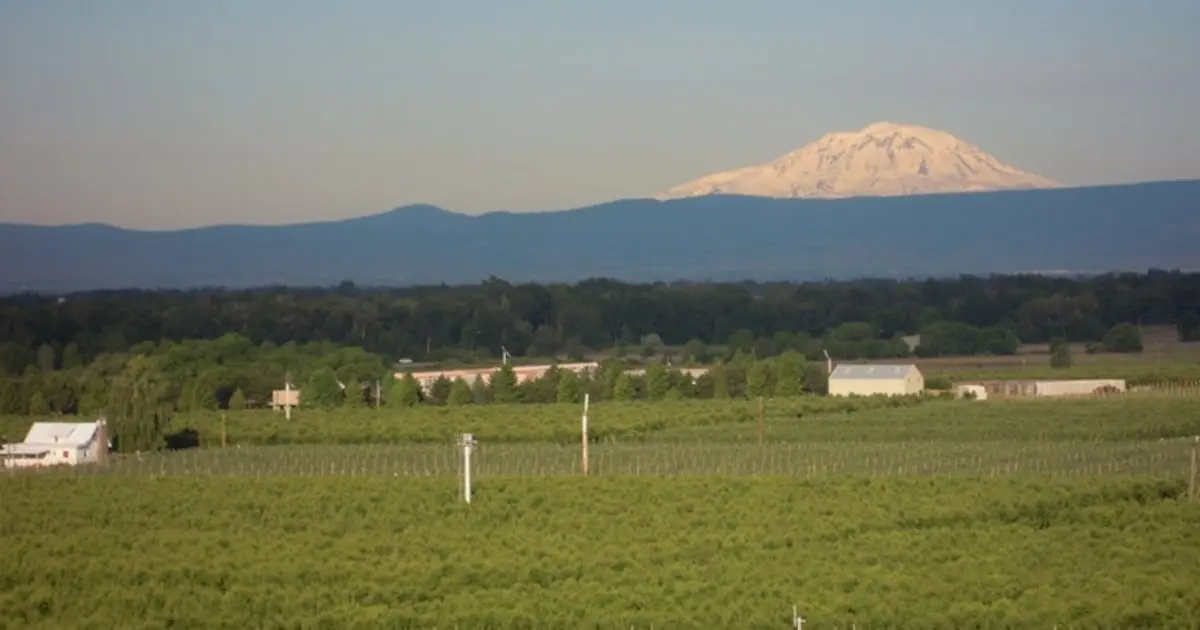
For Washington’s agricultural sector—which produces roughly two-thirds of the nation’s commercial apples, alongside significant yields of pears, cherries, and berries—the arrival of Reservoir Farms represents a potential turning point. As rising labor costs and chronic workforce shortages squeeze growers, the integration of physical AI and advanced agricultural automation is rapidly shifting from a futuristic luxury to an absolute necessity.
Detailed Chronology: The Evolution of Reservoir Farms and the Pacific Northwest Expansion
To understand the magnitude of Reservoir Farms’ arrival in the Pacific Northwest, it is necessary to trace the trajectory of the incubator and the milestones leading up to the October 2027 announcement.
The Foundation and California Roots
Founded to solve the persistent disconnect between software engineers, roboticists, and the dirt-under-the-fingernails reality of farming, Reservoir Farms pioneered a hands-on incubation model. Traditional tech incubators often rely on urban office spaces and simulated environments, which fail to prepare hardware and artificial intelligence for dust, moisture, uneven terrain, and unpredictable biological systems.
Reservoir addressed this by securing operational farmland in agricultural powerhouses Salinas and Sonoma, California, followed by an expansion into Arizona. By embedding startups directly into active farming ecosystems, the incubator allowed entrepreneurs to test prototypes under authentic agricultural stressors. This "boots-in-the-soil" philosophy quickly birthed success stories, turning raw concepts into field-ready machinery. Early alumni, such as Bonsai Robotics and Sky Sense, successfully scaled their operations through Reservoir’s framework, proving the viability of the subscription-based real-world testing model.
Scaling the Model and Securing Heavyweight Backing
As the agtech sector matured, Reservoir recognized that its model needed capital and broader geographical reach to tackle crops beyond row vegetables and broadacre commodities. A major milestone occurred in August 2026, when agricultural manufacturing titan John Deere injected $10 million into Reservoir Farms, validating its incubation framework on a global scale. This capital infusion, paired with ongoing collaboration with Western Growers, provided Reservoir with the financial runway needed to scale operations into new climatic and agronomic zones.
Concurrently, Reservoir introduced innovative market approaches, such as its "freemium" subscription tier launched in June 2026. Often dubbed the "Spotify for farming innovation," this tier lowered the barrier to entry for early-stage startups, allowing a broader cohort of developers to plug into Reservoir’s testing infrastructure without prohibitive upfront costs.
The Yakima Announcement and 2027 Roadmap
The culmination of these strategic scaling efforts arrived on October 20 at the FIRA event, where Danny Bernstein formally announced the Yakima, Washington, location. Moving into the Evergreen State required lining up a complex coalition of regional stakeholders. Reservoir spent months prior to the announcement forging alliances with the Washington Tree Fruit Research Commission, the North American Blueberry Council, and TRIDEC.
With the spring 2027 launch date now locked in, the preparatory phase involves selecting inaugural cohorts—including confirmed alumni Bonsai Robotics and Sky Sense, alongside new members Cordon and Rootline—and finalizing infrastructure to support hardware deployment. The Yakima site will serve as a specialized regional node, optimized specifically for the unique topological and biological challenges of orchards, vineyards, and berry fields.
Supporting Context & Metrics: Why Washington’s Specialty Crops Need Physical AI
The choice of Yakima, Washington, as the site for Reservoir’s newest incubator is far from accidental. Washington State is an agricultural powerhouse, but its dominant crops present some of the steepest engineering challenges in global agriculture.
The Specialty Crop Landscape
According to data from the United States Department of Agriculture (USDA), Washington accounts for approximately two-thirds of all commercial apple production in the United States. Beyond apples, the state is a leading producer of sweet cherries, pears, blueberries, wine grapes, and hops.
Unlike corn, soy, or wheat—commodities that have seen high levels of automation due to their uniform growth patterns and broadacre expanses—specialty crops are remarkably intricate. Orchards and vineyards feature three-dimensional canopies, delicate fruit surfaces, uneven terrain, and variable ripening timelines. Harvesting an apple or a delicate blueberry requires a level of dexterity, computer vision, and soft-robotics manipulation that has stymied engineers for decades.
The Labor Crisis and Cost Pressures
Underpinning the push for automation in Washington is an acute labor crisis. Labor represents the single largest operational cost for Washington growers. Escalating minimum wages, regulatory compliance costs, and a shrinking pool of available agricultural workers have squeezed profit margins to unsustainable levels.
For growers of perennial specialty crops, who must invest heavily years before an orchard or vineyard reaches full bearing maturity, labor shortages threaten long-term economic viability. If fruit cannot be harvested at peak ripeness, entire yields are lost. Consequently, growers are increasingly desperate for reliable, rugged automation that can perform selective harvesting, precision pruning, and targeted spraying without damaging crops or compacting soil.
Rugged Physical AI: Moving from Prototype to Production
Addressing these challenges requires what Danny Bernstein terms "rugged physical AI." Unlike software-based artificial intelligence that operates in controlled server environments, physical AI must interpret chaotic, unstructured physical environments in real time.
By placing startups directly in Yakima—surrounded by commercial growers who evaluate technologies with uncompromising honesty—Reservoir accelerates the feedback loop. When a robotics engineer watches a machine fail to pick a soft fruit on a windy Yakima hillside, the lessons learned in five minutes of field testing far outweigh months of laboratory simulation. This rigorous, iterative process is what allows agtech startups to fast-track their innovations from fragile prototypes to dependable commercial products.
Official Statements and Stakeholder Perspectives
The expansion of Reservoir Farms into Washington has drawn enthusiastic endorsements from agricultural leaders, economic development agencies, and academic institutions, highlighting the collaborative nature of the initiative.
Danny Bernstein, founder and CEO of Reservoir Farms, emphasized the stark realities of automating specialty crops during his announcement:
"Tree fruit, blueberries, wine grapes and hops are some of the hardest crops in the world to automate, and labor is now the biggest cost Washington growers face. Expanding into the Pacific Northwest shows the Reservoir model is working. When you put builders on real farms with growers who will tell them the truth, rugged physical AI goes from prototype to production much faster."
The academic community is equally poised to benefit from the influx of technological innovation. Naidu Rayapati, director of the Washington State University (WSU) Prosser Irrigated Agriculture Research and Extension Center (IAREC), highlighted the potential synergy between tech developers and university researchers:
"Opportunities to bring ag-tech startups together with faculty to evaluate emerging technologies across diverse cropping systems, including orchards and vineyards, could give growers valuable insights within a single growing season and rigorous validation over multiple seasons, helping them make informed decisions, reduce risks, and improve productivity and profitability."
Regional economic partners are also viewing the incubator as a catalyst for local high-tech job creation and modernization. Through commitments from organizations like the Tri-City Development Council (TRIDEC) and sector-specific bodies such as the Washington Tree Fruit Research Commission and the North American Blueberry Council, the incubator is set to act as an economic anchor, fusing the Pacific Northwest’s rich agricultural heritage with Silicon Valley-style innovation.
Future Outlook: The Horizon for Pacific Northwest Agtech
As Reservoir Farms prepares for its grand opening in the spring of 2027, the long-term implications for Washington agriculture are profound. The integration of incubator-vetted technologies into Pacific Northwest farming operations is expected to alter the economic and operational fabric of the region over the next decade.
Accelerated Commercialization Cycles
Historically, bringing an agricultural robot or an AI-driven crop-monitoring tool to market took years of trial and error, often constrained by a lack of access to diverse test environments. By plugging startups directly into the Washington ecosystem—where they can test equipment across microclimates, varied soil types, and distinct pest pressures—Reservoir will compress product development timelines. Technologies that once took a decade to commercialize may soon transition from concept to widespread farm adoption in a fraction of that time.
Deepening Institutional Synergy
The exploratory discussions between Reservoir Farms and Washington State University point toward a future where academic research and private-sector agility merge. By coupling WSU’s deep scientific expertise in plant pathology, entomology, and horticulture with Reservoir’s startup network, the Yakima facility could become a global nexus for agtech research. Growers will no longer have to rely on anecdotal evidence; instead, they will have access to multi-season, scientifically rigorous data validating which technologies genuinely move the needle on productivity and profitability.
Transforming the Global Specialty Crop Industry
While the immediate beneficiaries of the Yakima incubator will be Washington’s apple, berry, cherry, and grape producers, the ripple effects will be felt globally. The innovations forged in the rugged orchards of the Pacific Northwest—capable of handling delicate fruit, steep slopes, and complex canopies—will be readily exportable to specialty crop regions around the world facing similar labor pressures.
Ultimately, Reservoir Farms’ expansion into Washington State represents a maturing of the agtech sector. By shifting focus from broadacre crops to the intricate, labor-intensive demands of specialty agriculture, Reservoir and its partners are not just solving a regional labor crisis; they are laying the structural foundation for the sustainable, automated future of global farming.