In an era where the plight of stray, abandoned, and community cats often goes unnoticed by the mainstream public, individual acts of profound kindness stand as a beacon of hope. The story of John, a dedicated social studies teacher, consummate extrovert, and fiercely devoted "cat daddy," encapsulates the quiet yet seismic impact that a single individual can have on animal welfare. Through a carefully structured estate plan, John chose to include Alley Cat Allies—the global engine of the Trap-Neove-Return (TNR) movement—ensuring that his lifelong commitment to protecting vulnerable felines would continue long after his passing.
John’s journey into the world of feline advocacy began not with a lifelong obsession, but with a surprising personal revelation: a supposed cat allergy that vanished the moment a stray feline chose him as its human. Over a 42-year marriage to his wife, Deb, John transformed from a skeptical neighbor into an indispensable protector of outdoor and indoor cats alike. Inspired by a local community member, he spent decades feeding, watching over, and advocating for the cats sharing his neighborhood.
This feature-length investigative profile explores the remarkable life of John, examining how his personal transformation mirrors the broader evolution of community cat advocacy in the United States and globally. By weaving together personal reminiscences from his wife, Deb, insights into his professional life as an educator, and the structural importance of planned giving, this article highlights how everyday citizens can leverage estate planning to secure a humane future for cats. Furthermore, we examine the systemic impact of organizations like Alley Cat Allies, the mechanics of planned giving, and how supporters can follow in John’s footsteps to safeguard generations of animals to come.
Detailed Chronology: From Supposed Allergy to Dedicated "Cat Daddy"
The Early Years and a Surprising Misconception
For the first several decades of his life, John lived under the assumption that cats were entirely off-limits to him. Like many people who experience mild environmental sensitivities, he believed he suffered from a feline allergy. In a household where animals might have otherwise played a central role, this supposed medical limitation drew a firm boundary between John and the cat world.
However, fate—and a persistent stray cat—had entirely different plans.
Approximately thirty years ago, a wandering feline appeared near John and Deb’s home, bypassing other potential sanctuaries to forge an immediate, unbreakable bond with John. To his utter amazement, the dreaded allergy symptoms never materialized. Instead of sneezing or experiencing discomfort, John found himself captivated by the cat’s distinct personality and the quiet comfort of its companionship. This serendipitous encounter shattered his long-held preconceptions and opened the door to a lifelong passion.
The Arrival of "Puddy Cat" and Expanding Horizons
If the first stray cracked open the door to John’s affection, the arrival of a second stray twenty-five years ago blew it wide open.
A new feline appeared on their doorstep, possessing a unique charm that immediately captured John’s whimsical side. A devoted fan of classic Warner Brothers cartoons, John bestowed upon her a moniker that would become legendary in their household: "Puddy Cat," affectionately shortened to "Pud."
Pud proved to be much more than a transient visitor; she became a core member of the family, sharing their home for an incredible sixteen and a half years. During this time, John’s role evolved from a casual animal lover to a fully fledged, unyielding advocate. According to Deb, John became a self-described "permissive cat daddy," showering his feline companions with affection, patience, and bespoke care that accommodated their every whim.
The Classroom and the Community
John’s immense capacity for empathy was not restricted to the four walls of his home; it radiated outward into his professional life as a social studies teacher. In the classroom, John was known as a consummate extrovert who effortlessly commanded the attention and respect of his students.
Education experts often note that the most effective teachers are those who foster an environment of radical empathy and patience—traits that defined John’s interactions with both his human students and stray animals. Even when deploying his trademark, never-ending "dad jokes," John cultivated a classroom culture deeply rooted in care and mutual respect. Students loved him dearly, recognizing that the warmth, protection, and understanding he extended to animals were the exact qualities he brought to his teaching career every single day.
As the decades progressed, John’s neighborhood became a micro-ecosystem of compassion. Inspired by a kindred spirit living nearby, John took it upon himself to feed, monitor, and protect the community cats roaming his local area. Long before TNR was a mainstream term in every municipality, John intuitively understood the core tenet of humane animal stewardship: that outdoor cats deserve safety, sustenance, and respect.
Supporting Context & Metrics: The Architecture of Planned Giving and Cat Advocacy
Understanding the Landscape of Community Cat Populations
To fully appreciate John’s legacy, one must examine the broader scale of the challenge facing community cats—often referred to as feral or stray cats—across the globe. Millions of unowned cats live outdoors in urban, suburban, and rural environments. Historically, municipal animal control agencies relied on catch-and-kill methods, a cruel and fundamentally ineffective approach that failed to reduce populations while needlessly taking millions of lives.
Organizations like Alley Cat Allies revolutionized this paradigm by championing Trap-Neuter-Return (TNR). Scientific studies consistently demonstrate that TNR is the only humane and effective method for stabilizing community cat populations. Under a TNR program:
Trapping: Cats are humanely trapped using specialized box traps.
Neuter/Spay: The cats are sterilized by licensed veterinarians, vaccinated against rabies, and often ear-tipped (a universal sign of a sterilized community cat).
Return: The cats are returned to their outdoor territory where they can live out their natural lives without contributing to population growth.
The Mechanics and Power of Planned Giving
While day-to-day donations keep animal welfare organizations operational, planned gifts—such as bequests in a will, charitable gift annuities, or trusts—provide the foundational financial bedrock that guarantees long-term survival and institutional growth.
Estate planning is frequently viewed as a complex legal hurdle reserved exclusively for the ultra-wealthy. However, financial advisors emphasize that individuals of all income brackets can leverage planned giving to support causes close to their hearts. By designating a percentage of an estate or a specific monetary sum to organizations like Alley Cat Allies, donors create a ripple effect that extends decades into the future.
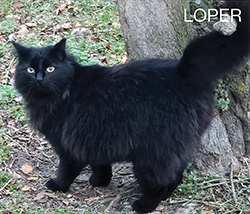
John’s decision to include Alley Cat Allies in his estate plans exemplifies this forward-thinking philanthropy. It transforms a lifetime of personal care into an institutional force multiplier. While John personally cared for a handful of cats in his neighborhood—such as his indoor-outdoor cat Gray, and community cats Miss Kitty, Slyvestra, Mini, and Loper—his planned gift ensures that thousands, if not millions, of cats worldwide will receive medical care, advocacy, and protection from inhumane policies.
Official Statements and Personal Reflections
The deeply personal nature of John’s legacy is preserved through the words of his wife, Deb, who shared their remarkable life story and her endorsement of lifesaving animal welfare practices.
Reflecting on their 42 years together, Deb painted a vivid picture of a man whose heart expanded continuously over the decades:
"Interestingly enough, John thought for years that he was allergic to cats! Then 30 years ago, we had a stray show up and get attached to John. Twenty-five years ago, another stray showed up. John, with his love of Warner Brothers cartoons, named her Puddy Cat… Pud lived with us for 16½ years."
Deb also emphasized John’s vibrant personality, noting his dual identity as a beloved educator and an indulgent caretaker of animals:
"He was a consummate extrovert, a social studies teacher whose students loved him dearly—even for his never-ending dad jokes—and a very permissive cat daddy."
In the wake of John’s passing, his immediate family of felines remains cared for, including their indoor-outdoor companion Gray, alongside four outdoor community cats: Miss Kitty, Slyvestra, Mini, and Loper.
Voicing her full support for the systemic solutions championed by Alley Cat Allies, Deb noted the vital importance of institutional advocacy:
"I am grateful that organizations like Alley Cat Allies exist."
Through her advocacy and John’s foresight, their shared love for animals has been translated into a powerful testament of endurance, compassion, and institutional change.
Future Outlook: Sustaining the Movement for Generations to Come
As we look toward the future of animal advocacy, the model established by advocates like John serves as both a roadmap and an inspiration. The challenges facing community cats—ranging from municipal resistance to TNR programs to climate-related pressures on outdoor animal populations—require robust, well-funded, and legally protected advocacy networks.
The Expanding Reach of Alley Cat Allies
Gifts like John’s bequest enable Alley Cat Allies to expand its reach in several critical areas:
Legislative Advocacy: Fighting to pass laws that protect community cats and prohibit lethal animal control methods in municipalities nationwide.
Emergency Response: Deploying resources, veterinary supplies, and personnel to disaster zones where outdoor and community cats are frequently displaced by natural disasters.
Public Education: Disseminating science-backed information on TNR, kitten care, and humane coexistence to communities, shelters, and local governments.
How You Can Leave a Legacy
John’s story demonstrates that you do not need to be a celebrity or a billionaire to change the world for animals. Every cat lover has the power to shape the future of feline welfare through intentional estate planning.
For those inspired by John’s journey, contributing to this global movement is accessible and straightforward. Supporters can explore planned giving options by visiting alleycat.org/PlannedGiving or by scanning the dedicated organizational QR codes provided in advocacy materials. Additionally, donors can reference CFC #10964 or EIN #52-1742079 for institutional contributions. For direct inquiries regarding bequests, legacy societies, and planned gifts, Alley Cat Allies maintains a dedicated support line at 866-309-6207.
For immediate, one-time, or recurring contributions that support ongoing rescue and advocacy efforts today, supporters are encouraged to visit alleycat.org/Donate.
Conclusion
John’s life reminds us that profound transformation often begins with a single, unexpected moment of connection—a stray cat walking up to a supposed skeptic and claiming him as its own. From that single interaction grew a lifetime of devotion, a celebrated career in the classroom, a deeply loving marriage with Deb, and a commitment to outdoor cats that spanned decades.
By embedding his love for animals into his estate plans, John ensured that his voice will never be silenced. Long after the dad jokes have faded from the classroom and the neighborhood cats he fed have found peace, John’s legacy will live on through every cat saved, every community educated, and every humane policy enacted across the globe. His story is an enduring proof of concept: compassion, when structured with purpose, has the power to change the world.