
Executive Overview
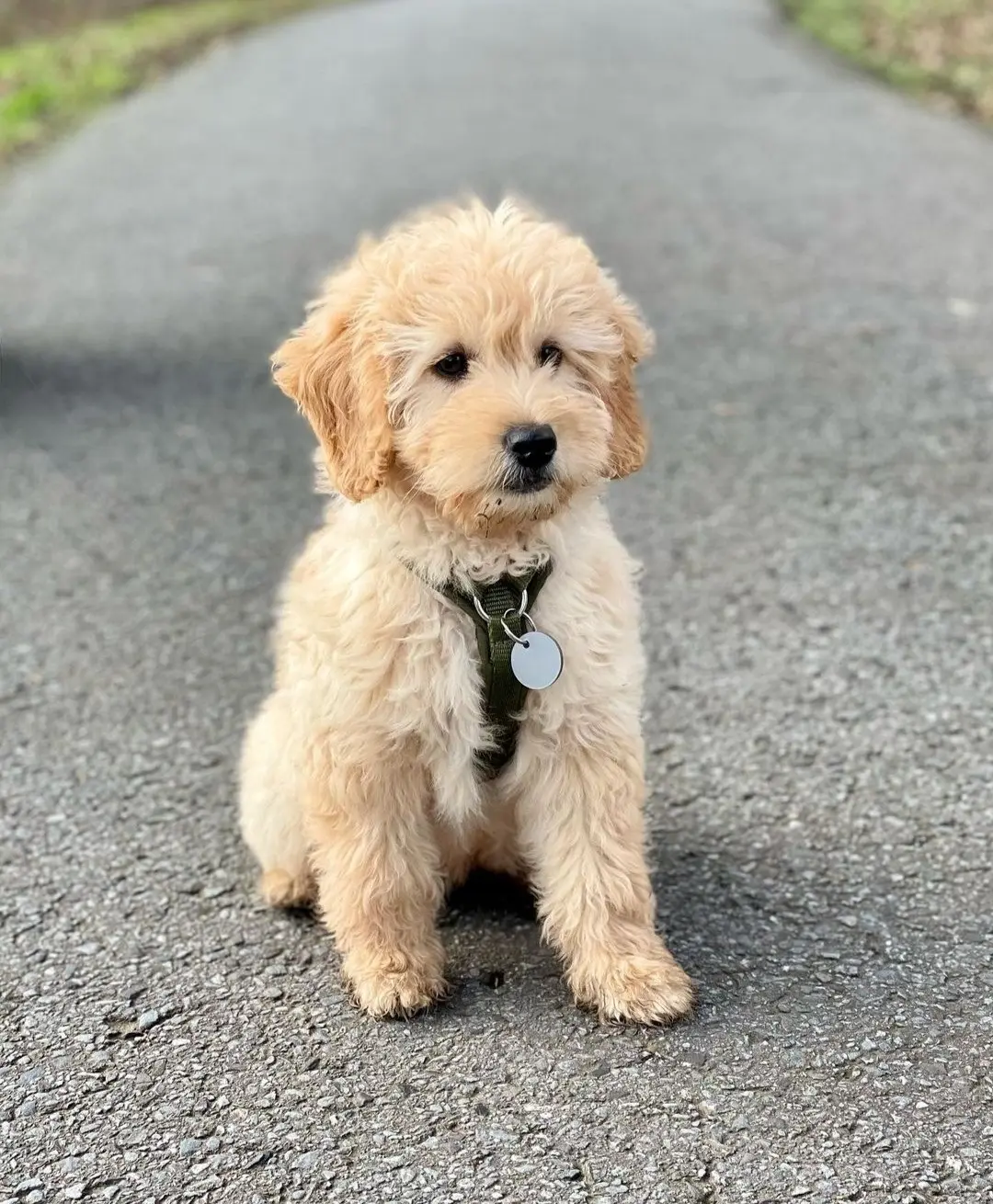
To the uninitiated, the world of designer dog breeding can read like a complex cryptographic formula. Terms like "F1," "F1B," and "multigen" are tossed around by breeders and owners alike, often leaving prospective pet parents bewildered. At the center of this terminology is one of the most popular designer breeds of the 21st century: the Goldendoodle. A deliberate cross between the affable Golden Retriever and the highly intelligent Standard, Miniature, or Toy Poodle, the Goldendoodle has captured the hearts of families worldwide.
However, not all Goldendoodles are created equal. Understanding the genetic distinctions behind these alphanumeric labels is not merely a matter of breeder semantics; it is the key to predicting a puppy’s adult size, coat type, shedding propensity, and suitability for allergy sufferers. Whether you are navigating the landscape of your first family pet or researching specific genetic traits for health and grooming considerations, decoding these generations is essential. This report provides an authoritative breakdown of Goldendoodle lineages, offering prospective owners the clarity needed to make informed, responsible decisions.
Detailed Chronology: The Generations Explained
The classification system used in hybrid breeding relies on generational markers ("F" stands for filial, denoting the generation in sequence) combined with numerical and alphabetical modifiers. This taxonomy maps out the exact lineage and percentage of parent breeds present in a puppy’s genetic makeup.
F1 Goldendoodle: The First-Generation Foundation
The F1 Goldendoodle is the foundational cross—a direct 50-50 genetic blend of a purebred Golden Retriever and a purebred Poodle.
- Characteristics and Temperament: F1s are universally celebrated as quintessential family companions. They inherit the supreme friendliness and eagerness to please of the Golden Retriever, paired with the sharp intellect of the Poodle. Because they bond so deeply with their human counterparts, however, they are prone to separation anxiety if left isolated for extended periods.
- Shedding and Coat Dynamics: While F1 Goldendoodles shed significantly less than a purebred Golden Retriever—making them manageable for homes with mild sensitivities—they are not guaranteed to be hypoallergenic. Their coats typically manifest as wavy or loose curls, coming in an array of shades from deep red and apricot to classic cream and jet black.
- Physical Metrics: Adult F1 standard Goldendoodles generally scale between 50 and 90 pounds, whereas miniature variations range from 15 to 35 pounds.
- Health and Vigor: As a first-generation cross, F1s frequently exhibit "hybrid vigor"—a genetic phenomenon where the first cross of two distinct purebred lines maximizes genetic diversity and minimizes certain inherited inbreeding defects. They boast a lifespan extending up to 15 years with proper veterinary care.
F1B Goldendoodle: The Backcross Standard
The "B" in F1B stands for "backcross." This designation indicates that an F1 Goldendoodle has been bred back to one of its purebred lineage ancestors—most commonly a Poodle.

- Genetic Breakdown: This pairing results in a puppy with a genetic profile of approximately 75% Poodle and 25% Golden Retriever.
- Allergy and Coat Benefits: Because of the dominant Poodle genetics, F1B Goldendoodles exhibit a much higher degree of curl, significantly reduced shedding, and a heavily increased hypoallergenic rating. This makes them the premier choice for individuals with moderate to severe dog allergies.
- Temperament and Challenges: Maintaining the high intelligence and loyalty of the baseline cross, F1B puppies are bursting with energy. Owners must provide substantial mental and physical stimulation, as boredom can lead to destructive chewing behaviors.
- Miniature Variations: F1B is the most common route for producing true miniature Goldendoodles, typically weighing in between 15 and 25 pounds at maturity.
F1BB Goldendoodle: Poodle-Heavy Precision
For households with severe allergic reactions who still desire the quintessential Goldendoodle temperament, the F1BB generation offers a specialized solution.
- Genetic Breakdown: Created by crossing an F1B Goldendoodle back once more with a purebred Poodle, the resulting puppy is 87.5% Poodle and only 12.5% Golden Retriever.
- Traits and Adaptability: Despite leaning heavily into Poodle genetics, these dogs retain the balanced, amicable social traits prized in Doodles. Weighing roughly 14 to 20 kilograms, they adapt seamlessly to various living situations, ranging from compact metropolitan apartments to sprawling suburban homes.
- Grooming Imperatives: Their dense, curly coats act as natural traps for loose dander and hair, requiring strict adherence to professional grooming schedules every 8 to 12 weeks to prevent severe matting.
F2 Goldendoodle: The Second-Generation Wildcard
An F2 Goldendoodle is produced by breeding two F1 Goldendoodles together, maintaining a theoretical 50-50 ratio of Poodle to Golden Retriever genetics.
- Predictability Challenges: While the genetic math remains balanced, the physical traits become much harder to predict. F2 litters display a wide spectrum of coat types—ranging from straight, retriever-like fur to wavy and tightly curled variations—alongside diverse colorations.
- Temperament and Socialization: F2s are deeply affectionate, humorous, and playful. However, because of their broad genetic diversity, early and rigorous socialization is non-negotiable. Exposing F2 puppies to diverse environments, sounds, and human interactions helps anchor a stable, dependable adult temperament.
F3 and Multigenerational (Multigen) Goldendoodles
When breeders cross two F2 Goldendoodles, they produce an F3 generation. Any lineage proceeding past the third generation is classified as "multigenerational."
- Breeding Complexity: Multigenerational breeding requires meticulous record-keeping and selective pairing to lock in desirable traits like hypoallergenic coats and calm temperaments. Because of this complexity, F3 and multigen litters are less common.
- Coat and Maintenance: These dogs generally feature reliable, non-shedding coats. However, owners must practice caution with maintenance; excessive bathing can strip natural oils from the skin, leading to dryness. A balanced bathing schedule every 4 to 6 weeks is standard.
Supporting Context & Metrics: Care, Health, and Lifespan
Evaluating a Goldendoodle goes beyond lineage percentages; it requires a comprehensive understanding of their daily operational requirements, health baselines, and physiological metrics.
Sizing Spectrum at a Glance
- Toy/Micro: Under 15 pounds
- Miniature: 15 to 35 pounds
- Medium: 35 to 50 pounds
- Standard: 50 to 90+ pounds
Exercise and Mental Stimulation
Goldendoodles are working-dog descendants engineered from retrievers and hunters. They possess high energy reserves that require active management:

- Physical Output: A minimum of 30 to 60 minutes of moderate-to-vigorous daily exercise (such as brisk walks, fetch, or swimming) is mandatory.
- Cognitive Engagement: Puzzle toys, obedience training, and agility games are critical for preventing destructive behaviors rooted in canine boredom.
Nutritional and Medical Baselines
- Dietary Needs: High-protein formulations incorporating quality animal sources (chicken, beef, lamb, turkey) tailored to the dog’s life stage and metabolic burn rate.
- Common Predispositions: While hybrid vigor protects against many purebred ailments, Goldendoodles remain susceptible to hip and elbow dysplasia, progressive retinal atrophy (PRA), skin allergies, and chronic ear infections due to their floppy, drop-ear anatomy. Routine veterinary oversight is essential to mitigate these risks.
Expert Perspectives & Industry Standards
Professional veterinarians and ethical breeders emphasize that alphanumeric classifications should serve as a guide rather than an absolute guarantee.
According to canine geneticists, no dog breed—including the Poodle and its derivatives—is truly 100% hypoallergenic, as proteins found in canine saliva, urine, and dander can still trigger allergic responses in sensitive individuals. Ethical breeding organizations stress that health testing of parent stock (such as OFA clearances for hips, eyes, and cardiac health) supersedes generational labels. A poorly bred F1B with genetic health liabilities is far riskier to a family than a health-tested, well-socialized F1.
Future Outlook: The Evolution of Designer Breeding
As the pet industry matures, the demand for transparency in designer dog breeding is reshaping market standards. The era of casual backyard breeding of Doodles is gradually giving way to formalized registries, DNA profiling, and predictive genetic mapping.
In the coming years, prospective owners can expect greater predictability in coat types, size categories, and allergy-friendly traits as breeders utilize advanced genomic testing before matching parent dogs. Ultimately, whether an owner selects an energetic F1, a hypoallergenic F1B, or a stable multigenerational companion, the enduring popularity of the Goldendoodle relies on informed education, ethical breeding practices, and a lifelong commitment to canine welfare.