Date: August 19, 2026 Organization: Alley Cat Allies Reporting Desk: National Feline Welfare and Legislative Update
Executive Overview
The landscape of community cat advocacy, disaster response, and individual feline rescue continues to evolve rapidly as animal welfare organizations confront systemic municipal policies and emergency crises head-on. In this comprehensive briefing, we examine Alley Cat Allies’ ongoing legislative battle against a regressive feeding ban proposed in Ripon, California, which threatens compassionate caregivers with criminalized penalties instead of embracing proven, humane population management strategies.
Beyond legislative advocacy, this dispatch highlights the organization’s relentless boots-on-the-ground disaster relief efforts in San Juan, Puerto Rico, where a severe water crisis has placed extraordinary strain on local communities and their feline companions. Furthermore, this report celebrates the enduring nationwide initiative to protect black cats from deep-seated superstitions, chronicles the emergency medical rescue of a feline family of five amid peak kitten season, and presents a heartwarming recovery update on Woody, a once-vulnerable kitten who has blossomed into a cherished family member. Through strategic intervention, community engagement, and donor-backed resources, these narratives underscore a singular, unifying mission: safeguarding the lives, health, and dignity of cats everywhere.
Detailed Chronology
Legislative Front: The Battle Against Ripon’s Proposed Feeding Ban
August 19, 2026: Alley Cat Allies formally registers its strenuous opposition to a newly proposed municipal ordinance in Ripon, California. The ordinance seeks to criminalize the feeding of community cats, subjecting compassionate caregivers to a $100 fine simply for providing sustenance.
Immediate Response: In response to the legislative overreach, advocacy teams immediately reached out to the City of Ripon administration. Rather than punitive measures that fail to address the root causes of cat overpopulation, Alley Cat Allies has urged city leadership to adopt Trap-Neuter-Return (TNR), the internationally recognized gold standard for humane and effective population stabilization.
Ongoing Dialogue: Advocacy letters have been made publicly available through the official Alley Cat Allies portal, pressing local authorities to rethink a strategy that penalizes empathy rather than solving community concerns.
Humanitarian Mission: San Juan Water Crisis Response
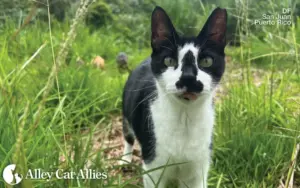
Ongoing (Summer 2026): The San Juan Cat Protection Team maintains an active, boots-on-the-ground presence in Puerto Rico’s capital amid an ongoing municipal water crisis.
Relief Delivery: Emergency supply runs continue uninterrupted, delivering critical cases of bottled fresh water and high-nutrition wet food directly to community cat caregivers across San Juan at zero cost to the recipients.
Community Resilience: Field agents report touching interactions with local residents who consistently prioritize the nutritional needs and hydration of their neighborhood cats above their own, reinforcing the deeply rooted cultural bond between Puerto Ricans and their community animals.
Seasonal Rescue Efforts: Saving a Family of Five
Mid-Summer 2026: Operating at the peak of the annual kitten season, national rescue networks and veterinary partners took in a vulnerable family comprising a mother cat and her four male kittens.
Medical Intervention: Transferred from an overburdened local shelter lacking the infrastructure to provide specialized care, the entire feline family was admitted to a partner veterinary clinic under fully covered Alley Cat Allies grants.
Treatment Protocols: The mother and her litter are actively undergoing comprehensive treatments for severe upper respiratory infections (URIs), with specialized ophthalmic care administered to the kittens displaying acute eye complications. Naming conventions for the four young brothers remain under review as their health stabilizes.
Success Story Update: Woody’s Journey to Forever Home
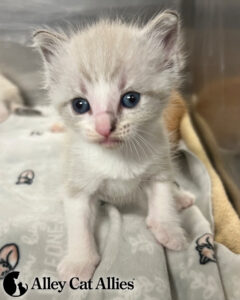
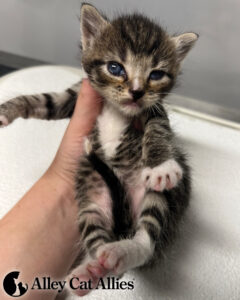
Spring 2026: Woody, an isolated young kitten separated prematurely from his mother, faced immense peril after being impounded as a single intake at a traditional municipal shelter. He quickly contracted a severe upper respiratory infection requiring immediate intervention.
Intervention & Recovery: Prompted by donor support, Alley Cat Allies stepped in to rescue Woody, funding his emergency veterinary rehabilitation and placing him in a transitional foster environment.
August 2026: Official adoption follow-ups reveal that Woody has fully recovered and transitioned into a permanent home with adopters Stephanie and Adam. No longer a fragile, sick kitten, Woody is described as an energetic, well-adjusted cat whose favorite pastime involves carrying around his signature blue fish toy and cuddling at night.
Supporting Context & Metrics
To fully understand the scope of Alley Cat Allies’ 2026 initiatives, one must analyze the structural mechanics of community cat management and emergency response infrastructure.
The Failure of Punitive Feeding Bans
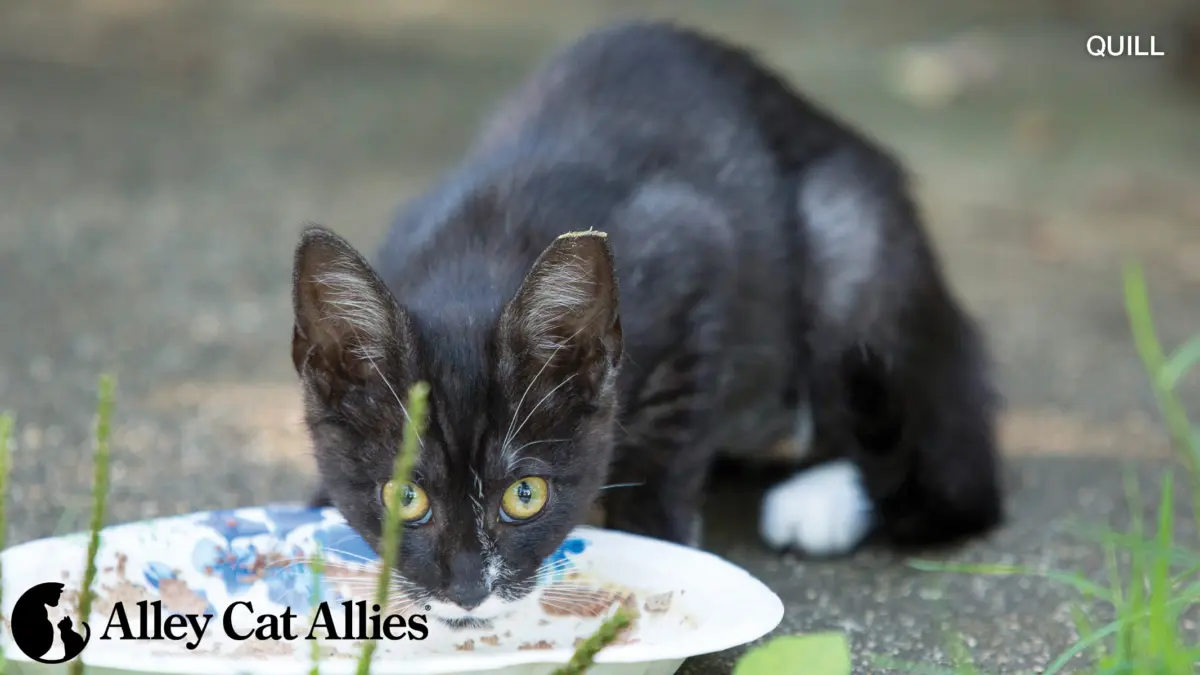
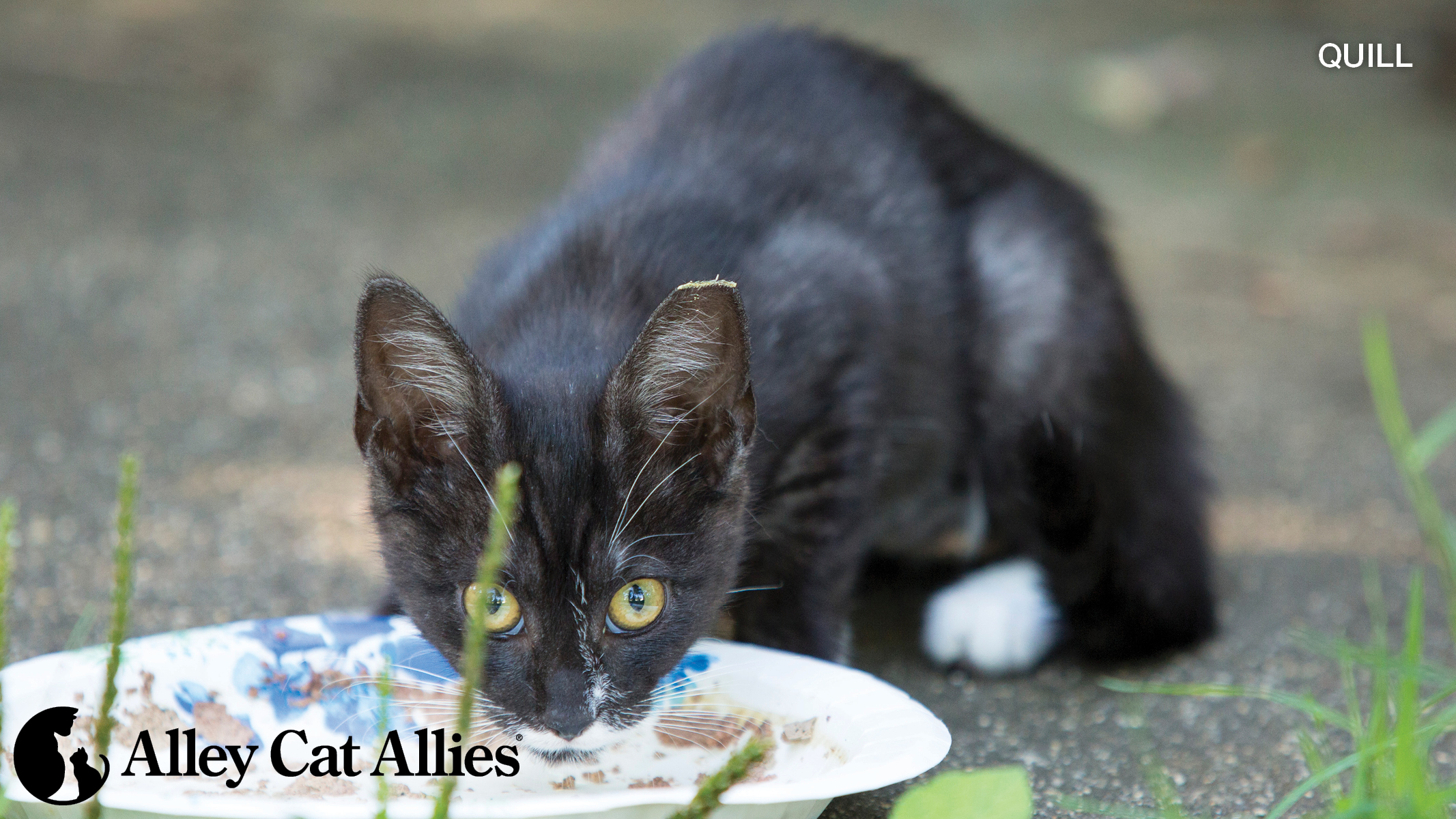
Municipalities historically turn to feeding bans under the false assumption that removing food sources will cause community cats to disperse. Decades of urban wildlife management data, however, demonstrate that feeding bans are entirely ineffective:
Ecological Vacuum: When cats leave an area due to lack of food, or when colonies scatter, new unsterilized cats quickly move in to exploit the available territory—a phenomenon known in wildlife biology as the "vacuum effect."
Public Health Impact: Starving or food-deprived cats often exhibit desperate behaviors, such as tearing into secure garbage receptacles or scavenging closer to human residences, thereby increasing visible nuisance complaints rather than reducing them.
Welfare Degradation: Denying cats access to food compromises their immune systems, rendering them far more susceptible to endemic illnesses like feline upper respiratory infections, parasites, and preventable injuries.
The Trap-Neuter-Return (TNR) Paradigm
In stark contrast to penalizing residents with fines, Trap-Neuter-Return offers a scientifically proven, humane alternative:
Population Stabilization: TNR humanely halts the reproductive cycle. Sterilized cats no longer contribute to the kitten population, leading to a natural, gradual decline in colony numbers over time.
Behavioral Cessation: Spaying and neutering eliminate hallmark nuisance behaviors associated with unsterilized feral and community cats, including noisy mating calls, territorial yowling, and hormone-driven spraying.
Cost-Efficiency: Municipalities that partner with organizations like Alley Cat Allies to implement TNR experience significant reductions in shelter intake numbers, sparing taxpayers the immense costs associated with mass impoundments and euthanasia.
Disaster Resilience Metrics
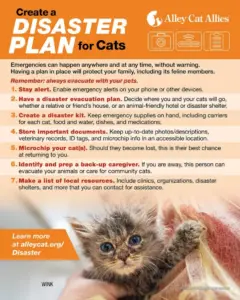
Natural disasters and infrastructure collapses—such as the water crisis in San Juan—disproportionately impact vulnerable urban animal populations. Emergency relief operations rely on rapid logistics frameworks to ensure:
Zero-Barrier Distribution: Providing wet food and potable water directly to grassroots caregivers ensures that systemic poverty or infrastructural failure does not become a death sentence for outdoor cats.
Donor-Funded Agility: Because disaster relief operates outside traditional municipal budgets, the speed of deployment is directly proportional to public engagement and philanthropic contributions.
Official Statements
On the Ripon Feeding Ban:
"Alley Cat Allies strongly opposes any municipal ordinance that criminalizes compassion. Issuing $100 fines to community cat caregivers in Ripon, California, is not only cruel and ethically indefensible, but it is also demonstrably ineffective at managing cat populations. We have extended our hand to Ripon officials to implement Trap-Neuter-Return—the only proven, humane, and sustainable method for stabilizing communities. We urge leadership to abandon outdated penalties and embrace evidence-based policy."
— Alley Cat Allies Legislative Advocacy Division
On the Puerto Rico Relief Efforts:
"Our San Juan Cat Protection Team is witnessing firsthand the extraordinary resilience and compassion of the Puerto Rican people. In the face of a severe water crisis, these incredible caregivers are putting the well-being of their community cats on par with their own survival. We are profoundly honored to support them, delivering essential water and wet food completely free of charge. This is what community-centric animal protection looks like."
— Field Operations Report, San Juan, Puerto Rico
From Woody’s Adopters (Stephanie and Adam):
"He still loves to play all day, especially with his favorite toy, his blue fish! He even loves to carry it around the house and settles down for snuggles at night, too. We love him more each day, and he’s really made himself at home. We feel so lucky we found him!"
Future Outlook
As Alley Cat Allies moves through the remainder of 2026, strategic priorities remain focused on proactive legislative reform, comprehensive disaster readiness, and individual feline advocacy.
Defeating Municipal Restrictions: The immediate priority in Ripon, California, involves mobilizing local residents, legal experts, and animal welfare advocates to challenge the proposed feeding ban during upcoming city council hearings. Organizers remain optimistic that public education regarding the failure of punitive laws will sway local lawmakers toward adopting formal TNR resolutions.
Expanding Disaster Preparedness: Building upon the successes of the San Juan Cat Protection Team, disaster response reserves are being reinforced to ensure rapid deployment capabilities for future climate and infrastructure emergencies across vulnerable coastal and island territories.
Kitten Season Mitigation: With veterinary partners nationwide operating at capacity, ongoing educational campaigns will continue to stress the dangers of premature shelter impoundments for single kittens, advocating instead for foster network integration and mother-litter keeping strategies.
Combating Bias and Superstition: Beyond seasonal cycles, educational initiatives—including digital outreach via platforms like TikTok and formal legislative lobbying—will persistently work to dismantle the systemic biases facing black cats and other frequently marginalized demographics in the animal shelter system.
Through the steadfast dedication of donors, veterinary partners, and grassroots caregivers, the path forward remains clear: defend the defenseless, replace cruelty with science, and ensure that every cat, regardless of location or coat color, is afforded a safe and healthy life.