
Executive Overview
ALCOVA, WYO. — In a landmark development bridging the often-divergent worlds of commercial agriculture and aggressive environmental stewardship, the National Audubon Society announced on October 19, 2026, that Pathfinder Ensign Ranches has officially earned Audubon’s Bird-Friendly Land Certification. Secured through the organization’s rigorous Audubon Conservation Ranching (ACR) program, this certification recognizes working landscapes managed specifically to foster bird populations, enhance biodiversity, and ensure the long-term ecological and economic resiliency of beef and bison production.
Historically known simply as Pathfinder Ranch—a sprawling expanse steeped in the lore of the American West—the property is now owned and operated by Ensign Ranches. The new ownership has signaled an unwavering commitment to continuing, and indeed expanding, a legacy of conservation in central Wyoming. This milestone does more than validate a single enterprise’s management practices; it serves as a powerful testament to the viability of regenerative agriculture. By integrating wildlife habitat preservation directly into the business model of meat production, Pathfinder Ensign Ranches has joined a national vanguard proving that ecological health and agricultural profitability are not mutually exclusive, but rather mutually dependent.
Furthermore, this certification marks a significant expansion of a conservation network that now encompasses more than 1.4 million acres across Wyoming—giving the Cowboy State the largest cumulative conservation footprint of any state where the ACR program operates. As North American grasslands and sagebrush steppes face unprecedented threats from habitat fragmentation, climate volatility, and invasive species, the enlistment of properties like Pathfinder Ensign Ranches offers a blueprint for how private landowners can serve as frontline defenders of biodiversity.
Detailed Chronology & Historical Context
To fully understand the significance of the Pathfinder Ensign Ranches certification, one must examine the deep historical roots and ecological evolution of the land itself. Situated in central Wyoming, the Pathfinder property is a geographic and cultural crossroads. The land is laced with the historical tracks of the historic Oregon, Mormon, California, and Pony Express Trails—pathways where pioneers once forged westward across the rugged American frontier. Today, the modern pioneers traversing these landscapes are conservationists and ranchers working to protect the very ecosystems that sustained those early travelers.
The ranch encompasses a diverse and ecologically rich tapestry of habitats, ranging from native shortgrass prairies and vast sagebrush steppes to vital riparian corridors fed by critical water resources, including the Pathfinder Reservoir. Recognizing the irreplaceable value of these lands, previous owners took monumental steps to secure their future. Nearly 18,000 acres of the ranch were placed under a permanent conservation easement with the Wyoming Stock Growers Land Trust, legally binding the property to a future of agricultural use combined with strict land stewardship, shielding it from subdivision and development in perpetuity.
When Ensign Ranches assumed ownership of the historic property, they inherited not just a working ranch, but a profound conservation trust. Rather than altering course to maximize short-term yields, Ensign Ranches chose to lean into the land’s ecological identity. The integration into the Audubon Conservation Ranching program is the logical next step in a decades-long trajectory of progressive land management.
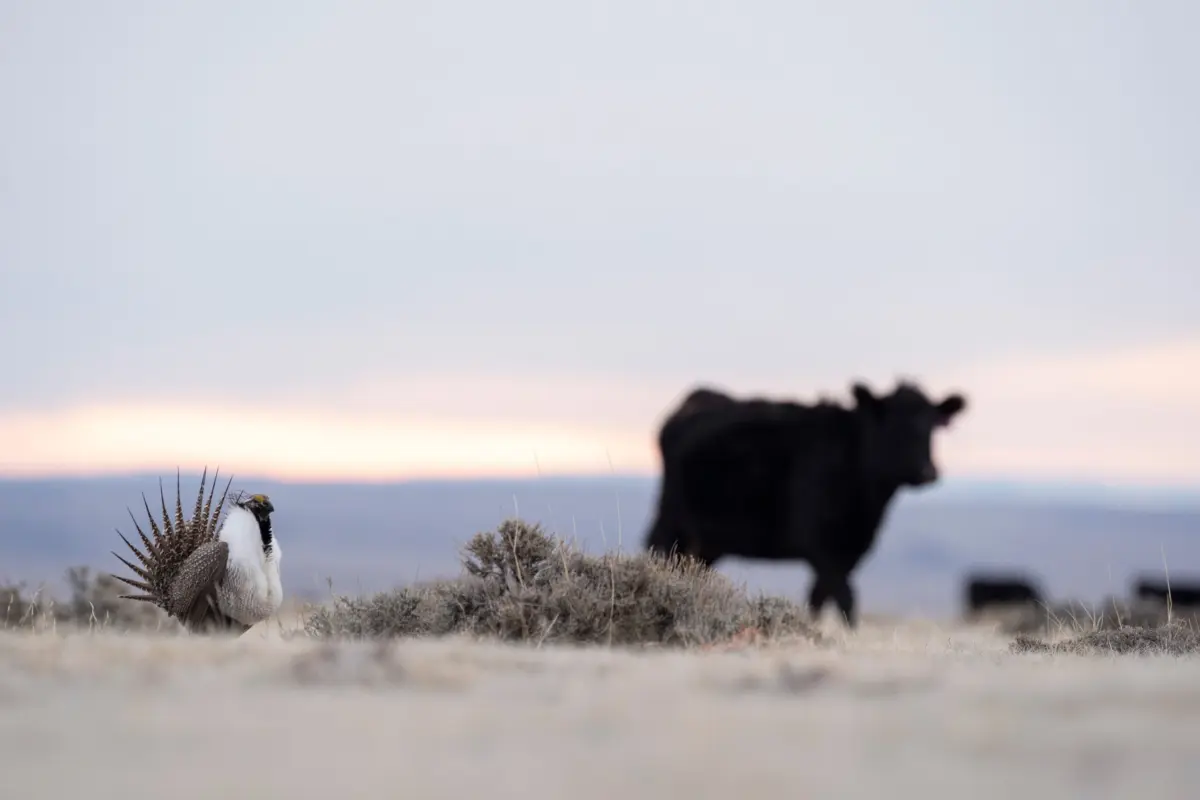
Historically, the property has operated as a laboratory for large-scale environmental innovation. Notably, the Pathfinder serves as the nation’s first and most expansive Greater Sage-Grouse conservation bank, a pioneering market-based mechanism designed to preserve and enhance some of the largest remaining contiguous habitats for this imperiled bird. By adding the Audubon Bird-Friendly Land Certification to its credentials, Pathfinder Ensign Ranches has woven yet another layer of scientific rigor and third-party accountability into its operations, ensuring that the legacy left by wagon trains centuries ago will be matched by a legacy of ecological resilience for generations to come.
Supporting Context & Metrics: The Crisis on the Grasslands and the ACR Model
The urgency behind the Audubon Conservation Ranching program cannot be overstated. Since 1970, grassland birds have experienced the steepest, most alarming population declines of any terrestrial biome in North America. Pressures such as widespread habitat loss, woody plant encroachment, and the intensive application of agricultural chemicals have fractured the delicate ecological webs upon which these species depend.
The core challenge of grassland bird conservation lies in land ownership patterns: the vast majority of vital grassland habitats in the United States are privately owned. Consequently, traditional top-down, government-mandated conservation approaches have limited reach. This reality elevates private landowners—farmers and ranchers—from passive observers to the most critical frontline partners in conservation.
The Audubon Conservation Ranching program bridges this gap through a science-based framework. To earn the coveted Audubon Bird-Friendly Land Certification, ranches must undergo a rigorous evaluation process. Producers must meet strict, multi-faceted standards covering:
- Habitat Management: Actively enhancing structural diversity and native plant communities.
- Environmental Sustainability: Protecting water quality, combating invasive species, and preventing soil erosion.
- Animal Welfare: Ensuring livestock are raised under humane, low-stress conditions.
Once certified, these producers earn the right to use the distinctive Audubon Bird-Friendly Land Certification seal on their product packaging and in marketing. This empowers conscientious consumers to vote with their wallets, transforming everyday grocery purchases into direct contributions toward grassland preservation.
The Wyoming Footprint
Nationwide, the impact of this model is expanding rapidly, with more than 160 farms and ranches now certified, bringing approximately 4.7 million acres under bird-friendly management. However, Wyoming stands out as a titan within this network. With 13 certified ranches encompassing more than 1.4 million acres, Wyoming commands the largest conservation footprint of any state participating in the ACR program.
This outsized role is driven by the state’s geography. Wyoming’s expansive public-private matrix of sagebrush steppe and native prairie provides indispensable strongholds for species that struggle to survive in more heavily industrialized or urbanized agricultural regions.
Official Statements & Ecological Mechanics
The ecological mechanics behind Pathfinder Ensign Ranches’ success rely heavily on sophisticated, adaptive grazing strategies. Rather than imposing a static, one-size-fits-all grazing schedule, the ranch’s management utilizes rotational and regenerative grazing techniques designed to manufacture "habitat heterogeneity"—meaning spatial and structural variety across the landscape.
[Rotational & Regenerative Grazing Strategy]
       │
       ├──> High-Intensity, Short-Duration Pastures
       │       └──> Creates short-stature grasslands
       │               └──> Favored by: Mountain Plover, Horned Lark
       │
       └──> Extended-Rest Pastures
               └──> Allows tall plant structure development
                       └──> Favored by: Sage Thrasher, Brewer’s Sparrow, Greater Sage-Grouse
As Cidney Handy, Range Ecologist for the Audubon Conservation Ranching program in Wyoming, explains:
"With its expansive sagebrush country, native grasslands, and healthy riparian corridors, Pathfinder Ensign Ranches provides exceptional habitat for a wide range of bird species. The ranch sits in a key ecological transition zone, and the way it’s managed is incredibly beneficial for not only our grassland birds but other wildlife as well."
Under this system, certain pastures are subjected to high-intensity, short-duration grazing by livestock. This practice mimics the historic, natural disturbances once wrought by massive herds of migratory bison, creating patches of short-stature grassland that are heavily favored by specialized species such as the Mountain Plover and the Horned Lark.
Conversely, neighboring pastures are granted extended periods of total rest from grazing. This allows native grasses, forbs, and shrubs to complete their full life cycles, developing the tall, dense plant structures required by birds like the Sage Thrasher, Brewer’s Sparrow, and the iconic Greater Sage-Grouse. The cumulative result of this mosaic management is a dramatic improvement in soil health, enhanced botanical diversity, and a landscape far more resilient to drought and climate shocks.
Chris Robinson, CEO of Ensign Ranches, underscores that this environmental commitment is deeply intertwined with business viability:
"Regenerative management and targeted habitat restoration are built into our ranching strategy. Audubon’s certification helps assure and monitor the value of bird-friendly management. What’s good for birds is also beneficial for rangelands and the viability of our business. We want to support precious species in Wyoming, like the Greater Sage-Grouse, that rely on our land for breeding and foraging."
Beyond avian conservation, the ecological dividends of Pathfinder Ensign Ranches pay out across the entire mammalian spectrum. The property provides essential migration corridors and seasonal ranges for elk, mule deer, and pronghorn. Furthermore, in a testament to the breadth of their conservation partnerships, the ranch has collaborated directly with the Wyoming Game and Fish Department to reintroduce bighorn sheep into the rugged Sweetwater Rocks—a historic move restoring a native population to a landscape that had lacked them for over a century.
Future Outlook: A New Standard for Regenerative Stewardship
As Pathfinder Ensign Ranches steps into its new chapter under Ensign Ranches’ leadership, the property remains firmly anchored to a dual mandate: operating a productive, commercially viable agricultural enterprise while serving as an uncompromising steward of the American wilderness.
The formal integration into the Audubon Conservation Ranching program is not a finishing line, but an accelerator. Moving forward, the ranch plans to leverage its bird-friendly certification to validate its beef and bison products in an increasingly discerning marketplace, where consumers demand transparency, ethical treatment of animals, and verifiable ecological benefits.
At the same time, the ranch’s active involvement in ongoing wildlife habitat initiatives, conservation research, and state-level wildlife reintroductions ensures it will remain a living laboratory. As climate pressures mount across the intermountain West, the lessons learned in the sagebrush flats and riparian zones of central Wyoming will likely echo far beyond the boundaries of the property.
By proving that intensive rangeland management can coexist with—and even elevate—the fortunes of declining grassland birds and native wildlife, Pathfinder Ensign Ranches has set a golden standard for modern stewardship. In doing so, it offers a hopeful glimpse into the future of American agriculture: an industry where working lands and wild landscapes are inextricably, harmoniously bound together.