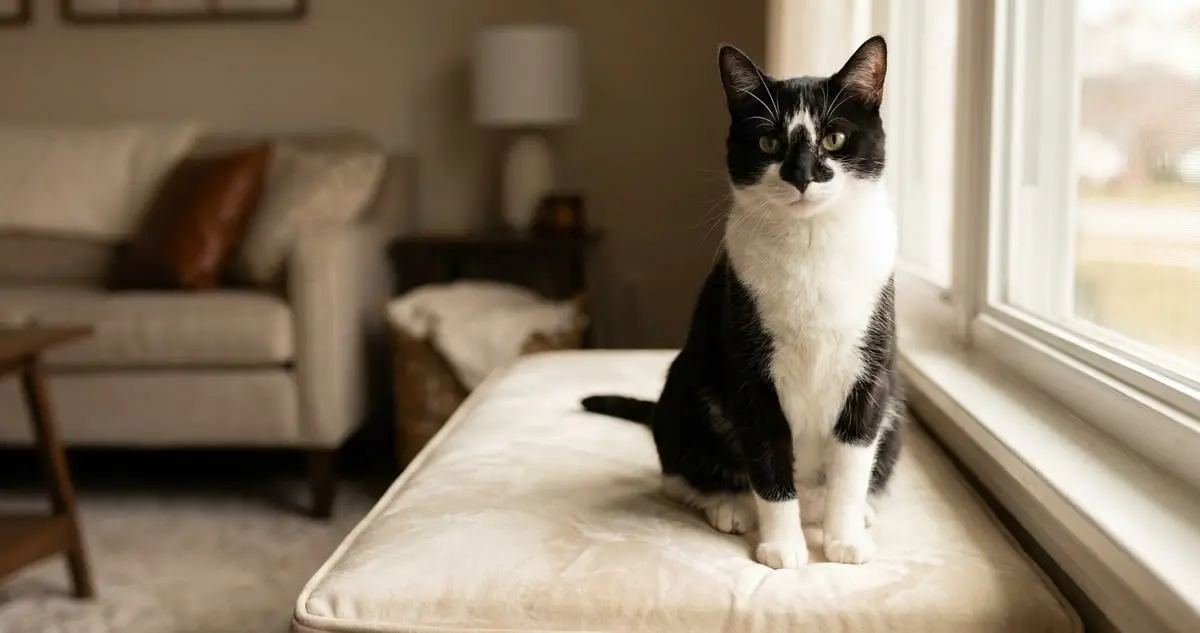
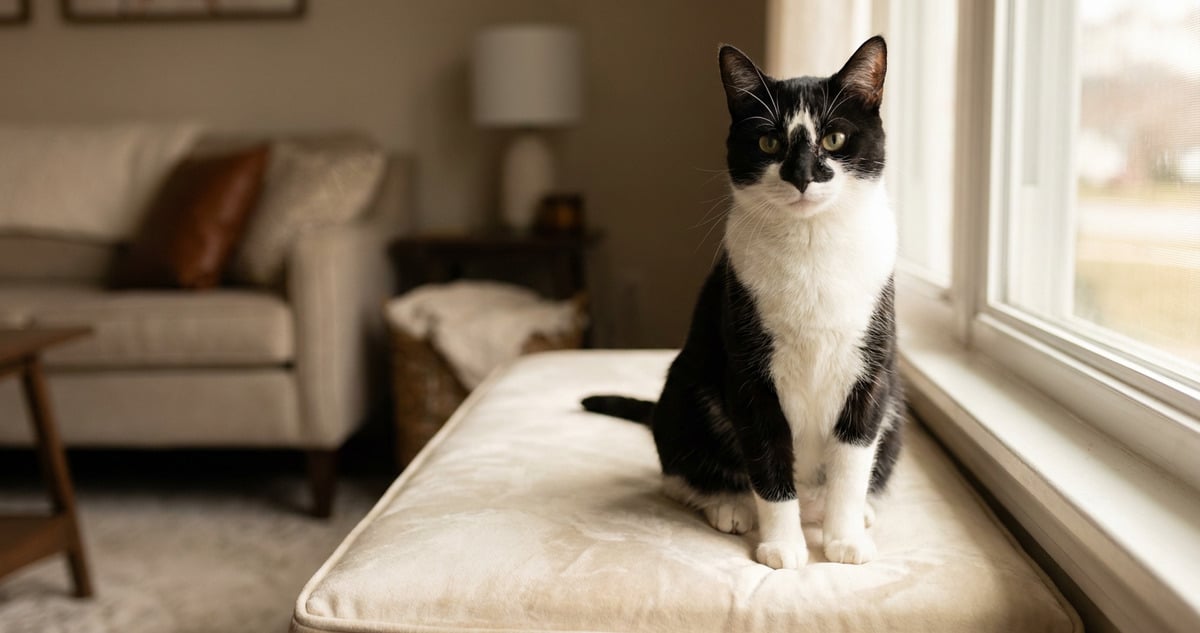
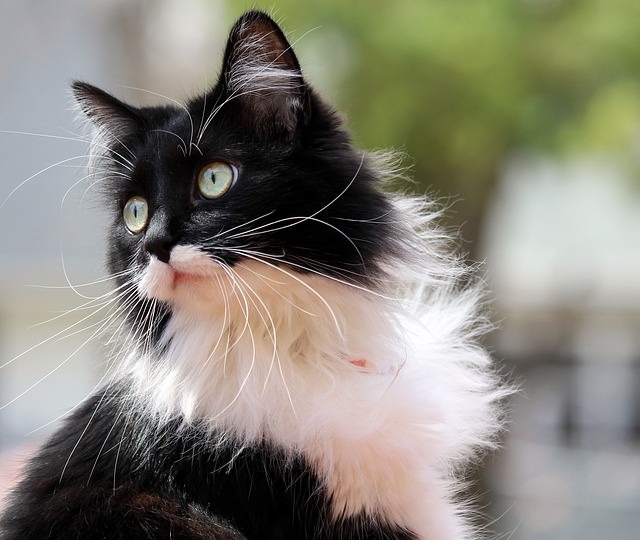
Few animals command a room with the effortless elegance of a tuxedo cat. Characterized by their striking black-and-white coats that mimic classic evening wear—complete with a dark "jacket," a crisp white "dress shirt," and often matching "spats"—these felines have long captured the human imagination. Yet, beyond their sophisticated appearance lies a rich tapestry of genetics, historical migration patterns, and behavioral science that debunks common myths while highlighting their unique place in the feline kingdom.
Contrary to popular belief, the "tuxedo" is not a distinct breed of cat, but rather a stunning color pattern that transcends dozens of recognized breeds and mixed-lineage rescues alike. Governed by a complex interplay of embryonic genetics known as the white spotting gene, this bi-colored or piebald aesthetic represents a fascinating evolutionary quirk. From ancient maritime trade routes in Western Europe to the hallowed halls of the White House and the silver screen, tuxedo cats have woven themselves into human culture for centuries.
This comprehensive report explores the scientific realities of the tuxedo pattern, traces its historical roots, evaluates the behavioral research surrounding bi-colored felines, and offers practical insights into the care and shelter dynamics of these dapper companions.
Detailed Chronology: The Evolution and History of the Tuxedo Coat
To understand how the tuxedo cat became a staple of modern households, one must look backward through centuries of maritime commerce, genetic drift, and cultural iconography. While the exact origins of the white spotting gene cannot be pinned to a single moment in time, historical and genetic research provides a clear roadmap of their proliferation.
Pre-Modern Origins and Trade Routes (Ancient Era to 17th Century)
The genetic mutations responsible for bi-colored and piebald coats—collectively classified under the white spotting gene (S gene)—did not originate in a single geographic vacuum. Instead, historical genetic studies, including landmark analyses of coat-color gene frequencies such as N.B. Todd’s seminal 1977 work Cats and Commerce published in Scientific American, point to Western Europe and Mediterranean port cities as early hotspots for high concentrations of white-spotted felines.
As merchant ships traversed the seas, domestic cats were routinely employed to control rodent populations on board. These seafaring felines interbred across ports of call, inadvertently spreading the white spotting gene along major shipping and trade corridors. This historical mobility explains why tuxedo markings appear broadly across unrelated modern lineages—from the British Shorthair to the Maine Coon—rather than being tethered to a singular regional bloodline.
The Rise of Feline Representation in Popular Culture (20th Century)
As mass media expanded through the 20th century, the visually distinct tuxedo pattern made the felines natural stars for animators and artists who needed characters that were instantly recognizable on screen.
1919: The silent film era introduced Felix the Cat, one of the earliest and most enduring animated cartoon characters in history, sporting the iconic black-and-white aesthetic.
1930s–Onward: Warner Brothers introduced Sylvester the Pussycat, whose classic black body, white face, and lisp cemented the tuxedo cat’s comedic and theatrical archetype in global pop culture.
1981: Andrew Lloyd Webber’s theatrical blockbuster Cats brought the mysterious and magical Mr. Mistoffelees to the stage, showcasing a famous tuxedo feline possessing supernatural flair.
Political Royalty in the Modern Era (1993–2001)
Perhaps no single feline did more to elevate the profile of the tuxedo cat in contemporary political history than Socks, the presidential pet of the Clinton administration. Rescued as a stray in Little Rock, Arkansas, Socks took up residence at 1600 Pennsylvania Avenue in 1993. Throughout his eight-year residency, Socks received tens of thousands of fan letters from around the globe, earning documentation in the William J. Clinton Presidential Library as one of the most beloved and culturally prominent pets in American presidential history.
Supporting Context & Metrics: Genetics, Demographics, and Behavioral Science
The mechanics behind the tuxedo coat are rooted in developmental biology, challenging many anecdotal assumptions about cat behavior and biology.
The Science of the Piebald Pattern
Genetically speaking, tuxedo cats are classified as piebald or bi-colored. The phenomenon is driven by the white spotting gene (S), which dictates whether pigment-producing cells (melanocytes) successfully migrate across the cat’s body during embryonic development.
According to research from the University of California, Davis (UC Davis) Veterinary Genetics Laboratory, the S gene acts locally to suppress melanin production in specific areas. Because this migration process is partially stochastic (random), no two tuxedo cats possess identical markings.
Low-grade white spotting restricts white fur primarily to the chest, chin, and paws, creating the classic "tuxedo" aesthetic.
High-grade white spotting produces expansive white areas, eventually crossing over into "van" or "harlequin" coat patterns.
Unlike calico and tortoiseshell cats—which are almost exclusively female due to their color-coding requiring two X chromosomes (a sex-linked genetic requirement)—the tuxedo pattern is not sex-linked. Consequently, male and female tuxedo cats occur in an equitable, nearly 50/50 ratio within the general feline population.
Dissecting the "Tuxedo Temperament"
For decades, pet owners and feline enthusiasts have debated whether coat color directly influences personality. Common folklore suggests that orange cats are goofy, black cats are mysterious, and tuxedo cats are exceptionally confident, vocal, and feisty.
Scientific consensus maintains that coat color alone does not dictate temperament; breed background, early socialization, and environmental enrichment are far more significant drivers. However, academic research has occasionally explored owner perceptions of feline behavior relative to coat patterns.
A notable 2015 study by Stelow, Bain, and Kass, published in the Journal of Applied Animal Welfare Science (2016), titled "The Relationship Between Coat Color and Aggressive Behaviors in the Domestic Cat," surveyed cat owners regarding aggression toward humans. The study found that while calico and tortoiseshell cats scored higher for reported aggressive behaviors in specific handling scenarios, solid-colored and bi-colored felines—including tuxedos—rated lower on overall aggression scales. Researchers urged caution, noting that human owner expectation bias heavily colors these reports, yet the statistical variation remains a point of interest in feline behavioral studies.
In practical terms, owners frequently characterize tuxedo cats as exceptionally engaging, playful, talkative, and dog-like in their social habits—traits largely amplified by the high level of human engagement these visually arresting pets naturally receive.
Official Statements and Expert Perspectives
Veterinary geneticists and animal welfare advocates emphasize the importance of looking past aesthetics when evaluating feline health and shelter dynamics.
"The white spotting gene operates independently of breed-specific health markers. Because ‘tuxedo’ is merely a description of pigmentation distribution rather than a distinct biological breed, a tuxedo cat’s medical profile is governed entirely by its underlying genetic ancestry—whether mixed-breed rescue or purebred lineage," notes leading developmental geneticists at major veterinary institutions.
Animal shelter administrators also point out the shifting tides of "black cat syndrome"—a well-documented phenomenon where dark-coated cats experience prolonged stays in rescue facilities due to superstition or poor photographic visibility.
"Tuxedo cats possess a distinct advantage in modern adoption networks," explains a shelter outreach coordinator. "The strategic placement of white fur breaks up the dark silhouette, allowing digital cameras to capture facial expressions and eye contact far more effectively. High-quality shelter photography routinely translates to faster adoption rates for bi-colored rescues compared to solid black felines."
Future Outlook: Health, Care, and the Modern Tuxedo Companion
Looking ahead, the popularity of the tuxedo cat shows no signs of waning. As veterinary medicine advances and genetic mapping becomes more accessible, our understanding of the nuances of coat-color expression continues to deepen.
For prospective pet parents and current owners, caring for a tuxedo cat requires standard, high-standard veterinary hygiene tailored to the individual cat’s underlying breed makeup rather than its coloration.
Lifespan: Averaging 12 to 18 years for indoor companions, mirroring the general domestic cat population. Mixed-breed tuxedo rescues often benefit from hybrid vigor, exhibiting robust overall health.
Grooming Considerations: While short-haired tuxedo cats require minimal maintenance beyond weekly brushing, white areas—particularly paws and chins—may show discoloration from environmental debris or litter dust, which is easily managed with routine wiping. Additionally, white fur patches serve as an early visual indicator for external parasites like fleas, whose dark excrement stands out vividly against white fur, aiding in prompt medical detection.
Ultimately, the enduring appeal of the tuxedo cat lies in its harmonious blend of scientific wonder and timeless style. Whether commanding attention from a sunny windowsill, starring in digital media, or greeting their humans at the door after a long day, these dapper felines prove that they do not merely wear the suit—they thoroughly own it.