
Executive Overview: A Case Study in Interspecies Socialization
In the field of animal rescue and rehabilitation, the socialization of vulnerable, orphaned neonates represents one of the most critical challenges faced by foster caretakers. Kittens separated from their mothers and litters prematurely often suffer from developmental deficits, heightened anxiety, and a profound lack of confidence—a combination of factors that can severely hinder their adoptability. While traditional protocols emphasize human-to-animal socialization, an emerging body of evidence highlights the profound efficacy of controlled, interspecies therapeutic partnerships.
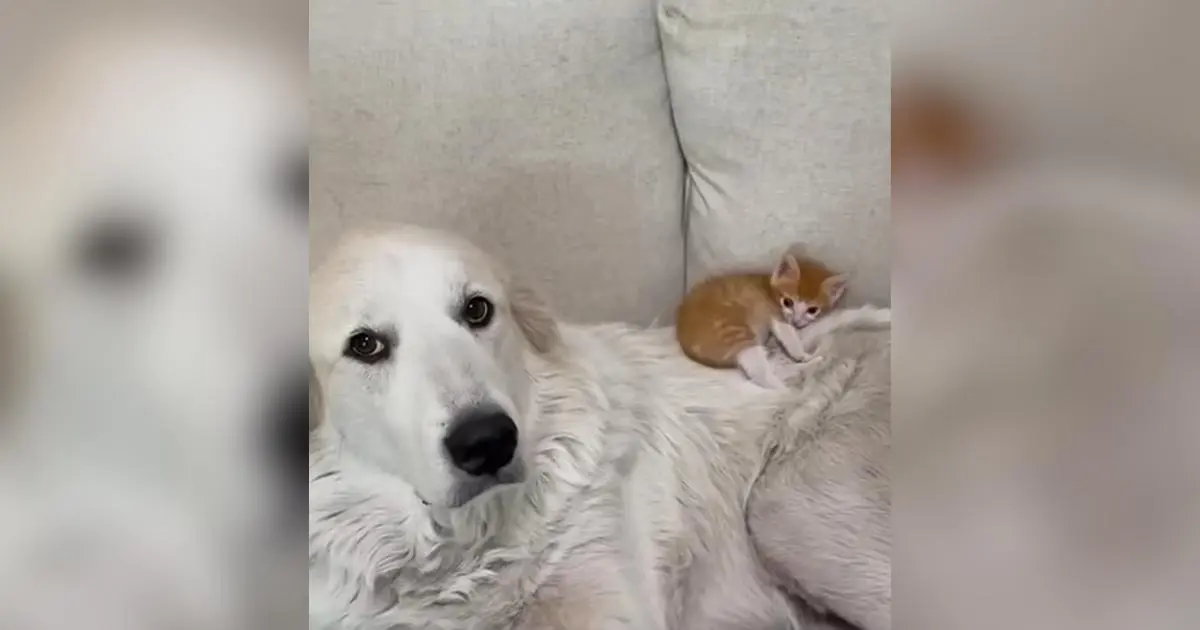
This case study examines the remarkable developmental trajectory of WeeWoo, a micro-sized foster kitten exhibiting acute environmental anxiety, and Lily, an adult Great Pyrenees characterized by her exceptionally low arousal threshold and deeply ingrained nurturing instincts. Under the structured supervision of foster caregiver Tracy, the pair was introduced to determine if the presence of a massive, calm canine could serve as a stabilizing force for the timid kitten.
Over a critical three-day observation window, WeeWoo transitioned from a state of defensive withdrawal to active play, cognitive confidence, and emotional security. This transformation not only facilitated WeeWoo’s successful permanent adoption but also serves as a compelling model for how domestic livestock guardian dogs (LGDs) can be utilized within foster networks to expedite the rehabilitation of traumatized or under-socialized felines.
Detailed Chronology of a Breakthrough Bond
The integration of a vulnerable kitten with a large-breed dog requires meticulous planning, acute observation of micro-expressions, and a willingness to prioritize emotional safety over rapid progress. The chronological progression of WeeWoo and Lily’s relationship demonstrates how a slow, non-intrusive approach can yield rapid, compounding developmental gains.
+-----------------------------------------------------------------------------+
|                         CHRONOLOGY OF SOCIALIZATION                          |
+-----------------------------------------------------------------------------+
|  DAY 1: Controlled Proximity & Passive Observation                          |
|  - Micro-feline introduced to large-breed canine environment.               |
|  - Maintenance of physical boundaries; stress-signal monitoring.            |
|  - Focus on scent acclimation and sight recognition.                        |
+-----------------------------------------------------------------------------+
|  DAY 2: Olfactory Exploration & Tactile Curiosity                           |
|  - Timidity transitions to self-directed investigation.                     |
|  - Kitten initiates close-range scenting of canine's coat.                  |
|  - Canine exhibits low-energy, stationary posture to invite trust.          |
+-----------------------------------------------------------------------------+
|  DAY 3: Active Integration & "Jungle Gym" Play                              |
|  - Complete elimination of defensive posturing.                             |
|  - Kitten utilizes canine's body for climbing and physical play.             |
|  - Establishment of secure attachment, facilitating future adoptability.    |
+-----------------------------------------------------------------------------+
Phase I: Controlled Proximity and Silent Observation (Day 1)
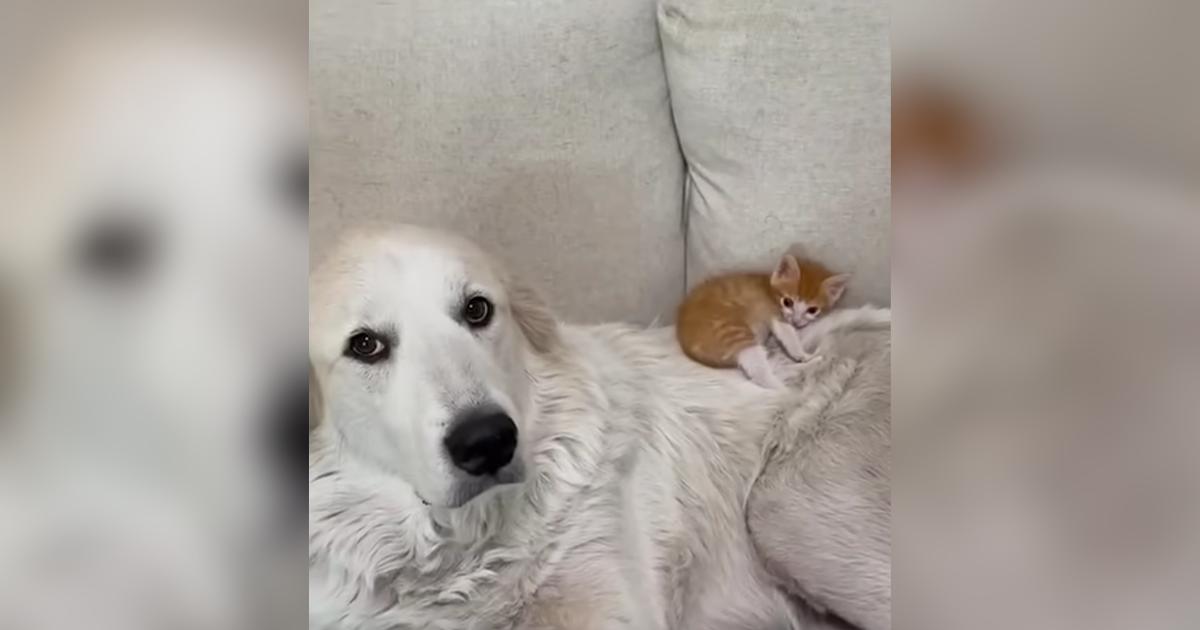
On the first day of the introduction, the primary objective was the mitigation of the kitten’s fight-or-flight response. Weighing only a fraction of a pound, WeeWoo was introduced to an environment containing Lily, a Great Pyrenees weighing upwards of one hundred pounds. To a micro-feline, an animal of this scale represents a apex-level threat.
Tracy structured this initial meeting around the concept of passive exposure. Rather than forcing direct physical contact, WeeWoo was placed in a secure area of the room where he could observe Lily from a self-determined safe distance.
- Kitten Behavioral Response: Initially, WeeWoo exhibited classic signs of environmental apprehension: a lowered body posture, dilated pupils, and a hyper-vigilant focus on the dog’s movements.
- Canine Behavioral Response: Lily demonstrated the classic temperament of her breed. Recognizing the fragile nature of the kitten, she maintained a recumbent, relaxed posture. By avoiding direct eye contact and keeping her movements slow and predictable, Lily signaled to WeeWoo that she posed zero predatory threat.
By the end of Day 1, WeeWoo had ceased hiding, choosing instead to sit quietly and watch Lily’s slow, rhythmic breathing. This passive observation was crucial; it allowed the kitten’s nervous system to return to homeostasis in the presence of a giant companion.
Phase II: Olfactory Habituation and Tactile Curiosity (Day 2)
By the second day, the baseline of safety established during the initial observation phase began to yield curiosity. In domestic animals, particularly felines, curiosity is a primary indicator that the animal feels secure in its immediate environment.
WeeWoo began to venture away from his designated safe zones, initiating self-directed exploration. His target was no longer just the room, but Lily herself.
- The Role of Scent: Felines rely heavily on olfactory communication. Lily’s thick, double coat acted as a massive sensory reservoir, holding the scents of the home, the outdoors, and her own calming pheromones. WeeWoo approached the recumbent dog, extending his neck to sniff her paws and muzzle.
- Tactile Appeal: The soft, dense texture of the Great Pyrenees’ coat likely mimicked the maternal warmth WeeWoo had been deprived of. Rather than retreating when Lily shifted her position, WeeWoo remained close, utilizing her fur as a source of physical warmth.
Lily’s response to this close-range inspection was complete neutrality. By offering no sudden movements, vocalizations, or invasive sniffing of her own, she allowed WeeWoo to conduct his investigation entirely on his own terms.
Phase III: Cognitive Integration and Active Play (Day 3)
By the third day of their cohabitation, the transition from cautious co-existence to active bonding was complete. The initial power dynamic—wherein the giant dog was an object of fear—had been entirely dismantled. WeeWoo now perceived Lily not merely as a safe presence, but as a source of physical enrichment and emotional comfort.
                  [TIMID KITTEN: WEEWOO]
                            │
                            ▼ (Day 1: Passive Observation)
                  [GENTLE GIANT: LILY]
                            │
                            ▼ (Day 2: Olfactory/Tactile Exploration)
                [SENSORY & PHYSICAL ANCHOR]
                            │
                            ▼ (Day 3: Active "Jungle Gym" Play)
         [CONFIDENT, HIGHLY ADOPTABLE FOSTER KITTEN]
The playful, instinctual behaviors of a healthy kitten emerged in full. WeeWoo began using Lily’s massive frame as a personal "jungle gym," climbing up her sides, burrowing into her thick ruff, and batting playfully at her tail.
Lily’s patience during this phase was absolute. She remained still, occasionally lowering her head to nudge the kitten gently, reinforcing her role as a protective, non-threatening maternal surrogate. This active play-therapy served to rapidly build WeeWoo’s motor skills, spatial awareness, and cognitive confidence.
Supporting Context: The Science of Interspecies Bonding
To understand why the pairing of WeeWoo and Lily was so remarkably successful, it is necessary to examine the biological and behavioral mechanisms of both species. This was not a random stroke of luck; rather, it was the intersection of specific breed genetics and feline developmental psychology.

The Breed Psychology of the Great Pyrenees
The Great Pyrenees is a breed developed over millennia to serve as livestock guardian dogs (LGDs) in the mountainous regions of Europe. Unlike herding dogs, which utilize high-energy movements and predatory chase instincts to control livestock, LGDs are bred for:
- Low Prey Drive: They do not perceive small, running animals as prey to be chased or captured.
- High Emotional Regulation: They possess an innate ability to remain calm in high-stress environments, acting as a stabilizing anchor for the flock.
- Nurturing Instincts: LGDs frequently bond with the young of other species, protecting them from external threats while displaying immense physical gentleness.
When introduced to a fragile foster kitten like WeeWoo, Lily’s genetic programming recognized the neonate as an object requiring protection rather than a target for pursuit. Her low-energy demeanor provided the perfect counter-weight to the kitten’s high-strung, nervous energy.
The Critical Feline Socialization Window
For domestic felines, the primary socialization window occurs between two and nine weeks of age. During this brief developmental phase, a kitten’s brain is highly plastic. The experiences they have during this period permanently shape their neurological response to novel stimuli, humans, and other animals in adulthood.
+-----------------------------------------------------------------------+
|                 FELINE DEVELOPMENTAL IMPACT ANALYSIS                  |
+-----------------------------------------------------------------------+
|  DEVELOPMENTAL METRIC   | WITHOUT THERAPEUTIC DOG | WITH LILY (LGD)   |
+-------------------------+-------------------------+-------------------+
|  Environmental Fear     | High / Persistent       | Rapidly Extinct   |
+-------------------------+-------------------------+-------------------+
|  Socialization Window   | Missed / Stunted        | Fully Maximized   |
+-------------------------+-------------------------+-------------------+
|  Novel Stimuli Recovery | Delayed / Poor          | Rapid / Resilient |
+-------------------------+-------------------------+-------------------+
|  Time-to-Adoptability   | Prolonged               | Accelerated       |
+-------------------------+-------------------------+-------------------+
If a kitten spends this window in a state of chronic fear or isolation, they are highly likely to develop long-term behavioral issues, including fear-aggression, hiding behaviors, and generalized neophobia (fear of the new).
By introducing WeeWoo to Lily during this critical period, Tracy successfully intercepted these negative behavioral trajectories. Lily provided WeeWoo with a safe "secure base"—a psychological term for a supportive figure that allows an individual to explore the world with confidence, knowing they can return to safety at any time.
Perspectives from the Field: The Foster Dynamics
Experienced foster caregivers understand that rehabilitating a shy animal requires a delicate balance of intervention and observation. Tracy’s approach to WeeWoo and Lily’s introduction offers a blueprint for successful foster-home management.
Rather than forcing the animals together to capture an immediate reaction, Tracy operated as an objective facilitator. She ensured that:
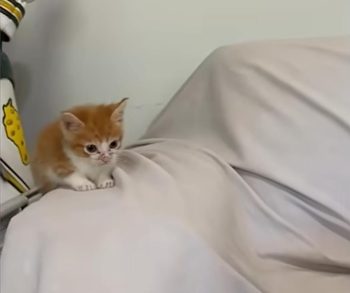
- Escape Routes Were Available: WeeWoo always had access to vertical spaces and small enclosures where Lily could not reach him, ensuring he never felt cornered.
- Canine Boundaries Were Respected: Lily was given quiet spaces to retreat to when the kitten’s high-energy play became too repetitive, preventing caregiver burnout in the dog.
- Positive Reinforcement Was Utilized: Both animals were rewarded for calm, neutral behaviors around one another, reinforcing the idea that proximity to the other species resulted in positive outcomes.
This structured environment allowed the bond to develop organically, converting what could have been a highly stressful encounter into a deeply therapeutic experience for the kitten.
Future Outlook: Restructuring Shelter Socialization Protocols
The success of WeeWoo and Lily’s partnership carries profound implications for the broader animal rescue community. Historically, shelter and rescue operations have kept canine and feline populations strictly segregated to minimize stress and disease transmission. However, as foster-based rescue networks continue to expand, there is a growing opportunity to formalize interspecies socialization protocols.
                       [TRADITIONAL SHELTER PROTOCOL]
                     Segregated Feline & Canine Tracks
                                     │
                                     ▼
                     Prolonged Feline Socialization
                     Higher Rates of Long-Term Fear
                                     │
                                     ▼
                      [INNOVATIVE FOSTER-LGD MODEL]
                    Structured Interspecies Pairing
                                     │
                                     ▼
                    Accelerated Confidence Building
                    Reduced Length of Stay (LOS)
By identifying, screening, and utilizing calm, low-prey-drive "helper dogs" within foster homes, rescue organizations can:
- Decrease Length of Stay (LOS): Kittens who exhibit confidence, friendliness, and high adaptability are adopted at significantly faster rates than those who remain fearful or hidden.
- Enhance Multi-Pet Compatibility: A kitten raised alongside a large, gentle dog is highly likely to thrive in a multi-pet adoptive home, widening the pool of potential adopters.
- Optimize Foster Resources: Utilizing resident pets as co-rehabilitators reduces the physical and emotional burden on human foster parents, allowing them to save more lives.
Ultimately, WeeWoo’s journey from a terrified, fragile orphan to a confident, playful kitten who easily secured a loving forever home is a testament to the power of interspecies connection. It stands as a beautiful, functional reminder that in the world of animal rescue, the most effective path to healing often comes from the most unexpected, giant-sized packages.