
Executive Overview
For decades, the unwritten rule of commercial air travel for pet owners has been a strict, uncompromising weight limit: under ten pounds, and sometimes up to sixteen pounds, grants safe passage into the passenger cabin. Anything beyond those modest dimensions is routinely relegated to the dark, cargo hold—a prospect that fills most modern pet parents with dread. However, a growing subculture of resourceful travelers is challenging these rigid parameters. Through meticulous preparation, strategic equipment modification, and a deep understanding of airline flexibility, experienced owners are successfully navigating the skies with larger dogs.
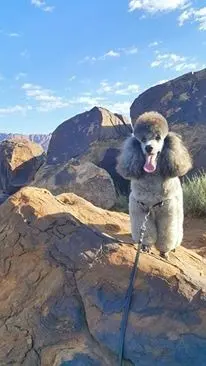
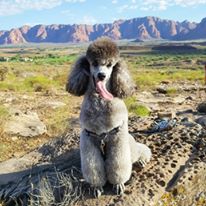
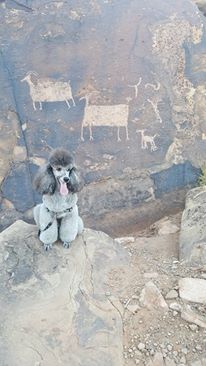
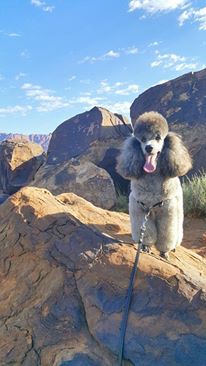
This report examines a recent triumph in pet aviation: the journey of Amy and her 17-pound, 16.5-inch-tall Miniature Poodle, Calvin. Traveling across major US carriers—Delta Air Lines and Southwest Airlines—Amy managed a multi-leg itinerary from Providence, Rhode Island, to Las Vegas, Nevada, with a return trip via Chicago, utilizing an extra-large (XL) SturdiBag. By engineering clever tactical modifications to her pet carrier and deploying a foolproof "Plan B" backup strategy, Amy proved that traveling with a larger-than-average dog in the cabin is not only possible, but manageable.
This comprehensive case study breaks down the mechanics of their journey, evaluating carrier specifications, airline booking hurdles, terminal navigation, and the vital lessons learned for pet owners seeking to bypass the cargo hold.
Detailed Chronology: The Providence to Las Vegas Operation
Leg 1: Rhode Island to Atlanta, Georgia (Delta Air Lines)
The journey began at Rhode Island T.F. Green International Airport (PVD), where Amy and Calvin checked in for their Delta flight bound for Hartsfield-Jackson Atlanta International Airport (ATL). Operating aboard a Delta MD-88, the initial challenge was not necessarily passing security or boarding gate scrutiny, but the physical geometry of the aircraft interior.

Amy had pre-booked her flight by calling Delta directly. Unlike many travelers who report aggressive pushback or strict interrogation from reservation agents regarding animal dimensions, Amy’s experience was refreshingly smooth. When she openly declared that she was traveling with a "large small dog and a larger soft carrier," the booking agent offered reassuring, pragmatic advice: as long as the carrier could "smoosh" to fit under the seat ahead, it would be permitted.
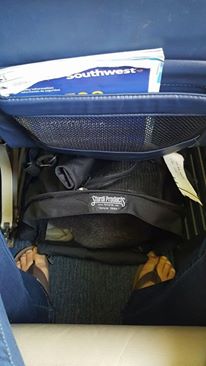
Upon boarding, Amy faced the reality of a middle-seat assignment on the MD-88. Maneuvering an XL SturdiBag into the tight confines between a middle seat and the seatback in front of it required patience and a gentle squeeze. Once compressed and secured properly under the seat, however, the carrier settled comfortably for the duration of the flight.
Layover in Atlanta: Navigating Terminal Real Estate
During the Atlanta layover, Amy successfully navigated security to take Calvin outside for a much-needed biological break. While major hubs frequently lack centralized, well-signposted outdoor pet relief areas, Amy improvised, utilizing patches of decorative landscaping near the terminal perimeter. Although unconventional, this quick pit stop ensured Calvin remained comfortable before boarding the next leg.
Leg 2: Atlanta to Las Vegas (Delta Air Lines)
The second flight of the outbound journey, operating from Atlanta to McCarran International Airport in Las Vegas (LAS) aboard a Boeing 737-700, went off without a hitch. The aircraft’s modern cabin layout provided standard under-seat dimensions that accommodated the XL SturdiBag with minimal friction. Calvin remained quiet, resting comfortably inside the flexible enclosure as they crossed the country into the striking landscapes of the American Southwest.
The Return Journey: Switching to Southwest Airlines
Unforeseen technological failures on Delta’s end on the return leg forced a mid-trip pivot. Facing significant scheduling delays and refusing to leave Calvin stranded or exposed to prolonged transit stress, Amy purchased a new ticket home via Southwest Airlines.
Boarding with Southwest brought a different set of administrative checks. A gate agent briefly stopped the pair during the boarding process to verify that a proper pet fee ticket had been attached to Calvin’s carrier. Once cleared, Southwest’s open-seating policy came into play. On the first leg of the return, featuring a Boeing 737-700 and a middle-seat assignment, the XL SturdiBag fit smoothly, offering Calvin ample internal space. The second leg provided a window seat, further easing spatial constraints.
Layover in Chicago (Midway) and Return to Providence
The connection through Chicago Midway International Airport (MDW) presented another opportunity for terminal relief. Midway features a dedicated, fenced outdoor pet relief area just outside security. Though constructed primarily of concrete and lacking a natural, green aesthetic, the zone sat adjacent to natural grass and trees, allowing Calvin to relieve himself effectively before clearing security lines with time to spare.
The final flight brought them back to Providence, concluding an itinerary that underscored the viability of in-cabin transit for taller dogs when paired with the right gear and a calm, adaptable handler.
Supporting Context & Metrics: Engineering the XL SturdiBag
To fully appreciate Calvin’s successful voyage, one must examine the precise dimensions and modifications that made it possible.
Carrier Specifications and the "Size-Down" Hack
- Optimal Carrier Guidelines: Standard soft-sided pet carriers approved for in-cabin use are typically designed for pets under 10 to 12 inches in shoulder height and weighing under 15 pounds.
- Calvin’s Metrics: Standing between 16 and 16.5 inches at the shoulder and weighing approximately 17 pounds, Calvin technically exceeds the standard parameters for soft-sided carriers.
- The Gear: The SturdiBag Extra Large (XL) is structurally rated for pets up to 40 pounds, but its standard length of 20 inches can create clearance challenges beneath certain airline seats.
- The Modification: Anticipating potential pushback from gate agents or tight under-seat tolerances, Amy engineered a brilliant modification. She packed a standard Large SturdiBag folded inside her primary carry-on luggage as a contingency plan. More importantly, she removed the rigid bottom insert and soft pad from the XL SturdiBag and replaced them with the smaller inserts from the Large model.
This simple substitution effectively shortened the functional base of the XL SturdiBag from 20 inches down to 18 inches, allowing it to compress more readily under standard coach seating while maintaining the vertical clearance required for Calvin’s long frame. Furthermore, if airport staff had forced a downgrade to the backup carrier, the swapped floorboard and pad would have fit the Large SturdiBag instantly.
Canine Biomechanics: Why Height Can Be Deceptive
Amy’s success highlights a crucial nuance in pet travel regulations: a dog’s height and weight do not always tell the whole story.
While Calvin stands 16.5 inches tall—roughly four inches higher than the optimal threshold for standard large carriers—a significant portion of that height is concentrated in his slender Poodle legs. Poodles are agile, flexible animals capable of coiling their bodies into compact bundles when resting. By evaluating her dog’s actual sleeping posture rather than blindly following rigid weight and height charts, Amy accurately determined that Calvin could comfortably inhabit the soft-sided enclosure without enduring physical distress.
Official Statements & Industry Perspectives
Airline policies regarding in-cabin pets remain a patchwork of corporate guidelines, gate-agent discretion, and inconsistent enforcement. While carriers like Delta and Southwest maintain published pet policies limiting container sizes to dimensions that fit under the seat ahead (typically around 19” x 13” x 9” for soft-sided bags), actual gate experiences vary wildly.
Industry analysts note that frontline employees prioritize safety, quietness, and compliance above literal millimeter measurements. As Amy’s interaction with Delta demonstrated, clear, non-defensive communication with booking agents sets a positive tone. By framing the inquiry around a "large small dog and a larger soft carrier" and focusing on the carrier’s ability to compress, Amy avoided triggering automated denials or unnecessary scrutiny.
Ground handling staff interviewed across various domestic hubs emphasize three core principles for pet owners attempting to push cabin size limits:
- The Animal Must Remain Confined: At no point during the flight or boarding process may the pet emerge from the carrier. Calvin remained fully enclosed, with only occasional peeks through the top hatch.
- Under-Seat Compliance is Non-Negotiable: If a carrier cannot fit entirely beneath the seat ahead without blocking emergency egress or encroaching on neighboring legroom, flight crews are mandated to deny boarding or force a gate check. Compression-flexible bags like the SturdiBag pass this test because their flexible fiberglass roof ribs bend downward under seat loads without collapsing inward on the animal.
- Documentation and Fees Must Be Pre-Cleared: Gate agents look specifically for compliance tags indicating that pet fees have been paid. Surprises at the boarding gate routinely result in denied boarding.
Future Outlook: The Evolution of Pet-Inclusive Air Travel
As domestic pet ownership surged over the past decade, the aviation industry has faced mounting pressure to adapt to travelers who view their animals as integral family members. Incidents involving pets in cargo holds have historically driven demand for in-cabin alternatives, pushing manufacturers to design smarter, more flexible carriers.
Innovations like the modified SturdiBag technique pioneered by Amy and her littermate’s owner, Keri—who successfully modified a Pettom Expandable carrier for her Miniature Poodle, Flint—signal a shift toward user-customized pet travel gear. Owners are no longer passively accepting the limitations of off-the-shelf pet products; they are actively engineering solutions that bridge the gap between strict airline rules and the reality of diverse canine breeds.
Recommendations for Prospective Travelers with Larger Dogs
For owners of Miniature Poodles, Cocker Spaniels, Terriers, and other mid-sized breeds looking to replicate Amy and Calvin’s success, aviation experts recommend the following roadmap:
- Train and Condition Early: Weeks before the flight, introduce the dog to the carrier at home. Feed them inside it, take short car rides, and ensure the animal associates the enclosed space with safety rather than anxiety.
- Maintain a Redundant Backup Plan: Always pack a smaller, compliant backup carrier (such as a standard Large SturdiBag) and ensure you have alternative airline options booked or mapped out in the event of major delays or equipment swaps.
- Manage Canine Energy: Ensure your dog receives a vigorous, exhaustive walk or exercise session the morning of the flight. Withholding heavy meals immediately prior to departure minimizes the risk of motion sickness while still allowing for calm, restful behavior airborne.
- Pre-Book Relief Stations: Research terminal layouts in advance. Knowing precisely where indoor and outdoor pet relief zones are located reduces handler stress during tight layovers.
Ultimately, while traveling with a dog just over the traditional weight and height limit requires meticulous planning, technical modifications, and a healthy dose of situational awareness, Amy and Calvin’s journey proves that the friendly skies are indeed open to well-prepared travelers of all sizes.