
Executive Overview
In an ambitious push to tackle one of the most persistent agricultural contributors to global climate change, the Japan International Research Center for Agricultural Sciences (JIRCAS) has officially announced a landmark partnership with innovative agritech startup Kaginowa. The core objective of this collaboration is to pioneer, test, and scale the cultivation of Kagikenori—a native Japanese seaweed species recognized for its extraordinary potential to mitigate enteric methane emissions when incorporated into cattle feed.
Livestock agriculture, particularly cattle farming, is responsible for a massive share of global anthropogenic methane emissions. Because methane possesses a global warming potential significantly higher than carbon dioxide over a 20-year timescale, finding effective, scalable mitigants is an urgent international priority. While various feed additives have been proposed over the years, seaweed-based interventions—specifically those involving bromoform-producing or specialized bioactive red and brown seaweeds—have emerged as scientific frontrunners. However, translating laboratory success into commercial-scale maritime production has historically been hindered by biological, logistical, and environmental hurdles.
This strategic partnership bridges foundational academic research and agile startup execution. By shifting from controlled laboratory and land-based settings to open marine trials in Japan’s coastal waters, JIRCAS and Kaginowa are looking to establish a reliable, scalable playbook for commercial seaweed farming. Scheduled to run through March 2028, the multi-year project not only seeks to reduce the carbon footprint of the cattle industry but also aims to inject a vital new revenue stream into coastal fishing communities through regenerative aquaculture.
Detailed Chronology and Technical Evolution of Kagikenori Research
The journey toward harnessing Kagikenori as a livestock feed additive is rooted in years of meticulous scientific inquiry, molecular investigation, and biological breakthroughs. Understanding the significance of the current JIRCAS-Kaginowa partnership requires tracing the chronological milestones that brought this native Japanese seaweed to the forefront of agricultural biotechnology.
The Foundation of Artificial Seedling Production
The scientific momentum behind Kagikenori is spearheaded by Tatsuya Matsuda, a distinguished researcher within the Fisheries Division at JIRCAS and a leading authority on Kagikenori propagation in Japan. For years, the wild harvesting of native seaweeds with methane-reducing properties has been unsustainable and economically unviable for mass agricultural adoption. To circumvent this, Matsuda and his collaborators set out to solve the complex biological puzzle of life-cycle control.
In previous cooperative research endeavors with Nagasaki University, Matsuda successfully developed and demonstrated a reliable protocol for the stable artificial production of Kagikenori seedlings. This breakthrough was nothing short of transformative for the sector. By mastering the hatchery phase, researchers removed the reliance on erratic wild crop yields, establishing a controlled starting point for commercial cultivation. This foundational achievement transformed Kagikenori from a botanical curiosity into a viable candidate for industrial-scale agricultural integration.
Transitioning from Lab to Land-Based Trials (2025)
Following the success of laboratory-scale seedling production, the imperative shifted toward scaling up volume. Kaginowa—a specialized spin-out from Tokyo-based biotech firm Alnur, which specializes in advanced microalgae mass-cultivation technology—took critical steps to test the limits of infrastructure scaling.
In 2025, Kaginowa announced a major operational milestone: the successful completion of its first harvest from outdoor, land-based cultivation trials of Kagikenori. These trials were specifically designed to test the seaweed’s resilience and growth rates under semi-controlled outdoor environments, pushing production capacities toward volumes exceeding 1,000 liters. While land-based systems offered valuable insights into growth parameters and nutrient uptake, the partners realized that achieving the massive volumes required by the livestock sector would ultimately necessitate a return to the natural marine environment.
The 2026–2028 Open-Water Marine Trials
Building upon the momentum of the 2025 land-based trials, the newly formalized partnership between JIRCAS and Kaginowa marks a decisive operational pivot toward real-world marine environments.
Beginning immediately and running through March 2028, the collaborative research protocol focuses heavily on deploying artificially produced seedlings directly into coastal marine waters, with primary trials anchored in Yamakawa Bay, located within Kagoshima Prefecture. This phase represents a transition from theoretical biology to applied marine agronomy, addressing the unpredictable variables of open-water ecosystems—such as shifting water temperatures, salinity fluctuations, tidal currents, and marine disease pressures.
Supporting Context & Metrics: The Global Methane Crisis and Seaweed Solutions
To fully appreciate the gravity of the JIRCAS-Kaginowa initiative, one must examine the broader environmental metrics governing livestock emissions, as well as the unique biochemical mechanisms that make seaweed an effective intervention.
The Enteric Methane Dilemma
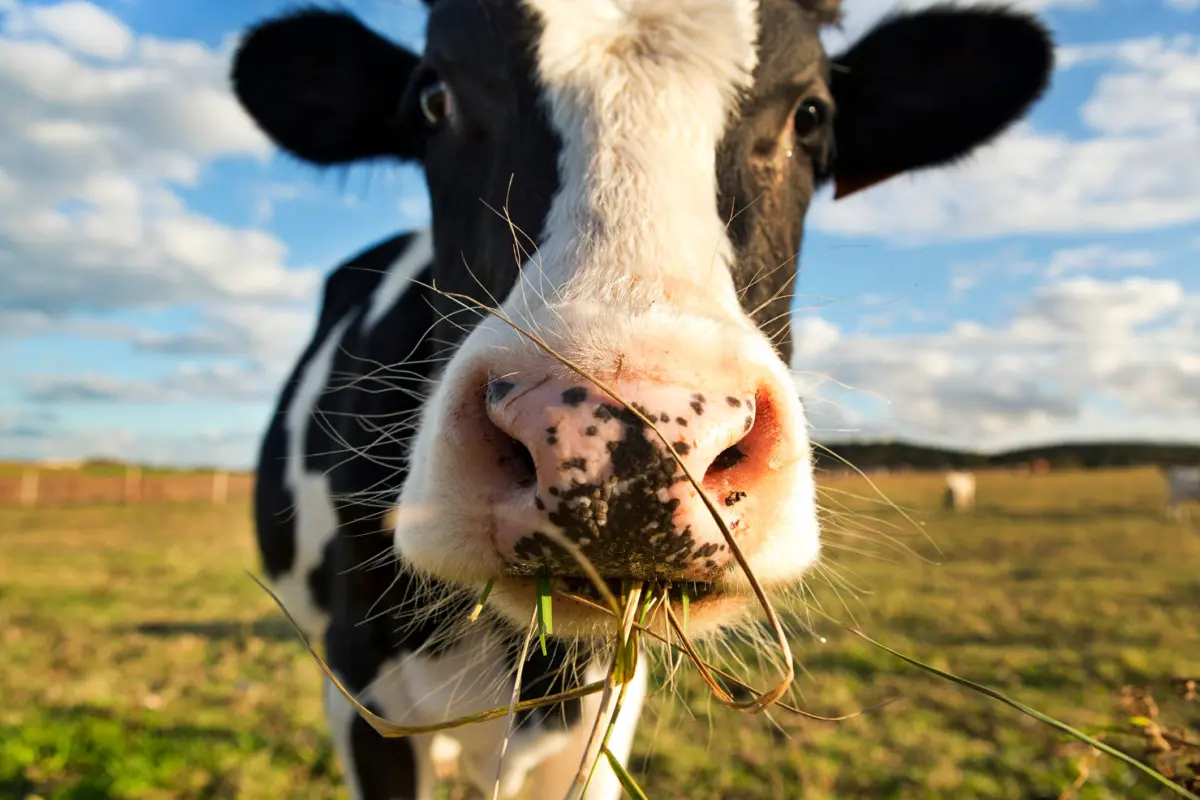
Methane ($textCH_4$) is a potent greenhouse gas. According to environmental agencies worldwide, its capacity to trap heat in the atmosphere over a 20-year period is roughly 80 times greater than that of carbon dioxide ($textCO_2$). Within the agricultural sector, enteric fermentation—a natural digestive process occurring in ruminant animals like cattle, sheep, and goats—accounts for a substantial portion of global greenhouse gas emissions. Microorganisms in the animal’s rumen break down fibrous plant material, producing methane as a metabolic byproduct, which is subsequently expelled primarily through eructation (burping).
For decades, policymakers, climate scientists, and agricultural economists have sought dietary interventions that can suppress this enteric fermentation pathway without compromising animal health, feed efficiency, or the quality of meat and dairy products.
Why Kagikenori?
While several seaweed species—most notably Asparagopsis taxiformis—have gained international fame for their ability to slash methane emissions by over 80% when comprising a minuscule fraction of a cow’s daily feed intake, they often present severe cultivation, regulatory, and ecological challenges. Many of these tropical species cannot be easily or safely cultivated in temperate Japanese waters without the risk of invasive ecological disruption or prohibitive energy costs for artificial heating.
Kagikenori, by contrast, is a native Japanese seaweed variety uniquely adapted to local marine ecosystems. Preliminary scientific evaluations indicate that Kagikenori possesses exceptional bioactive properties capable of inhibiting the methanogenic archaea (the microbes responsible for methane production in the rumen) when added to cattle feed in very small quantities.
Furthermore, because it is indigenous to the region, cultivating Kagikenori minimizes the ecological risks associated with introducing exotic species, aligning with Japan’s stringent environmental protection frameworks.
Dual Economic Value: Decarbonization Meets Fisheries Revitalization
Beyond its direct environmental impact on enteric emissions, the Kaginowa business model addresses a socio-economic crisis facing rural coastal communities in Japan: the aging and economic decline of traditional fisheries.
Many coastal fishing communities in Japan face shrinking catches, economic stagnation, and generational depopulation. By integrating advanced seaweed aquaculture into these coastal ecosystems, Kaginowa and JIRCAS are creating a mutually beneficial economic engine. The initiative envisions a dual-value framework:
- Agricultural Supply Chain Decarbonization: Providing feed companies and livestock producers with a reliable, domestically sourced input that drastically reduces methane footprints to meet corporate and national net-zero targets.
- Fisheries Diversification and Revitalization: Equipping local fishers and aquaculture operators with the technological training and market demand needed to cultivate high-value Kagikenori as a lucrative alternative or supplementary cash crop.
Official Statements and Institutional Synergy
The success of this ambitious initiative relies heavily on the distinct, complementary capabilities of the participating institutions. The collaboration marries rigorous public-sector agricultural science with nimble, market-driven biotech entrepreneurship.
JIRCAS: Public-Sector Agricultural Leadership
Operating under the jurisdiction of Japan’s prestigious Ministry of Agriculture, Forestry and Fisheries (MAFF), the Japan International Research Center for Agricultural Sciences plays a pivotal role in advancing national and international food security, sustainable agricultural practices, and climate resilience.
JIRCAS brings decades of deep institutional knowledge in marine biology, agronomy, and climate-smart agriculture to the table. By sanctioning and co-leading this research through experts like Tatsuya Matsuda, the Japanese government is signaling its formal commitment to addressing agricultural emissions at their root. Public-sector backing ensures that the research adheres to the highest scientific standards, with results made transparently available to guide national agricultural policy and international climate reporting frameworks.
Kaginowa: Commercial Agility and Biotech Innovation
As a specialized startup spun out from Alnur—a Tokyo-based biotechnology firm renowned for its mastery of microalgae mass-cultivation technology—Kaginowa represents the cutting edge of commercial agritech.
While research institutions excel at discovery and fundamental biology, startups are uniquely positioned to navigate the complexities of scale, operational logistics, and commercialization. Kaginowa’s expertise in mass cultivation, paired with its entrepreneurial drive to create scalable marine production models, bridges the gap between a petri dish in a JIRCAS laboratory and a commercial feed additive bag on a dairy farm.
Future Outlook: The Road to 2028 and Commercialization
As the open-water cultivation trials in Yamakawa Bay and surrounding marine zones progress through March 2028, observers across the global agrifood sector will be watching closely. The implications of this research extend far beyond the borders of Japan, offering a potential blueprint for nations grappling with the dual mandates of food security and climate action.
Key Objectives of the 2026–2028 Trial Phase
- Environmental Adaptation Baseline Data: Researchers will systematically record and analyze basic growth characteristics of Kagikenori across varying environmental parameters—including seasonal water temperature shifts, nutrient gradients, and hydrodynamic stress. This data will establish a comprehensive growth performance baseline for real-world marine farming.
- Active Compound Optimization: Beyond simple biomass yield, scientists will perform rigorous chemical analyses to track how cultivated seaweed synthesizes and accumulates its key bioactive, methane-reducing compounds. By correlating field growth data with controlled laboratory culture experiments, the team aims to optimize farming practices that maximize the concentration of these active ingredients.
- Scaling Commercial Production Systems: Insights gleaned from the multi-year marine trials will directly inform the engineering of future commercial production systems. The ultimate goal is to transition from experimental cultivation plots to industrial-scale marine farms capable of supplying a steady, predictable volume of feed ingredients to the commercial livestock market.
Toward a Methane-Conscious Livestock Industry
The pressure on farmers, food manufacturers, and retailers to decarbonize their supply chains has never been more intense. Major global food corporations are increasingly committing science-based targets (SBTs) to eliminate scope 3 emissions—those indirect emissions generated throughout the agricultural supply chain, heavily weighted by cattle farming.
If JIRCAS and Kaginowa successfully validate their open-water cultivation techniques and prove the efficacy and safety of Kagikenori as a commercial feed additive by 2028, the impact could be profound. Japan could position itself as a global exporter of low-emissions dairy and beef production methodologies, proving that ecological sustainability and agricultural productivity are not mutually exclusive, but rather inextricably linked.
Through careful scientific methodology, strategic cross-sector collaboration, and a commitment to regenerative coastal aquaculture, the partnership between JIRCAS and Kaginowa stands as a shining example of how targeted innovation can transform agricultural challenges into opportunities for planetary renewal.