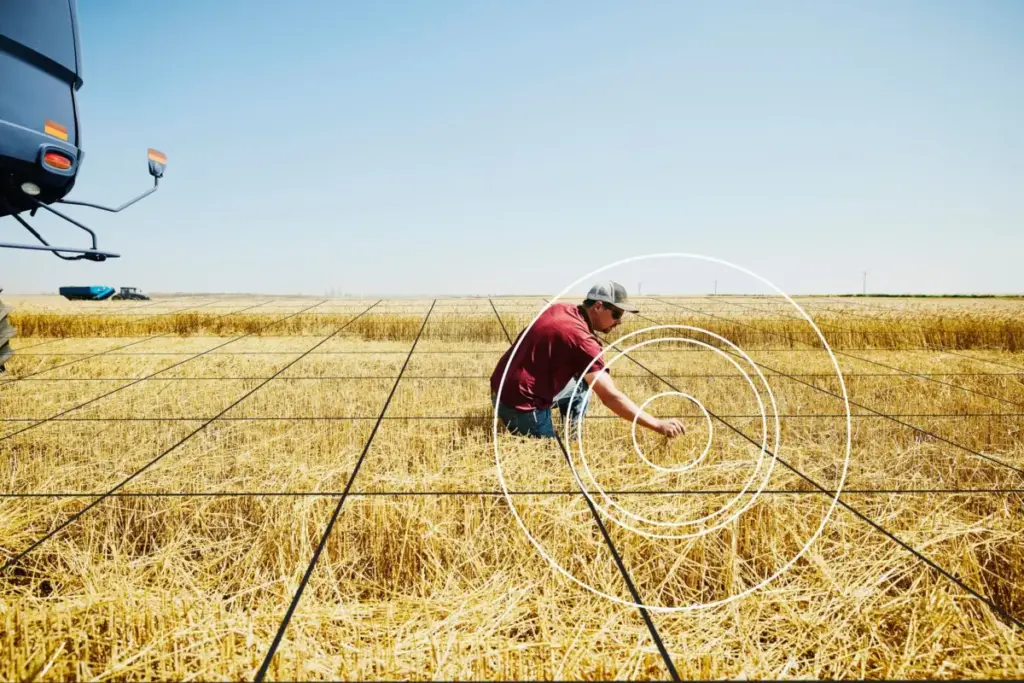

RUDOLPH, Wis. — In the heart of central Wisconsin, where the whispers of the wind through native tallgrasses have grown increasingly solitary over the last half-century, a quiet ecological renaissance is taking root. The National Audubon Society has officially announced that the Flaig Family Farm—home to the grass-fed livestock business Prairie Pastured Beef, owned and operated by Carl Flaig and his family near Junction City—has earned Audubon’s prestigious Bird-Friendly Land Certification.
Awarded through the rigorous Audubon Conservation Ranching (ACR) program, this certification recognizes agricultural producers who manage working lands in a manner that actively enhances biodiversity, improves soil and water productivity, and ensures the long-term viability of grassland ecosystems. For the Flaig family, this milestone is the culmination of decades of intentional land stewardship. It also pushes Wisconsin’s footprint in the ACR program past an impressive threshold, bringing the state’s total to seven certified farms encompassing more than 2,000 acres of dedicated, bird-friendly habitat.
Nationwide, the ACR initiative spans over 160 farms and ranches covering 4.7 million acres. Yet, the inclusion of the Flaig Family Farm carries a distinct weight. Situated within the Central Wisconsin Grassland Conservation Area—one of the state’s most critical ecological strongholds—the farm sits on the front lines of an urgent battle to rescue North America’s most rapidly declining avian biome.
Executive Overview: A Collaborative Blueprint for Conservation and Agriculture
The plight of North American grassland birds is well-documented and deeply alarming. Over the past fifty years, terrestrial bird populations across the continent have suffered severe declines, with grassland species experiencing the steepest drop-offs of any biome. This downward spiral is driven primarily by habitat loss, agricultural intensification, and the fragmentation of once-vast prairies into isolated patches.
Because the vast majority of remaining grassland habitats reside on private lands, conservation strategies that rely solely on public reserves are inherently limited. True ecological recovery requires the active engagement of private landowners and agricultural producers who manage these working landscapes day in and day out.
The Audubon Conservation Ranching program bridges this gap by proving that economic viability and ecological health do not have to be mutually exclusive. By aligning livestock management with the natural disturbance patterns of historic prairies—namely, rotational grazing that mimics the movements of native herbivores like bison—the program offers a science-based framework that revitalizes land health.
For Carl Flaig, adopting these standards was a natural extension of a lifelong philosophy. However, formalizing his practices under Audubon’s guidance has allowed him to fine-tune his operation. By integrating targeted habitat modifications, strategic resting periods for pastures, and wildlife-conscious haying schedules, Flaig has transformed his 600-acre operation into a diverse, multi-tiered sanctuary. Here, cattle production and endangered wildlife do not merely coexist; they actively support one another.
Detailed Chronology: From Dairy Roots to a Bird-Friendly Paradise
The story of the Flaig Family Farm is deeply rooted in the agricultural history of central Wisconsin, spanning generations of adaptation, resilience, and deep-seated land ethics.
1952–1980s: The Foundation and Early Dairy Years
The property was originally purchased by Carl Flaig’s parents in 1952. For the first few decades of its existence, the farm operated as a conventional dairy enterprise—a common model in rural Wisconsin during the post-World War II agricultural boom. However, as economic pressures mounted and the ecological toll of intensive, confinement-based farming became increasingly apparent, Carl recognized the need for a fundamental shift.
The 1980s: Transitioning to Grass-Based Agriculture
In the 1980s, under Carl’s leadership, the farm initiated a pivotal transition away from conventional row crops and confinement dairying, pivoting instead toward grass-based livestock production. This early philosophical pivot laid the groundwork for what would eventually become Prairie Pastured Beef. Recognizing that ruminants are biologically designed to forage on perennial grasses, Carl began refining a managed grazing system that prioritized soil health, forage diversity, and animal welfare.
2024–2026: Embracing Audubon Conservation Ranching
While Flaig had practiced sustainable grazing for decades, his partnership with the National Audubon Society marked a new chapter. Joining the ACR program brought rigorous ecological metrics to his intuitive management style. Over the past two years, Ashly Steinke, a Grassland Ecologist for the Audubon Conservation Ranching program in the Great Lakes, has worked closely with Flaig to optimize his land management.
Through targeted interventions—including the removal of invasive tree rows, the execution of prescribed burns to combat woody encroachment, and the fine-tuning of his cattle rotation schedules—the farm has evolved into a premier habitat model. Today, the Flaig operation encompasses approximately 600 connected acres of grasslands, housing a cow-calf business, an aquaponics system, and the Prairie Pastured Beef brand, which brings locally raised, conservation-positive meat directly to regional farmers’ markets.
Supporting Context & Metrics: The Science of Managed Grazing
To understand why the Flaig Family Farm is so vital to regional ecology, one must examine the geography and biology of the Central Wisconsin Grassland Conservation Area.
A Critical Ecological Crossroads
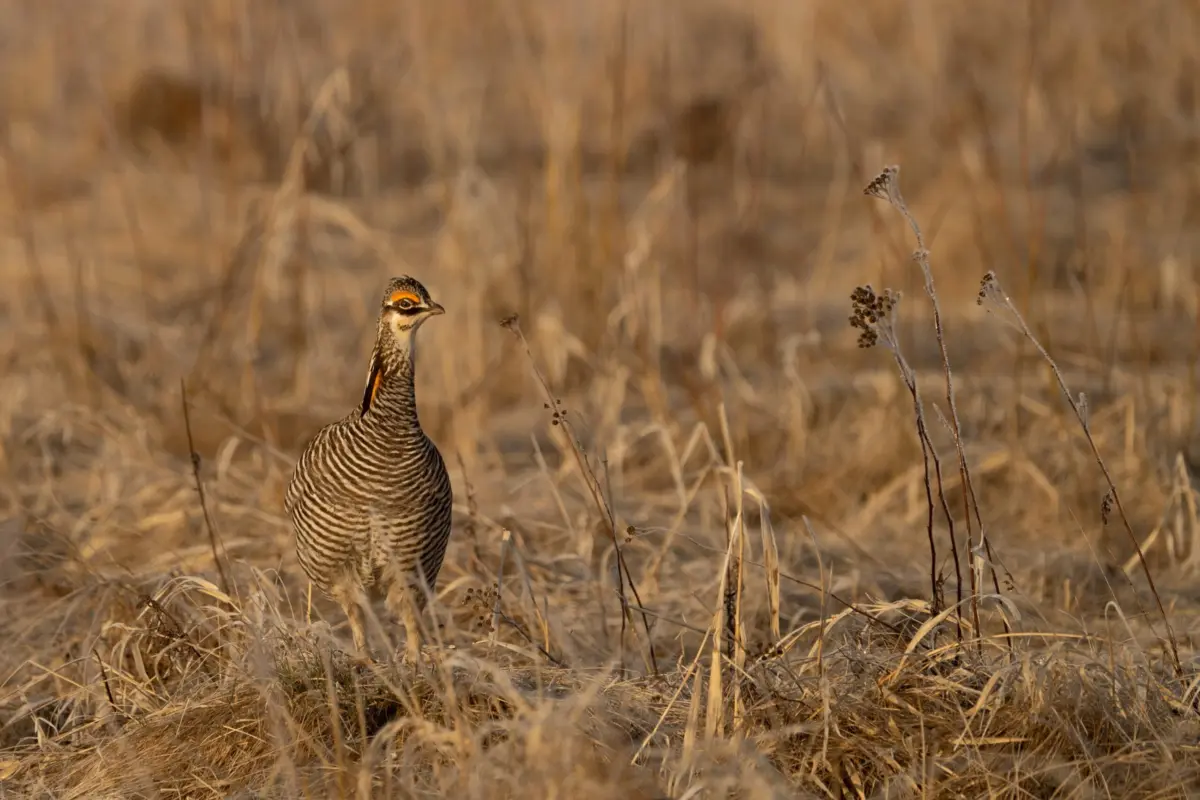
The farm is situated in the middle of the Paul J. Olson Wildlife Area, a landscape explicitly purchased and protected by the state of Wisconsin to stave off the extinction of the Greater Prairie-Chicken (Tympanuchus cupido). Central Wisconsin represents the final frontier for this iconic, state-threatened species within the state, alongside supporting the largest remaining population of Short-eared Owls (Asio flammeus).
+-------------------------------------------------------------------------+
|                  FLAIG FAMILY FARM HABITAT MOSAIC                       |
+--------------------------------|----------------------------------------+
| HABITAT TYPE                   | TARGET BIRD SPECIES                    |
+--------------------------------|----------------------------------------+
| Recently Grazed Areas          | • Greater Prairie-Chicken              |
| (Short vegetation, patchy)     | • Upland Sandpiper                     |
+--------------------------------|----------------------------------------+
| Rested Pastures                | • Bobolink                             |
| (Taller grass, dense cover)    | • Eastern Meadowlark                   |
|                                | • Savannah Sparrow                     |
+--------------------------------|----------------------------------------+
Creating the Habitat Mosaic
Birds do not experience landscapes uniformly; different species require vastly different structural stages of vegetation for foraging, breeding, and nesting. Carl Flaig’s high-intensity, short-duration grazing system—paired with long recovery periods for the pastures—creates a complex "habitat mosaic across the landscape."
- Short Vegetation Zones: Species such as the Upland Sandpiper (Bartramia longicauda) and the Greater Prairie-Chicken favor recently grazed areas where short, patchy vegetation allows them to spot predators easily and maneuver for courtship displays.
- Tall Grass / Rested Zones: Conversely, priority grassland songbirds—including Bobolinks (Dolichonyx oryzivorus), Eastern Meadowlarks (Sturnella magna), and Savannah Sparrows (Passerculus sandwichensis)—rely on rested pastures with taller, denser grass to conceal their ground nests.
- Bird-Friendly Haying: Beyond grazing management, the farm strictly adheres to bird-friendly haying protocols, purposefully leaving large blocks of grassland undisturbed throughout the peak spring and summer nesting season to protect vulnerable fledglings.
Official Statements: Voices from the Field
The success of the Flaig Family Farm is a testament to the power of collaboration between dedicated land stewards and environmental scientists.
Ashly Steinke, Grassland Ecologist for Audubon’s Great Lakes region, describes Carl Flaig not merely as a participant, but as a master of his craft:
"Carl is the consummate grazer who thinks about the entire grassland ecosystem with every move of his cattle in his managed grazing system," Steinke observed. "Since we started working with him, Carl has tweaked his grazing and haying regime, removed tree rows, and conducted two prescribed burns to reduce woody encroachment. It is truly my pleasure to work with someone like Carl to reverse the loss of grassland nesting birds."
Steinke highlights that while Flaig takes daily joy in observing routine grassland songbirds like meadowlarks and bobolinks, his crowning passion remains locked on the state-threatened Greater Prairie-Chicken:
"While Carl is constantly observing Bobolinks and meadowlarks, his true love and dedication is to the state-threatened Greater Prairie-Chicken," Steinke noted. "Carl has been working so hard to try and bring a lek back to his farm."
Historically, the Flaig property supported two active Greater Prairie-Chicken leks (communal display grounds). Today, one active lek remains just across the county road from the family’s pastures. To bolster this population, Flaig goes above and beyond his own property lines, managing his cattle on adjacent Wisconsin Department of Natural Resources (WDNR) land. Through strategic livestock rotation, he helps maintain and improve the public parcels that the prairie-chickens rely on for survival.
For Carl Flaig, the motivation is deeply personal and rooted in a profound sense of place:
"I care deeply about creating safe places for grassland birds to forage and nest on my farm," Flaig reflected. "Audubon has been an important leader in our area, helping landowners like me improve habitat for wildlife and set new conservation goals. Seeing those ideas starting to come to life, and watching birds thrive on my land, motivates me to keep going. I also know these grazing practices help me produce a higher-quality meat product."
Flaig’s perspective underscores a growing realization among sustainable producers: regenerative agriculture is not a charitable donation to nature; it is a superior production model that yields healthier soils, more resilient forages, and superior agricultural products. Emphasizing the urgency of his mission, Flaig added:
"Our biggest fight right now is trying to save the Greater Prairie-Chicken. I’d hate to see the day when I don’t get to hear them booming in April. Without grazing and this work with Audubon, we’d be much closer to losing this species."
Future Outlook: Scaling Up Bird-Friendly Agriculture in the Great Lakes
As the Flaig Family Farm officially joins the ranks of Audubon-certified lands, its story serves as both a local victory and a regional blueprint. Since launching its regional expansion in Wisconsin in 2024, the Audubon Conservation Ranching program has rapidly scaled, certifying seven distinct farm operations spanning more than 2,000 acres of high-quality, bird-friendly habitat.
However, the long-term success of this movement extends far beyond the farm gate. It relies heavily on consumer choices in the marketplace. By seeking out and purchasing meat products bearing the Audubon Certified Bird-Friendly Land seal, everyday consumers step into the role of active conservationists. Every dollar spent on certified grass-fed beef directly rewards farmers and ranchers who dedicate their land, labor, and capital to protecting North America’s fastest-declining bird species.
In central Wisconsin, the booming call of the Greater Prairie-Chicken in the April dawn is a fragile sound—one that hangs in the balance between extinction and recovery. Thanks to the unwavering dedication of Carl Flaig, his family, and the collaborative science of the National Audubon Society, that sound has a fighting chance to echo across the prairies for generations to come.
About Audubon Conservation Ranching
Audubon Conservation Ranching partners with ranchers to sustain healthy grasslands, abundant birdlife, and resilient rural communities. Through a science-based bird-friendly land certification program, Audubon empowers land stewards to enhance wildlife habitat, improve soil health and water quality, and strengthen the connection between ecological conservation and modern ranching. By purchasing products from Audubon Certified Bird-Friendly Land, consumers become active conservationists, helping protect America’s grasslands and the wildlife and communities that depend on them. For more information, visit www.audubon.org/ranching.