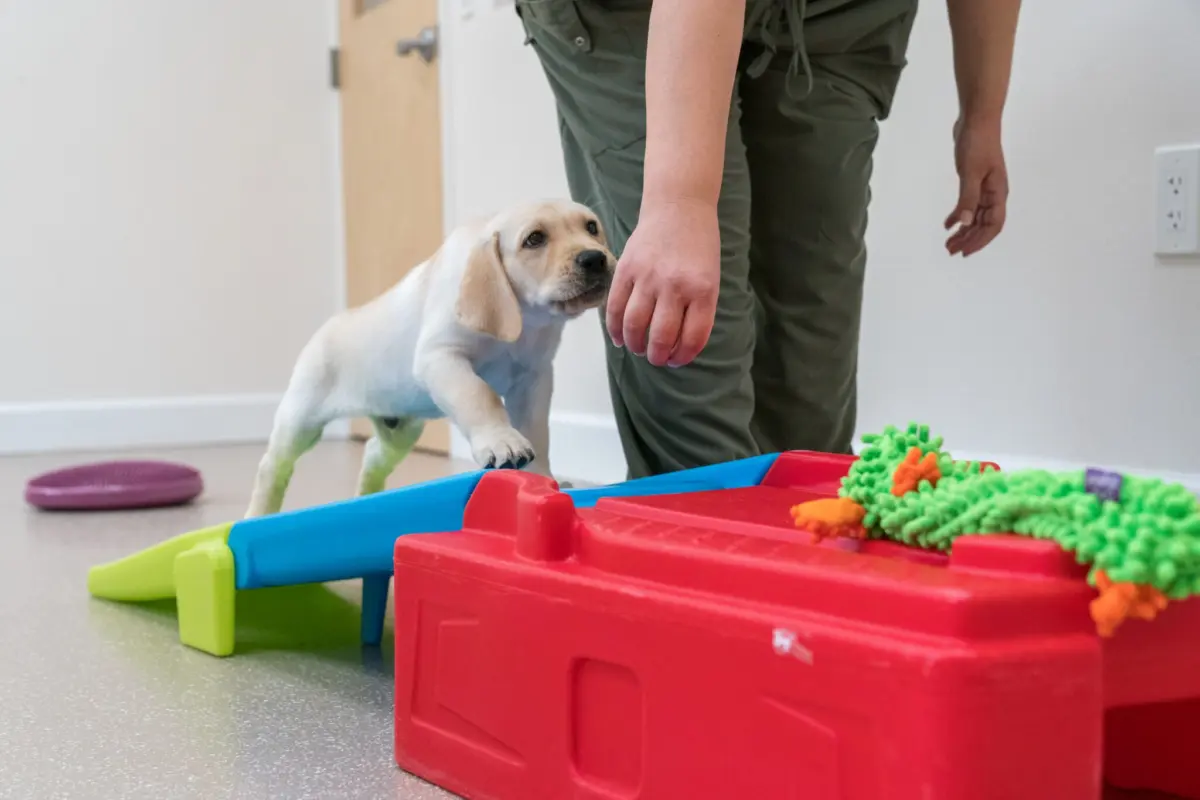
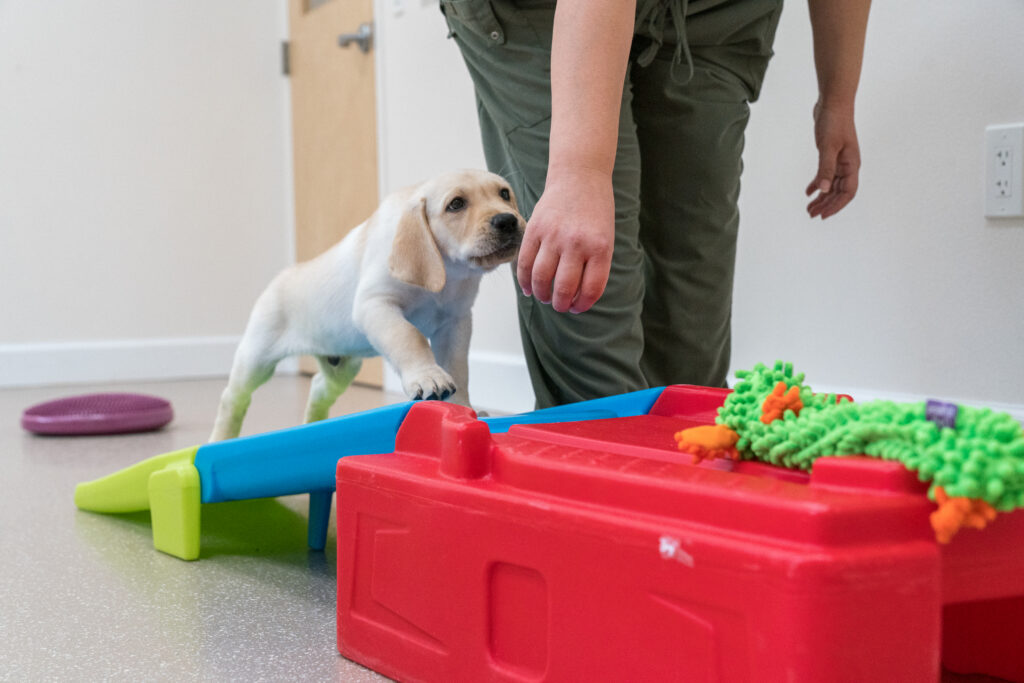
Long before a puppy takes its first step on a leash, sits on command, or navigates a bustling city street to guide a person with visual impairments, a complex and critical developmental journey is already underway behind the scenes. At organizations like Dogs Inc, the creation of a life-changing guide or service dog does not begin in the training yard at six months of age; it begins on day one of life.
During the fragile neonatal stage, newborn puppies undergo profound neurological and physiological changes. Although their eyes and ears remain sealed shut and they are entirely dependent on their mother and littermates, their brains are actively wiring themselves to interpret and react to the world. To optimize this crucial window of biological development, canine breeding and training programs utilize a specialized, science-backed protocol known as Early Neurological Stimulation (ENS).
While ENS is often misunderstood as early obedience training, it is actually a series of gentle, controlled physiological challenges administered during the first two weeks of life. Designed to stimulate the neurological system, ENS improves cardiovascular performance, strengthens heart rates, enhances adrenal gland function, and bolsters stress tolerance. It represents just one foundational chapter in a much larger, comprehensive roadmap of canine development—a roadmap that transitions seamlessly into the critical socialization period, puppy raising, and eventually, advanced service dog training. This report investigates the science, application, and long-term impact of early developmental interventions, examining how organizations like Dogs Inc cultivate the resilience, emotional stability, and intelligence required of tomorrow’s canine heroes.
Detailed Chronology: From Neonatal Foundations to Adolescent Maturity
The development of a service dog follows a precise biological and psychological timeline. Understanding this chronology clarifies why early interventions like ENS are so impactful and how they pave the way for later stages of learning.
The Neonatal Stage (Birth to 2 Weeks)
During the neonatal period, puppies exist in a sensory-limited state. They cannot see or hear, their body temperature regulation is immature, and they spend the vast majority of their time nursing and sleeping. Despite their apparent vulnerability, rapid neurological development is occurring.
It is precisely during this window—typically from day three to day sixteen—that Early Neurological Stimulation is introduced. The protocol involves handling puppies individually for brief periods each day, subjecting them to mild, non-harmful tactile and thermal stimulations. Because the puppy’s nervous system is malleable, these micro-stressors trigger an adaptive response that permanently alters how the brain and body react to stress later in life.
As puppies cross the threshold into the transitional stage, their eyes and ears open, permanently altering their perception of the environment. Around four weeks of age, puppies begin to walk, vocalize with barks, and erupt their first baby teeth. This stage marks the beginning of the shift from pure dependence on maternal milk toward soft food, and eventually, solid nutrition. Interactions with littermates become more dynamic, allowing puppies to begin learning fundamental canine social skills, such as bite inhibition and physical boundaries.
The Socialization Period (3 to 12 Weeks)
Arguably the most famous window in canine behavioral science, the socialization period overlaps with the transitional phase and extends through the third month of life. This is when a puppy’s brain is exceptionally open to forming positive associations with novel stimuli.
Weeks 3 to 8: Puppies build foundational social structures, learning heavily from their mother and littermates while expanding their interactions with trusted human handlers.
Weeks 8 to 12: Puppies are typically placed with volunteer puppy raisers or exposed to an array of environmental stimuli, including diverse human faces, unfamiliar sounds, varied surface textures, and other animals.
During this phase, proper exposure prevents the development of fear-based aggression and anxiety disorders in adult dogs. By the time a puppy reaches twelve weeks of age, they should possess a baseline of confidence that allows them to encounter the unfamiliar with curiosity rather than terror.
The Juvenile and Adolescent Stages (6 to 18 Months)
As puppies mature into adolescence—a phase that can begin as early as six months of age—they frequently test boundaries, much like human teenagers. This period coincides with physiological maturation, including hormonal shifts. Female dogs typically experience their first heat cycle, while male dogs display hormone-driven behaviors. Furthermore, veterinary behaviorists note that dogs experience an average of four distinct "fear periods" throughout their growth cycles. Thoughtful, positive-reinforcement-based handling during these adolescent trials ensures that temporary behavioral regressions do not become permanent flaws.
Supporting Context & Metrics: The Science of ENS and Environmental Enrichment
To appreciate the value of Early Neurological Stimulation, one must examine the physiological mechanisms at play. Originally developed for military canine programs (frequently referred to as the "Bio Sensor" program or "The U.S. Military’s Dog Program"), ENS was designed to improve the adaptability and performance of working dogs.
The standard ENS protocol consists of five distinct, brief exercises performed once daily between the third and sixteenth days of life. Each exercise lasts approximately three to five seconds:
Tactile Stimulation: Holding the puppy in one hand, the handler gently tickles the pad of one foot using a Q-tip. (Rotated through all four paws over successive days).
Head Held Up: The puppy is held perpendicularly pointing straight up (head up, feet down) with both hands.
Head Pointed Down: The puppy is held firmly with the head pointed downward toward the ground.
Supine Position: The puppy is held in the palm of both hands, back down, with its muzzle pointing toward the ceiling.
Thermal Stimulation: A damp towel that has been cooled in a refrigerator is placed in a box, and the puppy is placed on it for a brief moment, unfettered and unconstrained.
Quantifiable Physiological Benefits
Research and decades of field observation by working dog breeders indicate that these brief, controlled stresses yield measurable improvements in canine physiology:
Improved Cardiovascular Performance: Enhanced heart rate and stronger heart contractions.
Stronger Adrenal Glands: Improved hormonal output under stress.
Increased Tolerance to Stress: Greater emotional resilience when faced with novel or frightening stimuli in later life.
Enhanced Immune System: Better overall disease resistance and physiological vigor.
ENS vs. Socialization: Understanding the Distinction
It is vital to distinguish Early Neurological Stimulation from socialization. While both are critical pillars of modern canine husbandry, they operate during entirely different windows of development and serve distinct purposes:
Feature
Early Neurological Stimulation (ENS)
Socialization Period
Timing
Days 3 through 16 (Neonatal Stage)
Weeks 3 through 12 (and beyond)
Focus
Neurological, cardiovascular, and adrenal system development
Behavioral adaptability, social skills, and environmental confidence
Method
Controlled, brief physical and thermal micro-stimulations
Exposure to people, sounds, surfaces, animals, and novel environments
Primary Goal
To hardwire physical resilience and stress tolerance
To prevent fear-based behavioral issues and build worldly confidence
Official Perspectives: A Holistic Approach at Dogs Inc
Organizations dedicated to breeding elite guide and service dogs view early development through a holistic lens. According to canine care experts at Dogs Inc, no single intervention—whether it is ENS, elite genetics, or advanced obedience training—tells the whole story of a dog’s success.
"Early puppy development is not about creating ‘perfect’ dogs out of the womb," notes developmental literature from Dogs Inc. "It is about providing thoughtful, scientifically supported experiences that lay a robust foundation for emotional maturity, physical resilience, and future learning."
Experts emphasize that while ENS primes the nervous system, it must be paired with continuous, high-quality care, appropriate nutrition, veterinary oversight, and dedicated volunteer puppy raising. The philosophy rests on the understanding that a service dog’s temperament is a mosaic. Genetics provide the canvas, ENS strengthens the frame, and socialization, environment, and positive reinforcement paint the final picture.
Furthermore, professional organizations stress that ENS protocols are delicate procedures. Because neonatal puppies are intensely fragile, these exercises must be executed strictly by trained personnel who understand canine anatomy and neonatal stress thresholds. Inexperienced attempts to replicate these protocols outside of established guidelines can result in physical harm or unintended maternal rejection.
Future Outlook: Preparing Elite Partners for Complex Roles
The demands placed on modern guide dogs and service dogs have never been higher. Today’s working dogs must navigate high-speed public transit, crowded airports, unpredictable urban environments, and complex public spaces while remaining utterly calm, focused, and responsive to their handlers’ needs.
Achieving this level of elite performance requires looking far beyond basic obedience. The future of service dog breeding and training lies in continuous refinement of early-stage intervention models. As veterinary science and canine behavioral research evolve, organizations are increasingly tracking longitudinal data—correlating neonatal metrics and ENS outcomes with eventual graduation rates and working longevity as certified service animals.
Moreover, the integration of structured puppy raising programs, continued exposure to diverse species, routine-building exercises like crate training, and carefully managed puppy classes at 16 weeks and beyond ensure that the developmental momentum initiated by ENS never stalls.
Ultimately, the first few weeks of a puppy’s life pass in the blink of an eye, but their impact echoes through decades of human-canine partnership. By investing heavily in the neonatal foundation—through gentle science, rigorous protocols, and unwavering dedication—institutions like Dogs Inc ensure that their puppies grow into confident, capable, life-changing partners, ready to guide individuals toward greater independence from their very first steps into the world.