
Executive Overview
In the realm of evolutionary biology, a prevailing axiom has long dictated that when animals and plants colonize isolated island ecosystems, they undergo a specific genetic trajectory. Subjected to the "founder effect"—where a tiny fraction of a mainland population establishes a new colony—these island pioneers typically experience a drastic reduction in genetic diversity. Concurrently, theoretical models have maintained that relaxed natural selection on islands allows genomes to bloat, accumulating vast reservoirs of repetitive DNA and transposable elements, leading to a net increase in genome size.
For decades, this paradigm served as a comfortable rule of thumb for evolutionary geneticists tracking the eccentricities of insular evolution. However, a groundbreaking study published in Molecular Biology and Evolution has shattered this long-held assumption, introducing a stunning anomaly that forces science to rethink the fundamental mechanics of genomic evolution.
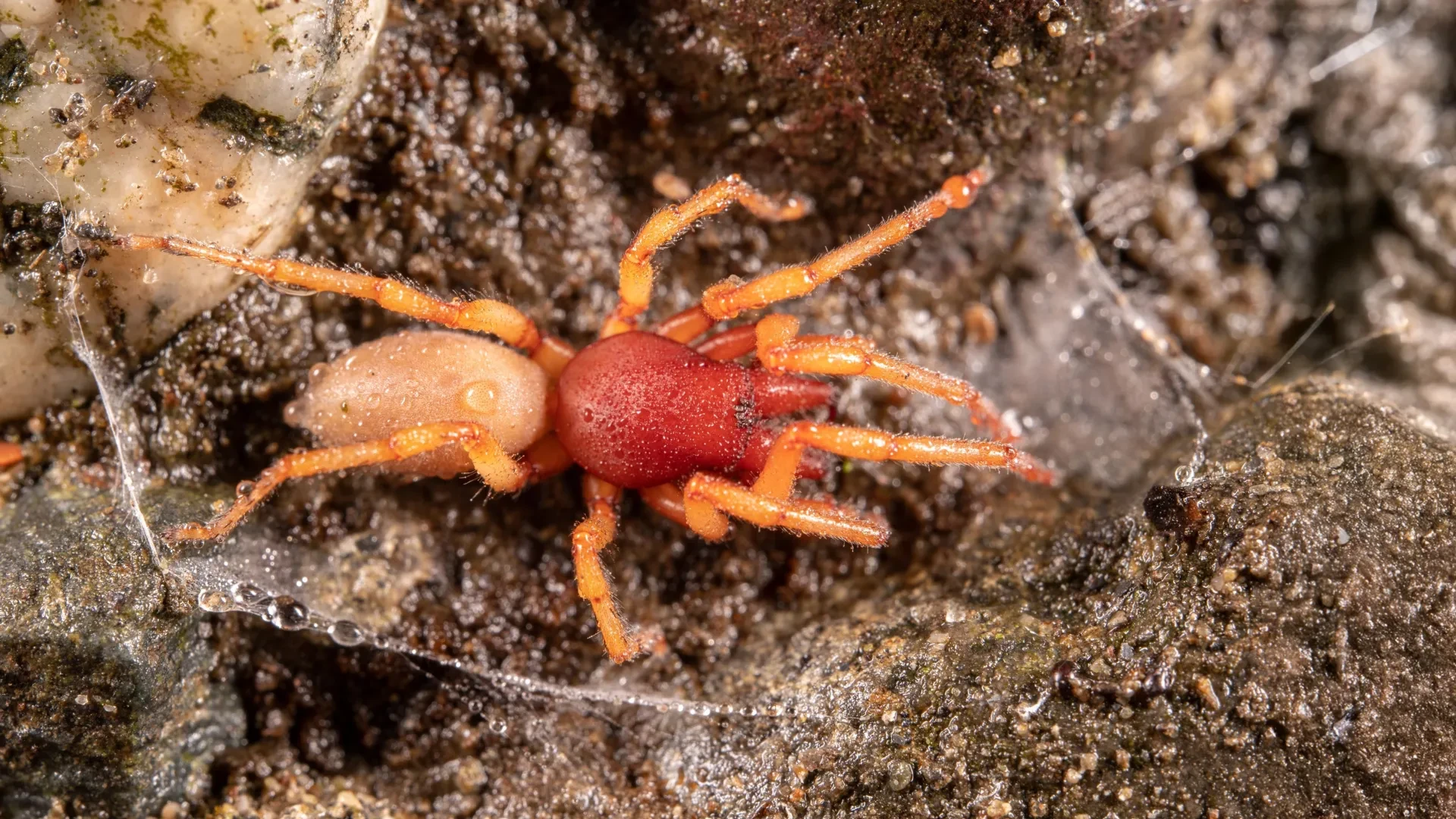
Researchers from the University of Barcelona’s Faculty of Biology and the Biodiversity Research Institute (IRBio), in collaboration with international partners, have documented an unprecedented biological event. Focusing on the spider species Dysdera tilosensis—endemic to the rugged terrain of Gran Canaria in the Canary Islands—the research team discovered that over the course of a few million years, the arachnid has pruned its genome by nearly 50%.
Even more paradoxically, while its genetic blueprint was undergoing this extreme downsizing, Dysdera tilosensis managed to cultivate a higher level of genetic diversity than its mainland relatives. This discovery not only marks the first time science has recorded an animal species shrinking its genome by half during island colonization, but it also reignites a central debate in evolutionary science: what drives the mysterious fluctuations of genome size across the tree of life?
Detailed Chronology and Research Methodology
The journey toward this paradigm-shifting discovery began within the volcanic landscapes of the Canary Islands, a region widely celebrated as a natural laboratory for evolutionary studies. Emerging from the Atlantic Ocean a few million years ago, the archipelago provided a pristine, isolated stage for speciation. Among the beneficiaries of this pristine habitat are spiders of the genus Dysdera. Since the islands formed, approximately 50 endemic species of Dysdera have evolved here, accounting for roughly 14% of all known species within the genus worldwide.
To understand how these island-dwelling spiders diverged from their continental ancestors, an investigative team spearheaded by Professors Julio Rozas and Sara Guirao, alongside lead author and doctoral student Vadim Pisarenco, initiated a rigorous comparative genomic analysis. They deployed advanced DNA sequencing technologies to examine two closely related species:
- Dysdera catalonica, a mainland species inhabiting parts of Catalonia in northeastern Spain and southern France.
- Dysdera tilosensis, the island specialist native exclusively to Gran Canaria.
The research team first established high-quality reference genomes for both species to compare their structural architectures. The findings were immediately striking. Dysdera catalonica presented a hefty genome comprising 3.3 billion base pairs (3.3 Gb). In stark contrast, the island-dwelling Dysdera tilosensis possessed a streamlined genome of just 1.7 Gb—effectively half the size of its continental counterpart.
Chromosomal analysis further illuminated this divergence. Dysdera catalonica displayed a haploid chromosome count of four autosomes plus one X chromosome. Meanwhile, Dysdera tilosensis featured six autosomes alongside a single X chromosome, pointing to significant chromosomal rearrangement during the evolutionary split.
Utilizing phylogenetic analysis combined with flow cytometry measurements, the team traced the ancestral state of the lineage. Their models revealed that the common ancestor of these spiders possessed a large genome hovering around 3.0 Gb. This crucial baseline confirmed that the reduction seen in D. tilosensis was not an inherited trait from a micro-genome ancestor, but rather a drastic, rapid downsizing event that occurred either during or immediately following the colonization of the Canary Islands.
Supporting Context & Metrics: Challenging the "Island Rule" of Genetics
The implications of the Dysdera tilosensis discovery stretch far beyond arachnology, challenging deeply entrenched theories regarding genome evolution and the "island rule."
The Paradox of Genome Downsizing in Animals
In evolutionary biology, variations in genome size—the total quantity of DNA base pairs contained within an organism’s genetic instructions—have long puzzled scientists. Organisms of similar morphological complexity often exhibit wildly divergent genome sizes.
Historically, large-scale genome reductions are exceptionally rare in the animal kingdom. While polyploidy (the multiplication of entire sets of chromosomes) is frequently observed in plants, leading to rapid genome expansion, sharp reductions over evolutionarily short timescales are uncommon among multicellular animals. When genome size shifts do occur, the prevailing scientific consensus has linked them to adaptation, environmental stress, or metabolic efficiency. However, because D. catalonica and D. tilosensis share remarkably similar ecological niches and dietary profiles, researchers quickly ruled out direct behavioral or dietary adaptations as the primary drivers of this discrepancy.
Upending the Founder Effect Hypothesis
The most provocative aspect of the Barcelona-led study is its direct contradiction of the island founder effect theory. Standard evolutionary models posit that when a small group of colonizers lands on an isolated island, genetic drift runs rampant, effective population sizes remain small, and natural selection weakens. Without stringent selective pressure to purge redundant or "junk" DNA, genomes are expected to bloat with the accumulation of repetitive elements like transposons.
Yet, Dysdera tilosensis did precisely the opposite. It engineered a compact, streamlined genome while simultaneously maintaining robust genetic diversity.
To explain this anomaly, the research team proposes a non-adaptive mechanism driven by population dynamics. They suggest that populations of Dysdera on Gran Canaria did not suffer from the chronic, severe population bottlenecks typical of island colonizations. Instead, these spider populations likely remained relatively numerous and stable over long stretches of evolutionary time. This sustained population stability maintained a potent selective pressure, empowering the organism’s cellular machinery to efficiently strip away non-functional, repetitive DNA sequences.
Rather than being a direct, targeted adaptation to volcanic rock or island microclimates, the researchers conclude that genome size in these spiders is governed by a delicate, ongoing cellular equilibrium: the biological tug-of-war between the accumulation of repetitive DNA elements and their active removal through natural selection.
Official Statements from the Research Consortium
The significance of the findings has drawn praise and commentary from the leading architects of the study, highlighting both the novelty of the discovery and the collaborative nature of the research.
Reflecting on the rarity of the phenomenon, Professor Julio Rozas, director of the Evolutionary Genomics and Bioinformatics research group at the University of Barcelona and a board member of the Bioinformatics Barcelona (BIB) platform, emphasized the milestone nature of the work:
"The species D. catalonica has a genome of 3.3 billion base pairs (3.3 Gb), which is almost double that of the species D. tilosensis (1.7 Gb). Interestingly, despite having a smaller genome, the species from the Canary Islands shows greater genetic diversity."
"The genome downsizing of the spider Dysdera tilosensis, associated with the colonization process of the Canary Island, is one of the first documented cases of drastic genome downsizing using high-quality reference genomes. This phenomenon is now being described for the first time in detail for phylogenetically closely related animal species."
Addressing the difficulty of attributing these genomic shifts to environmental pressures, Professor Sara Guirao noted the methodological steps taken to reconstruct the evolutionary history of the spiders:
"In such evolutionarily similar species, which share similar habitats and diet, differences in genome size cannot easily be attributed to ecological or behavioural factors. Phylogenetic analysis, combined with flow cytometry measurements, reveals that the common ancestor had a large genome (about 3 Gb). This indicates that the drastic genome reduction occurred during or after the arrival on the islands."
"Although less frequent in animals, the most common pattern is the increase in genome size via whole-genome duplications, especially in plants… In contrast, such sharp reductions in genome size over a relatively short period of time are much rarer."
Vadim Pisarenco, doctoral student and the study’s first author, pointed out the stark contradiction between their empirical observations and classical insular biogeography theories:
"In the study, we observed the opposite: island species have smaller, more compact genomes with greater genetic diversity. This pattern suggests the presence of non-adaptive mechanisms, whereby populations in the Canary Islands would have remained relatively numerous and stable for a long time. This would have made it possible to maintain a strong selective pressure and, as a consequence, eliminate unnecessary DNA."
Summarizing the ultimate takeaway of the research consortium regarding the mechanics of genomic architecture, the authors concluded:
"This study supports the idea that, rather than direct adaptation, genome size in these species depends primarily on a balance between the accumulation and removal of this repetitive DNA."
Future Outlook: Unlocking Evolution’s Genomic Enigmas
The publication of this study in Molecular Biology and Evolution opens up expansive new avenues for genomic research. For decades, evolutionary biologists have debated whether the massive amounts of non-coding, repetitive DNA found in eukaryotic genomes serve an unmapped regulatory purpose or represent mere genetic baggage.
By demonstrating that an animal species can successfully shed nearly 50% of its genetic material without suffering evolutionary extinction—and while actually enhancing its genetic diversity—the research on Dysdera tilosensis provides empirical ammunition for the proponents of the "neutral" or selection-balance model of genome evolution.
Moving forward, the scientific community faces the compelling task of determining whether this phenomenon is an isolated evolutionary quirk unique to Canary Island spiders, or part of a broader, unrecognized pattern of genomic downsizing among insular invertebrates. Researchers plan to expand their comparative sequencing efforts across other endemic invertebrate taxa within the Canary Islands and comparable oceanic archipelagos, such as the Galapagos and Hawaii.
Furthermore, technological advancements in long-read DNA sequencing and bioinformatics will allow scientists to map the precise composition of the deleted DNA in Dysdera tilosensis. Identifying which repetitive elements were purged—and understanding the cellular mechanisms that drove their excision—could provide humanity with a masterclass in genomic efficiency.
Ultimately, the humble Dysdera tilosensis has proven that evolution is far more inventive, adaptable, and willing to shed excess weight than textbook models ever dared to imagine. As scientists peer deeper into the structural architectures of island-dwelling organisms, the boundaries of evolutionary theory will continue to expand, driven by the remarkable resilience of life in isolation.